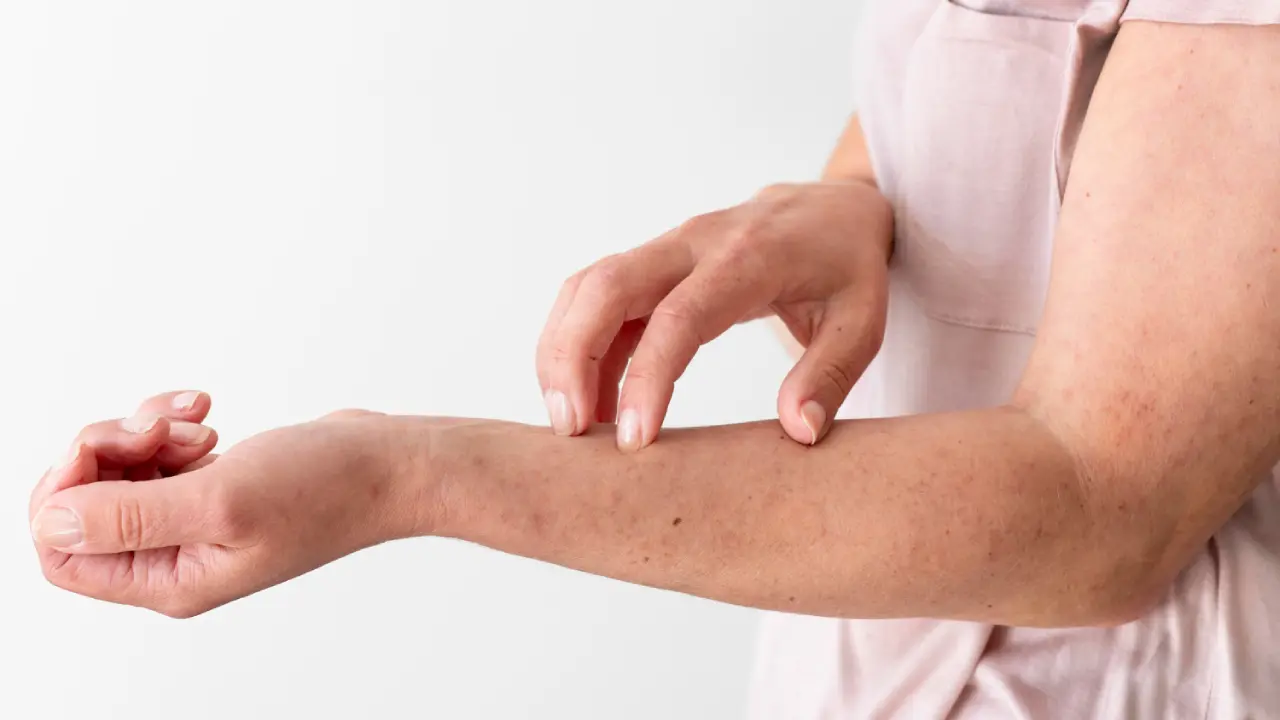
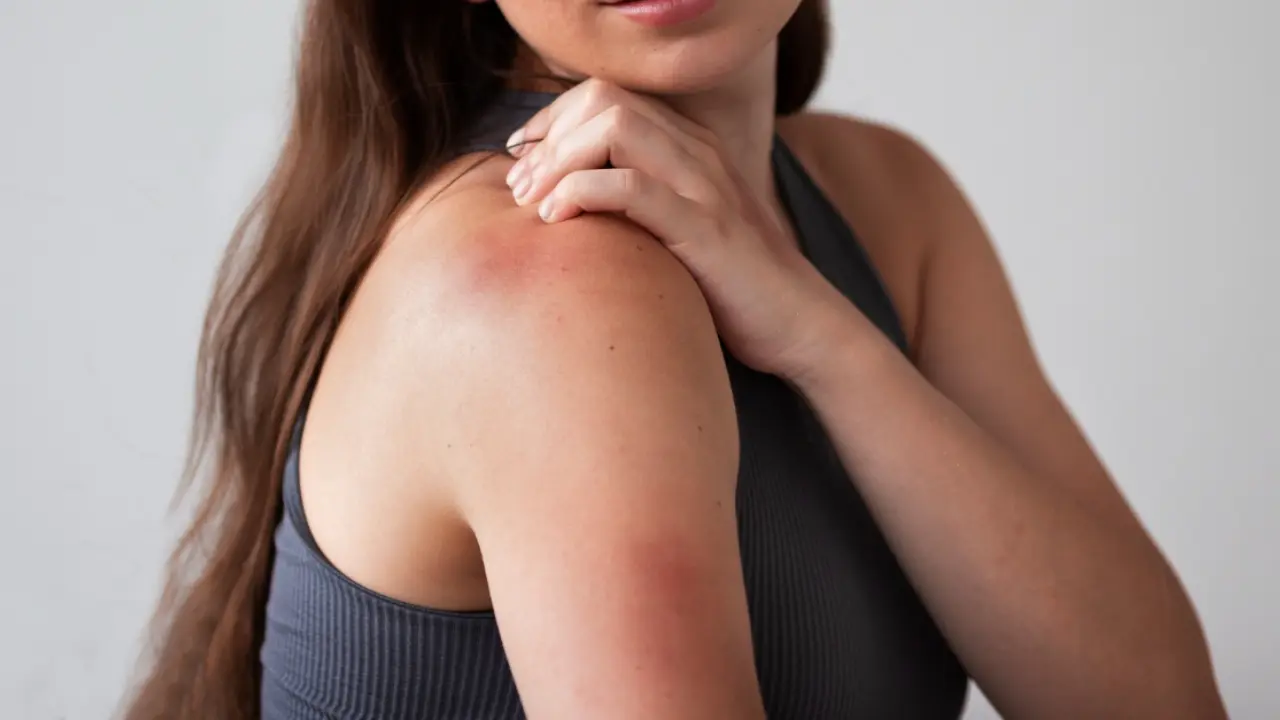
Dealing with the relentless itch, redness, and inflammation of eczema is an exhausting ordeal. Beyond the physical discomfort, chronic flare-ups disrupt sleep, affect productivity, and significantly impact overall well-being. While topical creams and medications offer temporary relief, treating the symptoms without addressing the environmental triggers often leads to a frustrating and endless cycle of skin irritation.
We understand how draining this process can be. To support long-term skin recovery, it is essential to create a “safe zone” indoors—one with stable humidity, clean air, and non-irritating fabrics. By optimising your environment, you can reduce the triggers that spark inflammation and allow your skin’s natural barrier the peace it needs to heal.
For many eczema (atopic dermatitis) sufferers, the air they breathe is just as important as the products they apply to their skin. The primary environmental culprits are often invisible: dust mites and pet dander.
The immune system of someone with eczema is often hypersensitive. When it detects foreign particles, it overreacts, leading to a flare-up. Crucially, these airborne allergens act as “contact triggers.” When microscopic dust mite waste or dander settles on the skin, it can penetrate a weakened skin barrier, causing an immediate inflammatory response from the inside out.
Understanding how these allergens enter and persist in your home is the first step toward effective management.
1. Dust Mite Proliferation
Dust mites are microscopic organisms that thrive in warm, humid conditions. They feed on human skin flakes and establish themselves rapidly in fibrous environments such as carpets, mattresses, and soft upholstery. They do not just live in the air; they reside exactly where your skin makes the most contact.
2. Pet Dander and External Pollutants
Pet dander consists of microscopic flakes of skin and dried saliva. Because it is incredibly light, it remains airborne for long periods and clings to clothing and furniture. Additionally, shoes and clothing bring in outdoor dust and pollen, further taxing an already sensitive immune system.
3. The Micro-Climate of Soft Furnishings
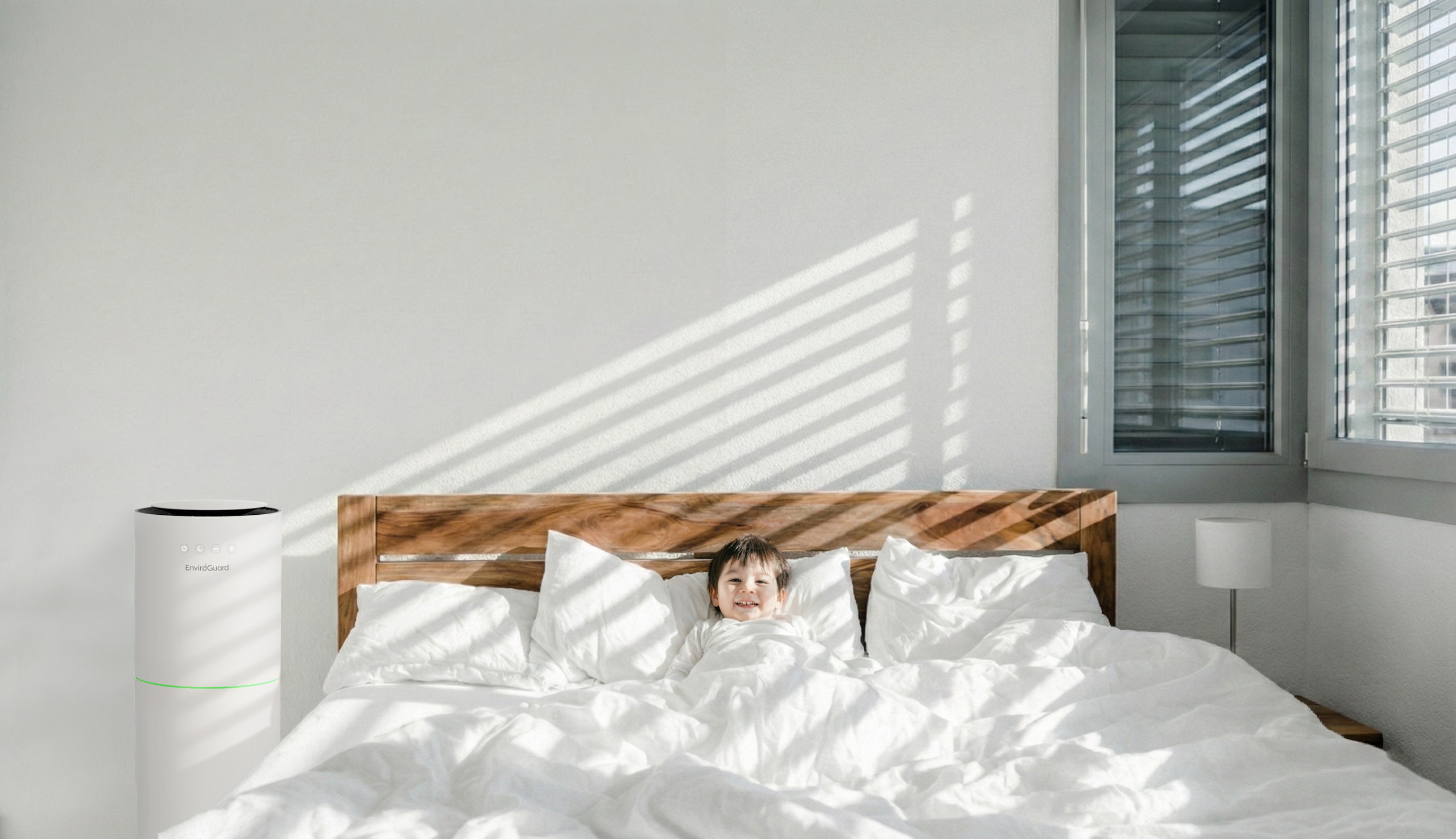
Bedding and sofas are prime “hotspots” for eczema triggers. These fabrics trap allergenic particles close to your body, while body heat and perspiration create a warm micro-climate where dust mites flourish.
In modern, energy-efficient homes—which are often tightly sealed to retain heat—natural ventilation is limited. This traps moisture and airborne particulates inside, allowing dander and mite fragments to accumulate to high, irritating concentrations on the very fabrics you touch most.
With the average person spending up to 80% of their time indoors, your skin and respiratory system are under constant environmental pressure. If your living space is not being actively sanitised, managing eczema triggers becomes a continuous uphill battle.
To break the cycle of inflammation, you must go beyond surface cleaning. A comprehensive approach involves:
By taking control of your indoor air quality, you aren’t just cleaning a room; you are protecting your skin’s barrier and reclaiming your quality of life.
When trying to manage indoor triggers, many people invest in standard HEPA air purifiers. However, there is a significant flaw in passive filtration: passive filters only clean the air; they cannot neutralise the allergens already sitting on your bed or sofa where your skin makes contact.
Traditional purifiers only clean the air that physically passes through their filters. This means the very triggers causing your discomfort remain undisturbed on surfaces, acting as a constant source of irritation every time you interact with your environment.
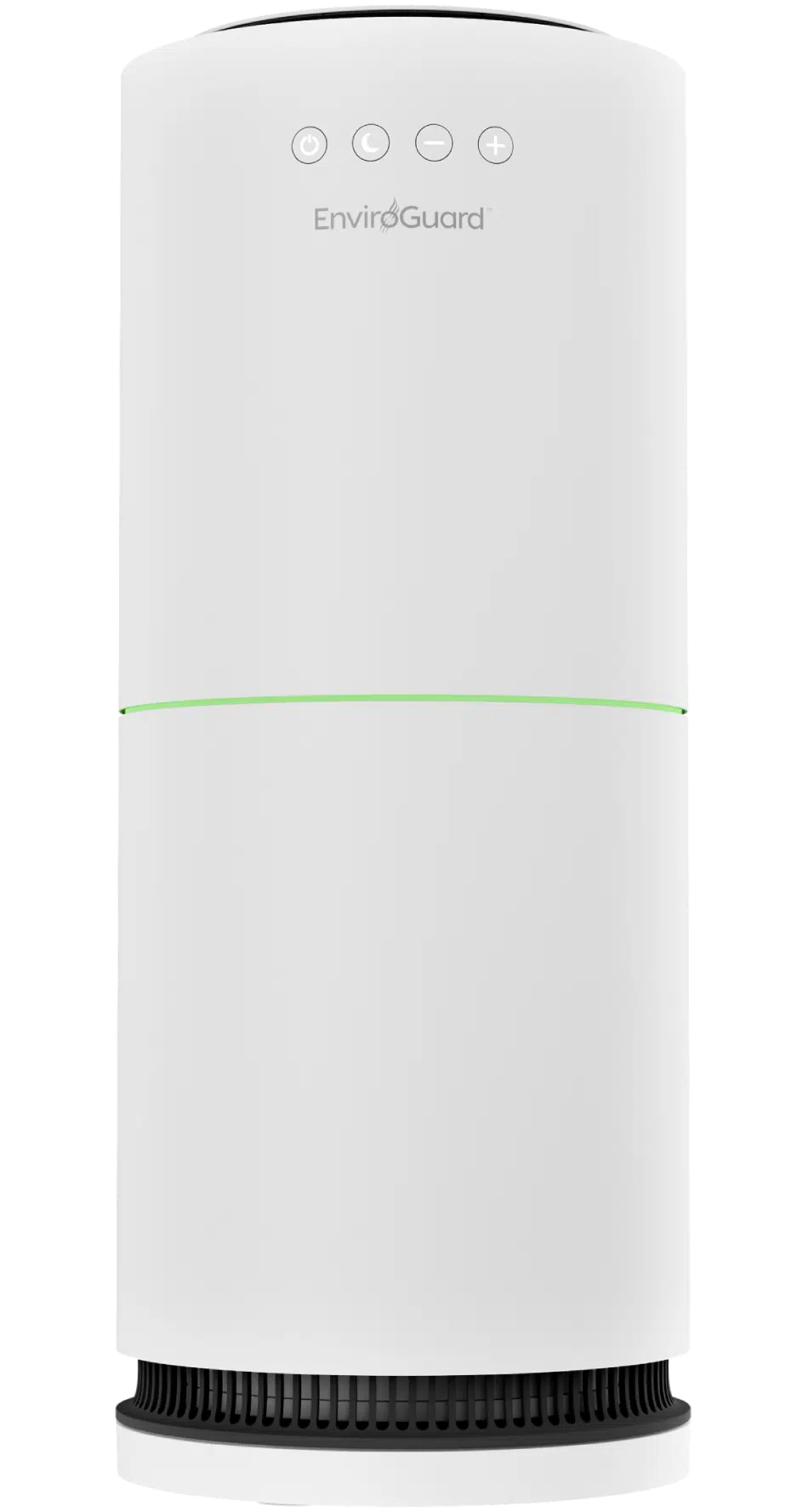
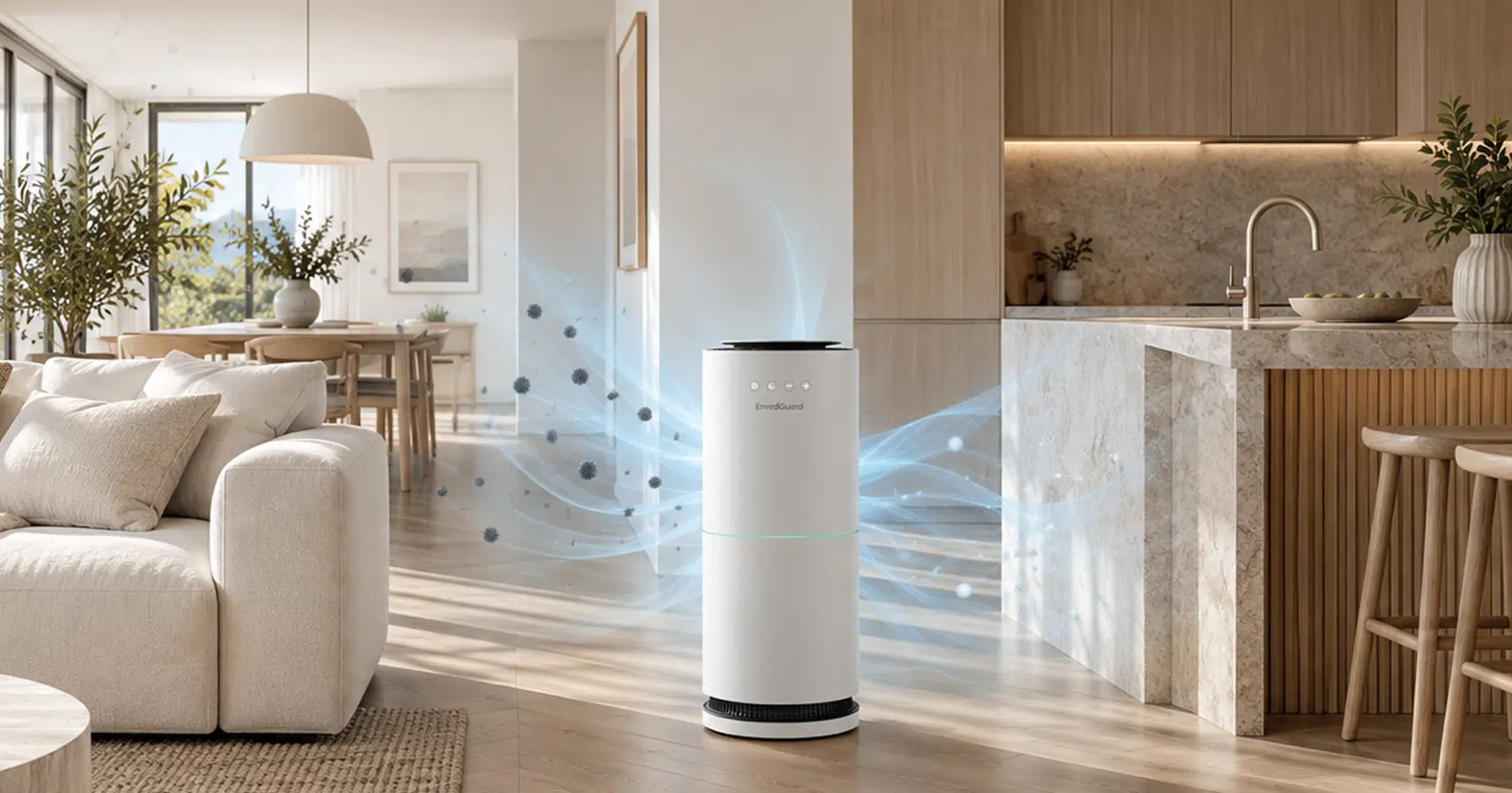
To effectively break the cycle of eczema triggers, you need an active approach that treats the entire room, not just the air passing through a machine. The EnviroGuard PRO™ X is a professional-grade air purification system designed to seek out and destroy triggers wherever they hide.
Our active vapour settles on surfaces, deactivating the allergenic proteins in dust mite waste and dander before they can irritate your skin. The most effective way to manage your environment is by using the EnviroGuard PRO™ X system combined with our proprietary non-toxic Purox™ Gel. As the HEPA filter traps airborne particles, the active vapour neutralises allergens on surrounding surfaces and in mid-air.
Proactive Protection You Can Trust:
How can I reduce dust mite exposure in the bedroom?
The most effective way is to use allergen-proof mattress and pillow covers, wash bedding weekly in hot water, and run an active air purifier to neutralise allergens mid-air.
Can pet dander trigger eczema?
Yes, pet dander can trigger eczema. Regular grooming, keeping pets out of bedrooms, and using an air purifier that neutralises allergens mid-air can reduce airborne exposure.
What cleaning methods best remove pet dander and dust mites?
Use a HEPA vacuum, damp dusting, and hot-wash soft furnishings. Pair this with an active air purifier to neutralise remaining airborne particles for better skin outcomes.
Is controlling indoor humidity important for eczema?
Yes, keep indoor humidity between 40–50% to discourage dust mites and mould. Pair humidity control with an air purifier that neutralises allergens to maintain skin-friendly air.
Will an air purifier completely stop eczema triggers indoors?
While an air purifier won’t stop all triggers, a high-quality unit that actively neutralises allergens can significantly reduce airborne irritants and lower the risk of flare-ups.

Don’t let indoor allergens dictate your quality of life. Protect your skin from indoor triggers by upgrading your home’s air quality today.
Order your VBreathe Device and your Purox™ Gel Refills to start experiencing true, professional-grade protection.
Further Reading & Complete Protection
Connect with Us
Follow our community for more skin-care and clean air tips: VBreathe Safe on Facebook
Remove
Total Amount
Adding {{itemName}} to cart
Added {{itemName}} to cart