Smoke & Cooking Odor Removal | How to Keep Your House Smelling Fresh
Many people believe that indoor odour problems are solely caused by “dirtiness,” so they try to solve the issue by mopping the floor, spraying air fresheners, or turning on fans to circulate the air. In reality, many odours do not disappear with general cleaning because the root cause may still be accumulating in the air and on various surfaces within the home.
Whether it is food odours, smoke, mustiness, or pet odours, they are all related to organic matter and Volatile Organic Compounds (VOCs) that can accumulate on fabrics, carpets, sofas, walls, and even the ventilation system. Even though they are invisible to the naked eye, when the temperature or humidity changes, these substances can evaporate back into the air, causing the smells to return.
According to indoor air quality data from various environmental agencies, such as the EPA, VOCs can accumulate in the air indoors from daily activities, including the use of cleaning products, fragrances, and cooking, which is one of the main reasons for poor indoor air quality.
Key Takeaway:
Indoor odours are not solely caused by dirt, but are also related to organic substances and VOCs accumulating on surfaces and in the air. Spraying fragrances or using fans might only provide temporary relief because they do not genuinely eliminate the root cause of the odour. Therefore, a more sustainable approach is to tackle it at the source—by reducing humidity, ensuring proper ventilation, and minimising the build-up of odour molecules within the home—to help improve overall air quality in the long run.
This article will guide you through understanding the causes of cooking-related odours and smoke from a practical, scientific perspective. It will introduce a systematic approach to managing them, from reducing odour accumulation during cooking and ventilating pollutants out of the kitchen area, to maintaining cleaner indoor air. It will also cover supplementary methods using active environmental management systems that tackle airborne contaminants like VOCs at their source, ensuring your home is not only free from lingering odours but also has clean, safe air suitable for long-term living for the whole family.

Why Do House Odours Return Even After Cleaning?
Often, we clean the house by opening windows for ventilation or spraying air fresheners until the room instantly feels fresh. However, shortly after, the original smell gradually returns. This problem is common because the root cause of the odour might not just be “in the air,” but also accumulating on various surfaces and materials in the house in the form of organic matter and tiny odour molecules.
According to Indoor Air Quality data from the EPA, indoor pollutants and volatile substances can accumulate in enclosed spaces for much longer than many people realise, especially in homes with limited ventilation or continuous moisture build-up.
Factors that cause odours to return despite cleaning include:
- Grease stains and organic food residues clinging to surfaces.
- Fabrics, carpets, sofas, and mattresses, which can absorb odours for a long time.
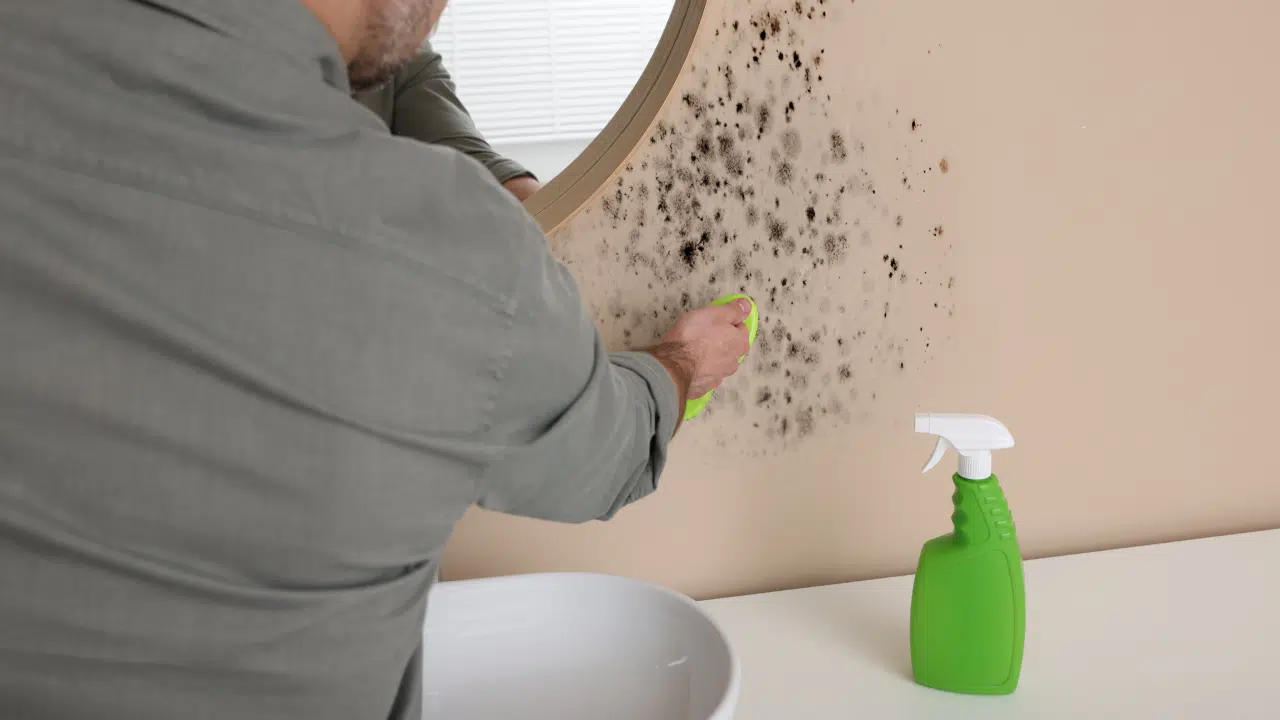
- Accumulated moisture that triggers musty smells and mould.
- Ventilation systems that continuously recirculate the same stale air.
- The use of air fresheners that merely mask the smell temporarily.
- VOCs from perfumes, cleaning products, and indoor smoke.
The crucial point is that many odours do not disappear immediately after cleaning. Instead, they remain accumulated at a molecular level and can evaporate back into the air when the temperature or humidity changes. This is why some homes still have musty or lingering smells even when they appear spotlessly clean.
Once you understand that odours don’t just originate from the air, the next step is choosing an odour reduction method that effectively tackles both the air and surfaces, without introducing unnecessary chemicals into your home.
Fact: The Appearance of Smoke Indicates What is in the Air
Smoke produced from cooking varies in appearance, which can give a rough indication of the types of particles suspended in the air. Thin, clear smoke usually consists of ultra-fine particles that can easily penetrate deep into the respiratory tract. Conversely, thick white or grey smoke is often laden with oil droplets and larger particles that tend to accumulate on surfaces like walls, cupboards, or curtains.
When these particles accumulate continuously, they combine with grease and moisture, becoming the source of rancid or musty odours lingering in the house, even after standard surface cleaning. Research also shows that cooking methods directly impact pollution levels. In particular, frying or stir-frying with oil at high temperatures can generate significantly more fine dust than boiling.
Does the Choice of Cooking Oil Matter?
The choice of cooking oil doesn’t just affect taste or health; certain types also have a direct impact on the amount of smoke and pollution generated indoors. For instance, using oils suitable for high heat, such as avocado oil or peanut oil, can more effectively reduce the production of smoke and oil droplets that float and stick to walls and ceilings.
However, some gases and volatile organic compounds will always manage to escape into the main living areas. This is where environmental management solutions—using air purifiers that meet safety standards and are certified as 100% Ozone Free—step in to effectively eliminate these residual pollutants.
Basic Methods for Reducing Indoor Odours Without Adding Chemicals
When odours begin to build up indoors, many people instinctively reach for air fresheners or strongly scented products to instantly refresh the room. However, in some cases, these methods only act as a temporary “mask,” leaving the root cause of the odour intact both in the air and on various surfaces throughout the house.
Another point of caution is that certain air-freshening products can release additional Volatile Organic Compounds (VOCs) into the air, which may negatively impact long-term indoor air quality, according to environmental agencies like the EPA and numerous studies on Indoor Air Quality.
Because of this, many households are turning to basic methods that reduce odours without adding unnecessary chemicals, whilst also dealing with odour molecules to a certain extent.
Popular basic methods include:
- Using baking soda to reduce mustiness and accumulated odours on surfaces.
- Using white vinegar to neutralise smoke or fishy smells.
- Using activated charcoal to absorb odours and volatile substances in enclosed spaces.
- Opening windows for ventilation to reduce the accumulation of odours and moisture.
- Cleaning fabrics, carpets, and furniture that tend to trap odours.
Reducing Odours with Baking Soda and White Vinegar
Baking soda and white vinegar are two fundamental methods widely used in many homes for odour reduction because they are easy to find, inexpensive, and help eliminate odours without relying on synthetic fragrances or harsh chemicals. The working principles of these two substances differ based on the chemical properties of each odour type.
Baking soda (Sodium Bicarbonate) has mildly alkaline properties, making it ideal for neutralising acidic odours, such as musty smells, food odours, or grease accumulated on surfaces. Meanwhile, distilled white vinegar is mildly acidic, so it is often used to tackle fishy smells, smoke, or certain types of accumulated alkaline odours.
According to basic chemical principles, using a substance with properties opposite to the odour molecules will effectively reduce the concentration of the odour in the air and on surfaces. This is why both methods continue to be a staple in household cleaning routines.
| Substance | Best for Odour Types | Basic Usage | Working Principle |
| Baking Soda | Musty smells, food odours, grease odours | Sprinkle on carpets, sofas, or shoes; leave for about 30 minutes, then vacuum out. | Helps absorb and reduce some odour molecules on surfaces. |
| White Vinegar | Smoke, fishy smells, accumulated kitchen odours | Place in an open bowl, or mix with water to wipe down surfaces. | Helps neutralise odours and reduce certain volatile substances in the air. |
However, these methods are only suitable for basic odour reduction in small areas. If the source of the odour has deeply penetrated the air, fabrics, or the home’s ventilation system, using just baking soda or vinegar may not be sufficient in the long term. Beyond chemical neutralisation, another popular method for reducing accumulated odours in enclosed spaces is using “activated charcoal” to directly absorb odour molecules and volatile substances from the air.
Using Activated Charcoal to Absorb Odours
Activated charcoal is another natural method frequently used to reduce indoor odours, particularly in enclosed spaces or areas with continuous odour accumulation, such as shoe cupboards, bathrooms, storage rooms, or inside cars. It can help diminish odours without introducing extra fragrances or chemicals into the air.
The working principle of activated charcoal differs from general air fresheners because it does not “mask” the smell. Instead, it relies on a process called Physical Adsorption, trapping molecules on the surface of the material.
Activated charcoal has a highly porous structure, giving it a surface area many times larger than regular charcoal. Odour molecules, gases, and certain VOCs can latch onto these surfaces, leading to a continuous reduction of odour concentration in the air.
According to data on air filtration and volatile substance adsorption, Activated Carbon is widely used in air filtration systems and the odour control industry because of its effective ability to reduce volatile compounds and accumulated odours in enclosed spaces.
Ideal areas for using activated charcoal include:
- Shoe cupboards and wardrobes.
- Bathrooms and storage rooms.
- Cars or poorly ventilated spaces.
- Areas where food or pet odours accumulate.
- Rooms with limited ventilation.
Although activated charcoal is highly effective at reducing odours in many scenarios, its efficiency gradually declines as the surface area becomes saturated. Therefore, the material should be replaced or rejuvenated at appropriate intervals.
Nevertheless, effective long-term odour reduction does not solely depend on absorbing smells. One of the primary factors contributing to odour build-up in a home is “moisture” and inadequate ventilation, which leads us to the next crucial topic in sustainably managing indoor air quality.
Basic Methods to Better Tackle the Root Causes of Odours
Even though using baking soda, white vinegar, or activated charcoal can help reduce odours to some extent, if the root cause remains inside the house, the problem will likely recur in the long run. This is especially true in homes with high humidity, poor air circulation, or surfaces that continuously accumulate dust and organic matter.
According to Indoor Air Quality principles, the indoor environment directly affects the accumulation of odours, mould, volatile compounds, and airborne particles. Therefore, tackling the “root cause” of the problem is just as important as eliminating the odour at the endpoint. The following basic methods provide a more sustainable approach to reducing odour accumulation, both in the air and on surfaces throughout your home.
Managing Indoor Humidity
Humidity is one of the main factors that facilitate the development of musty smells and mould, particularly in enclosed or poorly ventilated areas. When moisture sits on surfaces for an extended period, it creates an ideal environment for mould and microorganisms to thrive, which are the root causes of chronic musty odours in the home. According to indoor environmental data, excessively high humidity levels can also prompt organic matter and accumulated odours to evaporate back into the air much more easily.
High-Risk Areas for Moisture Build-up and Reduction Methods:
| High-Risk Area | Causes of Moisture | Basic Moisture Reduction Method |
| Bathrooms | Steam and continuous water usage | Use an extractor fan and leave it running for ventilation after use. |
| Kitchens | Steam from cooking and washing up | Open windows or use a cooker hood. |
| Under the sink & blind corners | Poor air circulation and potential leaks | Check for leaks and open doors to allow air to circulate. |
| Walls with little sun/water exposure | Moisture accumulation and slow drying | Wipe damp surfaces immediately and increase ventilation. |
| Wardrobes & storage rooms | Enclosed spaces with minimal air circulation | Leave cupboard doors open to ventilate and use a dehumidifier. |
| Areas around air conditioners | Water condensation and moisture build-up | Clean the air conditioning system and check the drainage. |
Once humidity levels drop, the likelihood of musty odours, mould, and the recurrence of smells inside the home will decrease accordingly.
Proper Ventilation
Even if a house looks clean, without proper air circulation, odours, moisture, and various volatile compounds can still build up indoors. This is particularly relevant in modern homes designed to be tightly sealed to maintain internal temperatures. Good ventilation helps reduce the accumulation of VOCs, cooking odours, humidity, and airborne particles, especially when fresh outdoor air is allowed in to replace the stale indoor air.
Basic methods to improve air circulation include:
- Opening windows when the outside air is fresh and breezy.
- Opening vents or windows on opposite sides of the house to create Cross Ventilation.
- Using an extractor fan in the kitchen whilst cooking.
- Ventilating the bathroom after showering to reduce moisture build-up.
- Avoiding the recirculation of air solely within a closed room.
The kitchen and bathroom are considered the two most critical areas, as they are primary sources of moisture, odours, and volatile substances generated from daily use. If ventilation is inadequate, odours and steam can easily spread and settle in other parts of the house.
Cleaning Surfaces Prone to Odour Accumulation
Many indoor odours do not just float in the air constantly; they are absorbed and accumulated on various surfaces, especially fabrics, fibres, or porous materials. These surfaces can trap dust, moisture, oils, and organic matter for long periods.
Areas prone to odour accumulation that are often overlooked include:
| Area Prone to Accumulation | Causes of Accumulated Odours | Basic Method to Reduce Accumulation |
| Curtains | Absorb dust, smoke, and airborne moisture | Wash curtains on a regular schedule. |
| Sofas & fabric furniture | Accumulate dust, sweat, food odours, and moisture | Vacuum and clean regularly. |
| Carpets | Trap dust, moisture, and odours from daily use | Vacuum frequently and air dry. |
| Mattresses & pillows | Accumulate sweat, moisture, and dust mites | Air out moisture and wash covers periodically. |
| Air conditioning filters & vents | Accumulate dust, mould, and musty odours from recirculated air | Wash or replace filters and clean air vents regularly. |
By concurrently managing moisture, improving ventilation, and cleaning odour-absorbing surfaces, you significantly reduce the chances of odours building up again, leading to a noticeably better overall indoor air quality.

Real Experience: A 48-Hour Deep Cleansing Test for Fried Fish and Stubborn Smoke Odours (Case Study)
To prove how effective the aforementioned odour removal theories are in practice, I conducted a test in an open-plan kitchen and living room measuring 30 square metres. I chose to cook a dish known for its stubborn smell fried fish and allowed the smoke to linger overnight without turning on the cooker hood (to simulate the worst-case scenario for odour accumulation).
(Hour 0):
The next morning, the fishy smell and cooking oil odour were still clearly hanging in the air. Walking from the front door into the kitchen, the smell hit me immediately. At this point, I was certain the odour had already seeped into the fabric sofa and curtains. I began testing straight away, breaking it down hour by hour as follows:
Hours 1-3 (Ventilation + HEPA Air Purifier)
I started by opening every window to create cross ventilation, with a fan blowing outwards towards the window. I also tried spraying an air freshener in the kitchen. The result: the smells clashed, causing a headache.
Next, I turned on a standard HEPA filter air purifier at its maximum setting. Result: The air felt noticeably clearer. However, once the windows were closed, the fish and oil smells still lingered heavily. This confirmed that standard HEPA systems cannot neutralise the VOCs responsible for food odours.
Hours 4-6 (Odour Management with White Vinegar)
Following that, I used a cloth dampened with warm water mixed with white vinegar to wipe down the kitchen worktops and the walls around the hob to remove the oily residue causing the rancid smell. I also placed two bowls of white vinegar in the corners—one near the hob and one in the middle of the kitchen. Result: The rancid smell around the worktops disappeared distinctly. The accumulated smell on the sofa decreased by over 80%. Nevertheless, a faint fishy odour remained in the air.
Hours 7-48 (Using an Active Environmental Management System):
To tackle the invisible odour molecules still floating in the air and clinging to blind corners, I decided to leave an air purifier featuring Vapour Phase Oxidation (VPO) technology, such as the Enviroguard pro™ x, running continuously. Result: After 12 hours, the fishy smell that previously lingered at nose level began to fade until it was barely noticeable. By the 48-hour mark, the air in the house had completely returned to a clean, neutral scent. Even after closing the windows and leaving the house for several hours, there was no rancid smell hitting me upon my return.
Key Takeaway from Real Experience: There is no magic “shortcut” to eliminate severe odours in a single step. Rushing to use an air freshener in the first few hours often makes the situation worse as the fragrance mixes with the foul smell. The fastest and most sustainable solution requires a three-dimensional approach: Ventilate the air outwards + Clean surfaces to break down residue + Manage airborne odour molecules using Active Air Purification technology.
Why is a Standard Air Purifier No Longer Sufficient for Odour Removal?
Standard air purifiers rely on HEPA filters, which are highly efficient at trapping small dust particles down to 0.3 microns. However, they cannot directly eliminate gases or Volatile Organic Compounds (VOCs), which are the primary culprits behind odours. Managing airborne odours traditionally requires an Activated Carbon filter to help absorb these gaseous molecules. Nowadays, active management technologies exist that can tackle pollutants at a molecular level, providing a much more comprehensive result in odour reduction.
Active Environmental and Air Management Systems
Even with the best source management and odour absorption techniques in place, some air pollutants will inevitably remain and linger in the home. Solving this problem effectively in the long term requires the intervention of advanced air purifier technology to ensure the air quality is clean and safe.
Comparison of Conventional Filtration vs. Active Air Purification
| Comparison Feature | Conventional Filtration | Active Air Purification |
| Working Principle | Traps pollutants through a filter by drawing air into the machine. | Actively manages and breaks down toxins in the air without waiting for the air to be drawn in. |
| Mode of Operation | Passive: Must wait for air to flow through the unit. | Active: Disperses its action throughout the space. |
| Dust Management (PM2.5) | HEPA filters trap particles exceptionally well (up to ~99.97%). | Continuously manages particles and the air environment simultaneously. |
| Odour & VOC Management | Relies on a Carbon filter and still cannot eliminate them completely. | Designed to break down and reduce VOCs straight from the source. |
| Limitations | Must wait for pollutants to drift into the machine; pollutants may linger in blind corners first. | Works completely across the room, without waiting for pollutants to reach the unit. |
| Continuity of Operation | Only works effectively in the area where the unit is placed. | Covers the entire room continuously. |
| Management Concept | “Capture” | “Neutralise & Transform” |
| Technology Examples | Standard HEPA Air Purifier | Vapour Phase Oxidation (VPO) |
| Safety | Depends on the filter type and regular maintenance. | Designed to clinical safety standards and is 100% Ozone Free. |
In summary, traditional air filtration systems are primarily suited for capturing dust but have limitations in managing odours and volatile gases. In contrast, active air management systems are designed to tackle pollutants at a much deeper level, actively reducing VOCs and controlling air quality comprehensively across the entire space.
The Limits of Conventional Filtration
Traditional air purifiers operate passively by using a fan to draw air through a HEPA filter. Whilst excellent at trapping particles as small as 0.3 microns with an efficiency of around 99.97%, they fall short in completely eliminating the gases or VOCs that cause odours unless paired with an activated carbon filter.
Furthermore, the system relies on waiting for pollutants to float into the unit before filtration begins. This means that some of the smoke and odours that latch onto surfaces or settle in blind corners may not be dealt with at the source.
Vapour Phase Oxidation Technology
This technology shifts the paradigm from simply “capturing” to directly “managing and breaking down” pollutants. It is particularly effective against toxic gases and VOCs emitted from furniture, house paint, and grease stains, which are constantly produced in daily life.
This technology is featured in air purifiers for smell like the Enviroguard pro™ x, which is engineered to tackle problems proactively. It works by dispersing vapours from Purox™ Gel throughout the room. It then uses an oxidation reaction to reduce and alter the structure of toxins, such as formaldehyde, transforming them into safe substances. Having passed clinical safety standard tests, this technology is 100% Ozone Free, making it completely safe for adults, pets, and small children.
Conclusion
Maintaining a sustainably clean and fresh-smelling home requires more than just spraying perfumes to mask odours. It demands a systematic approach starting right from the source. This ranges from managing cooking habits to reduce smoke and pollutants, correctly utilising cooker hoods and ventilation systems, and employing natural substances to diminish and break down residual odours on surfaces. Finally, supplementing these efforts with an active air quality management system helps eliminate pollutants at a deeper level. Because indoor air is constantly changing and accumulating contaminants, proper, continuous care is essential for maintaining a healthy environment for everyone in the household.
(FAQs) About Removing Smoke and Cooking Odours
How long does it take to eliminate food odours and make a room smell fresh again?
The timeframe depends on the severity of the odour and the management method used. Generally, opening windows for ventilation alongside using natural odour absorbers, such as placing bowls of white vinegar or baking soda, can help the room smell noticeably fresher within a few hours. However, if dealing with stubborn grease odours deeply embedded in the ceiling or strong cigarette smoke, utilising Vapour Phase Oxidation (VPO) technology is highly recommended, as it directly neutralises these stubborn odours.
Why is there still a lingering rancid smell the next day after cleaning the kitchen?
The primary cause is that smoke and heat from cooking rise, carrying oil droplets to accumulate on the ceiling and upper parts of the room. Over time, these residues merge to form a thin film that traps odours and volatile substances.
Therefore, simply wiping down the lower worktops is insufficient. An effective solution requires cleaning the upper surfaces, using a cooker hood to minimise accumulation at the source, and supplementing with Vapour Phase Oxidation (VPO) technology to proactively reduce and manage residual odour molecules in the air. This combination ensures complete odour control.
References
- US Environmental Protection Agency (EPA): Indoor Air Quality (IAQ) scientific manual regarding indoor Particulate Matter (PM) sources and cooking pollutants.
- National Oceanic and Atmospheric Administration (NOAA): A 2024 study detailing the emission rates of Volatile Organic Compounds (VOCs) into urban environments from cooking activities.
- Stanford Medicine: Interviews and research by Brett Singer, a scientist at Berkeley Lab, concerning the dangers of Nitrogen Dioxide ($NO_2$), ultrafine particles, and the 50%-70% efficiency of “The Back Burner Rule”.
- Intellipure: A report titled “Are Cooking Odors and Smoke Affecting Your Indoor Air?”, providing deep insights comparing the PM2.5 generation rate from pan-frying (which reaches up to 92.9 $\mu g/m^3$) versus boiling.
- Environmental Engineering Perspectives on Residential Culinary Emissions: Engineering documentation explaining the formation mechanics of grease films (Lyotropic liquid crystals), VOC entrapment, the Smoke Points of various cooking oils (like avocado and peanut), and deep-cleaning techniques.
- Environmental Science: Processes & Impacts (RSC Publishing): A 2025 published study titled “The impact of surfaces on indoor air chemistry following cooking and cleaning”, detailing the effects of surface materials on secondary pollutant formation and airborne chemical reactions.
- COIT, Branch Basics, Harmony Clean, and E-Cloth: Professional guides on odour removal and indoor surface restoration through Chemical Neutralisation and Physical Adsorption using baking soda, white vinegar, and activated charcoal.
- Vbreathe & EnviroGuard™: Technology databases and patent documents regarding the EnviroGuard Pro™ X environmental management system, Vapour Phase Oxidation (VPO) innovation, Molecular Breakdown mechanisms, and clinical safety standards (100% Ozone Free).