
For office workers and people working from home (WFH), symptoms such as headaches, fatigue, or difficulty concentrating in the afternoon often stem from stress or lack of sleep. However, from a medical and environmental science perspective, a demanding schedule may not be the sole cause of “brain fog.”
One often overlooked factor is indoor air quality (IAQ), which can directly influence brain function, concentration, and decision-making. In modern life, people spend up to 90% of their time indoors, making indoor environmental conditions highly relevant to overall wellbeing.
When ventilation is inadequate, pollutants such as carbon dioxide (CO₂), volatile organic compounds (VOCs), and fine particulate matter (PM2.5) can accumulate and gradually impair cognitive performance without immediate awareness. These factors are also associated with Sick Building Syndrome, a recognised condition describing fatigue, poor concentration, and reduced productivity linked to indoor environmental exposure rather than workload alone.
This article examines the science behind indoor air quality and cognitive performance — exploring how pollutants such as CO₂, VOCs, and PM2.5 affect the nervous system, why conventional filtration may no longer be sufficient for modern indoor environments, and how active air management solutions can support healthier, more productive workspaces.
Poorly ventilated workspaces often accumulate pollutants that affect the brain without obvious warning. One of the most common is carbon dioxide (CO₂). While CO₂ is naturally produced through breathing, elevated indoor concentrations can significantly impair cognitive performance.
Research from Harvard T.H. Chan School of Public Health found that when indoor CO₂ levels reached approximately 1,400 ppm, participants demonstrated lower performance in complex decision-making tasks. Similar findings from Masaryk University showed that increased CO₂ negatively affected working memory and problem-solving ability.
Indoor environments can also contain VOCs and PM2.5 emitted from furniture, carpets, paints, and cleaning products through off-gassing. These pollutants may enter the body and contribute to neuroinflammation, a cellular inflammatory process associated with slower mental processing, fatigue, and reduced concentration.
In this context, some pollutants such as formaldehyde are difficult to remove effectively using conventional filtration alone. This limitation has led to the development of active technologies such as Vapour Phase Oxidation (VPO), which target and break down airborne contaminants at a molecular level.
Many people spend hours in offices or home workspaces without realising that the air around them may be quietly affecting how they feel and think. Volatile Organic Compounds (VOCs) are among the most common indoor pollutants, yet their symptoms are often mistaken for everyday discomforts such as tiredness or stress.
Understanding what VOC exposure and poor indoor air quality actually feel like is the first step toward addressing the root cause.
VOCs are released continuously from everyday materials including off-gassing from new furniture, flooring, paints, adhesives, and cleaning products. Even at low concentrations, prolonged exposure can produce a recognisable pattern of symptoms:
These symptoms may appear individually or in combination, and tend to improve when the person leaves the building or spends time outdoors — a key indicator that the indoor environment, rather than personal health, may be the primary cause.
Beyond VOCs, poor indoor air quality involving elevated CO₂, PM2.5, and inadequate ventilation can produce a broader set of symptoms that collectively resemble what is described in Sick Building Syndrome:
If several of these symptoms occur regularly and improve on weekends or when working from a different location, indoor air quality should be considered as a contributing factor.
Mild symptoms may respond well to basic measures such as improving ventilation, reducing pollution sources, and maintaining appropriate humidity levels. However, in environments where VOC-emitting materials are present throughout the space — such as in newly built or recently renovated offices — passive filtration alone may not provide sufficient relief.
In these cases, active air management systems designed to break down gaseous pollutants at a molecular level, rather than simply capturing particulates, may offer more comprehensive support for maintaining a healthier and more productive indoor environment.
Scientific evidence makes a compelling case for investing in indoor air quality. The COGfx Study from Harvard T.H. Chan School of Public Health found that employees in well-ventilated, low-VOC environments scored up to 61% higher on cognitive function tests than those in standard office buildings.
Research also shows that for every 10 µg/m³ increase in PM2.5, response time slows by 0.8–0.9% and cognitive throughput drops by 0.8–1.7% — with elevated CO₂ levels producing comparable declines in performance. The data is clear: reducing VOCs, PM2.5, and CO₂ through effective air management can meaningfully improve decision-making speed, mental clarity, and sustained focus in the workplace.

While advanced air management systems provide broader coverage, several practical steps can improve indoor air quality in daily life.
Choose low-VOC furniture, finishes, and cleaning products. After activities that generate fumes—such as cooking, renovation work, or strong chemical cleaning—improve ventilation by opening windows where possible.
A healthy indoor environment generally maintains temperatures around 19–23°C, with relative humidity between 40–60%, helping reduce mould growth, dust mites, and airborne irritants.
Opening windows can reduce indoor CO₂ build-up, while exposure to natural daylight supports circadian rhythm regulation. Taking short breaks outdoors can also improve alertness and restore focus during the workday. For a deeper look at the research, see how clean air enhances cognitive function.
Regular dusting, surface cleaning, and vacuuming using HEPA-equipped systems can reduce allergens and particulates. Air-conditioning systems should also be cleaned routinely to minimise mould and bacterial accumulation.
Air purification systems can reduce respiratory burden, but the most effective options for modern workspaces should address both particulate pollution and gaseous contaminants such as VOCs.
Why Your Air Purifier May Not Be Enough
Traditional air purifiers use passive filtration, meaning they can only capture pollutants that happen to travel to the unit. In practice, many contaminants never make it that far. They remain suspended in the air or settle onto surfaces such as walls, carpets, desks, and furnishings, where standard filters cannot reach them.
This gap has driven the development of active air management technology. Rather than waiting for pollutants to arrive, active systems release treatment into the surrounding air — breaking down contaminants at a molecular level before they reach the people in the room.
This approach is particularly effective against gaseous pollutants like VOCs and formaldehyde, as well as embedded contaminants such as third-hand smoke residues that accumulate in surfaces over time — a process made possible through how Purox™ Gel targets surface contaminants. The underlying principle draws from natural atmospheric chemistry — adapting the same oxidation process that sunlight drives outdoors for continuous indoor use, without generating ozone. To understand the mechanism in more detail, see how Vapour Phase Oxidation works.
Performance Comparison: Why Conventional Filtration May Not Be Enough for Productivity
| Criteria | Conventional Passive Filtration | Vapour Phase Oxidation Technology |
| Core Mechanism | Reactive system that draws air through filters, covering only areas where airflow passes. | Releases treatment vapour into the air (Takes treatment to the air) to break down pollutants before they reach the user. |
| Toxic Gas Management | Relies solely on activated carbon filters, with limited effectiveness in hard-to-reach or stagnant air zones. | Hazardous gases such as formaldehyde are permanently broken down via Vapour Phase Oxidation (VPO). |
| Volatile Organic Compounds (VOCs) | Captures only VOCs that are drawn into the device by airflow. | VOCs released from furniture throughout the room are eliminated using Vapour Phase Oxidation vapour-based treatment. |
| Surface Contaminants | Treats airborne particles only; cannot address pollutants settled on surfaces such as carpets, desks, or floors. | Embedded pollutants such as thirdhand smoke (NNA/NNK) are broken down through the molecular breakdown mechanism of Purox Gel. |
| Biological Threats | Pathogens may remain airborne if not captured by filtration systems. | Pathogenic bacteria such as Staphylococcus aureus are neutralized upon contact with vapour from Purox Gel. |
| Safety Standards | Some technologies (e.g., ionizers) may generate ozone, which can negatively impact lung tissue. | 100% ozone-free and certified under clinical safety standards for continuous safe use. |
| Air Recovery Speed | Requires pollutants to reach the device first, resulting in slower purification. | Up to 10x faster performance compared to conventional systems, based on clinical testing, enabling rapid delivery of cleaner air. |
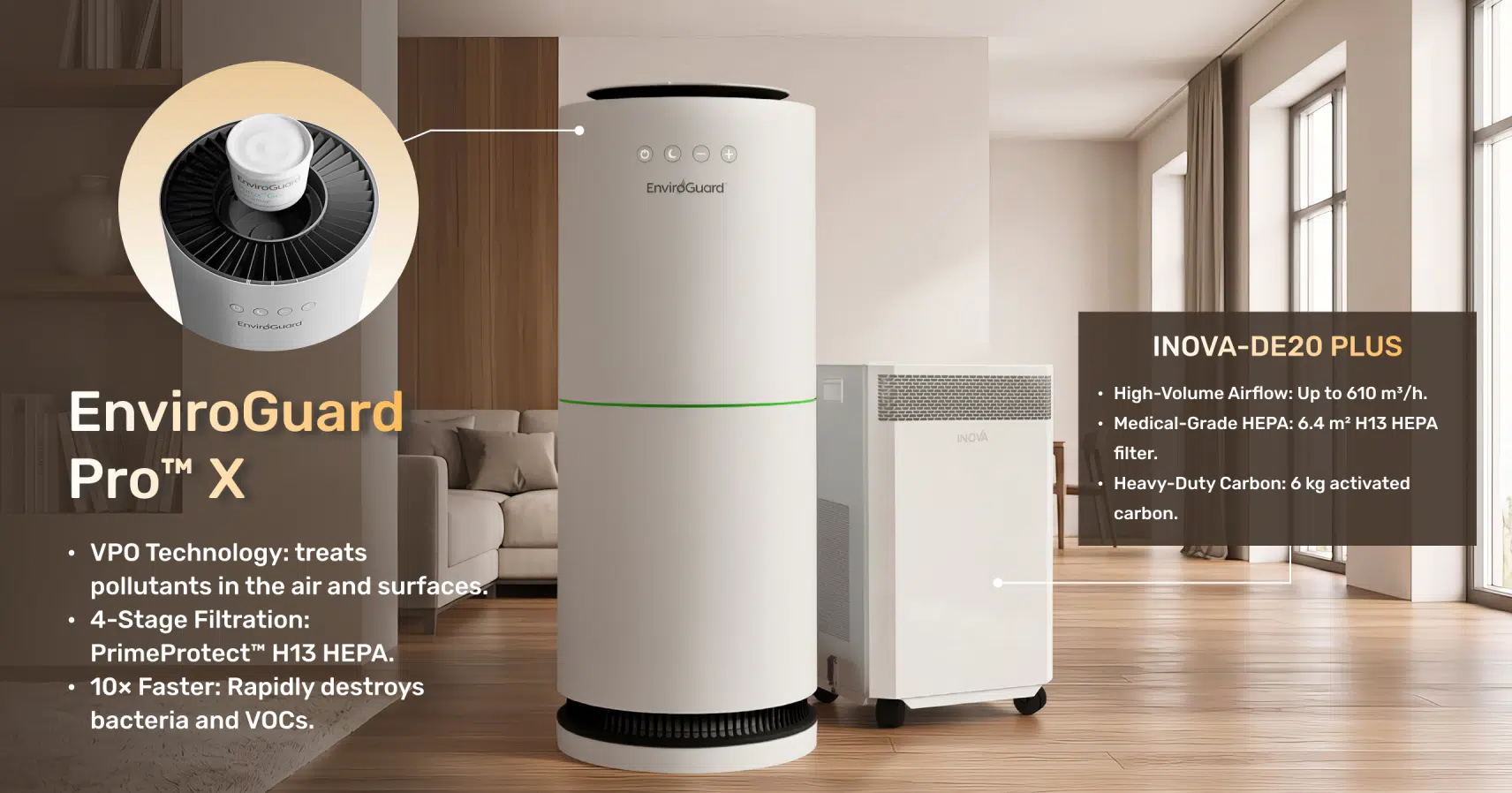
If the goal is to reduce brain fog and create a workspace that supports sustained cognitive performance, filtration focused only on dust capture may be insufficient. Modern indoor pollution includes gases, residual chemicals, and contaminants embedded in surfaces. An active environmental approach, like EnviroGuard Pro X, targets both airborne and surface pollutants to support a healthier and more stable workspace over time.
The air inside your workspace is not a background condition — it is an active variable that shapes how well you think, focus, and perform throughout the day. Research consistently shows that pollutants such as CO₂, VOCs, and PM2.5 impair cognitive function in ways that are easy to overlook but measurable in their impact. Headaches, fatigue, and difficulty concentrating are not always signs of overwork — they may be signals from your environment.
Managing indoor air quality is no longer a matter of comfort. It is a practical investment in cognitive performance, workforce wellbeing, and long-term productivity — one that the science increasingly supports. If you are looking for a starting point, exploring the right air purifier for office use can make a measurable difference in how your workspace feels and performs.
Yes. Scientific evidence shows that pollutants such as PM2.5 and VOCs can contribute to neuroinflammation, which may impair concentration, mental processing speed, and overall cognitive performance.
Air purifiers do not generate oxygen directly. However, by reducing pollutants and improving air quality, they may create conditions that allow the body to use available oxygen more efficiently.
The most suitable option depends on the environment, but systems that manage both particulate matter and gaseous pollutants generally provide broader support for maintaining healthy indoor work conditions.
VOCs can cross into the bloodstream through inhalation and contribute to neuroinflammation — an inflammatory response within the central nervous system. This process slows mental processing, reduces working memory, impairs attention, and creates the general mental cloudiness people commonly call “brain fog.” Unlike acute chemical poisoning, low-level VOC exposure causes gradual and cumulative cognitive effects, which people easily overlook until they actively improve air quality.
Does an air purifier help with focus and studying?
It can, particularly in environments where VOCs, elevated CO₂, or fine particulates are present. Research suggests that managing air quality better reduces these pollutants and measurably improves cognitive test scores, decision-making, and sustained attention. The most effective systems for study or office environments are those that address both particulate matter and gaseous contaminants, rather than relying solely on dust filtration.
References
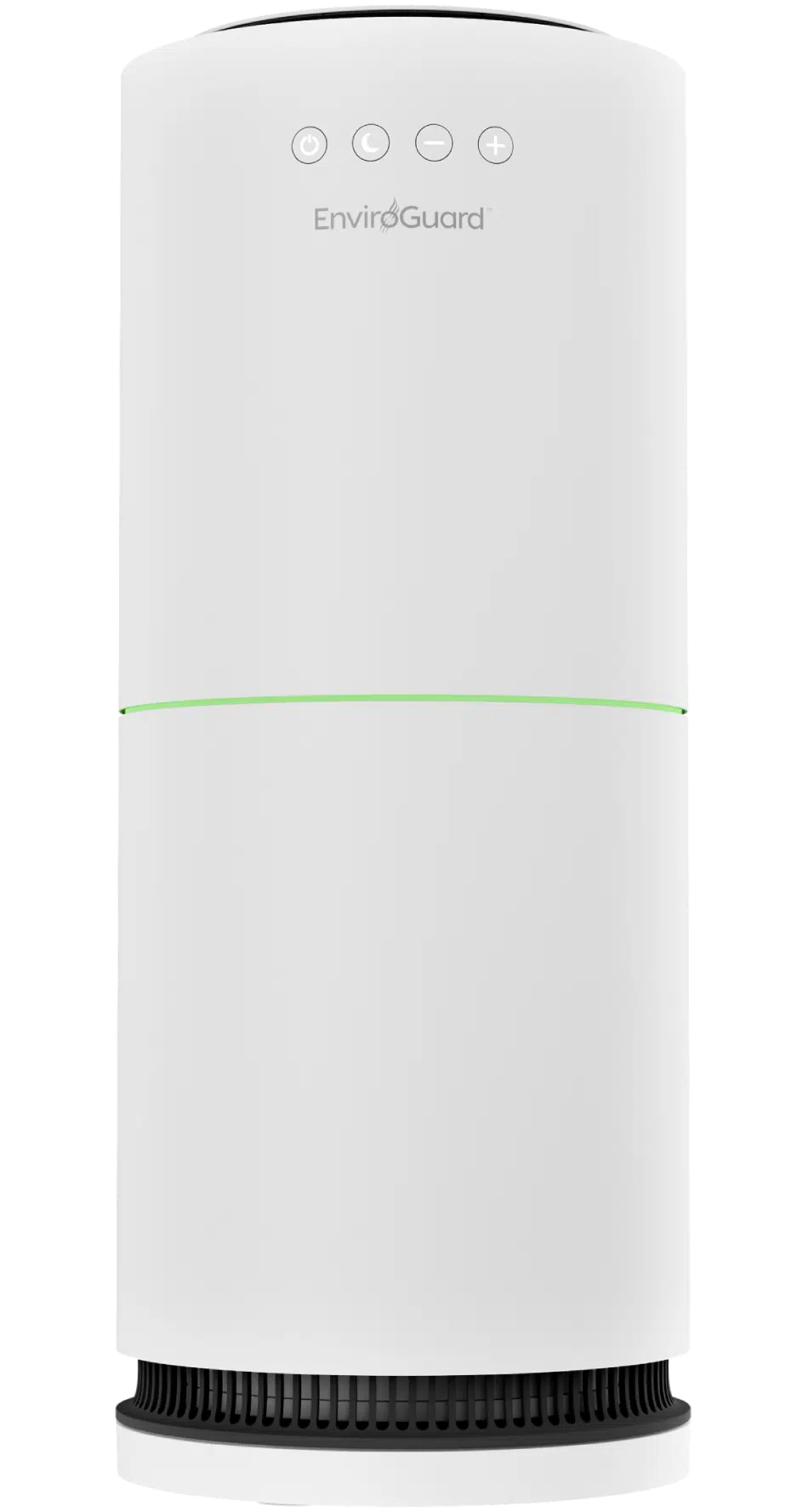
Upgrade to the innovative EnviroGuard PRO™ X today for only $790 (Was $1,590). Claim your $800 saving now and breathe cleaner, healthier air tomorrow.