
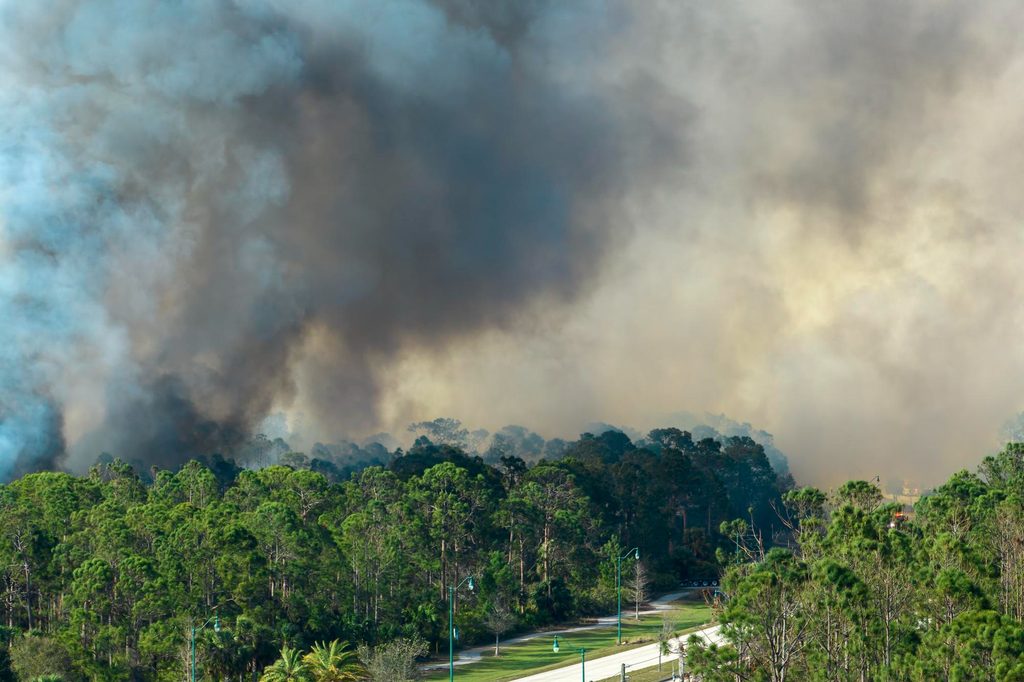
If you’ve ever driven through a thick wall of smoke during an Australian summer — especially when bushfires are at their worst and ash is falling across the city — you’ll know exactly how frightening that experience can be. Visibility on the roads drops to almost nothing, the sky turns a murky orange-grey, and the hot, dry air hits your face with a sharp, burning smell. The news footage of people in Sydney and Melbourne living under heavy smoke for weeks on end is proof enough that this is one of the most severe air quality disasters a person can face.
When you find yourself in that situation, the instinct is to rush indoors, seal every door and window as tightly as possible, and switch your air purifier to its highest setting — hoping to create a safe haven inside your home.
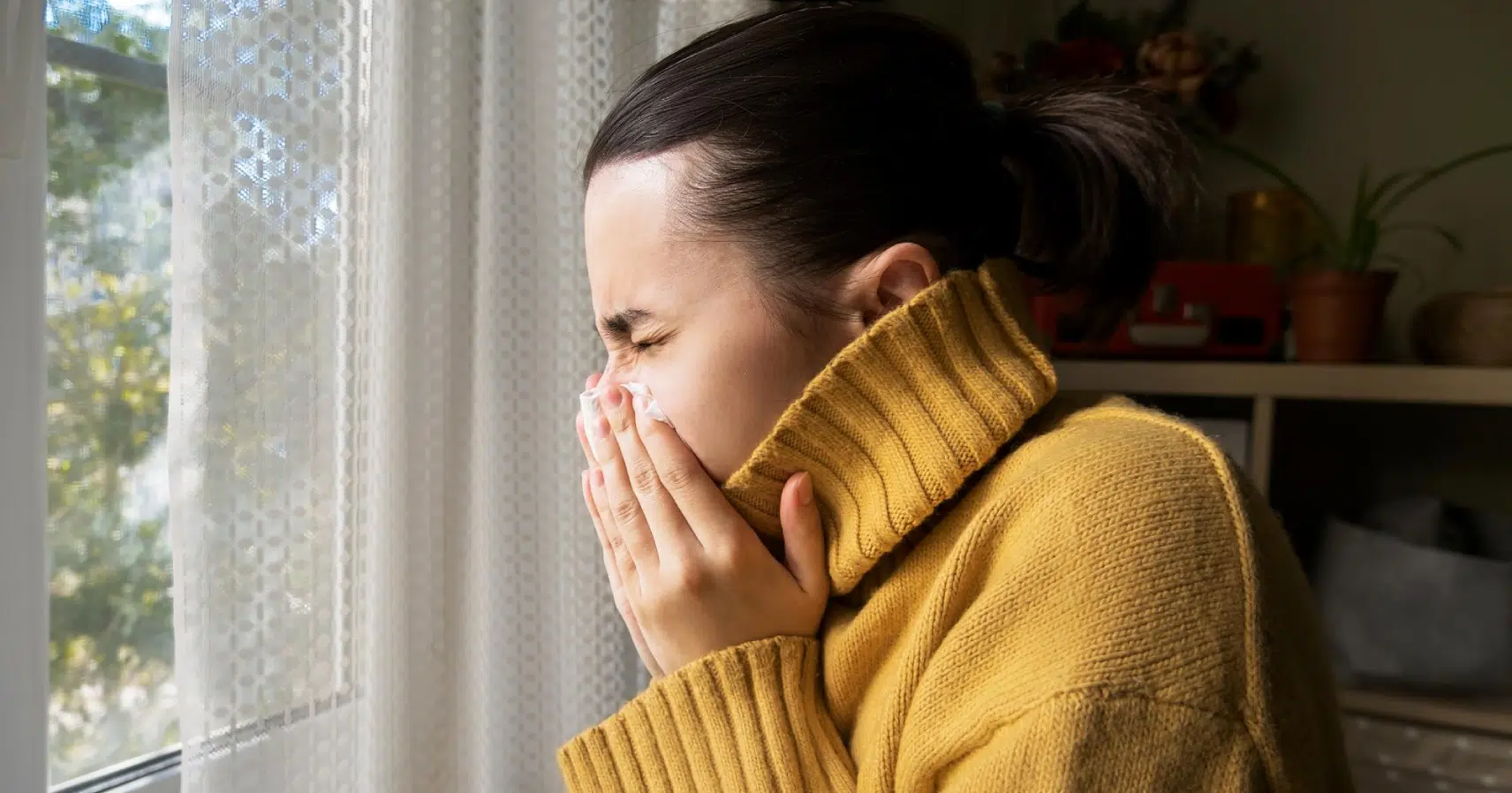
But here’s where things get confusing. After sealing yourself indoors for several days, the result is often far from the relief and safety you’d expected. Many people wake up with a throbbing headache, a foggy mind, shortness of breath, and overwhelming fatigue — as though the body is protesting against something. And yet the air purifier has been running the entire time. So what exactly is going wrong inside your safe space?
The biggest misconception when dealing with this kind of crisis is assuming that dust and smoke particles are the only enemy. This article will help you understand indoor air in a sealed home — because when you’re locked inside for an extended period, you’re actually facing three threats at once:
We’ll also walk you through the right way to deal with each one, so you can create a genuinely safe environment at home.
Most Australian homes are built with excellent insulation. When you seal every door and window to keep bushfire smoke out, your home effectively becomes a completely airtight box. The trouble is, your body continuously releases carbon dioxide (CO2) as you breathe. With no fresh air coming in from outside, CO2 levels inside the room rise rapidly. This is the root cause of that persistent headache and the feeling that you can’t get a full breath of air. Here’s a fact that air quality experts often have to repeat: even if your air purifier has both a HEPA filter and a carbon filter, it cannot remove CO2 from the air.
The filter mechanism is built to catch particles like PM2.5, it does not generate oxygen. Once CO2 levels climb past 1,000 or even 2,000 ppm, your body starts sending warning signals. You’ll notice a dull headache, mental fog, unusual tiredness, and poor sleep. These symptoms are often mistaken for the effects of inhaling bushfire smoke, when in reality they’re a sign that your body is running low on clean, fresh air. The only effective solution is to ventilate push the stale air out and bring fresh air back in.
Keeping your home completely sealed for 24 hours a day isn’t a sustainable approach — particularly when a bushfire crisis drags on for weeks. The real question is: how do you bring fresh oxygen into your home without letting toxic smoke pour in? Here are some practical ventilation steps you can follow.
Don’t just open your windows at random. Keep a close eye on air quality monitoring apps and weather conditions — including wind direction from your local meteorology service. During the Australian summer, there are often brief windows of opportunity when the wind shifts direction or picks up in the late afternoon, temporarily dispersing the smoke. Once you see the Air Quality Index (AQI) drop to a more acceptable level, you can move on to the next step.
When the timing is right, open windows on opposite sides of your home to create a natural airflow tunnel. This encourages air movement and quickly sweeps out the stale, CO2-heavy air that has built up inside.
To speed things up, position a fan facing outward through an open window so it actively pushes air out of the room. This forces the CO2 and stale air out rather than waiting for it to drift out on its own. For a medium-sized room of around 10–16 square metres, just 8 – 10 minutes is enough to noticeably improve airflow — though it may not achieve a complete 100% oxygen reset if there’s limited air movement outside as well.
Once done, close all your windows again straight away and switch your air purifier back to its highest setting to clear any small particles that may have drifted in during ventilation. This way, you’ll restore safe oxygen levels while keeping your indoor air clean at the same time.
As many people know, scented candles are hugely popular in Australia. During a bushfire crisis, it’s very tempting to light one to mask the smell of smoke and create a calm, comforting atmosphere indoors. But as air quality professionals, we’d ask you to pause and think twice — because this habit could be quietly making things far worse for your lungs.
Why? Burning a scented candle releases fine particles (PM2.5) and toxic volatile organic compounds (VOCs) — including benzene and formaldehyde. In a sealed room with no ventilation, these substances build up and become increasingly concentrated, leaving you with difficulty breathing, throat irritation, and worsening headaches.
If you still want some form of aromatherapy during the crisis, we recommend avoiding candles made from paraffin wax, which is a petroleum by-product. Instead, opt for candles made from natural wax — such as 100% soy wax or beeswax — which burn more cleanly and produce significantly less soot. Better still, switch to an ultrasonic aroma diffuser entirely, as it produces fragrance through water vapour rather than combustion.
To some extent, yes. Many people bring air-purifying plants into their homes — such as Pothos, Snake Plants, and Peace Lilies (see our complete guide on the best indoor plants for air quality). These plants do offer genuine benefits, particularly in absorbing VOCs and reducing CO2 levels. Some varieties, such as the Snake Plant, also release oxygen overnight, which can help ease the stale air problem we discussed earlier.
That said, it’s important to be clear: plants work passively. They function like an old-fashioned air filter that waits for air to drift past — a slow mechanism with a very limited range. When you consider the sheer volume of PM2.5 particles produced by a major bushfire, a handful of houseplants simply cannot filter particles quickly enough to make a meaningful difference. Don’t place all your trust in plants alone. They are a helpful supporting measure for balancing the air — but they are not a primary defence against a national-scale smoke crisis.
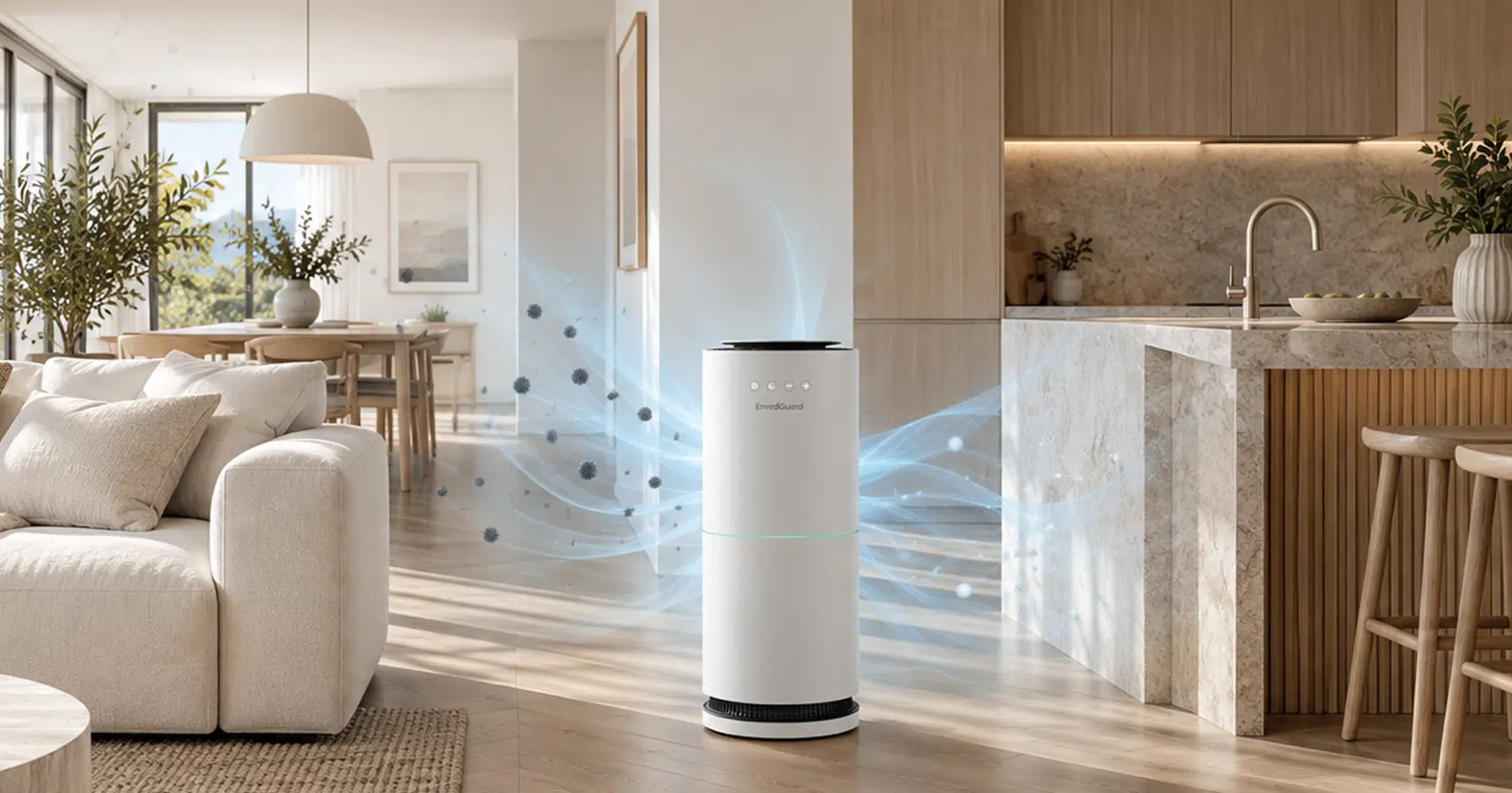
Even if you already have an air purifier at home, it’s worth acknowledging one important truth during a severe and prolonged bushfire event: nearly all air purifiers on the market work passively — just like plants. They simply wait for smoke and particles to pass through their HEPA or carbon filters, which is already too slow, given that pollutants can reach your lungs before they ever reach the machine.
And what about pollutants that settle in the corners of a room, or toxic particles clinging to your curtains, sofa, and carpet? As long as those aren’t drawn directly into the purifier, they’ll continue to circulate in the air around you. This is a significant gap in protection — and the reason why sealing your home during a bushfire still can’t guarantee truly clean air.
A new solution that mimics nature’s own cleaning process has been developed to close this gap, known as Vapour Phase Oxidation (VPO). Rather than waiting for pollutants to come to it, VPO works to break down and neutralise pollutants directly at their source.
The science behind it draws on a natural mechanism that has existed long before humans — sunlight striking water vapour in the atmosphere to produce hydrogen peroxide molecules that break down airborne pollutants completely.
The result: What remains after the reaction isn’t a harmful chemical residue. It’s simply water (H₂O) and pure oxygen (O₂) — nothing more.
Purox™ Gel harnesses this natural process, stabilising it into a gel form that can be placed in any room. Once positioned, it slowly releases active vapour that spreads across every corner of the space immediately.
For those concerned about residual chemicals, this technology has been rigorously tested and certified:
The level of vapour released is up to 10 times lower than internationally recognised safe exposure limits. Active Gel acts like a microscopic clean-up crew, constantly neutralising pollutants in the air — and it’s the missing piece that makes your air purifier’s protection truly complete.
Air purifiers are designed to filter particles (PM2.5) and odours — they cannot remove CO2 or add oxygen to the air. If you’ve been indoors with all windows closed and you’re experiencing headaches, the only solution is to ventilate — push the built-up gas out and bring fresh air in.
In a sealed room, burning a candle means you’re actively adding more PM2.5 and VOCs to your indoor air. We recommend using an ultrasonic aroma diffuser or an Purox™ Gel product to neutralise odours at the source — with no combustion involved.
We recommend no more than 8 to 10 minutes, using a fan to push stale air out through an open window. Choose a time when outdoor air quality has improved — such as in the afternoon when a breeze picks up — to refresh your oxygen levels without letting too many particles drift inside.
Technology such as Purox™ Gel releases vapour at levels well below internationally recognised safety thresholds. It produces no ozone whatsoever, and the only by-products of its purification process are water and oxygen — completely harmless to everyone in your home.
We hope this article has given you a clearer, more systematic way of thinking about indoor air management — so that you and your family can get through a bushfire crisis in good health. Here are four practical steps you can put into action straight away.
Don’t let CO2 build-up silently cause you harm. Use the ventilation technique above: wait for a moment when the outdoor AQI drops to an acceptable level (often in the afternoon when a breeze comes through), open your windows and run a fan to push stale air out for just 8 to 10 minutes, then close everything up and run your air purifier again on its highest setting.
Don’t open your windows by guesswork. Use a reliable air quality app or check the Bureau of Meteorology for wind direction and AQI readings. Only ventilate when conditions give you a safe window of opportunity.
When your home is sealed, everything you burn affects your lungs directly. Avoid lighting paraffin candles or cooking with high heat in a closed space. If you want a pleasant scent, choose natural wax candles (soy or beeswax) or an ultrasonic aroma diffuser to reduce VOCs and fine particle emissions in an enclosed environment.
Fill the gaps that passive air purifiers cannot reach. The use of Purox™ Gel within your space releases high-performance vapour that helps neutralise wildfire odour molecules, toxic VOCs, and various pathogens directly — on surfaces, in room corners, and in all areas where air circulates. This technology helps transform a sealed home into a space with truly clean and safe air to breathe.
We hope this guide has been useful. Having the right knowledge and the right tools can turn what feels like an overwhelming crisis into a situation you’re fully equipped to manage — for the health and wellbeing of everyone in your home.
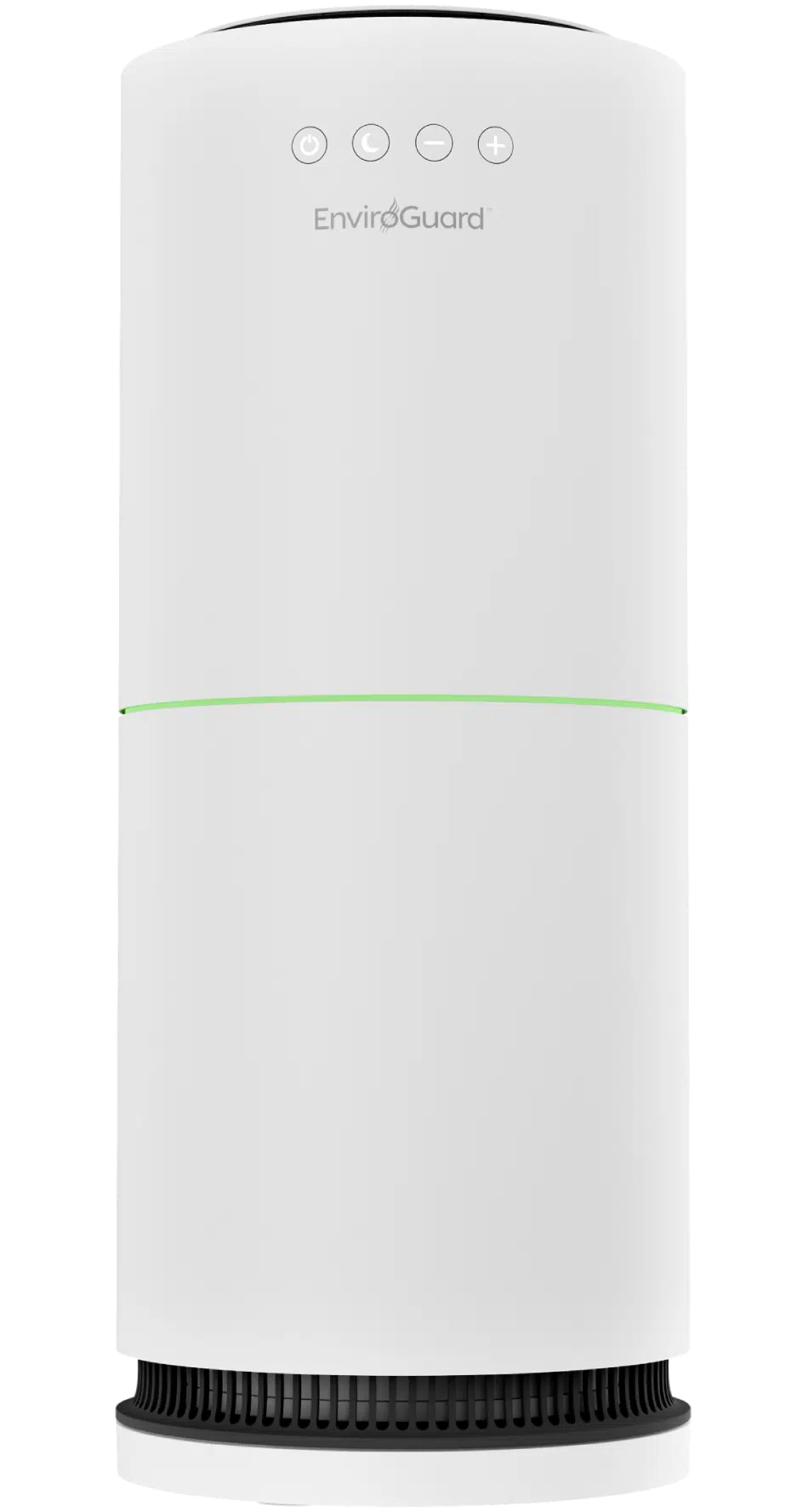
Upgrade to the innovative EnviroGuard PRO™ X today for only $790 (Was $1,590). Claim your $800 saving now and breathe cleaner, healthier air tomorrow.