Best Air Purifier for Dust (2026 Buyer’s Guide)
Indoor air quality in Australia and across the globe is often compromised by a persistent yet invisible challenge: domestic dust. While frequently dismissed as a mere aesthetic nuisance, household dust is a complex mixture of organic and inorganic matter, including skin cells, fabric fibres, pet dander, pollen, and microscopic dust mites.
For individuals managing respiratory sensitivities or dust mite allergies, finding the best air purifier for dust is a priority. However, a common misconception exists: that all purifiers handle dust equally. Most traditional systems are “passive,” meaning they only clean the air that happens to pass through their filters. This leaves a significant portion of pollutants settled on surfaces—furniture, carpets, and bedding—where they remain a trigger for symptoms.
To achieve a truly hygienic environment, one must look beyond simple filtration and adopt a strategy that addresses both airborne particles and surface-level contaminants.
Simple Ways to Keep Dust Out of Your Home
Before selecting a device, it is essential to understand that an air purifier for dust removal is most effective when integrated into a broader home maintenance routine. To reduce the total dust load in your environment, consider these professional-grade strategies:
1. The ‘Top-to-Bottom’ Cleaning Rule
Dust follows gravity. When cleaning, always start with high surfaces—such as ceiling fans, pelmets, and the tops of wardrobes—before moving to the floor. Use a damp microfibre cloth rather than a dry duster or feather duster; dry dusting often serves only to re-suspend fine particles back into the breathing zone.
2. High-Temperature Laundering for Dust Mite Control
Dust mites thrive in bedding and soft furnishings. To neutralise these allergens, wash linens weekly in water heated to at least 49°C (120°F). This temperature is necessary to kill the mites and denature the proteins that cause allergic reactions, such as dust mite rashes.
3. HEPA-Standard Vacuuming
Standard vacuums without adequate filtration often exhaust fine dust back into the room. Ensure your vacuum cleaner is equipped with a certified HEPA filter to trap particles as small as 0.3 microns, preventing them from recirculating.
4. Humidity and Mould Management
Dust and mould often coexist in humid environments. In many Australian regions, maintaining indoor humidity below 50% is crucial. Lower humidity levels inhibit the growth of mould spores and discourage dust mite populations from proliferating.
5. Bridging the Gap with Active Technology
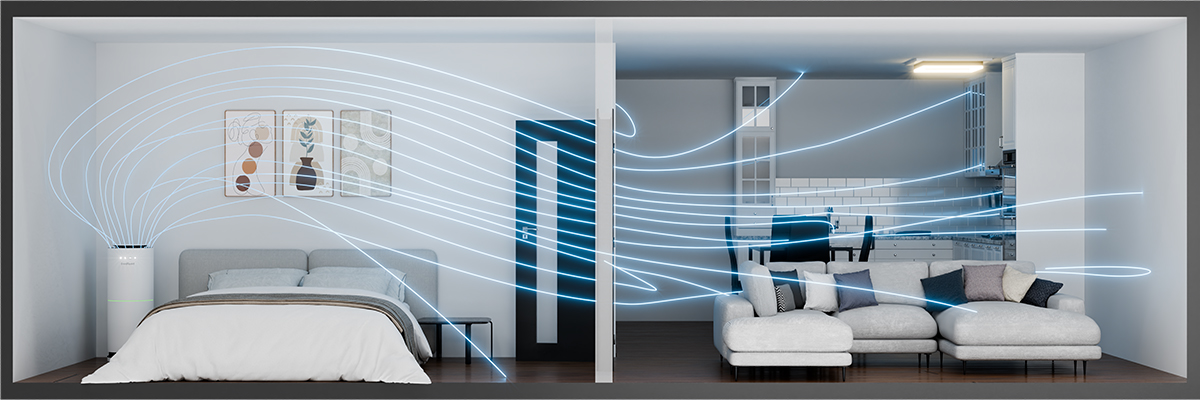
While manual cleaning addresses visible dust, it cannot capture the microscopic particles that stay suspended for hours. Furthermore, standard passive air purifiers cannot reach dust once it has settled on your desk or sofa. This is where active air purifier for dust—technology that proactively sanitises surfaces and neutralises pollutants mid-air—provides a critical advantage in maintaining a consistently clean environment.
Choosing the Best Air Purifier for Dust: Key Technical Metrics
When searching for the best air purifier for dust, it is easy to become overwhelmed by marketing terminology. However, air purification is a science rooted in measurable performance. To ensure a device can effectively manage dust mites, pet hair, and fine particulate matter, several critical factors must be evaluated.
1. Understanding CADR (Clean Air Delivery Rate)
The most vital metric is the CADR, which measures the volume of filtered air a device delivers per hour. For significant dust reduction in larger Australian homes, a high CADR is non-negotiable. A professional-grade system, such as the EnviroGuard PRO X, offers a CADR of 540 cubic metres per hour (m3/h). This high flow rate ensures that even fine dust particles are captured before they have the opportunity to settle on surfaces or be inhaled.
2. The ACH Rule (Air Changes per Hour)
While CADR tells you the power of the engine, ACH tells you how frequently the air in your specific room is being cleaned. To effectively manage dust mite allergies, the industry standard recommends a minimum of 5 ACH.
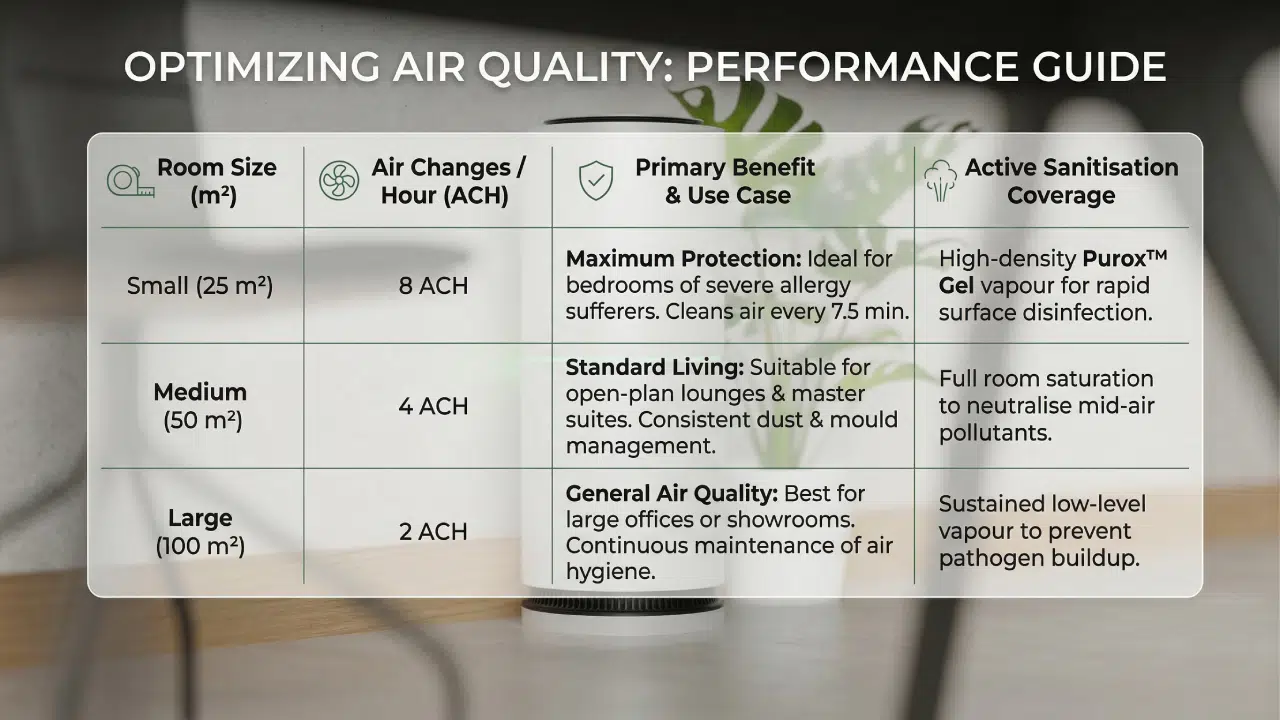
The efficiency of a device changes based on the room size:
- Small Rooms (approx. 25 sqm): Can achieve up to 8 ACH, providing an exceptionally high level of protection for bedrooms.
- Medium Rooms (approx. 50 sqm): Typically achieve 4 ACH, ideal for standard living areas.
- Large Rooms (approx. 100 sqm): Achieve 2 ACH, which is suitable for maintaining general air quality in open-plan spaces.
3. Medical-Grade HEPA-13 vs. Passive Filtration
For dust removal, the quality of the filter is paramount. Look for a 4-stage filtration system that includes:
- A Robust Pre-filter: Essential for trapping large particles like pet hair and lint, which prevents the main filter from clogging prematurely.
- Antimicrobial Filter: High-end filters are often treated with antimicrobial agents (such as AerisGuard™) to neutralise bacteria and viruses on contact, ensuring the filter itself does not become a breeding ground for pathogens.
- Medical-Grade HEPA-13: This is the gold standard, capable of trapping 99.97% of particles as small as 0.3 microns, including microscopic dust mites and pollen.
4. The Distinction: Active vs. Passive Technology
Most consumers are only familiar with Passive Purifiers, which act like a vacuum cleaner—they only clean the air that passes through the machine.
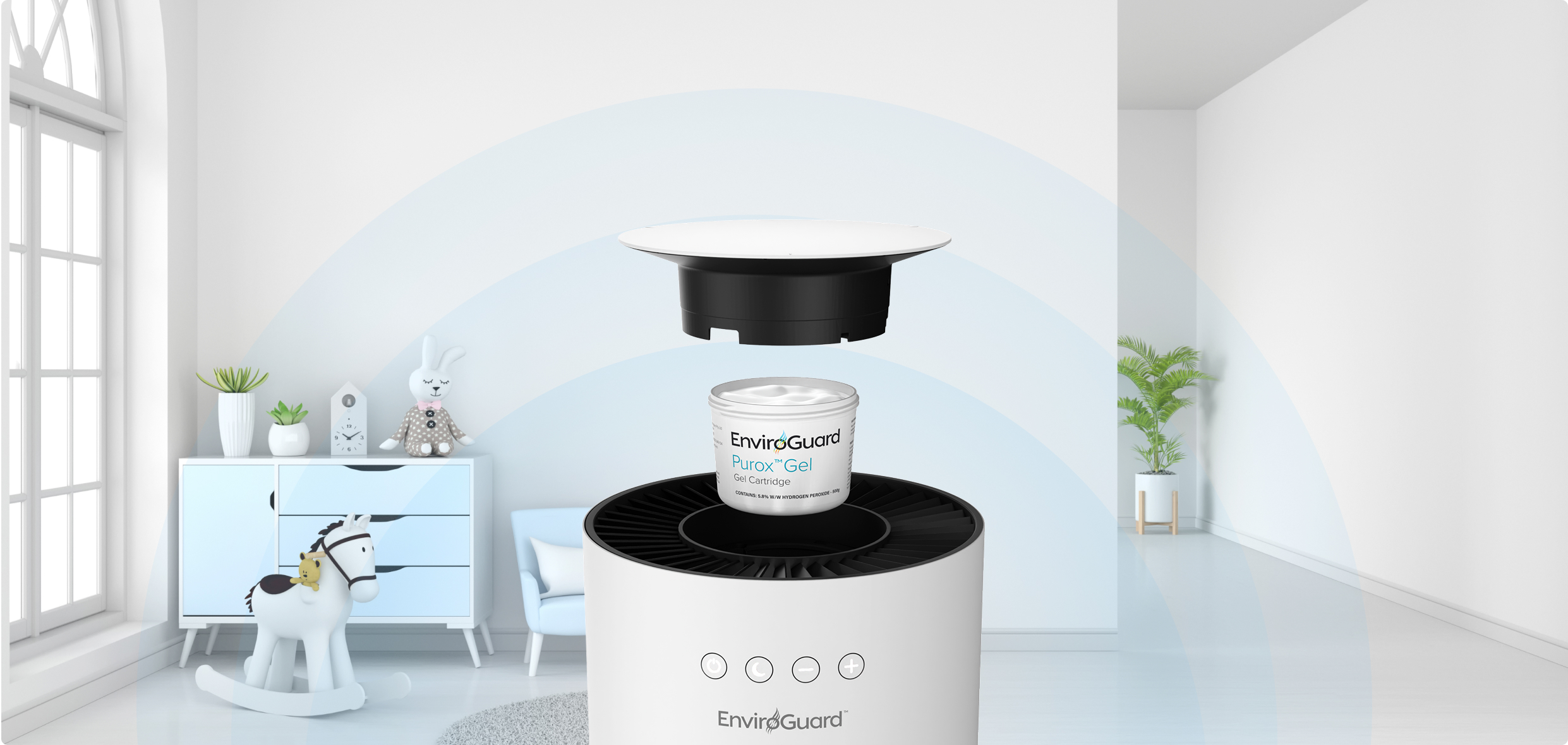
In contrast, Active Air Treatment Technology—using technologies like Purox™ Gel—adds a proactive layer of defence. By releasing a safe, low-level vapour (such as 0.1 ppm Hydrogen Peroxide), the system performs mid-air neutralisation. This vapour travels throughout the room, reaching corners and surfaces where dust and mould accumulate, neutralising pollutants that standard filters may miss.
5. Noise Levels and Consistent Operation
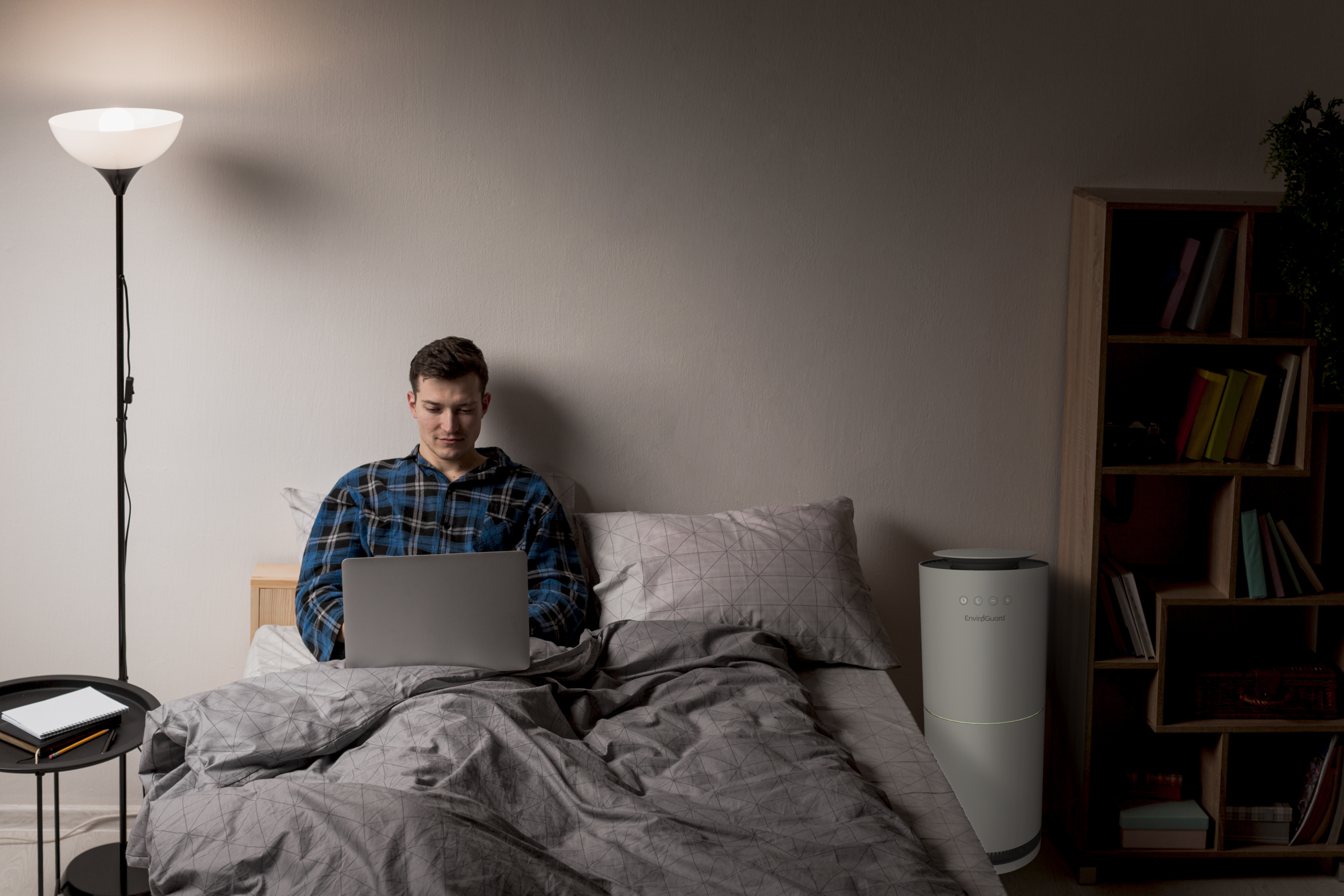
Dust accumulation is a 24-hour process; therefore, a purifier must be able to run continuously. The best air purifier for bedroom use should operate at low decibel levels to avoid sleep disruption. Look for devices that offer a range of speeds, ideally starting as low as 32 dBA, allowing for whisper-quiet operation during the night while maintaining air movement.
6. Intelligent Sensing (PM1 to PM10)
Advanced systems do more than just filter; they monitor. Integrated smart sensors should track various particle sizes—from PM10 (large dust/pollen) to PM1 (ultra-fine particles). Real-time data allows the device to adjust its fan speed automatically when a spike in dust levels is detected, ensuring optimal performance without manual intervention.
Technical Comparison: EnviroGuard PRO X Efficiency by Room Size
The effectiveness of an air purifier for dust removal is directly linked to how quickly it can cycle the air. For those suffering from dust mite allergies or managing high levels of pet hair, a higher ACH rate is recommended.
Technical Specifications Summary
To maintain transparency and assist in an informed purchase, the following data represents the core performance metrics of the system:
- Maximum CADR: 540 (Boost Mode).
- Filtration Standard: 4-Layer System including Medical Grade HEPA-13 (99.97% efficiency at 0.3 microns).
- Active Agent: Purox™ Gel (5.8% w/w Food-grade Hydrogen Peroxide).
- Noise Range: 32 dBA (Quiet/Night mode) to 59 dBA (Max speed).
- Particle Sensing: Multi-sensor tracking of PM1, PM2.5, PM4, and PM10.
- Power Efficiency: 22W to 58W (80W in Boost Mode).
- Surface Efficacy: Proven to reduce bacteria (E. coli, S. aureus) by over 99%.
Analysis of the Data
When evaluating an air purifier for dust, the relationship between CADR and room size is critical. In a typical Australian bedroom (approx. 25 sqm), the EnviroGuard PRO X performs 8 full air changes every hour. This high frequency is essential because dust is constantly being generated by bedding, clothing, and skin cells.
Furthermore, unlike passive-only models, the integration of Purox™ Gel means that even at the 2 ACH rate in a 100 sqm room, the device is proactively treating the environment. The active vapour fills the entire volume of the space, reaching areas where airflow may be restricted, ensuring that dust mites and airborne pollutants are neutralised regardless of their proximity to the machine.
Recommended Solution: The EnviroGuard PRO X and Active Purox™ Gel Technology
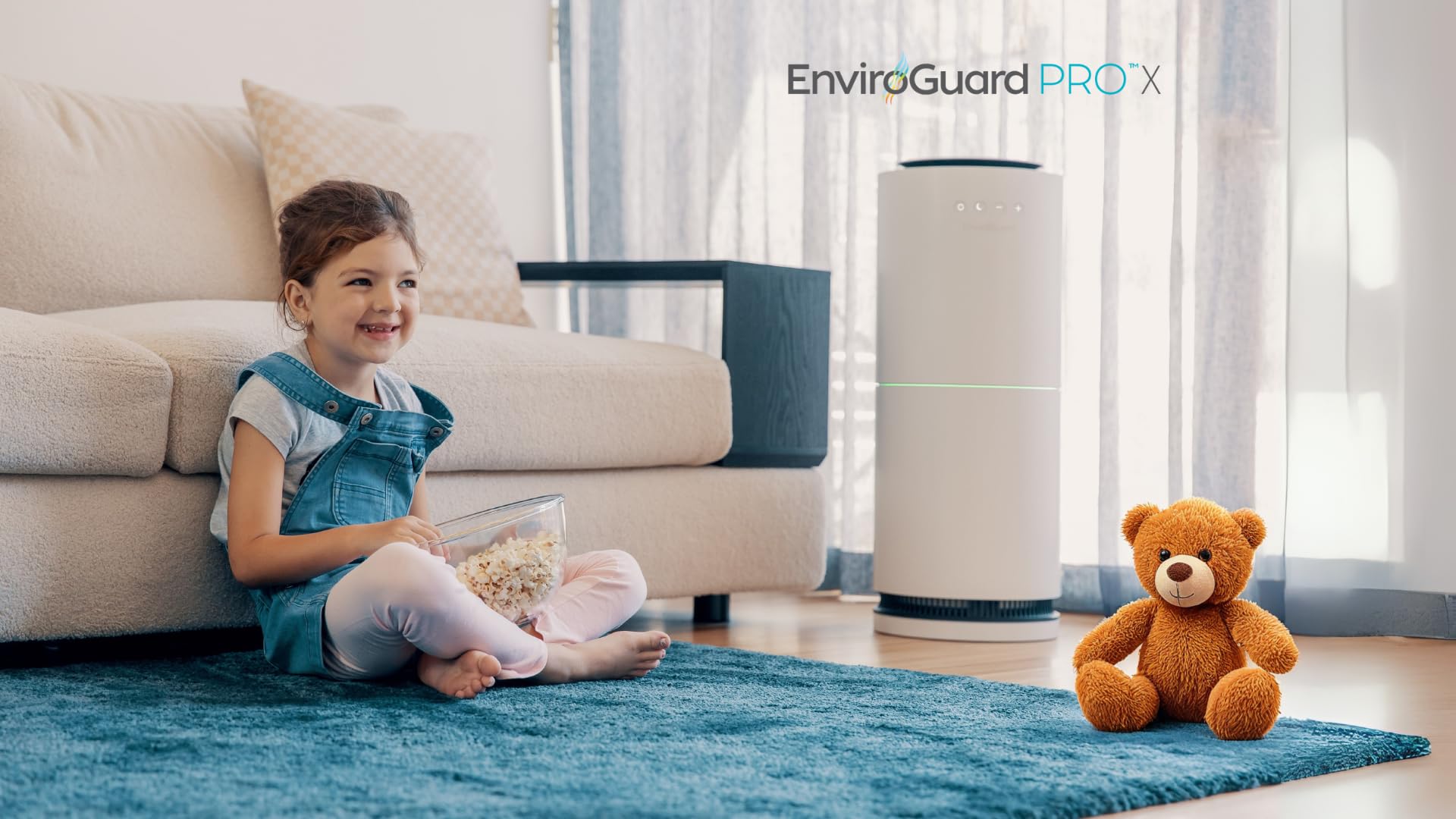
When evaluating the best air purifier for dust and pets, the choice often comes down to the method of purification. While many high-quality devices use HEPA filtration, the EnviroGuard PRO X is distinguished by its Active Elimination Approach. This system does not merely wait for dust to enter the machine; it proactively treats the entire room environment.
1. The 4-Layer “Passive” Defence: Medical-Grade Filtration
The foundation of the EnviroGuard PRO X is a sophisticated 4-stage filtration system designed to manage diverse pollutants, from large pet hair to microscopic dust mites.
- Coarse Particulate Pre-Filter: The first line of defence, specifically designed for pet owners. It captures large debris, lint, and hair, ensuring the more sensitive internal filters remain efficient.
- Antimicrobial Filter: Unlike standard filters where bacteria can accumulate, this layer is treated with AerisGuard™, an antimicrobial agent that neutralises pathogens on contact.
- Medical-Grade HEPA-13: This filter captures 99.97% of particles as small as 0.3 microns. This includes the primary triggers for dust mite allergies, as well as pollen and fine smoke particles.
- Activated Carbon Filter: Essential for modern living, this layer adsorbs VOCs (Volatile Organic Compounds), chemical vapours, and unpleasant odours from pets or cooking.
2. The “Active” Advantage: Purox™ Gel Sanitisation
The most significant innovation in this system is the integration of Purox™ Gel. This is an Active Air Treatment process inspired by how natural sunlight reduces airborne pollutants through oxidation.
- Vapour-Phase Oxidation: The device slowly evaporates the food-grade Purox™ Gel (containing 5.8% w/w Hydrogen Peroxide). This safe, low-level vapour (0.1 ppm) disperses throughout the room, reaching surfaces and mid-air zones that traditional filters cannot.
- Surface Disinfection: Because dust frequently settles on furniture before it can be filtered, the active vapour is critical. It is proven to reduce harmful pathogens—including mould, bacteria, and viruses—by over 99% on both surfaces and in the air.
- Safe for Humans and Pets: Despite its potency against pathogens, the vapour levels are ten times lower than international safety limits (1 ppm), making it a suitable air purifier for pets and young families.
3. Intelligent Environmental Monitoring
A high-performance air purifier for dust removal must be responsive. The EnviroGuard PRO X features a sophisticated suite of Smart Sensors that monitor:
- Particulate Matter: Real-time tracking of PM1, PM2.5, PM4, and PM10.
- Climate Data: Temperature and humidity levels, which are vital for mould prevention.
- Gel Status: An intuitive Light flashes Red when the Purox™ Gel requires replacement (typically every 45 to 90 days depending on usage).
For households in Australia and internationally seeking a whole-house or large room solution, the combination of high-airflow (540 CADR) and active surface treatment represents a significant advancement in indoor hygiene technology.
What’s Already in Your Home?
Clean air is about more than just removing what “comes in”; it is about neutralising what is already there.
- The Leather Jacket Scenario: In humid conditions, a leather jacket in a dark wardrobe is the perfect host for mould. Vapour Phase Oxidation reaches these confined spaces where no filter ever could.
- The New Mattress: New furniture often “off-gasses” formaldehyde. The EnviroGuard PRO X eliminates these chemicals at a molecular level before they are inhaled during sleep.
- The Dog on the Bed: Pet dander proteins are destroyed mid-air, allowing for a harmonious home with pets without the allergic triggers.
Proving the Science: Case Study
The efficacy of this technology is not merely theoretical. In a professional mould remediation project for a 600m² office building in Cairns, the EnviroGuard PRO X was tested against ANSI IICRC S520 standards—the gold standard for professional restoration.
The Challenge:
The site was classified as Grade 4 (severe fungal contamination) with Condition 3 active fungal growth.
The Results:
- Airborne Fungal Reduction: Airborne fungal contamination in a heavily affected meeting room was reduced from 795 CFU/m³ to just 4 CFU/m³—an exceptional result achieved without traditional HEPA air scrubbers.
- Surface Hygiene: Over 40 surfaces tested post-remediation via ATP sampling returned an average of eight Relative Light Units (RLU), signifying medical-grade cleanliness.
- Total Eradication: Week 14 verification results confirmed that the total average concentration of fungal spores remained at zero across multiple surfaces.
This proves that the system’s Active Air Treatment reaches corners, furniture, and hidden surfaces that traditional “passive” filters simply cannot influence.
Frequently Asked Questions (FAQ)
Are air purifiers good for dust mites?
Yes. Medical-grade HEPA-13 filters capture 99.97% of dust mite allergens. Active Air Treatment like VBreathe also neutralise these pathogens on surfaces where they typically settle.
What is the best air purifier for dust and pets?
A device with a high CADR (above 500), a dedicated pre-filter for pet hair, and a medical-grade HEPA filter. The EnviroGuard PRO X is specifically designed to handle both airborne dander and surface-level allergens.
Air purifier vs Humidifier for dust: Which is better?
An air purifier removes dust from the environment. A humidifier only adds moisture to prevent dust from becoming airborne. For actual dust removal and allergy relief, an air purifier is the correct choice.
Will an air purifier help with dust mite rashes?
Yes, by significantly reducing the airborne triggers that cause skin irritation. Combining air purification with active surface treatment provides the most comprehensive protection against settled allergens.
Does it work for mould and VOCs?
Yes. The 4-stage filtration system includes Activated Carbon for VOCs, while the active vapour technology proactively reduces mould spores in the air and on surfaces by over 99%.
Is the EnviroGuard PRO X quiet enough for a bedroom?
Yes. In quiet mode, it operates at 32 dBA, which is lower than a typical library environment, making it an ideal bedroom air purifier.
Final Conclusion
Managing household dust is a continuous process that requires more than just a traditional filter. By integrating active sanitisation with high-capacity medical-grade filtration, you address the problem at its source—both in the air and on the surfaces you touch every day.
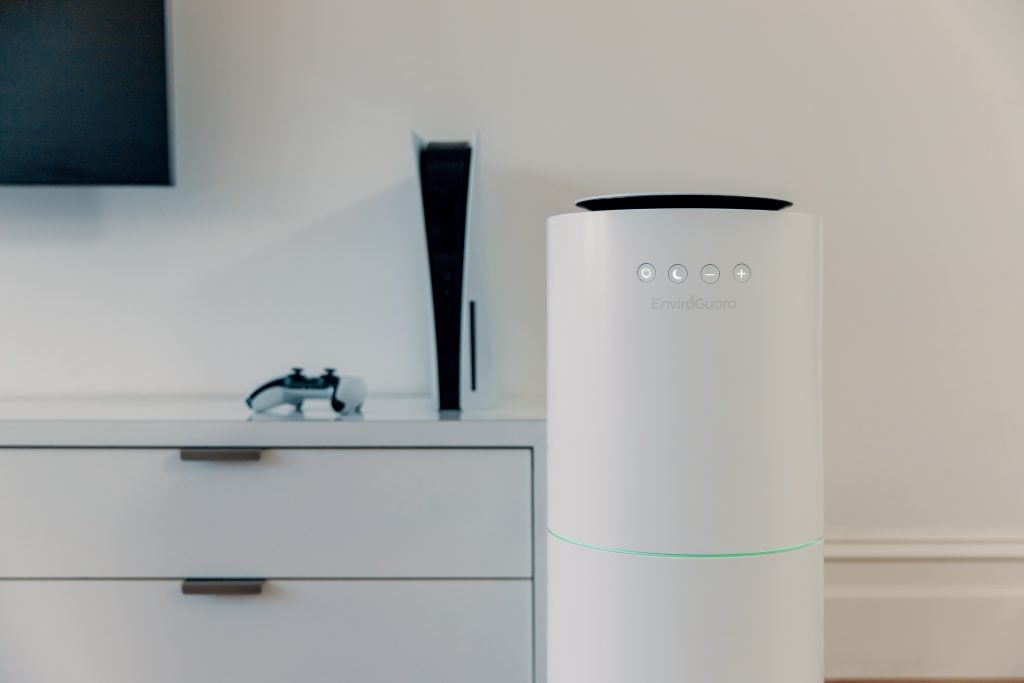
The EnviroGuard PRO X air purifier, powered by the proactive Vapour Phase Oxidation technology, delivers a professional-grade solution that goes beyond standard retail air purifiers. Whether you are managing dust mite allergies, pet dander, or simply seeking a cleaner indoor environment, its proactive treatment approach is considered one of the most effective ways to create a truly clean and healthy home.