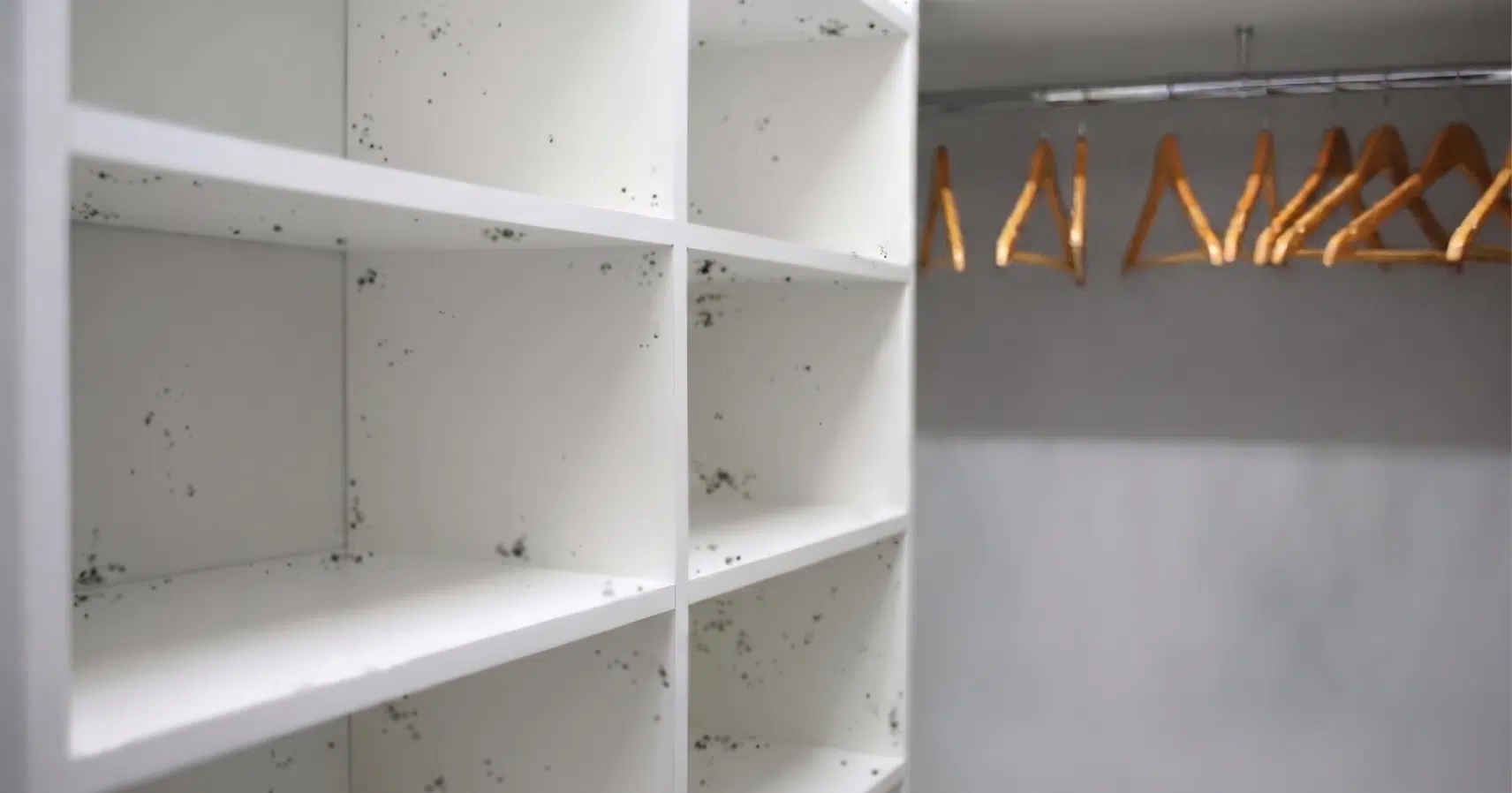
Finding an accumulation of dark spots and a musty odor on garments inside a wardrobe is a common issue for many households. Similarly, moisture accumulation under a bedroom rug can lead to fungal growth directly on the carpet. Discovering mould on clothes in a closet typically occurs during periods of high indoor humidity, persistent rain, or restricted airflow.
If your garments or home textiles are affected by fungal growth, you require direct, actionable instructions on how to get mould out of clothes without damaging the fabric material.
However, it is important to understand a key environmental fact that general cleaning guides omit: washing machine cycles and manual scrubbing only address visible surface contamination.
Washing the affected garment without modifying the surrounding air quality allows airborne spores to continuously redeposit onto the fabrics. This results in recurring fungal growth inside the wardrobe.
This guide provides a verified, step-by-step method to remove visible mould from textiles. Additionally, it outlines the environmental solutions required to eliminate the airborne sources of contamination permanently.
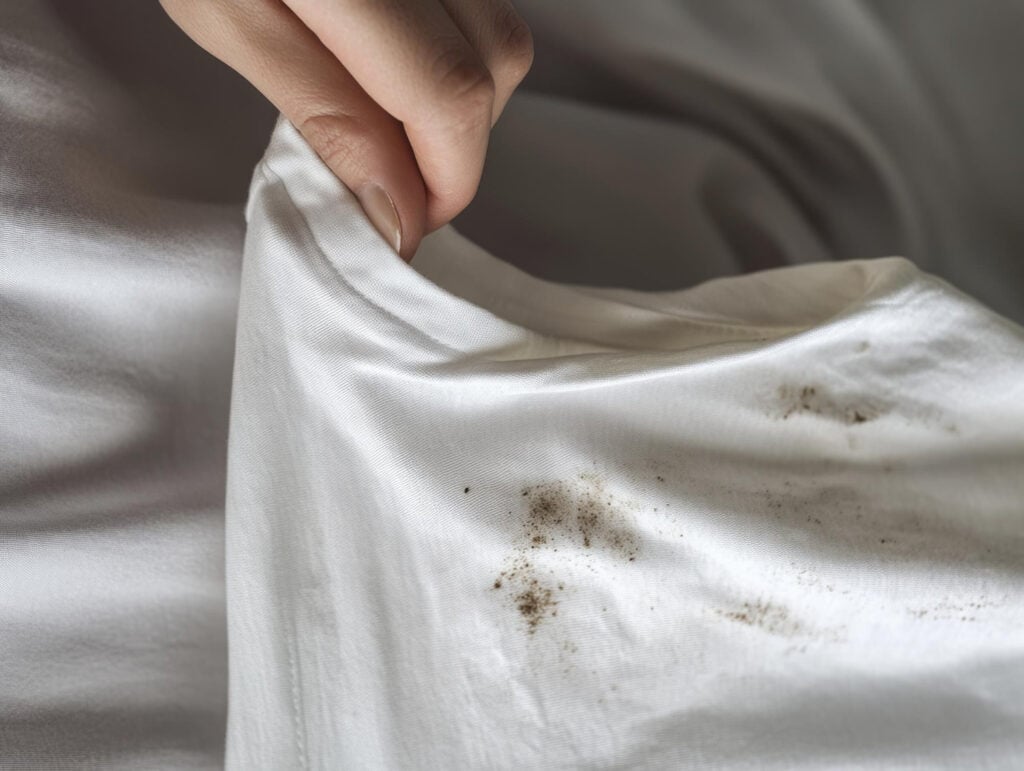
When fungal growth is detected on garments, prompt cleaning is required. Fungal colonization weakens textile fibers over time, which can lead to permanent structural degradation or staining. Follow these steps to remove visible growth:
Wardrobes built over carpeted areas can transfer dampness downward, requiring owners to know how to clean mouldy carpet near their clothing racks. Because carpet backing holds settled particles, it requires a specific extraction process:
To stop recurring contamination, you must understand the specific household mechanics that allow fungi to grow. Visible mould on garments is the final stage of an unmanaged air quality issue. Fungal colonization originates from microscopic, invisible mould spores that drift through indoor rooms.
These airborne particles require three environmental variables to develop: continuous moisture, stagnant air, and organic nutrients such as skin flakes or dust. A standard home wardrobe regularly satisfies these criteria.
Closets are closed, dark spaces that lack active ventilation. Garments that have been worn carry trace skin dust, providing a consistent nutrient source for biological particles. However, the critical catalyst for fungal germination is an environmental threshold called the dew point.
The dew point is the temperature at which water vapour suspended in the air condenses into physical liquid water on a surface. The global ASHRAE standard recommends maintaining indoor dew points at or below 15°C to prevent fungal germination. Wardrobes often breach this safety baseline.
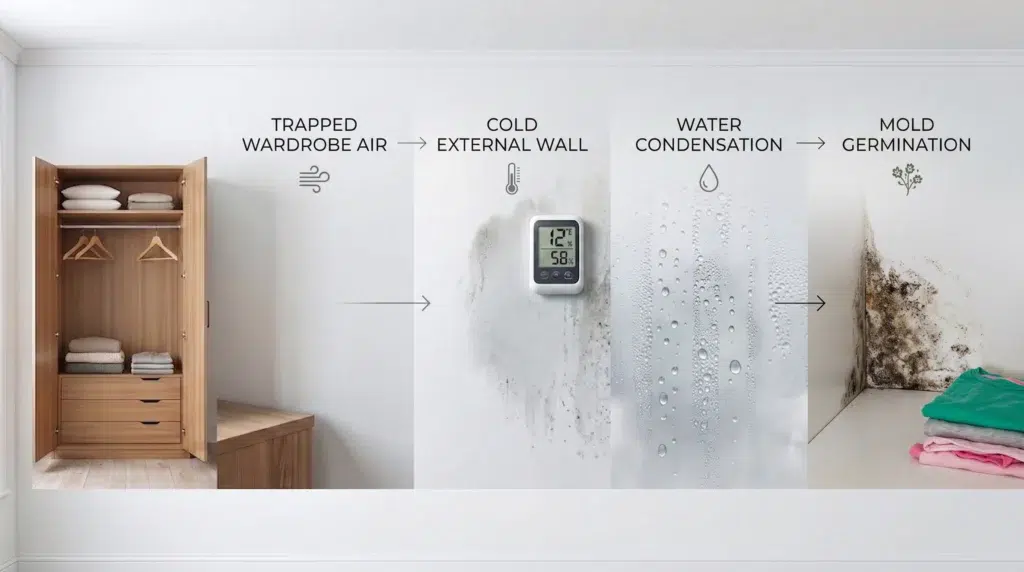
When a wardrobe is positioned against a cold external wall of a house, the internal temperature behind the backing board drops sharply. Because the closet doors remain closed, ambient room heat cannot circulate to dry the space. This causes moisture to accumulate on the back panel of the wardrobe and the garments. Mould grows silently in these unventilated zones for weeks before visible stains appear.
This climate variable explains why leather garments are frequently damaged by mould. Wardrobes create the precise conditions that allow spores to target porous organic materials. Leather absorbs ambient moisture easily, allowing floating spores to settle and establish roots deep within the material material.
True mould penetrates deep into the textile weave, releasing invisible mycotoxins and gases as part of its biological cycle. Washing a single infected item addresses the visible symptom, but it leaves the airborne reservoir of spores completely active inside the unventilated closet air.
When managing a musty closet odor, most households rely on chemical moisture-absorbing boxes, silica packs, or conventional air purifiers. However, these methods have distinct physical limitations that prevent them from stopping a recurring mould issue.
Chemical dehumidifier boxes utilizing calcium chloride are strictly passive tools. They gradually absorb moisture from the immediate air space directly surrounding the box until the chemical medium saturates and liquefies. These traps do not eliminate the active, airborne mould spores floating through the closet. Once the medium reaches its capacity, absorption stops completely, leaving the wardrobe unprotected.
Standard air purifiers rely entirely on passive, mechanical air filtration. They require a motor to pull ambient air through an internal barrier to trap particles. This engineering model fails inside closets and wardrobes due to three factors:
This limitation exists because mechanical filtration technology was originally invented in 1942 during the Manhattan Project to isolate radioactive particulates. It is a century-old mechanical barrier that is not designed for active, space-wide sanitation in airtight modern homes. To protect clothes and carpets, you require a system that disperses treatment directly into the air and surfaces where mould resides.
Washing clothes treats the downstream symptom, but it does not change the biological condition of the closet air. To permanently stop structural mold growth, air management must transition from passive mechanical barriers to an active, space-wide intervention.
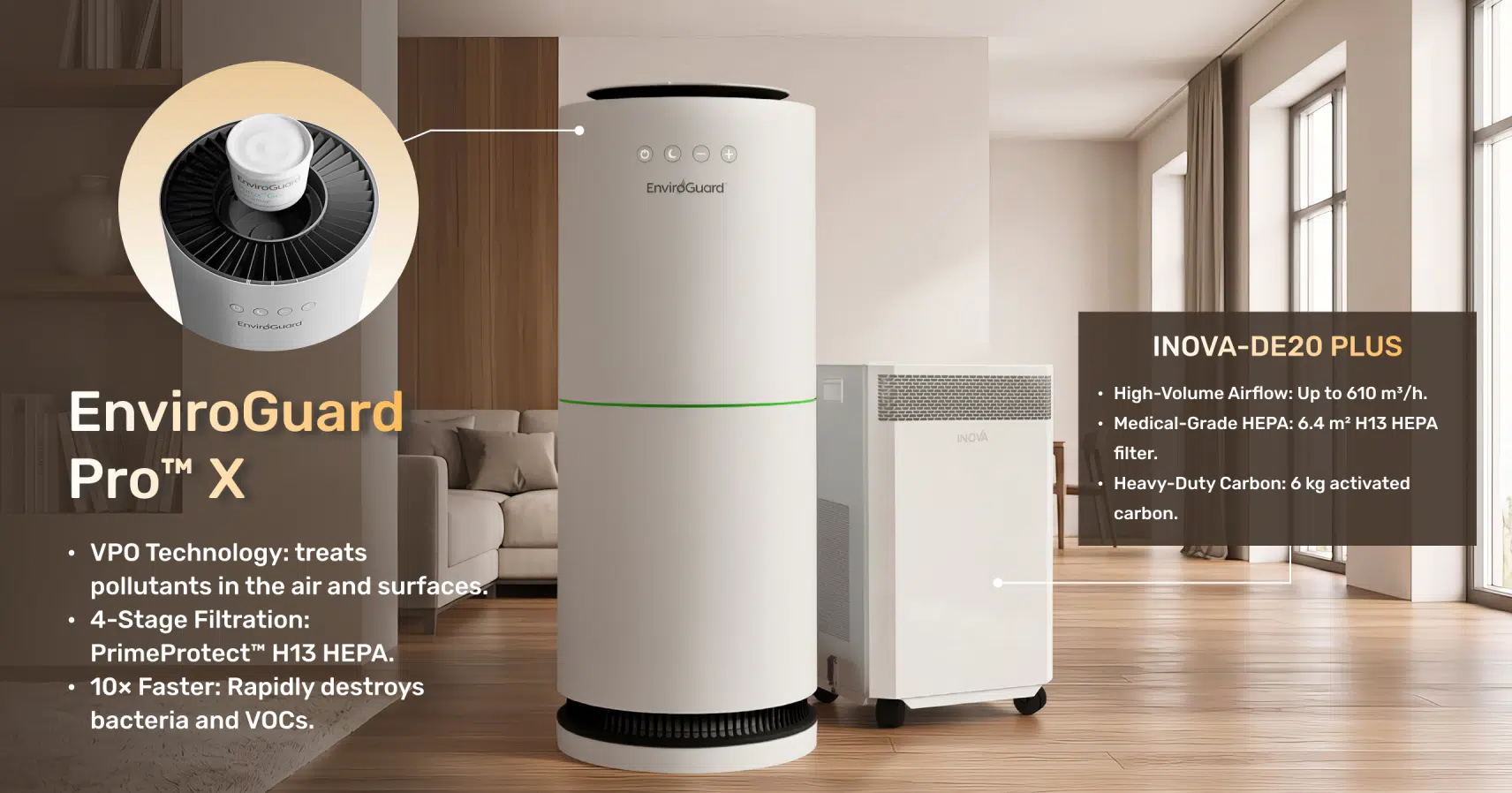
The EnviroGuard PRO™ X achieves this thorough space sanitization using Vapour Phase Oxidation powered by a specialized Purox™ Gel cartridge (H2O2 5.8% w/w).
Instead of waiting for air to enter a filter box, this technology releases a weightless, active dry vapour consistently throughout the entire room volume.
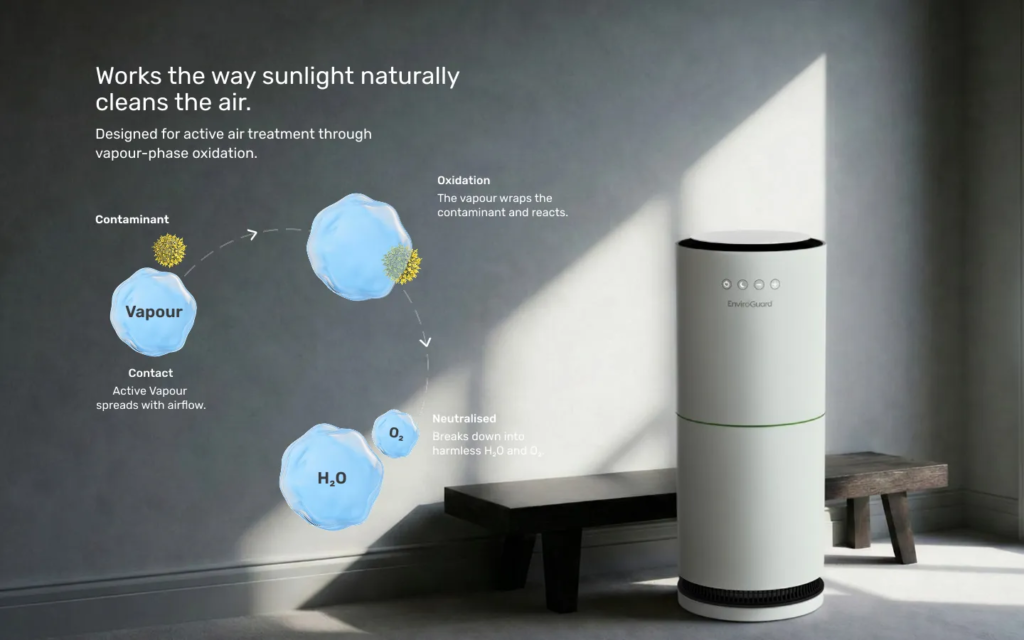
Because this specialized vapour moves exactly like air, it diffuses into spaces that standard filters cannot breach. It passes through the tight borders of closed wardrobe doors, flows across crowded clothing racks, and penetrates deep into porous materials like fabrics, carpets, and leather jackets.
When the active vapour encounters an airborne mould spore or a dust mite allergen, it encapsulates the particle and breaks it down at the molecular level, rendering it completely inert. It also deactivates pet dander and dust mite allergens on physical touch surfaces. The contaminant is broken down completely, converting into natural water vapour (H2O) and oxygen (O2) molecules
The performance of this active dry vapour technology has been validated by independent laboratories and real-world commercial implementations:
For domestic homes, this means complete spatial protection. Hanging garments, premium clothing items, and bedroom textiles are continuously treated to stop spores from germinating, protecting your financial investment in your wardrobe.
The system automates the process of knowing how to prevent mould in a closet. Equipped with smart environmental intelligence sensors, the device continuously tracks temperature, humidity, and four distinct particle size classes (PM1, PM2.5, PM4, and PM10) simultaneously.
Through Wi-Fi and Bluetooth connectivity, the app cross-references your home’s internal air quality metrics with live outdoor weather and postcode data.
When the app detects that local outdoor humidity is rising or a sudden weather front threatens to lower internal closet walls toward the 15°C dew point, it automatically scales the device’s performance. The system increases fan speed and vapour output to deploy a preventative cycle, neutralising spores before they can settle on your garments. The indoor environment is managed automatically.
Cleaning a visible mold stain or treating a musty carpet provides temporary relief. However, unless you permanently alter the biological condition of the air inside your closet, fungal spores will return, resulting in damaged clothes, lost investments, and ongoing allergy symptoms.
It is necessary to transition from old, passive filtration methods to an active environmental management system.
Automate your indoor air management with EnviroGuard ProCare™. Designed as a worry-free subscription model for modern homes, the ProCare™ plan provides consistent environmental control. The monthly structure delivers the advanced EnviroGuard PRO™ X system alongside an automated supply of filters and active gel cartridges shipped to your home every six months.
Set up the system once, let the automation manage the space, and maintain a fresh, mould-free wardrobe year-round.
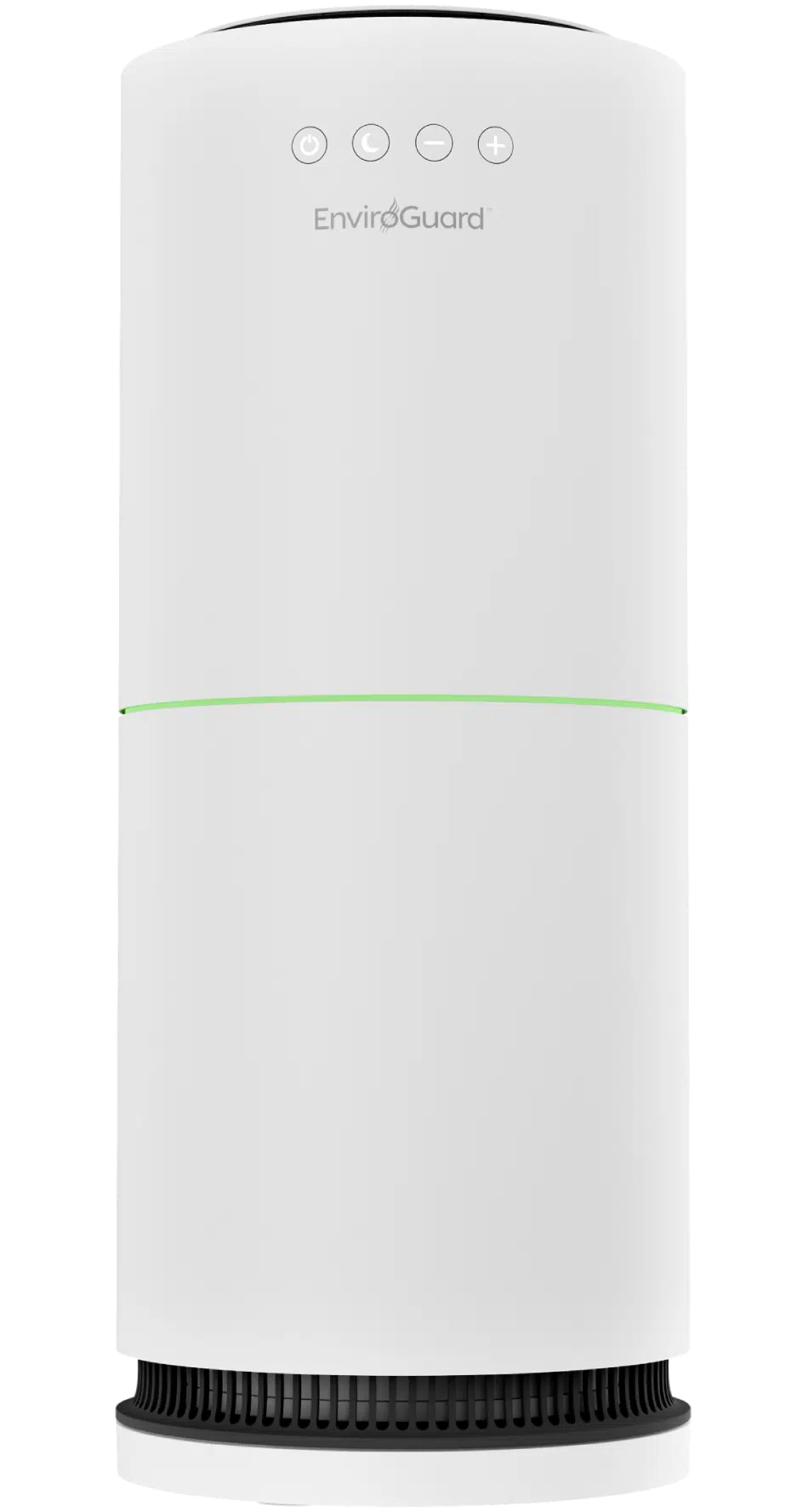
Upgrade to the innovative EnviroGuard PRO™ X today for only $790 (Was $1,590). Claim your $800 saving now and breathe cleaner, healthier air tomorrow.