Whenever you step into a newly renovated home or bring brand-new furniture into a room, you often notice a distinct, unfamiliar scent—commonly referred to as that “new home” or “brand-new” smell. While many people consider this a normal part of buying new items, this odour can actually be a […]
Air is clean and safe. No health risks expected. Everyone can enjoy outdoor activities without concern.
PM₂.₅
2.8
PM₁₀
4.22
SO₂
2.53
NO₂
6.69
O₃
64.09
CO
113.95
Table of Contents
Share
Today’s Air Quality
London, GB
8:28 AM
Air QualityGood
Air is clean and safe. No health risks expected. Everyone can enjoy outdoor activities without concern.
PM₂.₅
2.8
PM₁₀
4.22
SO₂
2.53
NO₂
6.69
O₃
64.09
CO
113.95
Whenever you step into a newly renovated home or bring brand-new furniture into a room, you often notice a distinct, unfamiliar scent—commonly referred to as that “new home” or “brand-new” smell. While many people consider this a normal part of buying new items, this odour can actually be a warning sign that hazardous chemicals or toxic gases are lingering in the air you breathe.
One of the primary culprits behind this smell is formaldehyde, a chemical compound that gradually off-gasses from materials such as plywood, adhesives, furniture, and various building materials. This release happens continuously over extended periods, long outlasting the noticeable scent itself.
In this guide, we explore what formaldehyde is, the health risks it poses, how it differs from general Volatile Organic Compounds (VOCs), where it hides in the home, and—most importantly—how to effectively eliminate it to keep your living environment safe for your entire family.
What Is Formaldehyde, and How Does It Differ from General VOCs?
When discussing indoor air pollution, most people think exclusively of airborne dust. However, indoor pollutants can accumulate at levels up to 10 times higher than outdoor levels, and chemical gases represent one of the most significant unseen hazards.
Formaldehyde is a colourless, flammable organic compound with a pungent, suffocating odour at room temperature. Its chemical formula is CH₂O, classifying it as an aldehyde.
How Does Formaldehyde Differ from Standard VOCs?
Volatile Organic Compounds (VOCs) encompass a broad category of chemicals that readily vaporise into gases at normal room temperatures. This includes hundreds of substances found in everyday products like cleaning supplies, aerosol sprays, and wall paints.
While formaldehyde is technically classified as a VOC, it warrants dedicated attention due to several critical factors:
Molecular Size and High Mobility: Formaldehyde molecules are exceptionally small (approx. 0.37 nm) with a low molecular weight (30.03 g/mol ). This allows the gas to disperse, travel, and linger in indoor air rapidly and persistently.
Toxicity at Extremely Low Concentrations: The World Health Organization (WHO) sets safety thresholds for formaldehyde significantly lower than those for most common VOCs. Even trace amounts in the air can pose acute and long-term health risks, often well before the concentration is high enough to be detected by smell.
Because of its microscopic molecular size, standard air purifiers relying solely on particulate filters are incapable of capturing or neutralising formaldehyde gas.
Formaldehyde Safety Standards
Australia maintains some of the most rigorous indoor air quality guidelines and material emission standards globally. The table below outlines safety thresholds for indoor air and wood-based building materials:
Indoor Air Safety & Emission Standards
Governing Body / Standard
Indoor Air Safety Threshold
Wood Material Emission Rating (E-Class)
WHO (World Health Organization)
Max 0.1 mg/m³ (approx. 0.08 ppm), measured as a 30-minute average
—
Australia (National Standards)
Recommended maximum safe limit of 0.08 ppm (aligned with WHO guidelines)
Super E0: ≤ 0.3 mg/L (Highest safety standard; recommended for nurseries and bedrooms)
E0: ≤ 0.5 mg/L (Very low emissions)
E1: ≤ 1.5 mg/L (Standard acceptable limit for general indoor use)
E2: ≤ 5.0 mg/L (High emissions; not recommended for domestic indoor spaces)
When sourcing cabinetry, flat-pack furniture, or building materials, check the E-Class emission rating. Selecting materials certified as Super E0 or E0 ensures that formaldehyde off-gassing remains at minimal, safe levels for daily living.
Common Sources of Formaldehyde in the Home
Formaldehyde is widely used in manufacturing home goods and building products. Rather than releasing all at once, these materials undergo continuous off-gassing, steadily releasing chemical vapours into your indoor environment over months or even years.
Key household sources include:
Engineered and Pressed Wood (MDF, Particleboard, Plywood): Flat-pack wardrobes, shelving units, cabinetry, and laminate flooring often utilise urea-formaldehyde or phenol-formaldehyde resin binders. These represent the primary source of domestic off-gassing and can release vapours actively for 2–3 years.
Paints, Varnishes, and Adhesives: Wall coatings, timber sealants, carpet glues, and wallpaper adhesives emit chemical vapours for months after application, even after the fresh paint smell has completely dissipated.
Textiles and Soft Furnishings: Wrinkle-resistant finishes on clothing and plush toys, flame-retardant drapery, carpets, and certain industrial cleaning agents often contain formaldehyde-based resins.
Combustion Sources: Unflued gas heaters, gas cooktops, tobacco smoke, and vehicle exhaust from an attached garage can all introduce significant amounts of formaldehyde into the home.
Fact
While the highest concentration of off-gassing occurs during the first 2 to 3 years, unsealed or substandard engineered timber can continue off-gassing for 3 to 15 years. Heat and relative humidity act as direct catalysts, accelerating the rate of chemical release. In closed, air-conditioned rooms during hot weather, toxic vapours can quickly reach hazardous concentrations.
What Are the Dangers of Formaldehyde Exposure?
Formaldehyde exposure affects human health across two distinct timelines:
1. Acute Health Effects (Short-Term Exposure)
When indoor formaldehyde concentrations exceed 0.1 ppm, physiological symptoms can manifest quickly:
Burning sensations in the eyes, excessive tearing, and conjunctival irritation.
Sneezing, nasal congestion, sore throat, and persistent coughing.
Nausea, dizziness, and shortness of breath.
Rapid triggering of asthma attacks and severe allergic flare-ups, particularly in young children and individuals with pre-existing respiratory conditions.
2. Chronic Effects and Cancer Risks (Long-Term Exposure)
The International Agency for Research on Cancer (IARC), a specialised agency of the WHO, categorises formaldehyde as a Group 1: Known Human Carcinogen.
Medical research and occupational studies confirm a direct link between chronic, long-term inhalation of formaldehyde and:
Nasopharyngeal cancer (cancer of the upper throat behind the nose).
Sinonasal cancer.
Leukaemia (specifically myeloid leukaemia).
In vulnerable demographics—such as infants, toddlers, and pregnant women—prolonged exposure to airborne formaldehyde can compromise the developing immune system and negatively impact cognitive and neurological development.
How to Detect Formaldehyde: Why Your Sense of Smell Is Not Enough
Many people rely on their sense of smell to determine whether their indoor air is safe. However, relying on your nose alone is dangerous:
High Odour Threshold: The human olfactory threshold for formaldehyde typically ranges between 0.5 and 1.0 ppm. This means by the time you actually smell the chemical, the concentration is already 6 to 12 times higher than the recommended safe threshold (0.08 ppm).
Olfactory Fatigue: The human nose quickly adapts to ambient scents. After remaining in an affected room for a short period, you will no longer perceive the odour, even though the chemical concentration remains unchanged.
Reliable Detection Methods
Digital Air Quality Monitors (HCHO / TVOC Detectors): Dedicated electronic sensors track formaldehyde (HCHO) and Total Volatile Organic Compounds (TVOCs) in real time, alerting you when ventilation is required.
Professional Indoor Air Quality (IAQ) Testing: For full-home renovations or new builds, hiring an environmental consultant to perform laboratory-grade sampling provides the most precise assessment.
How to Remove and Reduce Formaldehyde in Your Home
You can significantly lower formaldehyde levels through targeted environmental management and smart purchasing decisions:
1. Increase Mechanical and Natural Ventilation
Ventilation is the simplest and most effective way to lower indoor formaldehyde levels. Regularly opening windows on opposing sides of the house to create cross-breezes, or running ducted exhaust systems, introduces fresh outdoor air to dilute and flush out concentrated chemical vapours. This is essential immediately after moving into a new build, painting, installing new carpets, or assembling flat-pack furniture.
2. Control Temperature and Relative Humidity
Off-gassing rates increase substantially with rising temperatures and moisture levels. Studies show that for every 10°C increase in ambient temperature, the emission rate of formaldehyde can more than double.
Climate Control: Use reverse-cycle air conditioning or dehumidifiers to keep indoor conditions cool and stable.
Target Humidity: Maintain indoor relative humidity at approximately 40–50% during warm seasons to suppress off-gassing rates.
Air Purification Technologies: HEPA vs Activated Carbon vs Vapour Phase Oxidation
When outdoor pollution, bushfire smoke, or extreme heat prevent opening windows, an air purifier becomes necessary. However, standard filtration systems are often ineffective against gaseous pollutants:
1. HEPA Filters
HEPA filters are engineered to capture solid airborne particles (such as PM2.5, pollen, dust mite allergens, and pet dander). Because formaldehyde exists in a gaseous state at the molecular level, it passes straight through mechanical HEPA fibres unrestricted.
2. Activated Carbon Filters
Activated carbon traps gas molecules within internal microscopic pores via passive physical adsorption. While effective for general odours, standard carbon filters have a low natural affinity for small formaldehyde molecules. Furthermore, once the carbon bed becomes saturated, fluctuations in ambient temperature or humidity can cause the filter to re-release trapped gases back into the room.
3. Vapour Phase Oxidation (Active Neutralisation)
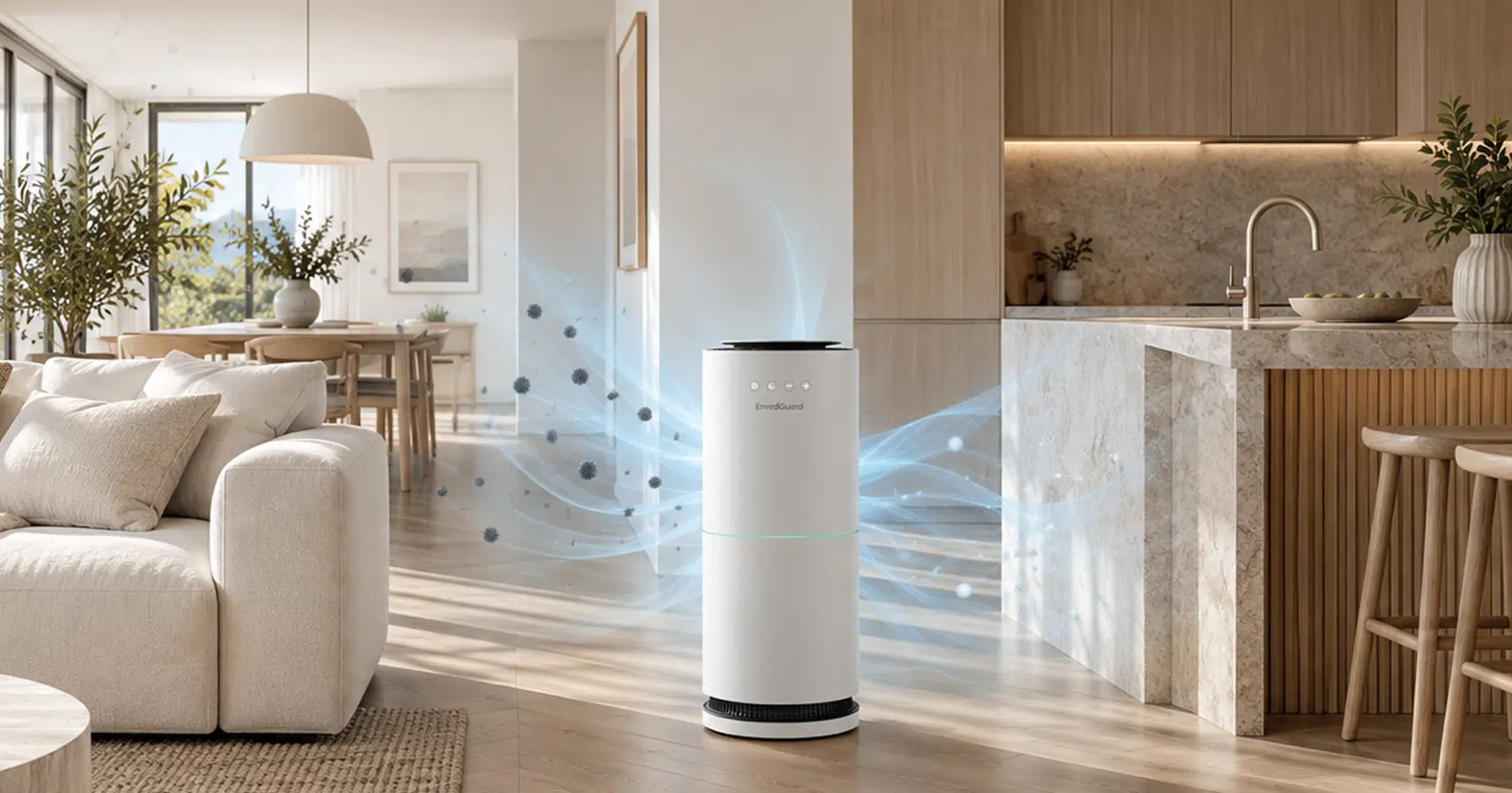
Unlike passive systems that wait for air to pass through a filter, active vapour phase oxidation releases safe, ultra-low concentrations of oxidising agents (such as hydrogen peroxide vapour, H2O2) throughout the entire room. These oxidisers actively break the chemical bonds of airborne and surface-bound formaldehyde, converting the toxic compound into harmless water vapour (H2O2) and oxygen (O2).
Formaldehyde Removal Technologies
Technology
Operating Mechanism
Effectiveness Against Formaldehyde
Limitations / Important Considerations
HEPA Filtration
Mechanical capture using a dense matrix of microfibres
Ineffective(Gas molecules pass directly through)
Captures particulate matter only; does not eliminate toxic gases or chemical fumes.
Activated Carbon
Passive surface adsorption into carbon pores
Limited / Moderate(Standard carbon binds poorly with small formaldehyde molecules)
Prone to saturation; risk of desorbing and re-emitting trapped gases when temperature or humidity shifts.
Vapour Phase Oxidation
Active dispersal of oxidising vapours to break chemical bonds
High Effectiveness(Destroys formaldehyde molecules in the air and on exposed surfaces)
Must be properly calibrated to ensure oxidising concentrations remain within safe environmental parameters.
Practical Ways to Minimise Formaldehyde at the Source
Eliminating the source is the most sustainable long-term strategy for maintaining healthy indoor air:
Source Low-Emission Materials: Choose products certified with CARB Phase 2, UL Greenguard Gold, or Australian E0 / Super E0 ratings when purchasing cabinetry, structural timber, or laminate flooring.
Off-Gas Items Before Bringing Them Inside: Unbox new flat-pack furniture, rugs, and mattresses in a well-ventilated, covered outdoor area or garage for several days before moving them inside.
Wash Textiles Prior to First Use: Launder brand-new clothing, bed linen, and washable curtains before use to remove topical resin coatings.
Incorporate Air-Filtering Plants: Research identified by NASA suggests certain indoor plants—such as the Spider Plant (Chlorophytum comosum) and Chinese Evergreen (Aglaonema)—can absorb minor levels of VOCs and formaldehyde, while adding natural humidity regulation.
Enforce a Strict Smoke-Free Policy Indoors: Environmental tobacco smoke is a heavy contributor to indoor formaldehyde; keep all smoking strictly outdoors.
Don’t Let the “New Smell” Become a Silent Threat
That familiar “brand-new smell” is not an indicator of cleanliness—it is often a direct sign of active chemical off-gassing. Formaldehyde does not disappear overnight; it steadily releases from engineered timbers, adhesives, and finishes over months or years.
Protecting your indoor environment starts with consistent cross-ventilation, managing indoor humidity, and selecting low-emission certified materials. When choosing an air purifier to manage VOCs and chemical hazards, ensure it features active oxidation technology capable of breaking chemical bonds at the molecular level, rather than relying solely on standard particulate filters.
Frequently Asked Questions
What does formaldehyde smell like?
Formaldehyde has a sharp, pungent, pickle-like or sterile medicinal odour, commonly recognised as the strong "new furniture" or "new carpet" smell. However, at lower concentrations that still exceed health guidelines, it can be entirely odourless to humans.
Is formaldehyde a proven carcinogen?
Yes. The International Agency for Research on Cancer (IARC) classifies formaldehyde as a Group 1 Known Human Carcinogen. Long-term exposure is scientifically linked to nasopharyngeal cancer, sinonasal cancer, and leukaemia.
How can I remove formaldehyde residues from new clothes or denim?
Soak new garments overnight in a tub of cold water mixed with 1 cup of white vinegar and half a cup of baking soda. Follow with a standard wash cycle, then hang them on an outdoor washing line to air and sun-dry thoroughly before wearing.
Limited-Time Offer
Transform Your Indoor Air Quality
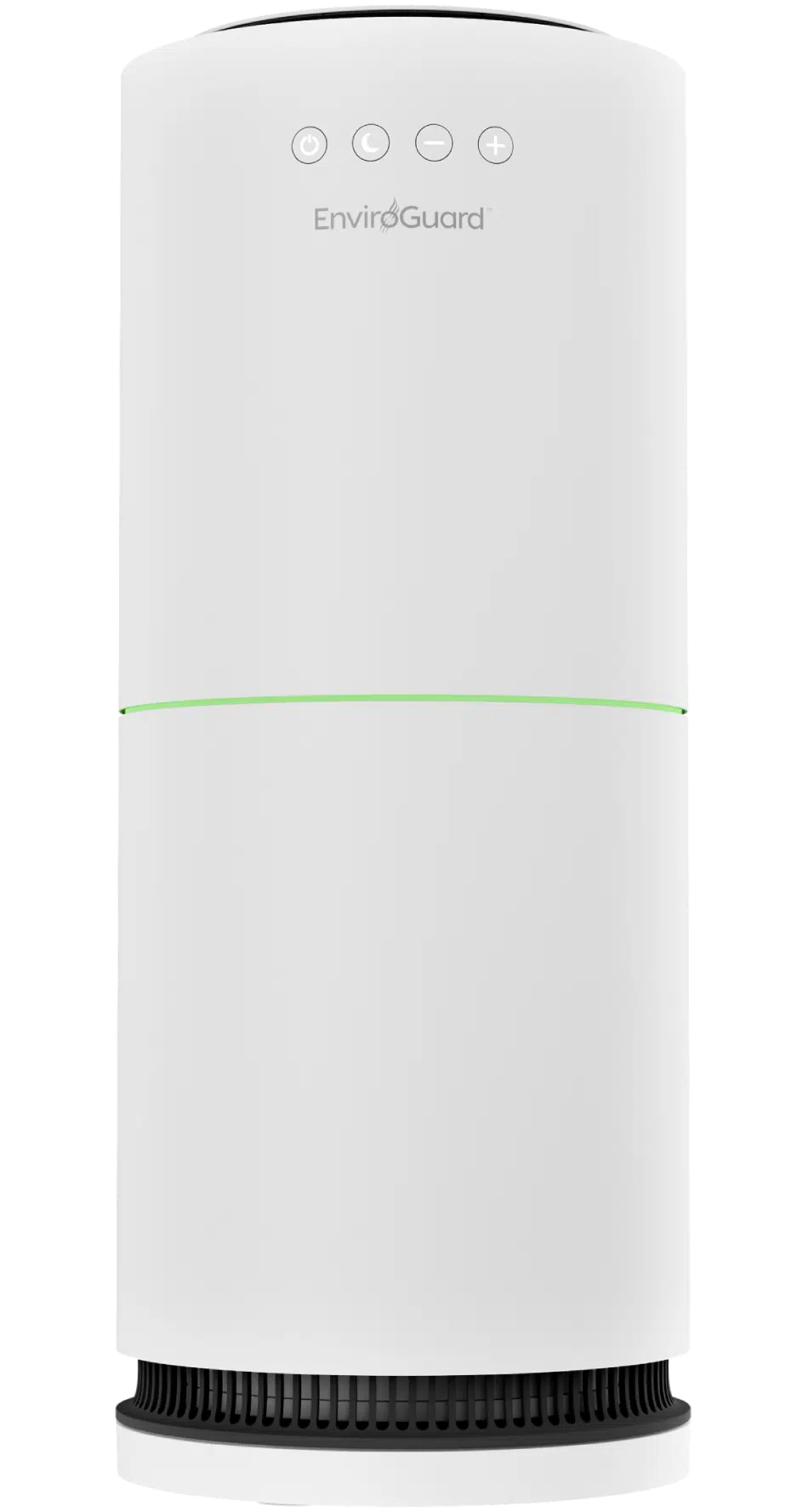
Upgrade to the innovative EnviroGuard PRO™ X today for only $790 (Was $1,590). Claim your $800 saving now and breathe cleaner, healthier air tomorrow.
Air purifiers genuinely help alleviate airborne allergies and Hay Fever by reducing the concentration of allergens in the air, such as pollen, dust mites, and pet dander. They achieve this by capturing over 99.97% of particles as small as 0.3 microns through a True HEPA filter. However, modern Environmental […]
How does an air purifier work? An air purifier draws contaminated indoor air into the unit, where filters or treatment technologies capture, remove or break down pollutants such as PM2.5, pet dander, pollen, mould spores and odours. The treated air is then released back into the room, creating a […]
How Do You Destruct VOCs? Most standard air purifiers fail to eliminate Volatile Organic Compounds (VOCs) because they rely on passive filtration (like HEPA), which only captures solid particles, or thin activated carbon filters that quickly saturate and risk releasing trapped toxic gases back into your room. For definitive […]
Many people experience no allergy issues with their first dog or cat. However, introducing a second or third pet into the home often triggers sudden sneezing, nasal congestion, red eyes, itchy skin, or morning chest tightness. This sudden reaction does not mean you have “developed a pet allergy out […]
Yes. You can develop or become aware of a pet allergy later in life, even if you have lived with cats or dogs for years without noticeable symptoms. This does not necessarily mean that your pet suddenly caused an allergy. Allergic disease involves a process called sensitisation, in which […]
¹ Tested in independent Australian laboratories under controlled conditions using airborne mould spores, bacteria and allergen particulates (0.3μm–10μm).
² Based on third-party testing results confirming 99.9% reduction in airborne mould spores and pet dander when using EnviroGuard Pro X with Purox™ Gel over 24 hours.
³ Independent testing by ICAS Testing Technology Service (Shanghai) Co., Ltd. demonstrated 99.99% reduction in airborne Staphylococcus Albus bacteria within 30 minutes in a 20m² test chamber, in accordance with Technical Standard for Disinfection GB 27948-2020.
⁴ Surface efficacy testing conducted by Eurofins BioPharma Product Testing — Sydney (Eurofins ams Laboratories Pty Ltd, TGA-licensed under MI-2021-LI-08995-1). Reductions over 8 hours: 99.99% Pseudomonas Aeruginosa, 99.9% Escherichia Coli, 90% Candida Albicans Yeast.
⁵ "10x faster than conventional filtration" comparison based on EnviroGuard Pro X achieving log 4 (99.99%) airborne bacterial reduction in 30 minutes, compared with log 1 (90%) pathogen reduction in 20 minutes reported for hospital HEPA systems operating at 12 air changes per hour (Fernstrom A, Goldblatt M. Aerobiology and its role in the transmission of infectious diseases. J Pathog. 2013;2013:493960).
⁶ Performance varies based on room size, airflow configuration, fan speed setting, environmental conditions and usage patterns.