Mould spores are tiny particles released by mould as part of its natural life cycle. They can become airborne, move through indoor spaces and enter the air people breathe. While mould growth often starts on damp surfaces, its effects are not always limited to the area where it is visible.
When mould spores become airborne, they can contribute to indoor particle levels and affect the overall quality of the indoor environment. Understanding how mould spores spread, what causes them to grow and how to manage them can help homeowners maintain a healthier living space.
1. The Mould You See Is Only Part of the Problem
Visible mould is only one indication of a potential mould problem. The dark patches that appear on walls, ceilings, windows or furniture are established mould growth. However, mould can also release microscopic spores into the surrounding air.
These spores are too small to be seen individually without a microscope. Once airborne, they may travel beyond the original area of growth, particularly when air moves through a room or ventilation system.
This means a small patch of visible mould does not necessarily indicate that the issue is limited to that exact spot. Spores may have spread into nearby areas, while mould may also be developing in hidden locations such as:
- Behind furniture placed against damp walls
- Inside wall cavities and ceiling spaces
- Around leaking pipes and plumbing connections
- Under carpets and flooring
- Inside poorly ventilated cupboards
- Around air-conditioning systems and ventilation components
The relationship between visible growth, moisture and airborne spores is an important part of understanding mould in the home.
It is also why simply cleaning visible mould may not resolve the underlying problem if the moisture source remains.
2. How Mould Spores Find Their Way Into the Air
Mould reproduces by releasing spores into the environment. These microscopic particles can become airborne through natural air movement or physical disturbance.
Once released, spores may remain suspended in the air for a period of time before settling on surfaces. Their movement depends on several factors, including particle size, airflow, ventilation and indoor activity.
Common ways mould spores become airborne include:
- Air movement: Natural ventilation, fans and air-conditioning systems can move airborne spores from one area to another.
- Physical disturbance: Cleaning mouldy surfaces, moving contaminated materials or disturbing mould growth can release additional spores into the air.
- Everyday household activity: Walking across contaminated carpets, moving furniture or handling affected fabrics may disturb settled particles.
- Ventilation systems: If mould or moisture is present around HVAC components, air movement may contribute to the spread of airborne particles through connected spaces.
Mould spores can also enter a home from outside. They may come in through open windows and doors, attach to clothing or shoes, or enter with outdoor air.
The presence of some mould spores indoors is normal. The concern arises when indoor conditions allow mould to grow and release additional spores, potentially increasing indoor concentrations.
3. Why Some Homes Have a Persistent Mould Problem
Moisture is the main condition that allows mould to grow. Mould spores may already be present in the environment, but they need suitable conditions to develop into active growth.
When moisture remains on a surface or within a building material, mould can begin to grow if other conditions are favourable.
Several factors can contribute to persistent mould problems.
High Indoor Humidity
High relative humidity can create conditions that support mould growth, particularly in rooms with limited ventilation.
Bathrooms, kitchens, laundries and bedrooms can experience increased humidity through everyday activities such as showering, cooking, drying clothes and breathing.
If humid air is not removed effectively, moisture may accumulate on cooler surfaces.
Poor Ventilation
Ventilation helps remove humid indoor air and replace it with fresh outdoor air. Without adequate air exchange, moisture can remain trapped inside a room.
This is particularly common in bathrooms without effective exhaust fans, storage areas with limited airflow and rooms where windows are rarely opened.
Water Leaks and Building Damage
A leaking roof, damaged plumbing or water entering through external walls can introduce moisture into building materials.
Carpets, plasterboard, insulation and timber may retain moisture for extended periods. Even when the surface appears dry, moisture can remain underneath or inside the material.
Condensation
Condensation occurs when warm, moisture-containing air comes into contact with a cooler surface.
It commonly appears on windows, walls and other cold surfaces. If condensation happens regularly and is not managed, it can create conditions suitable for mould growth.
Inadequate Moisture Management
Cleaning visible mould without addressing the source of moisture often leads to recurring growth.
For long-term control, homeowners need to identify where moisture is coming from, improve ventilation where appropriate and repair any water damage.
Practical steps to prevent mould growth should focus on controlling moisture rather than relying on surface cleaning alone.
4. What Happens When You Breathe in Mould Spores?
People regularly encounter mould spores in both indoor and outdoor environments. The effects of exposure can vary depending on the type and concentration of spores, the duration of exposure and individual sensitivity.
For some people, exposure may cause no noticeable effects. Others, particularly those with mould allergies or respiratory sensitivities, may experience symptoms when exposed.
Possible reactions include:
- Sneezing
- A runny or blocked nose
- Itchy or watery eyes
- Throat irritation
- Coughing
- Skin irritation
- Worsening of existing allergy or asthma symptoms in some individuals
Mould exposure does not affect everyone in the same way. A person’s response may depend on their health, sensitivity and the conditions of the indoor environment.
People who already have allergies or respiratory conditions may be more sensitive to airborne mould particles.
It is also important to distinguish between mould exposure and a confirmed medical condition. Indoor mould does not automatically mean someone will develop an allergy or respiratory illness.
If symptoms appear regularly in a particular indoor environment, it may be useful to consider whether mould or other indoor allergens could be contributing factors. Learn more about common mould allergy symptoms and when medical advice may be appropriate.
5. Signs That Mould May Be Affecting Your Indoor Environment
Mould is not always visible. In some homes, the first signs of a potential problem may come from changes in smell, moisture or the condition of building materials.
Look out for the following indicators.
A Persistent Musty Smell
A damp, earthy or musty smell may indicate mould growth or moisture problems, particularly in enclosed spaces.
However, smell alone cannot confirm the presence or extent of mould. Some mould problems may have little noticeable odour, while musty smells can also come from other damp materials.
Visible Spots or Discolouration
Mould may appear as black, green, grey, white or brown patches. It can develop on walls, ceilings, window frames, fabrics, furniture and other materials.
The colour of mould does not reliably identify its species or determine how harmful it may be.
Condensation and Damp Surfaces
Regular condensation on windows, damp walls or persistent moisture around fixtures may indicate that indoor humidity or ventilation needs attention.
These conditions can increase the likelihood of mould developing over time.
Recurring Mould Growth
If mould repeatedly returns after cleaning, the underlying moisture source may not have been addressed.
Recurring growth should not be treated as a simple surface-cleaning issue. It may require a closer assessment of leaks, condensation, ventilation or hidden moisture.
Changes in Indoor Comfort
Some occupants may notice sneezing, coughing or irritation that seems to occur more often in certain rooms. These symptoms are not proof of mould exposure, but they may be a reason to review the indoor environment.
6. Getting Mould Under Control Starts With Moisture
The most effective approach to mould management is to address the conditions that allow it to grow.
Air treatment and cleaning can play supporting roles, but neither should replace moisture control or proper mould remediation.
Identify and Fix the Moisture Source
Start by checking for leaking pipes, roof damage, water entry, condensation and other sources of persistent moisture.
Repair leaks promptly and investigate damp materials rather than simply covering or repainting affected areas.
Improve Ventilation
Use bathroom exhaust fans during and after showers. When practical, ventilate kitchens and laundries to remove moisture generated by everyday activities.
Make sure exhaust systems discharge air appropriately and are maintained in good working condition.
Manage Indoor Humidity
Monitor humidity in rooms that frequently become damp.
Where necessary, use suitable moisture-control measures, such as ventilation or a dehumidifier, to help maintain more stable indoor conditions.
Dry Wet Materials Promptly
Wet carpets, fabrics and other absorbent materials should be dried quickly and thoroughly.
Materials that remain damp for extended periods may support mould growth. Severely affected porous materials may require professional assessment or removal.
Clean or Remediate Existing Mould
Small areas of mould on suitable non-porous surfaces may sometimes be cleaned using appropriate methods and protective equipment.
However, extensive growth, recurring mould, hidden contamination or mould associated with significant water damage may require professional assessment.
Do not disturb extensive mould growth unnecessarily, as this can release additional spores into the air.
7. Where Air Purifiers Fit Into Mould Management
Air filtration addresses airborne particles, not the source of mould growth. A suitable air purifier can capture airborne mould spores as air passes through its filter, but it cannot repair a leak, dry wet materials or remove mould growing inside a wall.
Choosing an Air Purifier for Mould Spores
A HEPA filter is designed to capture very small airborne particles, including mould spores. However, real-world performance also depends on airflow, room size, placement and filter maintenance.
Filtration vs Active Air Treatment
Air purification systems may use different approaches:
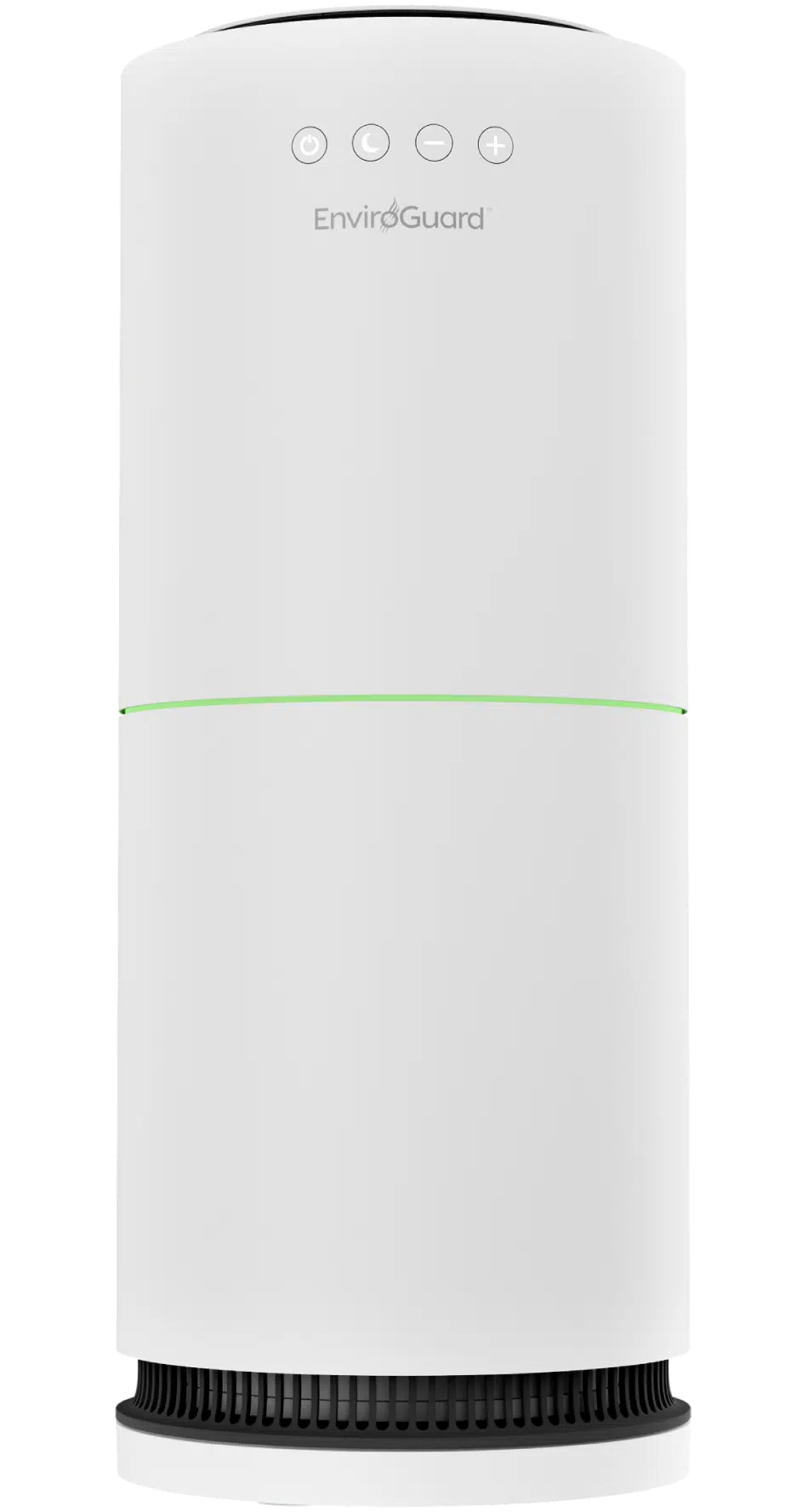
The EnviroGuard PRO X Environmental System combines PrimeProtect™ HEPA-13 filtration with Purox™ Gel-based Vapour Phase Oxidation (VPO). This combines particle filtration with a separate active air-treatment process, rather than relying on filtration alone.
The technologies should be assessed according to their specific performance and safety evidence. Air treatment should not be considered a replacement for mould removal, moisture control or professional remediation.
The most effective approach is to manage mould at its source while using suitable air treatment to help reduce airborne particles.
8. When Is Professional Mould Assessment Worth Considering?
Not every mould problem requires professional remediation. However, some situations are more complex than routine household cleaning.
Consider seeking professional assessment when:
- Mould covers a large area or continues to spread.
- Mould repeatedly returns after cleaning.
- There has been significant flooding or water damage.
- Mould is suspected inside walls, ceilings, flooring or ventilation systems.
- Building materials remain damp or show signs of deterioration.
- The source of moisture cannot be identified.
- Occupants have ongoing health concerns that need medical assessment.
A professional assessment can help identify the extent of contamination, possible moisture sources and the appropriate remediation process.
For more extensive problems, mould remediation may involve containment, removal of affected materials, cleaning and verification procedures. The appropriate method depends on the building, the extent of contamination and relevant professional guidance.
Conclusion: Managing Mould Means Managing the Whole Indoor Environment
Mould spores are a natural part of the environment, but indoor conditions can allow mould to grow and release additional spores into the air.
The most effective approach is to understand the relationship between moisture, mould growth and airborne particles. Start by identifying and fixing moisture sources, improving ventilation and addressing existing mould. Air purification can then support the process by helping manage airborne particles within the living space.
A cleaner indoor environment requires more than treating the air alone. It means managing the conditions that affect the air, the surfaces and the building itself.