How to Get Rid of Dust in Your Bedroom
Quick answer: To reduce dust in your bedroom, deal with two things at the same time: dust that settles on surfaces and fine particles that remain in the air. Wipe furniture with a slightly damp microfibre cloth, wash your bedding every week using a temperature suitable for the fabric, and vacuum floors and carpets regularly.
Fine dust and dust mite allergens can also become airborne and enter the air you breathe. A suitable air purifier with effective filtration, such as HEPA-13, can help reduce airborne particles. For overnight use, choose a system with a noise level that suits your sleep environment.
Why Is There So Much Dust in the Bedroom, Even When the Windows Are Closed?
Have you noticed that you can wipe your bedside table until it looks spotless, only to find a fine layer of grey dust on it again a couple of days later? It can happen even when your windows stay closed.
That is because bedroom dust does not come from outdoors alone. Everyday activities and materials inside your home also add to it.
- Shed skin cells: Your body naturally sheds dead skin cells. These can build up in bedding, pillows and mattresses.
- Fabric fibres: Moving your doona, changing clothes or walking on carpet can release tiny fibres from bedding, clothes, blankets and curtains. These fibres mix with household dust.
- Pet allergens: If your pet spends time in the bedroom, skin flakes and proteins from its saliva can collect in carpets and bedding. Learn more about how pet allergens can affect indoor air.
- Particles from outdoors: Fine soil, vehicle exhaust particles and pollen can enter through gaps around doors, ventilation openings, or on your clothes and hair.
Keeping doors and windows closed can reduce natural ventilation, allowing particles to remain inside for longer. When you move in bed, walk across the carpet or shake out a blanket, settled dust can rise back into the air around your breathing zone. It may then settle on surfaces again, repeating the cycle.
For a closer look at household dust and what an air purifier can help with, read our guide to the best air purifier for dust.
The Truth About Dust Mites, What Makes You Sneeze?
If you wake up with a blocked nose, a dry cough, itchy eyes or repeated sneezing, dust mite allergens may be one possible cause. This is especially worth considering if your symptoms often return in the bedroom or soon after you wake up.
There is one common misunderstanding to clear up: people with a dust mite allergy are not allergic because dust mites bite them. They react to proteins found in dust mite body fragments and droppings, as well as particles from dead mites.
How Dust Mite Allergies Develop
Dust mites often live in places where dust and fabric fibres collect, such as mattresses, pillows and carpets. These areas also provide a supply of shed skin cells. One important dust mite allergen is a protein called Der p 1, which is found in dust mite droppings. When you turn over in bed, shake a pillow or walk across carpet, particles containing these allergens may become airborne and enter your respiratory system.
For people who are sensitive to dust mite allergens, repeated exposure overnight may contribute to morning nasal congestion. It may also worsen asthma symptoms associated with allergens. If you have asthma, see our guide to air purifiers and asthma.
Can an Air Purifier Stop Dust Building Up on Furniture?
An air purifier can help reduce airborne particles and support an indoor environment that is more comfortable for people with allergies. However, it is important to understand what an air purifier can and cannot do.
What Can an Air Purifier Do?
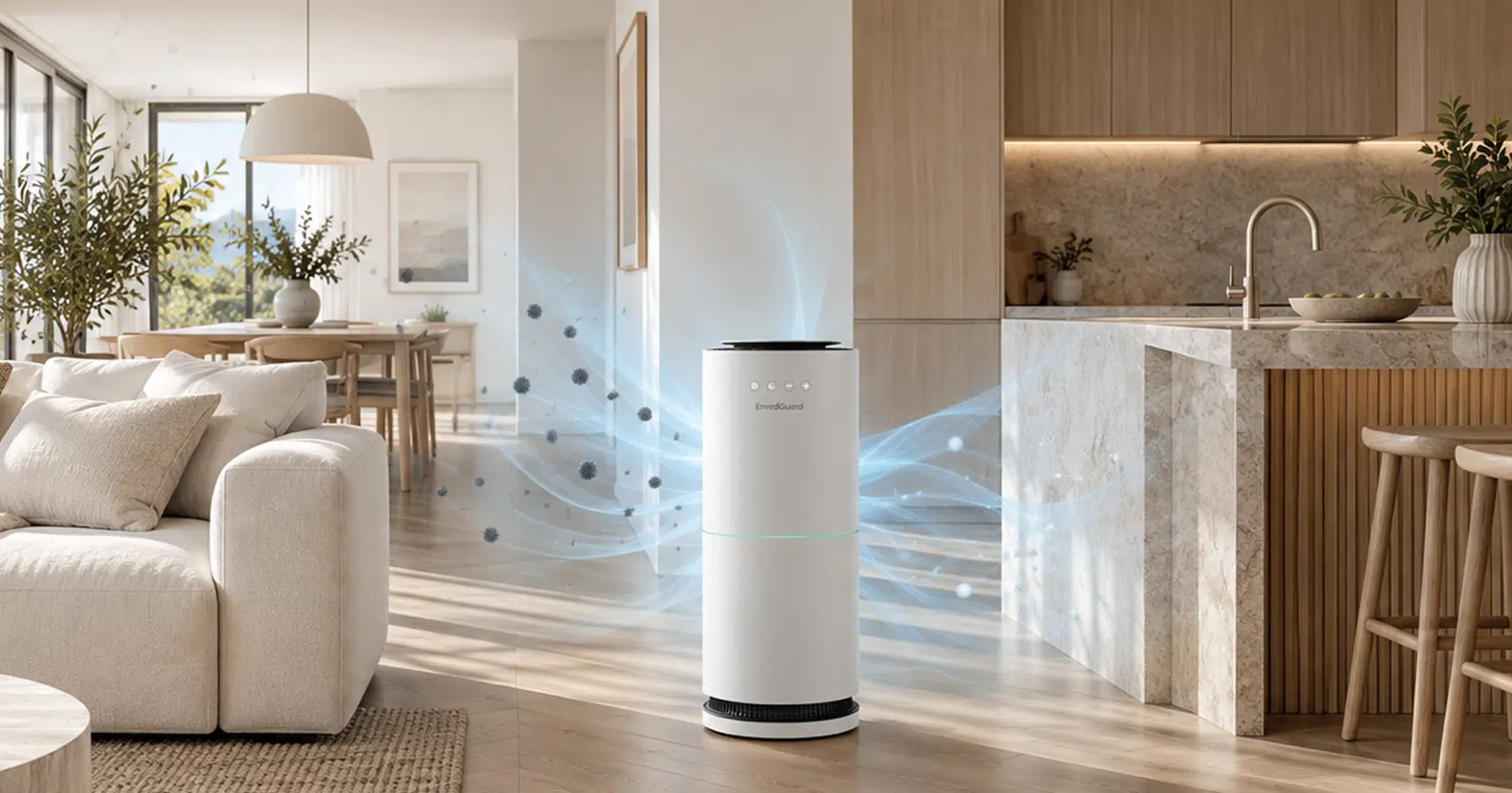
An air purifier draws surrounding air into the unit and passes it through its filtration system. Depending on the filter, it can capture airborne particles such as shed skin cells, pet allergens, pollen and particles containing dust mite allergens. This can reduce the number of particles that remain in the air and may otherwise be breathed in or settle on surfaces.
What Can’t an Air Purifier Do?
A standard air purifier cannot directly remove dust that has already settled on your bedside table. It is also not designed to pull dust mites out from deep inside a mattress, and it cannot replace a vacuum cleaner.
The most practical approach is to combine two tasks: remove settled dust from surfaces, floors and bedding, and use an air purifier to help capture smaller particles that are still airborne. For a simple explanation of how these systems work, read how an air purifier works.
A 5-Step Routine to Reduce Dust in Your Bedroom
Following these five steps regularly can help limit dust build-up, keep furniture cleaner for longer and reduce your exposure to indoor allergens.
1. Wash Your Sheets and Pillowcases Every Week
Washing bedding in cold or warm water can remove dirt and some allergens, but it does not guarantee that all dust mites will be removed.
A hot wash at around 55–60°C can help kill dust mites. The results depend on the water temperature, wash duration and type of fabric, so check the care label before choosing a cycle.
Wash your sheets, pillowcases and doona cover every week using a programme that is suitable for the material.
Tip: Consider allergen-resistant mattress and pillow covers. Look for tightly woven fabric and secure zips to help reduce contact with dust mites inside your bedding.
2. Swap the Dry Duster for a Slightly Damp Microfibre Cloth
A feather duster or some dry cloths can move dust around rather than remove it from the room. This can allow particles to settle on the same surfaces again.
Use a slightly damp microfibre cloth to wipe surfaces. Its fine fibres help trap and hold dust, reducing the amount that becomes airborne compared with dry dusting.
Clean from top to bottom. Start with ceiling fan blades, curtain edges and the tops of wardrobes. Wipe bedside tables next, and leave skirting boards until last. That way, dust that falls can be vacuumed up afterwards.
3. Vacuum Floors and Carpets
Vacuum carpets and floors at least twice a week, moving the vacuum head slowly and overlapping each pass slightly.
If your bedroom is carpeted and someone in the household has a significant dust mite or other allergen sensitivity, changing to timber or another easy-to-clean hard floor may help reduce places where dust collects. However, changing the flooring alone will not remove all dust mites or allergens.
4. Keep Bedroom Humidity at a Suitable Level
Dust mites rely on moisture in the air to survive, so managing indoor humidity can help make the environment less suitable for them.
Keeping relative humidity below 50% can help limit dust mite growth in many settings, although the effect also depends on room temperature and other environmental conditions.
At some times of year, indoor humidity can rise in Australian cities such as Sydney, Brisbane and Melbourne, creating conditions that may encourage dust mites and mould.
When needed, use your air conditioner’s dry mode or a dehumidifier. If your climate and equipment allow, aim for relative humidity of around 40–50%.
Humidity control can also help reduce the chance of mould developing around wardrobes, window frames and other areas where moisture builds up. If mould is a concern, read more about an air purifier for mould.
5. Keep Air Moving and Run Your Air Purifier Consistently
Each time you get into bed, turn over or open a wardrobe, settled dust can be stirred up into the air again.
For that reason, running an air purifier for only 20 minutes before bedtime may not be enough to manage airborne particles throughout the night.
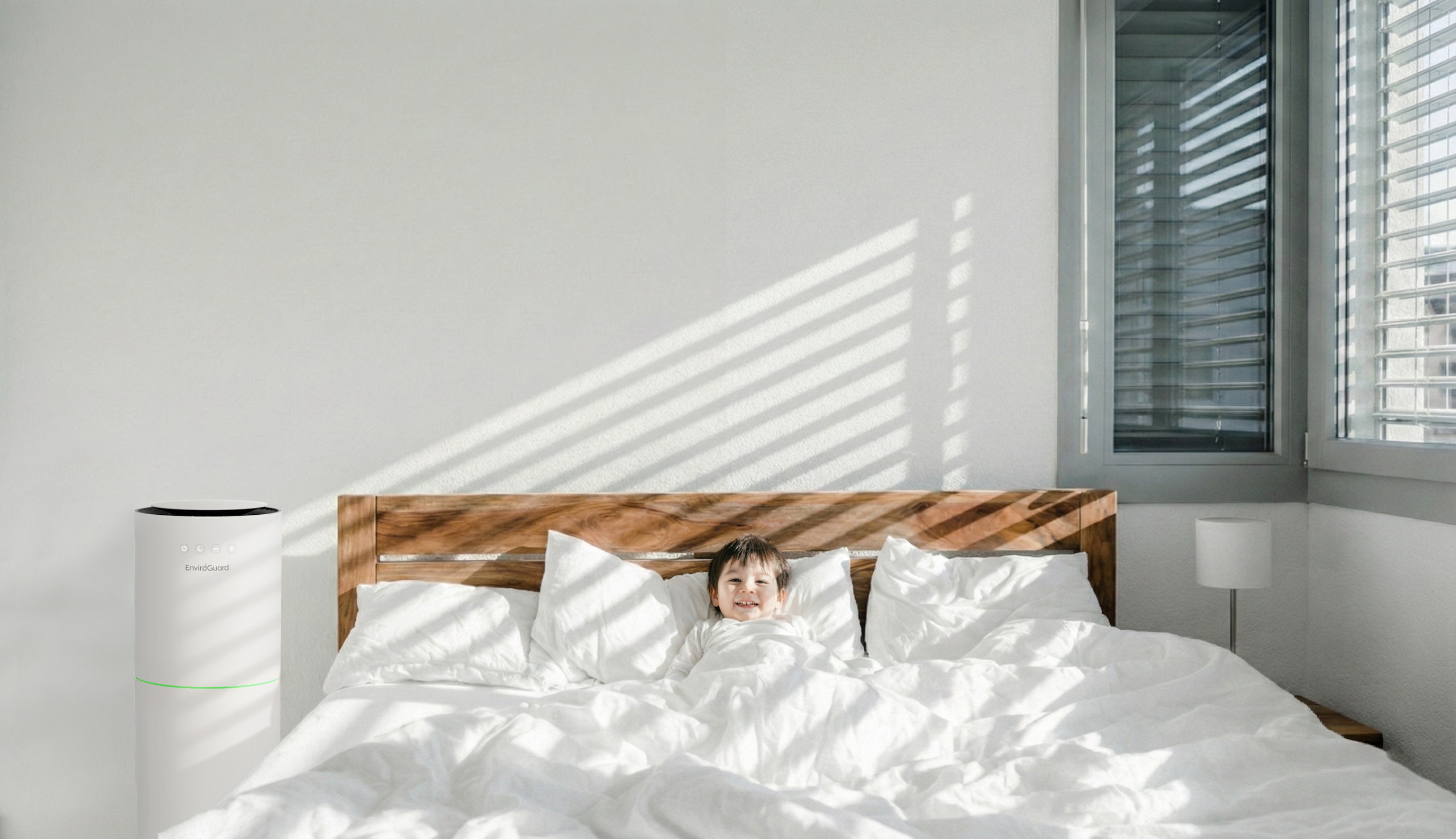
Choose a unit that is suitable for the size of your bedroom and run it consistently at a setting that is comfortable for sleeping. Regularly circulating air through an effective filter helps reduce the concentration of airborne particles, including those around the breathing zone.
Placement also matters. Read our practical guide on where to place an air purifier for the best results. Remember to maintain the filter and replace it as recommended; our air purifier filter replacement guide explains what to consider.
Comparing Air-Treatment Options for the Bedroom
Different air-treatment technologies do different jobs. The table below compares a typical HEPA air purifier, a carbon filter used for odours and the Vapour Phase Oxidation (VPO) technology featured in the VBreathe EnviroGuard PRO X Environmental System.
Note: Actual performance depends on the model, placement, room size, airflow rate and conditions of use. Check each product’s technical information and test results before making a direct comparison.
How Does VPO Technology Go Beyond Conventional Air Filtration?
A standard filter-based air purifier draws air through an intake and passes it through a filter. Particles are captured when air carrying those particles reaches and passes through the system.
Particles may remain in areas with poor air circulation or may not pass through the purifier. As a result, they can remain in the air or settle on surfaces.
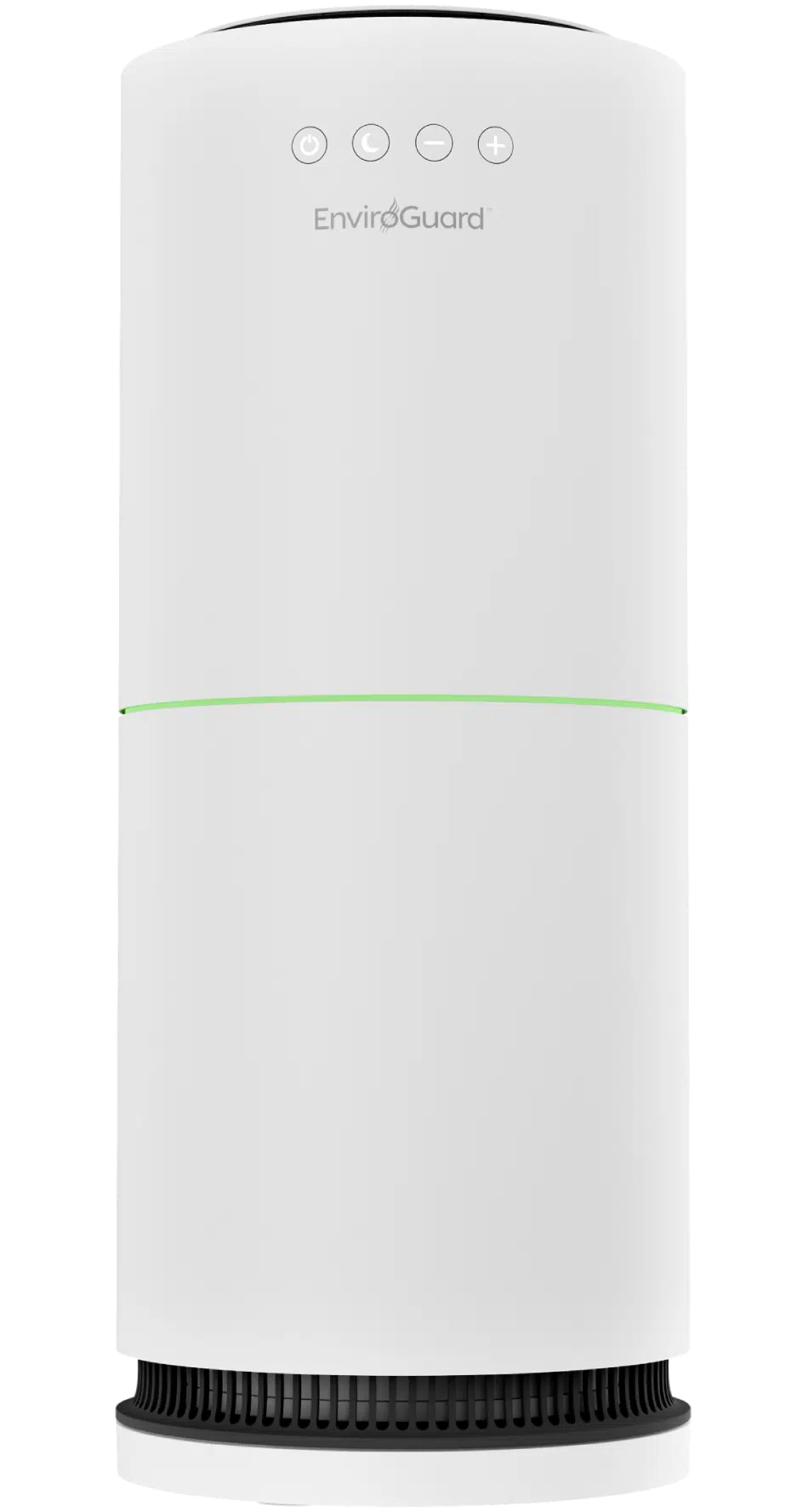
The VBreathe EnviroGuard PRO X™ combines mechanical filtration with active air treatment. Its two main components are described below.
1. Four-Stage PrimeProtect™ Filtration
According to the product information, the filtration system includes the following main components:
- Pre-filter: Helps capture larger dust particles, fabric fibres and coarse debris.
- AerisGuard™ antimicrobial layer: Designed to help limit microbial growth on the filter surface, as specified for the product.
- Medical-grade HEPA-13 filter: Designed to capture fine particles. The stated 99.97% efficiency should be considered alongside the relevant test conditions and standard referenced by the manufacturer. Find out more about the PrimeProtect™ four-stage filter.
- Activated carbon: Helps adsorb some gases, odours and volatile organic compounds (VOCs). Its performance depends on the type, amount and condition of the carbon material.
2. Active Whole-Room Vapour Treatment
Alongside air filtration, the system uses Purox™ Gel to release vapour. Air passing through the unit helps distribute the vapour through the indoor environment.
Vapour Phase Oxidation (VPO) uses an oxidation process to target certain organic contaminants in the air and on surfaces. The product describes this process as acting on allergens, odours and chemicals such as VOCs, breaking down their molecules into water and oxygen. The product information also states that the technology has undergone clinical testing, is designed for use around occupants and pets, and produces no ozone.
Start Creating a Cleaner-Breathing Bedroom
A clean bedroom is about more than removing visible dust. It also means reducing fine particles and allergens that may remain in the air you breathe throughout the night.
Combining good cleaning habits with an effective air-treatment system can help create a cleaner and more comfortable bedroom for you and your family.
The VBreathe EnviroGuard PRO X™ Environmental System includes the following features for indoor air treatment:
- High-efficiency HEPA-13 filtration: Helps capture dust, pollen and particles carrying allergens, subject to the performance of the filtration system.
- Purox™ Gel Active Air Care: Vapour Phase Oxidation technology designed to target certain contaminants in the indoor environment.
- Smart environmental sensing: Measures PM1, PM2.5, PM4 and PM10 particles, as well as temperature and humidity, according to product information.
- Whisper-quiet 33 dBA Night Mode: A night setting with a stated sound level of 33 dBA to support use while sleeping.
If you are looking for an approach to indoor air quality that goes beyond cleaning surfaces alone, explore the VBreathe EnviroGuard PRO X Environmental System and consider whether its features suit your bedroom and your family’s needs.