Pet allergens do not just cling to the clothes you have just worn. Instead, they are tiny protein particles floating in the air in every corner of the room. No matter how thoroughly you clean your clothes, the moment you put them back into the wardrobe, they are ready to be re-contaminated by the allergens floating in the air within just a few hours.
Therefore, the purpose of this article does not stop at recommending how to wash clothes. Instead, we want to present a comprehensive approach to managing pet allergens so that you can solve the problem decisively and right at the source. This covers everything from fabric cleaning techniques and changing clothing storage habits to managing indoor air quality. This is the key that will help break the re-contamination cycle and restore a safe space for you to live happily with your pets again.
Why can standard laundry not completely eliminate pet allergens?
Washing clothes is merely solving the problem at the end point on the “surface”. To understand why allergens refuse to go away, it is necessary to know The Four-Stage Contamination Cycle as follows:
- Primary Aerosolisation: When a pet moves, licks its fur, or shakes itself, protein particles will break loose and become airborne.
- Textile Deposition: The particles fall and settle on clothes in an open wardrobe or laundry hanging on a rack, even if the pet has never walked near those clothes.
- Mechanical Resuspension: Normal activities such as opening a wardrobe, grabbing a shirt, or folding clothes will create vibrations that cause the particles on the fabric to resuspend into your respiratory system.
- Re-deposition: When freshly washed clothes are put back in a room with unmanaged air, allergens will start accumulating on the clean fabric within 24 hours, causing the cycle to start all over again.
What are the limitations of standard laundering?
Besides the re-contamination cycle, cleaning clothes with standard methods also has limitations that make it impossible to completely eliminate allergens.
Washing water temperature
Destroying the protein structure requires hot water at 60°C, but many types of clothing (such as wool or delicate fabrics) cannot be washed at high temperatures. Washing in cold water can only wash away some of it, but most of the proteins remain deeply embedded.
Deep-fibre Sequestration
Fabrics that are thick, fluffy, or textured (such as fleece or velvet) are excellent places for trapping proteins. The centrifugal force from standard washing machines cannot penetrate to extract all these particles.
Risks from Dry Cleaning
The dry cleaning process uses solvents containing volatile organic compounds (VOCs). When clothes covered in plastic bags are hung back up, the residual chemicals and allergens will accumulate together in the wardrobe, worsening the air quality in the storage area.
How should an integrated management and cleaning approach be done?
To completely break the re-contamination cycle, cleaning alone is not enough. We need to elevate our management to cover all 3 main areas simultaneously as follows:
1.) Garment-Level Management
Cleaning with heat and enzymes is a key helper in destroying the protein structure of deeply embedded allergens. Washing separately and drying clothes properly will help prevent cross-contamination, as well as reduce the accumulation of airborne allergens while the fabric is still wet.
- Use hot water: Wash clothes at 60°C (always check the fabric care label first).
- Use enzymes for delicate fabrics: If it is necessary to wash with cold water, you should use a laundry detergent containing Protease enzymes to help break down protein stains.
- Wash separately: Do not wash clothes that have been in contact with pets together with regular clothes.
- Heat drying: If possible, clothes should be tumble dried on high heat for at least 10 minutes.
- Avoid air-drying clothes in open areas of the room: Avoid hanging clothes to dry in areas where pets walk past or reside.
2.) Storage Environment
This step is considered creating an effective physical barrier to prevent airborne particles in the room from falling and clinging onto your freshly washed clothes again.
- Seal tightly: Keep clothes that are rarely worn or clothes belonging to allergy sufferers in tightly sealed garment bags.
- Wipe the wardrobe clean: Regularly use a damp microfibre cloth to wipe away dust and pet dander along the shelves inside the wardrobe.
- Close the wardrobe doors completely: Close the wardrobe immediately after use, and avoid leaving the doors open.
3.) Ambient Air Treatment
Managing air quality means cutting off the allergen cycle right from the source by breaking down protein structures in the air and in the corners of your wardrobe “before” they fall onto your clothes.
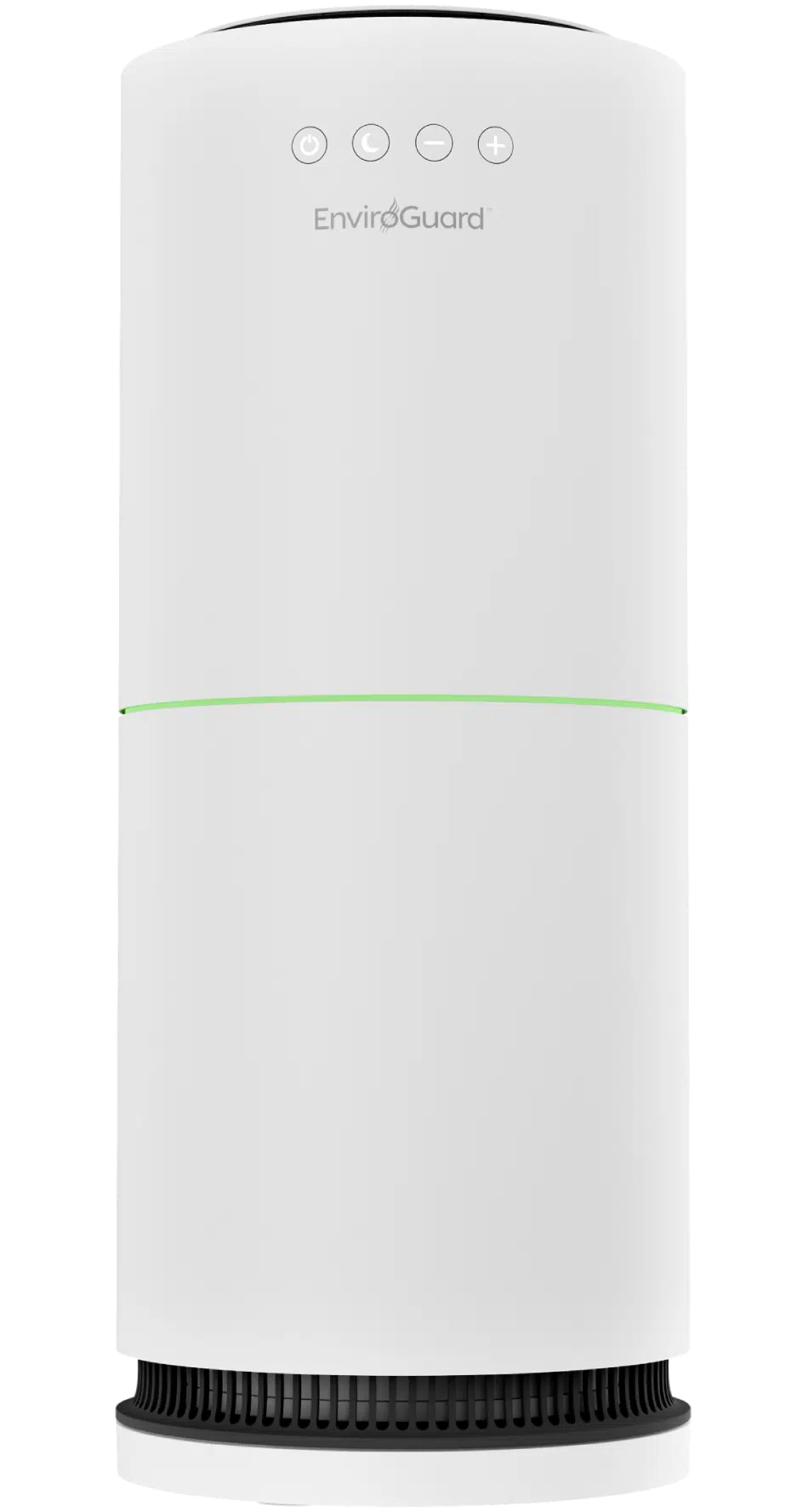
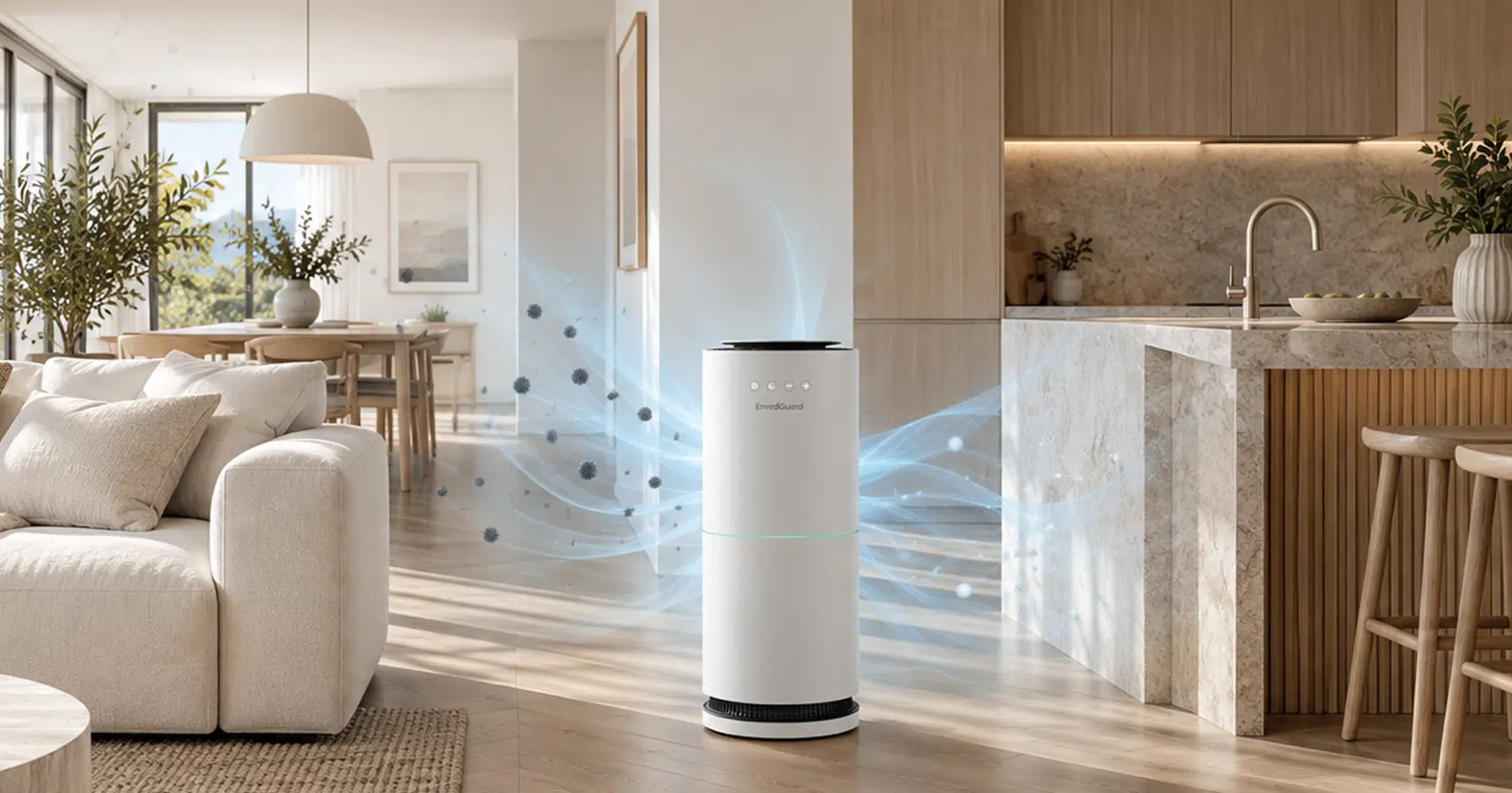
- Use an active elimination technology: You should choose an air treatment system that safely releases vapour (such as Vapour Phase Oxidation technology), which can circulate through the room to react with and help break down allergen molecules in every corner of the space.
- Do not rely solely on filtration systems (Passive HEPA): Standard dust-catching air purifiers only work well when the air floats into the machine, so they cannot comprehensively reach and deal with allergens clinging to clothes or embedded in blind spots.
Are there any specific risk spots in the house that need special attention?
Even if you strictly follow the washing and storage steps above, there are often “blind spots” in the house that act as hidden reservoirs for accumulating and spreading allergens without us knowing. If you neglect these spots, your clothes might become contaminated again.
Blind spots in the wardrobe
Hanging clothes often hold static charges that attract and trap protein particles. Combined with wardrobes being dark, enclosed spaces with little to no air circulation, this creates an ideal environment for allergen build-up. If you use an air purifier for pet allergies, Vapour Phase Oxidation technology is better suited for this, as the vapour can penetrate enclosed spaces and target allergens more deeply than a standard air purifier placed in the middle of the room.
Clothes that have just returned from Dry Cleaning
Many people think that keeping clothes in the plastic covers provided by the dry cleaner will help keep the dust out. However, in reality, these bags are not 100% airtight, and allergens can still slip inside. Moreover, the plastic bags trap volatile organic compounds (VOCs) from the dry cleaning solvents. The solution is to remove the plastic bags and air out the clothes in a well-ventilated area, or in a room with a working air treatment system, before putting them away in the wardrobe.
Pet beds near the laundry zone
In many homes, pet beds are often placed near the washing area or folding zone. This is the most dangerous risk point for re-contamination because while you are sorting or folding freshly washed clothes, those clothes will immediately absorb the allergens floating around the pet bed. Solution: You should move the pet bed away from the laundry area and fold clothes in a completely closed room or a room with proper climate management.
Conclusion: To break the allergy cycle, you should follow this
Cleaning clothes through washing is an essential part of hygiene care. However, it only provides a short-term fix. When allergens continue to circulate in the indoor environment, they quickly re-enter a cycle of accumulation, resuspension, and re-deposition—often within just a few hours.
The most effective strategy must therefore rely on an integrated management approach covering all 3 dimensions:
- Clothes: Wash to destroy proteins using the appropriate temperature or enzymes.
- Storage: Create a physical barrier with tightly sealed garment covers and a clean wardrobe.
- Air quality: Proactively treat the air with technology that helps break down allergens floating in the room and in the corners.
Especially point 3, which is the part people most often overlook, even though it is a key variable that determines whether your laundry washing and storage will reach maximum efficiency. If you can take care of all 3 of these levels, the annoying allergy problem will noticeably decrease, returning fresh air and a safe space for you to live happily and sustainably with your beloved pets.
Frequently Asked Questions (FAQs)
1. Does using a lint roller or vacuum cleaner help remove pet allergens on clothes?
Answer: It only helps at the surface level. Lint rollers and vacuum cleaners can remove hair and large pet dander, but they cannot pull out the tiny protein particles embedded deep within the fabric’s structure. Therefore, washing using the right method remains the most important step. Using a lint roller or vacuum cleaner is suitable for basic daytime maintenance to reduce the amount of external allergens.
2. How long can pet allergens stay on unwashed clothes?
Answer: Without proper management, allergenic proteins can persist and remain active for years. Their highly stable structure prevents them from degrading at normal room temperatures. As clothing stays in pet-inhabited environments without protection, it continues to accumulate more allergens over time.
3. Can standard air purifiers (HEPA) help reduce allergen contamination on clothes?
Answer: They only help partially. Passive filtration air purifiers can only trap allergens that float through the machine, but they cannot reach and deal with particles that have settled on clothes or allergens accumulated in enclosed spaces like wardrobes. Using an Active Air Treatment Technology that releases vapour throughout the room can therefore cut off the contamination cycle much more comprehensively.
4. Is an Active Air Treatment system safe for humans and pets?
Answer: It is completely safe when you choose technology backed by scientific testing and independent certification. For example, Vapour Phase Oxidation technology such as Purox™ Gel offers clear, evidence-based safety credentials, including:
- Test results from Eurofins Sydney: Confirms that the concentration level of hydrogen peroxide (H₂O₂) vapour released at a normal breathing distance during continuous machine operation is at a “Zero detectable” level, which is well below the safety standard limits.
- Certification from the University of New South Wales (UNSW): Conducted independent research and concluded that this technology is “completely safe to use as intended,” even in enclosed spaces where children and pets are present.
Furthermore, the aforementioned technology is a system that is entirely free from ozone emissions (100% Ozone-free), unlike some ioniser air purifiers. Therefore, it does not cause irritation to the lungs or respiratory system, meaning you can leave it on continuously to treat the air and manage allergens with complete peace of mind.