

Table of Contents Share Copy Link When setting up a nursery for your little one, one of the first things parents often buy is an air purifier. They think that just having a machine in the room should be enough to keep their child safe from dust and germs. However,
When setting up a nursery for your little one, one of the first things parents often buy is an air purifier. They think that just having a machine in the room should be enough to keep their child safe from dust and germs.
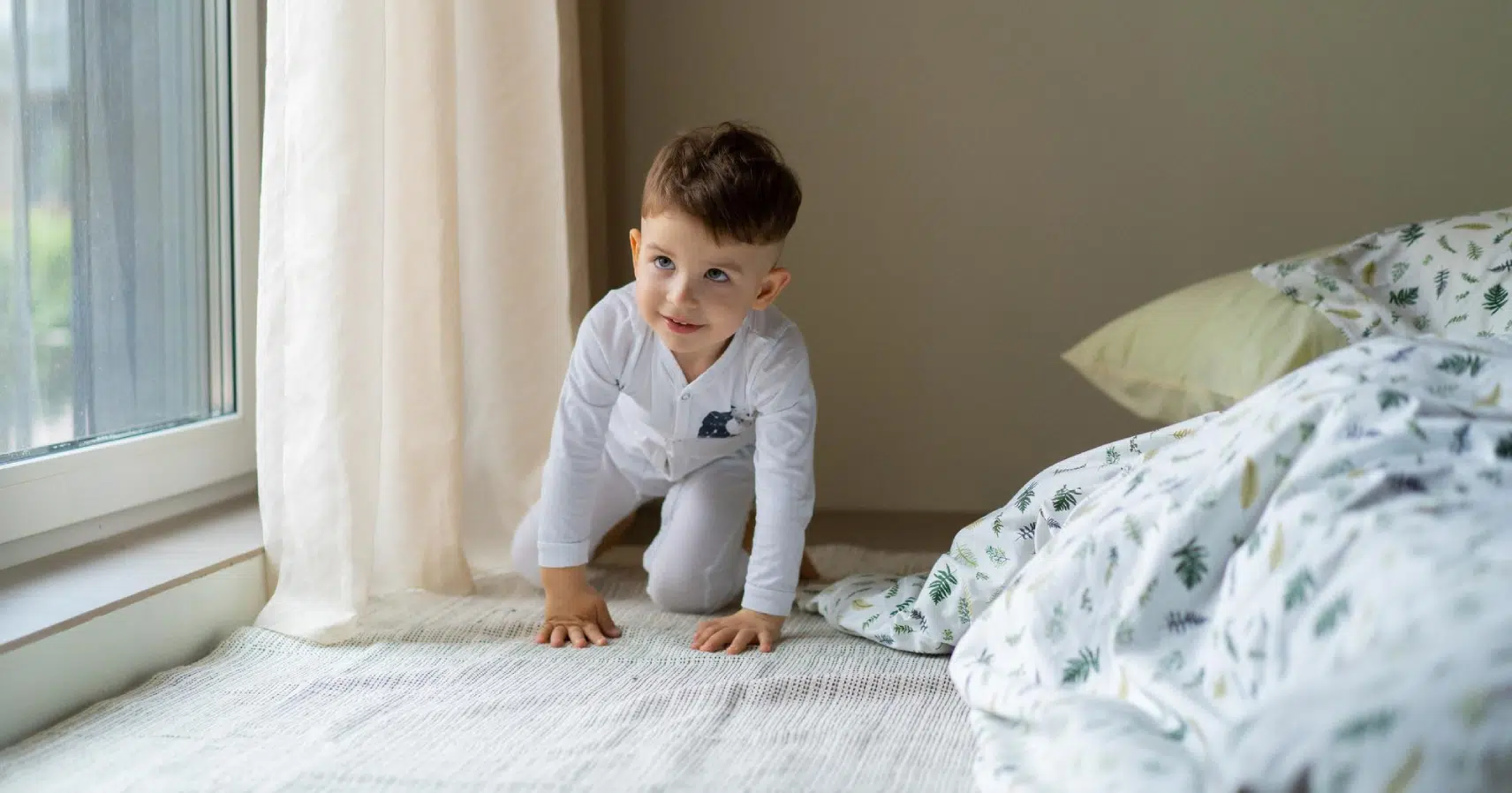
However, the reality of everyday life in a child’s bedroom involves much more than that. As soon as we close the door for bedtime, the air in the room becomes still. Meanwhile, new furniture, plastic beds, or even freshly bought toys can slowly release faint chemical odours (or VOCs) constantly. Furthermore, children love to crawl and play on the floor, put toys in their mouths, or sleep on low beds, which are all below the level where typical air purifiers can effectively draw in and filter the air.
Traditional air purifiers that we are used to working in a “passive” way, meaning they must wait for the air to carry dust or germs into the machine sitting in the corner of the room. By the time the air gets there, the machine might not be able to keep up with the breathing rate of your little one, who breathes many times faster than an adult. In this article, we will have a relaxed chat about the reality of children’s bedrooms and the new technologies that don’t just sit and wait for the dust to come to them, but can actively distribute themselves to protect your little one right where they are, ensuring the best possible hygiene for your child.
Parents might think that a child’s body functions similarly to ours, just smaller. But the reality of their respiratory system is that a “child’s lungs” are incredibly fragile and require significantly more special care than adult lungs, for the following real-life reasons:
This is exactly why we must pay extra special attention to “every breath” our child takes in their bedroom.

Sometimes when we walk into a newly decorated nursery, we might feel that the room looks beautiful, clean, and safe. But in reality, hidden in the corners and everyday items of a child’s room are “invisible pollutants”. Some chemical gases are completely odourless, causing us to lower our guard without realising it. Let’s look at these common items around us:
Many households prepare a soft mattress to welcome their new baby. However, standard mattresses are typically made from synthetic foams and glues, which are sources of formaldehyde emissions and other concerning volatile chemicals. What is worrying is that while your child is sleeping, their body heat further stimulates the mattress to release these chemicals at double the rate. Moreover, these don’t just evaporate in a day or two; they can slowly seep out bit by bit for months or even years.
To make the nursery look cute and bright, parents often choose beautiful pastel paints. But did you know that chemicals like Toluene or Xylene found in house paints and varnishes will continue to slowly evaporate and mix into the air for several weeks, even after we feel the “paint smell” has completely faded?
These two things are prime habitats for dust mites. And if you have dogs or cats at home, tiny flakes of skin (pet dander) will constantly fall and accumulate on these carpets and soft toys. These are major triggers for irritation and allergies in children.
Some adorable baby clothes are treated with chemical coatings to prevent wrinkling. When hung in a tightly closed wardrobe, these chemicals will gradually evaporate and accumulate until they fill the wardrobe and your child’s small bedroom.
The troubling truth is that standard air purifiers on the market can barely manage these types of chemical gases and volatile substances at their source. Standard dust filtration systems can only wait to catch airborne dirt that flows past the machine, but they cannot actively target and stop the evaporation or neutralise the chemicals seeping from the mattress, walls, or wardrobe.
When buying an air purifier, many people look for machines with a HEPA filter or thick carbon filters, thinking that should be sufficient. But in the real world of parenting, especially during the night when your child goes to sleep, traditional air purifiers have limitations that prevent them from working as efficiently as we expect:
Since traditional air purifiers can only passively catch large dust particles and cannot genuinely tackle chemical gases or surface germs, it is time for us to look for a new kind of technology that addresses this problem directly and safely for your baby’s health.
Imagine simply that there is a crumb of food on your child’s bedroom floor. The passive trapping method is like placing a vacuum cleaner in the corner of the room, turning it on to the max, and hoping the wind will blow the crumb into the machine. In reality, this is impossible. This is the difference between a “passive air purifier” and an “active environmental management system” that sends helpers out to tackle the problem directly.
Currently, a technology called Vapour Phase Oxidation (VPO) has been developed. It works by using the air flowing through the machine to carry Active Vapour, spreading it rapidly and thoroughly across every square inch of your child’s bedroom.
This invisible vapour will project outwards to instantly break down and destroy the structure of germs, dust mites, and volatile organic compounds (VOCs) mid-air. It also settles onto surfaces to clean things like mattresses, toys, or even confined spaces like wardrobes. It converts those toxins into simply water vapour and oxygen, which are safe for your baby to breathe.
To paint a clearer picture of how this works in daily life, let’s look at the simple comparison table below:
| Topic | Standard Air Purifier (HEPA Filter) | Active Purification Environmental Management System |
|---|---|---|
| Operation Method | Passive: Waits for the fan to pull air and dust into the machine. | Active: Sends out VPO vapour to seek and destroy toxins at their source. |
| Coverage Area | Only the immediate area around the machine where air flows. | The entire child's bedroom, including hidden corners and wardrobes. |
| Toxic Gas (VOCs) Handling | Captures very little and risks off-gassing when the carbon filter is full. | Permanently breaks down the molecular structure of chemical gases into water and oxygen. |
| Surface Care | Cannot do this at all (only filters airborne dust). | Vapour helps destroy germs and dirt clinging to mattresses, carpets, and children's toys. |
| Speed | Slow, as it relies on air circulation cycles. | Works up to 10 times faster than standard air purifiers (clinically tested). |
| Safety | Some models may emit ozone gas, which is harmful to a child's lungs. | 100% safe, no synthetic chemicals, and completely ozone-free. |
The magic of the Active Approach (which utilises both active VPO vapour and a medical-grade HEPA-13 filter) is that it works extremely quietly and gently. The machine and the vapour work together naturally. Your little one will continue to sleep soundly, warmly, and peacefully, while an invisible protective shield constantly and seamlessly cleans the air around them.
Upon hearing words like ‘vapour’ or the main active ingredient “Hydrogen Peroxide (H₂O₂)”, many parents might initially worry whether it is genuinely safe for their little one. But in reality, this VPO technology is designed by mimicking nature’s own cleaning mechanisms to ensure maximum gentleness and safety for every family member. Even newborns with the most fragile lungs or expectant mothers can live and sleep in the room normally without any concern. Here are the factual reasons why:
Simply put, VPO technology is like simulating our planet’s natural air-cleaning method in your child’s bedroom in the gentlest way possible. Parents can have complete peace of mind that every breath of a newborn baby and a pregnant mother will be safely and comfortingly cared for every single day.
Let’s look at a simulated 9-hour timeline of parents closing the door for their baby’s bedtime, comparing a room using a standard air purifier (passive) and a room using VPO technology (active):
Choosing an air purifier for Babies & Kids involves minor details that parents must consider more deeply than a standard adult bedroom. Let’s look at a 5-point checklist to help parents choose a worthwhile machine suited to their baby’s hygiene, starting from basic criteria to better, new intelligent systems:
It must not disturb your baby’s sleep cycle. The sleep cycles of children and infants are very fragile and they wake up easily. It is recommended to choose a machine with a “Sleep Mode” or “Night Mode” that operates quietly, at no more than 33 decibels (dBA), which is equivalent to a quiet library. This ensures your little one can sleep deeply all night without loud fan noises waking them up.
For a nursery that must have its door tightly shut all night, choose a machine with an Air Changes per Hour (ACH) efficiency of around 4.8–5 times per hour. This ensures that fresh air is constantly circulating and prevents damp, stale air from building up.
Strictly avoid air purifiers with ioniser systems or cheap machines that emit ozone. Ozone gas can easily irritate and damage a baby’s developing lung tissue. Always look for a machine with a certified “100% Ozone-Free” label from an independent body to guarantee your baby’s safety.
Standard air purifiers with only basic dust and carbon filters can only clean the dust that floats into the unit. Moreover, carbon filters are at risk of saturating and releasing toxins back into the air. A better new alternative is VPO (Vapour Phase Oxidation) technology, which releases a gentle, invisible vapour throughout every corner of the room to immediately break down chemical gas molecules, fine dust, and dust mites clinging to mattresses or toys, without waiting for the dirt to float to the machine.
Typical air purifiers often only detect and report PM2.5 dust. However, in a child’s bedroom, there are hidden dangers from fine dust and other factors. A superior new option is a smart system that can precisely monitor and display 4 particle sizes simultaneously (PM1, PM2.5, PM4, and PM10) to cover fine dust, pollen, and various allergens. It must also have built-in “temperature and humidity sensors”. Because a child’s skin and respiratory system are very sensitive, if the air-conditioned room is too cold or dry, the baby will be irritated and wake easily. These readings will help you adjust the temperature and nursery conditions optimally so your baby can sleep comfortably all night.
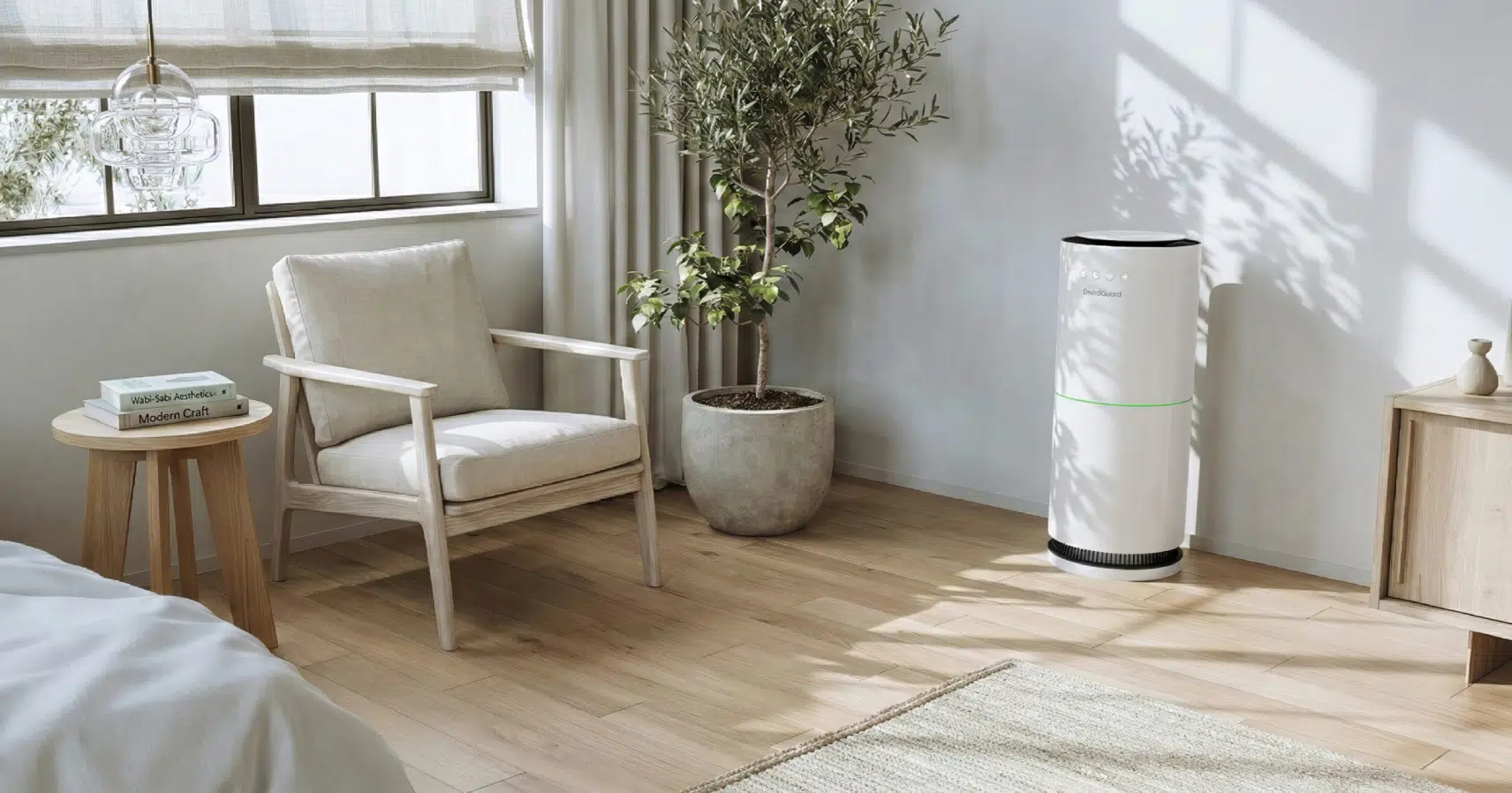
Once you have a good air purifier, another important daily matter for parents is finding the right spot to place it. Furniture, beds, and wardrobes in a child’s room greatly affect airflow directions. Let’s look at easy-to-understand placement techniques that will help your child get the best pure air:
In a bedroom where your beloved child breathes an average of 40 times a minute, the vital question for parents is no longer just about having an “air purifier” sitting in the room…. The real question is whether the air management system you choose can actually travel to protect your little one right where the dirt and chemicals are hiding.
Since traditional passive dust filters cannot keep up with volatile chemical gases or dirt on your child’s bed, switching to an environmental care technology invented specifically for children’s hygiene, such as the EnviroGuard PRO™ X working in tandem with Purox™ Gel in an Active Approach, is the answer that parents in Australia currently trust. It helps ensure that every breath your child takes will be nothing but clean, pure, and safe air every single day.
¹ Tested in independent Australian laboratories under controlled conditions using airborne mould spores, bacteria and allergen particulates (0.3μm–10μm).
² Based on third-party testing results confirming 99.9% reduction in airborne mould spores and pet dander when using EnviroGuard Pro X with Purox™ Gel over 24 hours.
³ Independent testing by ICAS Testing Technology Service (Shanghai) Co., Ltd. demonstrated 99.99% reduction in airborne Staphylococcus Albus bacteria within 30 minutes in a 20m² test chamber, in accordance with Technical Standard for Disinfection GB 27948-2020.
⁴ Surface efficacy testing conducted by Eurofins BioPharma Product Testing — Sydney (Eurofins ams Laboratories Pty Ltd, TGA-licensed under MI-2021-LI-08995-1). Reductions over 8 hours: 99.99% Pseudomonas Aeruginosa, 99.9% Escherichia Coli, 90% Candida Albicans Yeast.
⁵ "10x faster than conventional filtration" comparison based on EnviroGuard Pro X achieving log 4 (99.99%) airborne bacterial reduction in 30 minutes, compared with log 1 (90%) pathogen reduction in 20 minutes reported for hospital HEPA systems operating at 12 air changes per hour (Fernstrom A, Goldblatt M. Aerobiology and its role in the transmission of infectious diseases. J Pathog. 2013;2013:493960).
⁶ Performance varies based on room size, airflow configuration, fan speed setting, environmental conditions and usage patterns.
Remove
Total Amount
Adding {{itemName}} to cart
Added {{itemName}} to cart