Asthma is not merely about experiencing fatigue or occasional coughing fits; it is a chronic respiratory disorder characterised by continuous inflammation of the bronchial walls. Today, asthma is no longer just a personal health issue but a major global public health concern affecting people of all ages, particularly children and adolescents. In fact, this condition remains a leading cause of hospital admissions and school absences. If left undiagnosed and improperly managed, asthma symptoms can escalate into life-threatening medical emergencies.
This article will delve into the underlying causes and triggers of asthma, provide updates on the latest 2025-2026 treatment guidelines from Australia, and recommend ways to manage your environment using air purification technology. This comprehensive guide aims to empower patients and their families to confidently cope with the condition and improve their overall quality of life.
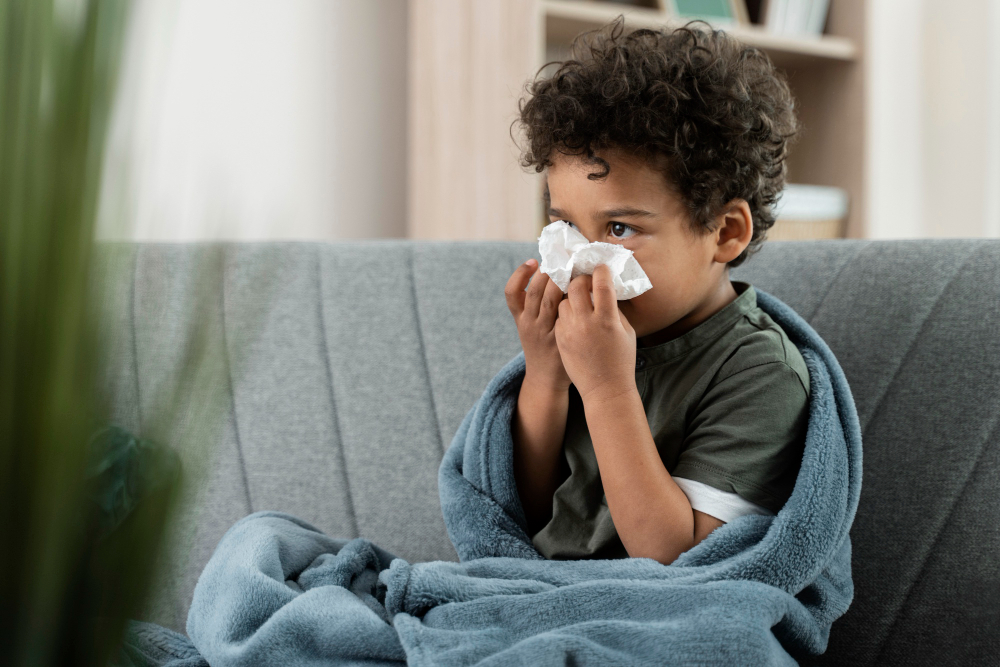
Asthma symptoms tend to fluctuate and can vary significantly in severity from person to person. Common typical signs include shortness of breath, coughing, wheezing, and a feeling of chest tightness.
Age-specific symptom differences:
A sudden, severe flare-up is considered a medical emergency. If you observe any of the following signs, take the patient to the hospital or contact emergency services immediately:
For effective disease management, it is crucial to understand and differentiate between the “root causes” of the condition and the “triggers” that provoke an attack, which can be categorised as follows:
Currently, the medical community cannot pinpoint a single definitive cause, but it is widely believed to result from a combination of genetic and environmental factors. The most significant risk factor is having immediate family members with a history of atopic disease. The patient’s body exhibits a hypersensitive immune system, making their airways highly susceptible to inflammation.
Triggers vary significantly from person to person. What provokes an attack in one individual might have absolutely no effect on another. You can learn more about the common culprits by exploring Asthma Triggers & Causes, which typically include:
Allergic asthma is the most prevalent form of the disease. The primary mechanism involves a hypersensitive immune response mediated by IgE antibodies. When a patient is exposed to an allergen (such as dust mites or pollen), their body produces abnormally high levels of IgE, which in turn stimulates immune cells like mast cells to rapidly release inflammatory mediators, such as histamine.
This process causes the smooth muscles of the bronchial tubes to contract, swell, and produce thick, sticky mucus that obstructs the airways.
Medical professionals have observed a significant, sequential progression of allergic diseases, commonly referred to as “The Allergic March” or “Atopic March”. This trajectory often begins with eczema (atopic dermatitis) in infancy, progresses to food allergies during the toddler years, and eventually develops into asthma and hay fever (allergic rhinitis) by later childhood or adolescence.
Statistics show that approximately two-thirds of children with eczema will develop hay fever, and one-third will eventually develop asthma. These trends suggest that allergic asthma is not merely an isolated lung problem, but rather a consequence of an overall systemic immune system dysfunction.
Seasonal asthma – Asthma symptoms often fluctuate and worsen according to the season. They may severely flare up during periods of high pollen counts (such as spring to early summer) or during the winter months when respiratory viruses are rampant.
Beyond typical seasonal variations, there is a dangerous meteorological phenomenon that can lead to critical emergencies: “Thunderstorm Asthma“. This occurs when strong wind gusts ahead of a storm sweep pollen (such as grass pollen) up into the clouds. Upon colliding with high humidity, the pollen grains absorb moisture, swell, and rupture into millions of microscopic sub-pollen particles, measuring less than 2.5 microns. Cold downdrafts then carry this highly concentrated allergenic particulate matter back down to ground level.
Because these fragments are incredibly fine, they bypass the nose’s natural filtration system and penetrate deep into the lower airways, triggering sudden and severe asthma attacks. Alarmingly, even individuals with no prior asthma diagnosis, who merely suffer from seasonal hay fever, can experience life-threatening asthma exacerbations from these storms.
Australia bears a massive burden of asthma, with roughly 2.8 million people (about 11% of the national population) living with the condition. Furthermore, the country faced the world’s most devastating epidemic thunderstorm asthma event in Melbourne in 2016, which resulted in over 3,300 emergency department presentations and 10 tragic deaths in a single evening.
To address this crisis and foster a deeper understanding of the disease, the recently updated Australian Asthma Handbook 2025 announced a major shift in treatment guidelines. It explicitly states that relying solely on a short-acting beta-2 agonist (SABA) reliever, such as Salbutamol, is no longer considered adequate treatment for adolescents and adults.
The rationale behind this change is that depending heavily on bronchodilators only provides temporary symptom relief while masking the chronic underlying airway inflammation. Data also indicates that SABA overuse (dispensing more than 12 canisters a year) is associated with a 32-fold increased risk of asthma-related mortality.
Therefore, the new standard recommends transitioning to an Anti-Inflammatory Reliever (AIR) therapy, which combines an inhaled corticosteroid (ICS) with a fast-acting bronchodilator (Formoterol) in a single device. This approach ensures that every time a patient uses their inhaler to ease breathlessness, they are simultaneously treating the root inflammation, with clinical outcomes showing this method can reduce the risk of severe exacerbations by up to 55% compared to traditional SABA use.
The most effective way to manage asthma is not just treating symptoms as they arise, but employing proactive daily prevention to minimise the chances of flare-ups. Here are practical self-care and risk-reduction strategies patients can adopt immediately:
When discussing indoor environmental management, Are air purifiers good for asthma? Clinical research confirms that air purifiers equipped with HEPA filters can indeed reduce fine particulate matter (PM2.5) and airborne allergens. However, conventional air purifiers still possess significant, unavoidable limitations.
Traditional air purifiers operate on a “Passive” system, meaning the device must wait to draw air and pollutants through its filter. In reality, heavier allergens or toxic gases often do not drift far enough to reach the unit. Furthermore, standard HEPA filters cannot decisively destroy volatile organic compounds (VOCs) or toxic gases. Although some models feature Activated Carbon filters to absorb odours, these filters merely “trap” the gases. Once saturated, or when temperature and humidity fluctuate, these accumulated toxins can be released back into the room (off-gassing), posing a severe hazard to asthma sufferers.
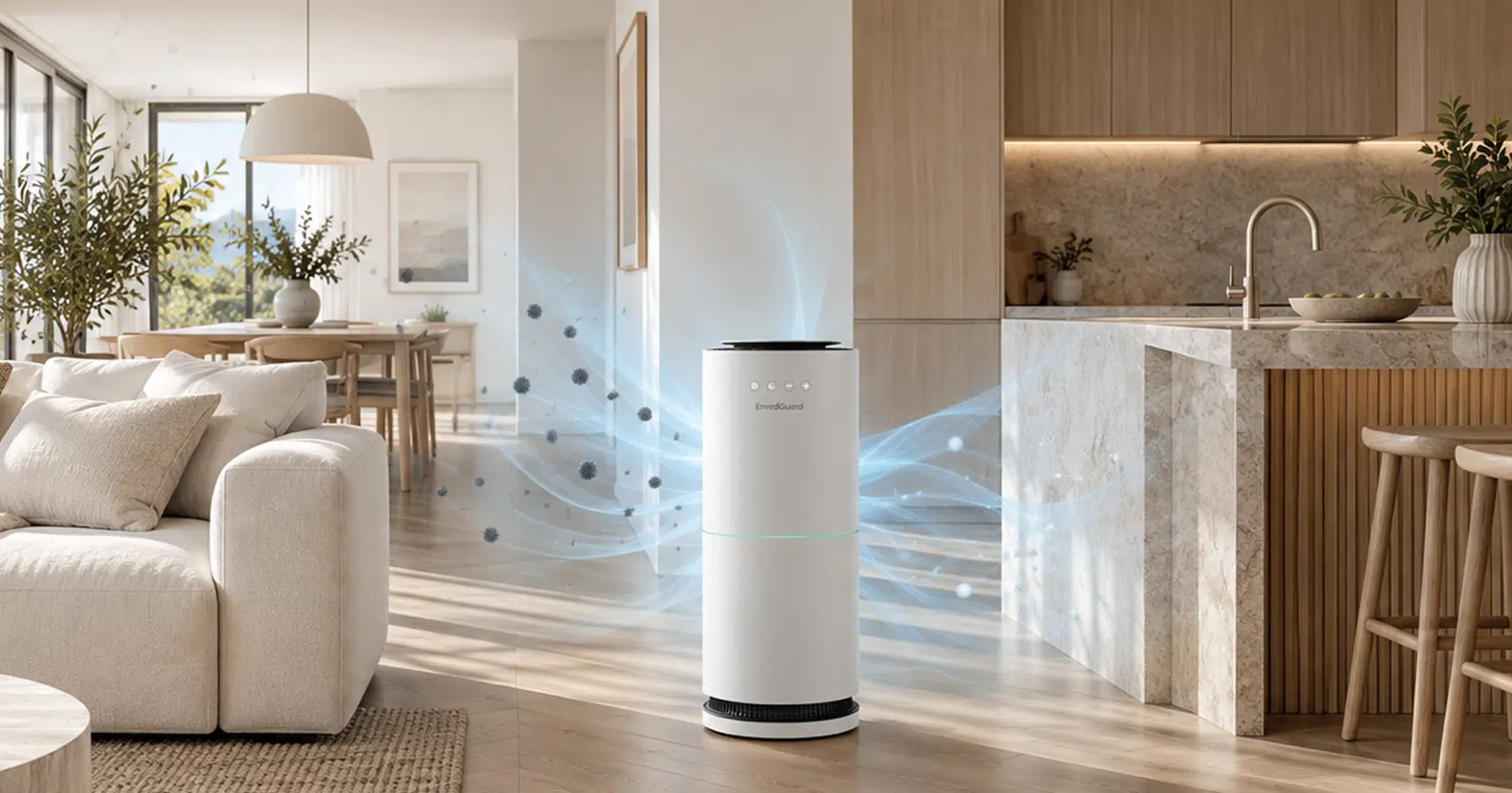
To truly serve as an effective air purifier for asthma and allergy sufferers, technology must evolve from a passive defence to an “Active Air Treatment”. An exemplary innovation is the EnviroGuard Pro X, designed to offer comprehensive protection for the respiratory system.
To clearly illustrate the distinction, the table below compares the two technological approaches:
| Operational Feature | Traditional Air Purifiers | EnviroGuard Pro X (VPO) Environmental System |
| Core Principle | Passive: Must wait to draw air into the device. | Active: Proactively releases vapour to seek out pollutants and allergens. |
| Coverage Area | Limited only to zones reached by the machine’s airflow. | Whole-Room: Reaches every corner and cleans deep down to the surface level. |
| Toxic Gas (VOCs) Management | Limited (often risks off-gassing, releasing toxins back into the air). | Molecular Breakdown: Permanently destroys the chemical bonds of toxic gases. |
| Processing Speed | Slow response; must wait for pollutants to disperse towards the unit. | 10x Faster: Neutralises pollutants mid-air before they can spread. |
| Surface Protection | Ineffective. | Destroys pet dander proteins and mould spores embedded on surfaces (e.g., sofas, carpets, beds). |
Dual Active Approach: The EnviroGuard Pro X system does not abandon traditional filtration but merges two innovative formats for ultimate safety.
Selecting an air purifier for asthma patients should focus on “Active” rather than “Passive” systems. The EnviroGuard PRO™ X from VBreathe is highly recommended, as it employs a Dual Active Approach. It features VPO (Vapour Phase Oxidation), which releases vapour from the Purox™ Gel to permanently break down the molecular structure of VOCs and allergens both mid-air and on surfaces. This is paired with the PrimeProtect™ Filter, a medical-grade system that captures 0.3-micron particles with 99.97% efficiency. This technology is exceptionally safe for patients as it is 100% ozone-free.
Childhood asthma has about a 30-70% chance of improving or going into remission as children grow into adolescence, primarily because their airways enlarge. However, this does not guarantee a cure for everyone. If the asthma is severe or heavily triggered by allergies, the condition can relapse in adulthood. Proper treatment from an early age significantly increases the likelihood of outgrowing the condition.
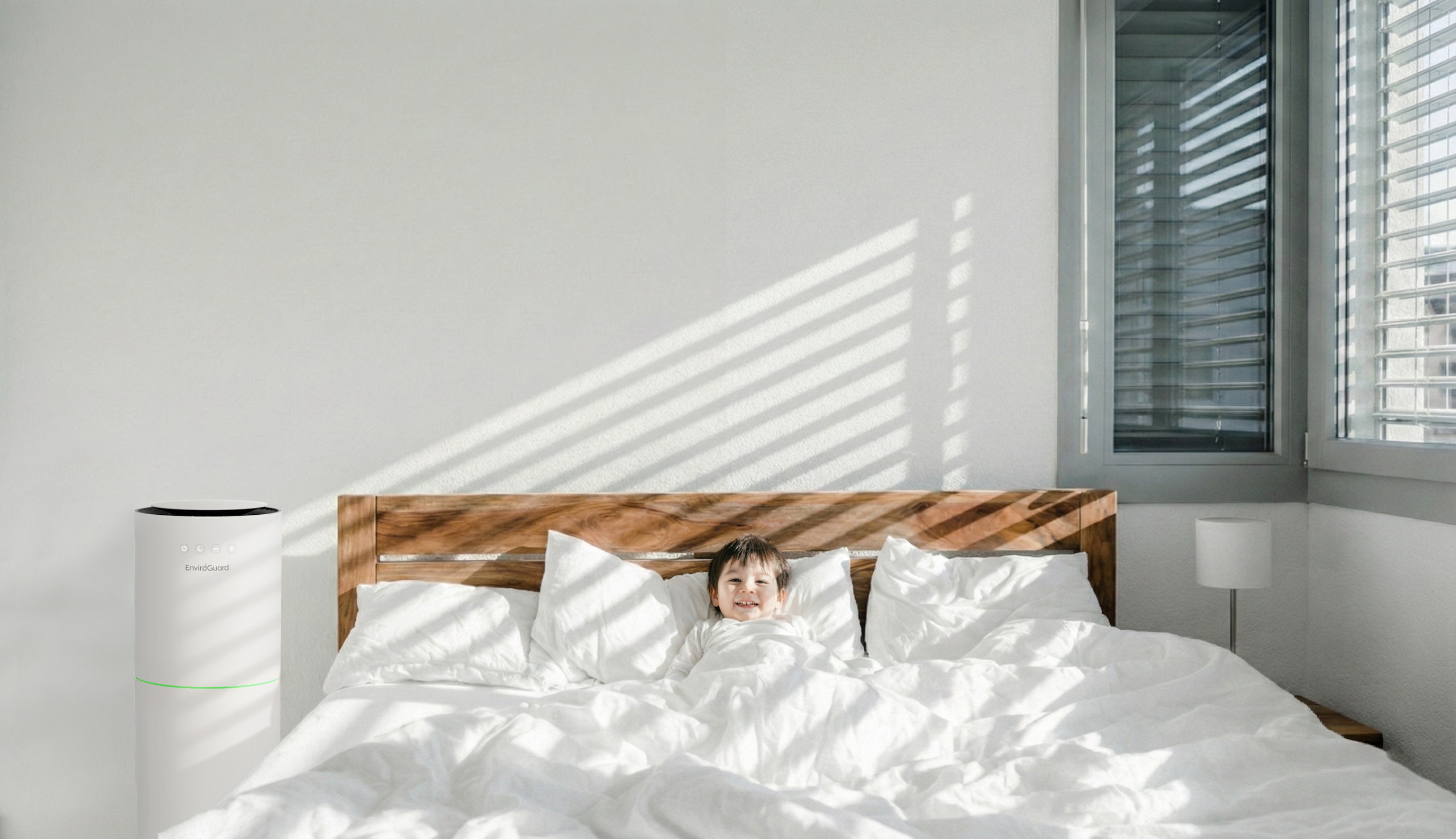
Yes, it is advisable to operate the unit continuously 24/7 to maintain a consistently clean environment. Leaving the machine on prevents the accumulation of new allergens and pollutants. Especially when using an active system like the EnviroGuard PRO™ X, continuous operation allows the vapour to disperse and form a fully effective protective shield, seamlessly neutralising newly introduced toxins and pathogens.
Pet dander and proteins found in their saliva are major asthma triggers. While doctors generally recommend avoiding pets, if you must keep them, maintaining pristine cleanliness is paramount. Relying solely on a traditional HEPA filter may not suffice, as it only captures dust that floats through the device. Conversely, Vapour Phase Oxidation (VPO) technology releases an active vapour that destroys allergenic proteins and deep-seated odours at the molecular level within fabric fibres, sofas, and pet beds, providing far more comprehensive respiratory protection.
Patients can and “should” exercise regularly if their asthma symptoms are well-controlled. Even though physical exertion (particularly in dry and cold weather) can trigger exercise-induced bronchoconstriction in some individuals, the correct approach is forward planning. For example, using a reliever inhaler before commencing activities, as advised in the Green Zone of their Asthma Action Plan, helps prevent airway constriction during exercise, allowing patients to safely enjoy the lung and overall health benefits of physical activity.
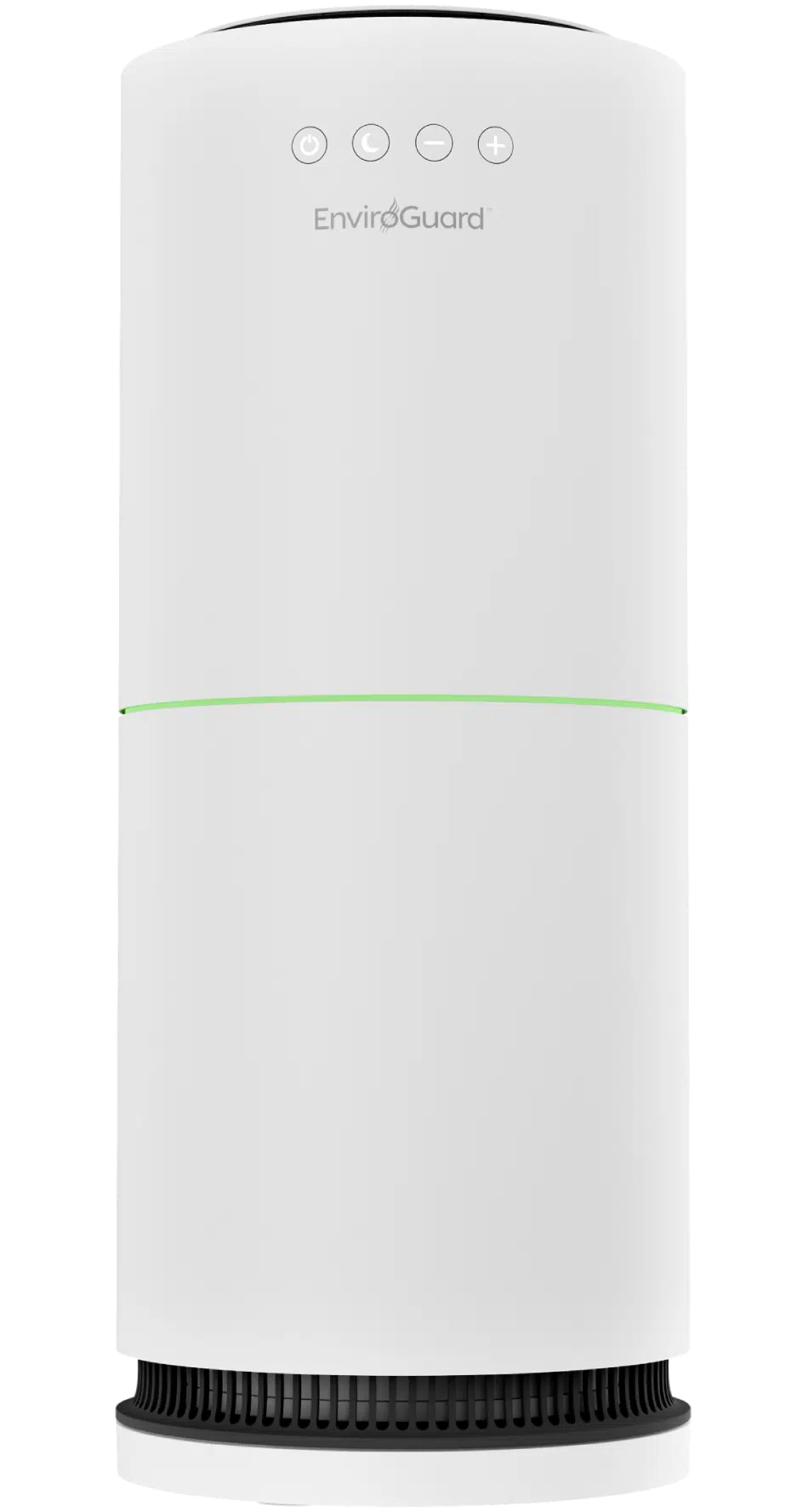
Upgrade to the innovative EnviroGuard PRO™ X today for only $790 (Was $1,590). Claim your $800 saving now and breathe cleaner, healthier air tomorrow.