Top 10 Indoor Plants That Improve Air Quality (And Why You Still Need a Purifier)
Bring home a new couch or finish painting the nursery, and you’ll notice that unmistakable “new” smell drifting through the house. It’s not just a smell — it’s off-gassing, and it’s one of the reasons so many Aussies start Googling best indoor plants for air quality the moment they […]
The air quality is generally acceptable for most people. However, sensitive groups may experience minor to moderate symptoms from long-term exposure.
PM₂.₅
15.79
PM₁₀
20.99
SO₂
22.07
NO₂
31.39
O₃
51.99
CO
195.23
Table of Contents
Share
Today’s Air Quality
London, GB
2:33 PM
Air QualityModerate
The air quality is generally acceptable for most people. However, sensitive groups may experience minor to moderate symptoms from long-term exposure.
PM₂.₅
15.79
PM₁₀
20.99
SO₂
22.07
NO₂
31.39
O₃
51.99
CO
195.23
Bring home a new couch or finish painting the nursery, and you’ll notice that unmistakable “new” smell drifting through the house. It’s not just a smell — it’s off-gassing, and it’s one of the reasons so many Aussies start Googling best indoor plants for air quality the moment they move into a freshly renovated home.
Houseplants are having a moment, and for good reason. They look great, they’re calming to be around, and — according to a famous NASA study from 1989 — some of them can actually pull toxins out of the air. But here’s what most “top 10 plants” listicles won’t tell you: that NASA research was done in sealed 0.5 cubic metre chambers, not in a living room with doors, windows and an air conditioner running. Real homes behave very differently to lab boxes.
So in this guide, we’ll walk through the plants that are genuinely backed by data, what they can and can’t do for your indoor air, and why most Australian homes still need something more powerful sitting alongside the greenery — especially if you’re dealing with a large open-plan living area, pets, or a place that’s just been renovated.
What Does "Air-Purifying" Actually Mean for a Houseplant?
When people say a plant “purifies” air, they’re usually talking about one (or all) of three natural processes happening inside the leaves and roots.
The first is stomatal absorption. Leaves are covered in tiny pores called stomata, and as the plant breathes, it draws in gases — including airborne VOCs like formaldehyde and benzene — along with the carbon dioxide it needs for photosynthesis. The second is cuticular adsorption, where oily, waxy compounds stick to the surface of the leaf itself, a bit like dust settling on a car bonnet. The third, and the one almost nobody talks about, is what happens underground: rhizosphere biodegradation. Moisture pulled down through the plant carries pollutants into the root zone, where naturally occurring soil bacteria and fungi break them down into harmless by-products like water and carbon dioxide.
Not every plant does this the same way, either. C3 plants — the majority of common houseplants — open their stomata during the day and do their gas exchange in daylight, right when photosynthesis is happening. CAM plants, on the other hand, are built for dry climates and keep their pores shut during the day to conserve moisture, only opening them at night. That’s why a plant like the Snake Plant is so often recommended for bedrooms — it’s doing its best air-cleaning work while you sleep, not while you’re at work.
This is also where the famous 1989 NASA Clean Air Study comes in. The research, run with the Associated Landscape Contractors of America, was designed to test whether plants could help scrub the air inside sealed space station environments. Plants were placed in small, airtight chambers for 24 to 72 hours and tested against specific chemicals. Several species performed impressively under those conditions.
Why Lab Results Don't Translate Directly to Your Living Room
Here’s the catch that rarely makes it into the average blog post: a sealed half-cubic-metre chamber has no air exchange at all. Your house isn’t like that. Modern Australian homes typically cycle air in and out at a rate of roughly 0.5 to 2 air changes per hour, thanks to gaps, ventilation, and mechanical systems doing their job.
To match what a standard HEPA air purifier for home use can achieve in that same space, researchers estimate you’d need somewhere between 10 and 1,000 plants per square metre of floor area — a genuinely wild number once you picture it. A lounge room with that many pot plants would be a jungle, not a living space.
None of this means plants are useless. It just means the “one peace lily and I’m sorted” idea doesn’t hold up once you look at the maths.
Top 10 Best Indoor Plants for Air Quality
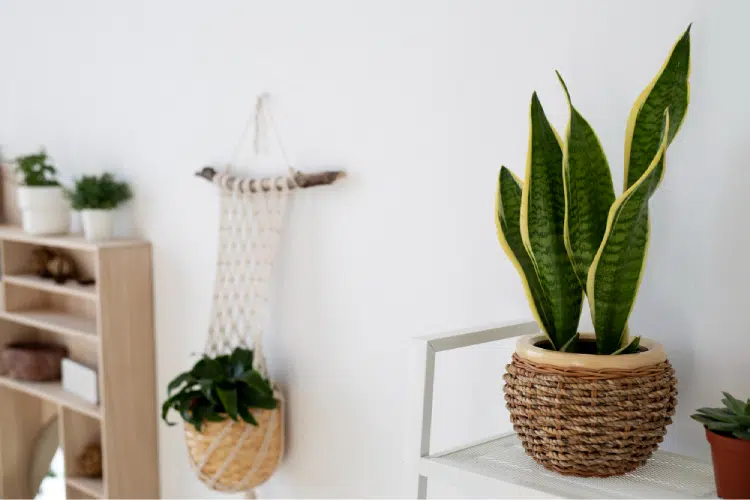
1. Snake Plant (Dracaena trifasciata)
Often still sold under its old name, Sansevieria, the Snake Plant is a CAM species, meaning it releases oxygen and processes VOCs overnight rather than during the day. Lab testing recorded it removing meaningful amounts of formaldehyde, benzene and trichloroethylene, plus some nitrogen oxides. It’s about as low-maintenance as houseplants get — happy in low light or bright indirect sun, and it prefers to dry out completely between waterings.
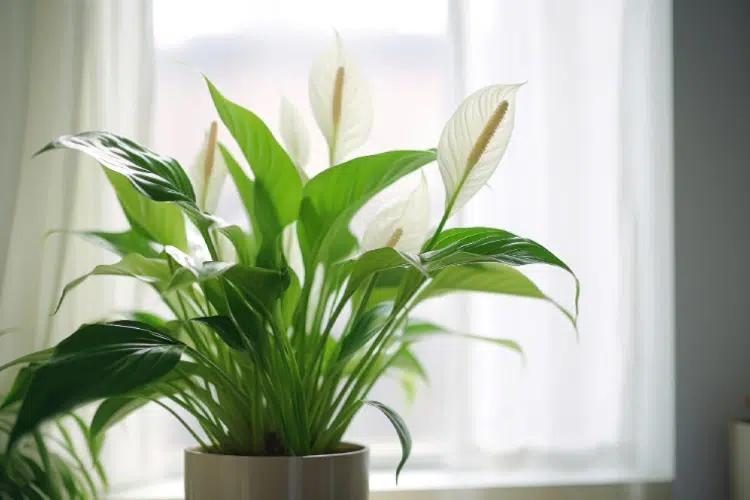
2. Peace Lily (Spathiphyllum ‘Mauna Loa’)
One of the strongest all-rounders in the original NASA data, the Peace Lily processed benzene, trichloroethylene, formaldehyde, xylene and even airborne ammonia. It likes bright, indirect light and consistently moist (not soggy) soil, and it’s dramatic about telling you when it’s thirsty — the leaves droop noticeably, then perk back up soon after watering.
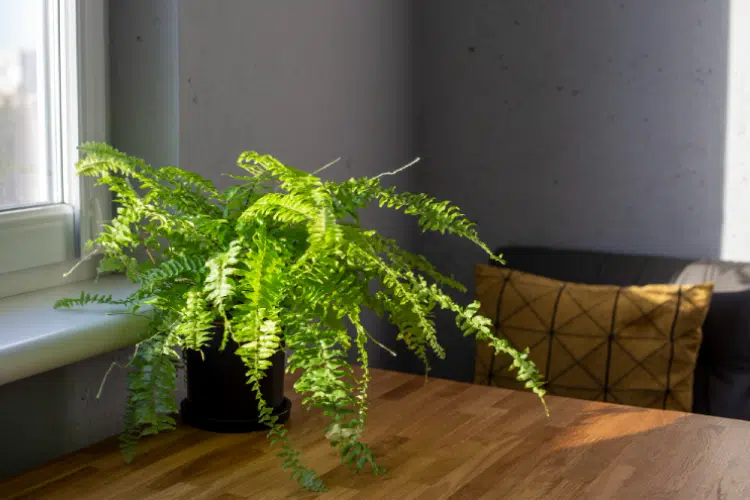
3. Boston Fern (Nephrolepis exaltata ‘Bostoniensis’)
This fern posted one of the highest formaldehyde removal rates recorded in chamber testing, largely thanks to its huge leaf surface area. It also naturally lifts humidity in a room through transpiration, which is handy in Australia’s drier inland climates.
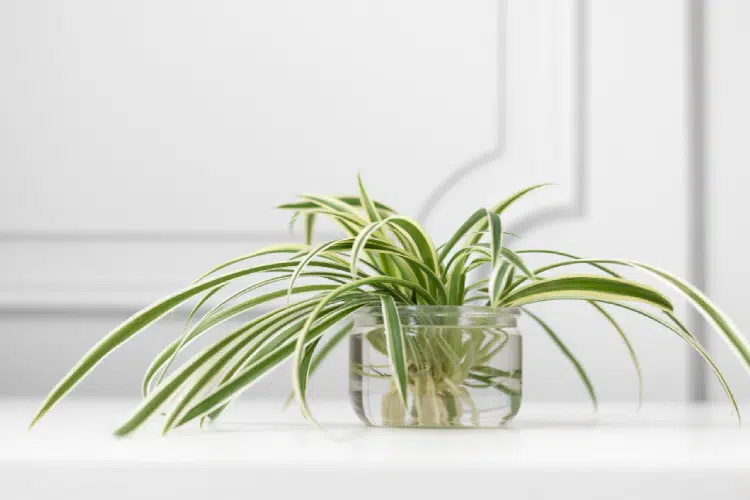
4. Spider Plant (Chlorophytum comosum)
The Spider Plant is a genuine Aussie household favourite, and it’s easy to see why — it’s cheap, forgiving, and turns up on the shelves at most nurseries and hardware stores, including the spider plant options you’ll spot at Bunnings on any given weekend. It absorbs formaldehyde and processes xylene, toluene and carbon monoxide, and it tolerates a fair bit of neglect.
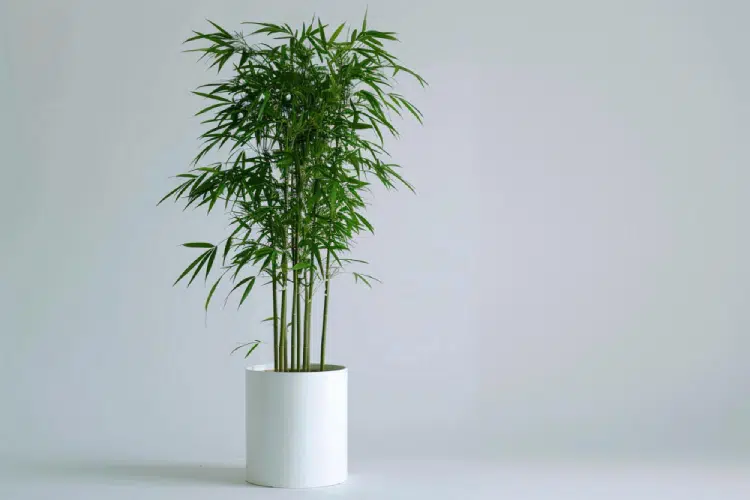
5. Bamboo Palm (Chamaedorea seifrizii)
One of the standout performers in the original research, the Bamboo Palm scrubbed notable amounts of formaldehyde, benzene and trichloroethylene in testing. It handles low light better than most palms and prefers evenly moist, well-aerated soil.
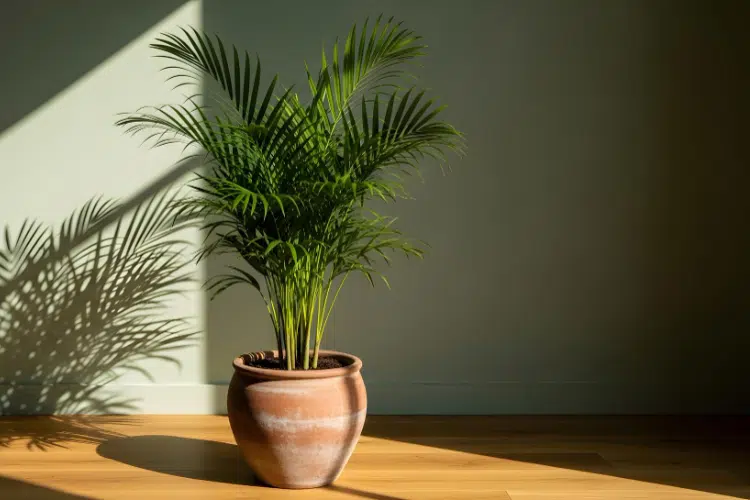
6. Areca Palm (Dypsis lutescens)
The Areca Palm processes formaldehyde, xylene and toluene, and its high transpiration rate makes it a decent natural humidifier for dry rooms. It wants bright indirect light and consistent moisture — direct sun will scorch the fronds fast.
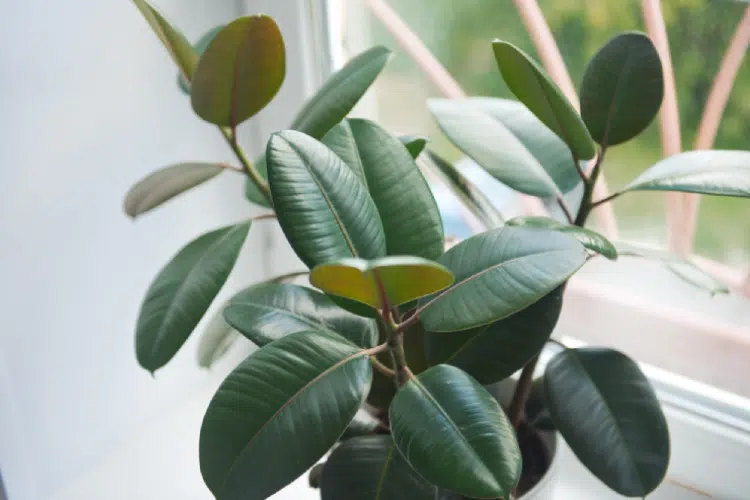
7. Rubber Plant (Ficus elastica)
Thanks to its large, waxy leaves, the Rubber Plant is efficient at adsorbing and metabolising airborne formaldehyde and benzene. It needs bright indirect light and a light wipe-down occasionally, since dust build-up on those big leaves can block gas exchange.
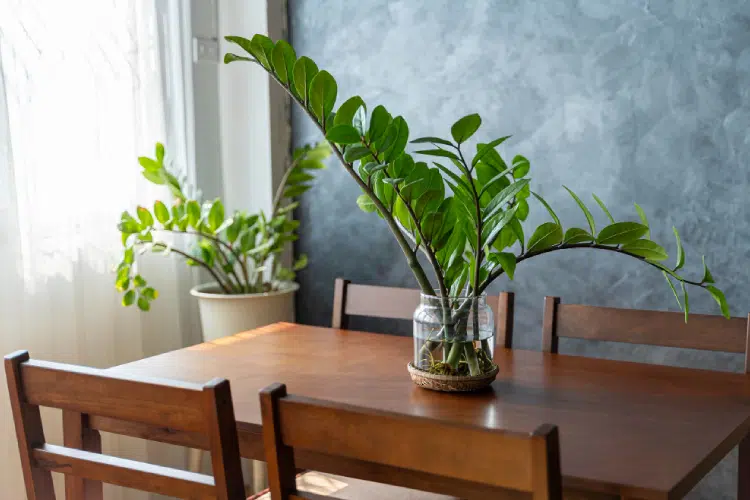
8. ZZ Plant (Zamioculcas zamiifolia)
Almost impossible to kill, the ZZ Plant handles low light and irregular watering better than nearly anything on this list. Studies show it absorbs a solid share of BTEX compounds — benzene, toluene, ethylbenzene and xylene — mostly through its leaf pores.
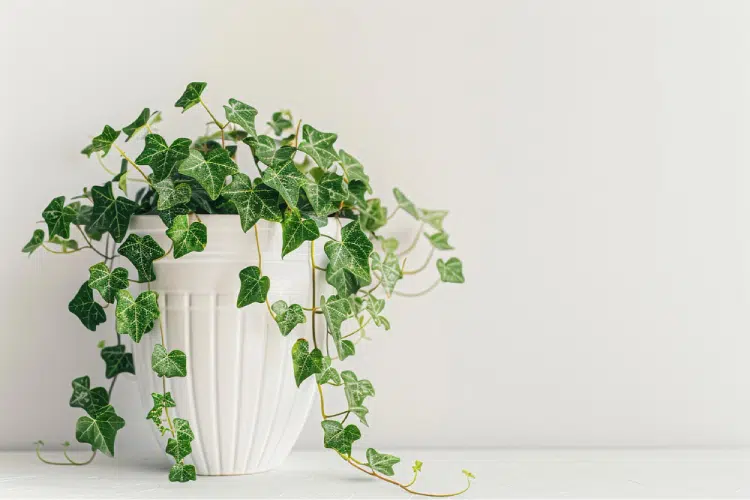
9. English Ivy (Hedera helix)
English Ivy showed up strongly across multiple VOC categories in testing, including benzene, formaldehyde and trichloroethylene. It prefers cooler indoor temperatures and consistently moist soil, and it can get leggy if the light’s too low.
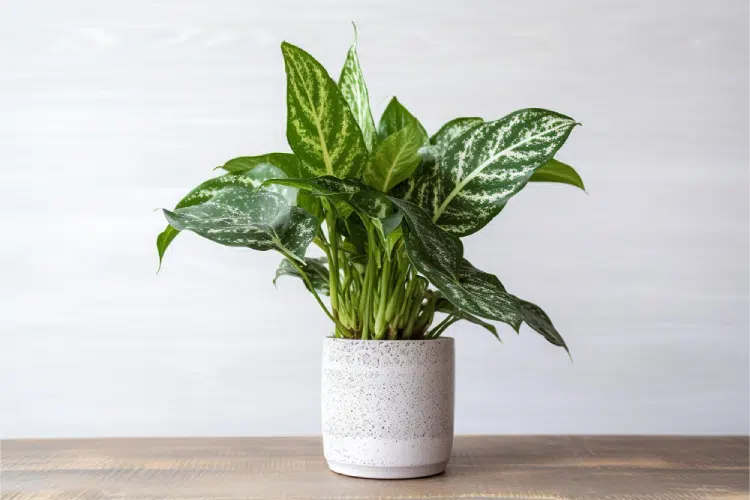
10. Chinese Evergreen (Aglaonema modestum)
A reliable, shade-loving plant that processes benzene and formaldehyde at a steady baseline rate. It’s a solid option for darker corners of the house where most other plants would sulk.
Botanical Library
Species-specific care, toxicity, and design suitability.
Phytoremediation Performance
Comparison of VOC removal rates measured in NASA chamber trials ($ \mu g/h $). Note that mechanical ventilation often outperforms these passive rates, making plants a complementary strategy.
What Plants Can’t Do: The Honest Limitations
Here’s the part worth being upfront about. Plants are genuinely poor at filtering fine particulate matter — the PM2.5 and PM10 dust that comes from traffic, bushfire smoke, cooking, and everyday household activity. That job belongs to physical filtration, not leaves. If particulate matter is your main concern, a plant isn’t going to move the needle much at all.
And as we covered earlier, the sheer number of plants needed to genuinely rival a mechanical air purifier for home use is far beyond what’s practical in a normal-sized room. Plants are best thought of as a supporting layer in your indoor air strategy — not the whole strategy.
What Small Plants Remove Smell From a Room?
If you’re chasing a plant that’ll tackle cooking smells, pet odours or general stuffiness, the honest answer is: none of them do it particularly well. Plants like the Boston Fern or Areca Palm can nibble away at light background VOCs over time through transpiration and leaf adsorption, but they’re not built to neutralise strong odours, smoke, or cooking fumes in any meaningful way. For that, you’re better off looking at ventilation or an active air treatment system.
Building a Real Indoor Air Quality Strategy (Plants + Mechanical Systems)
The best approach isn’t plants or purifiers — it’s layering both, alongside good source control (think low-VOC paints and furniture) and decent ventilation.
Plants add a genuine, if modest, biophilic layer to that stack. They help nudge humidity, support some gas exchange, and undeniably make a room feel calmer and more liveable. But for bigger rooms, higher-occupancy homes, recently renovated spaces still off-gassing, or households with pets and allergy sufferers, plants alone can’t close the gap. That’s where a proper air purifier for VOCs — or a home-wide system — earns its keep.
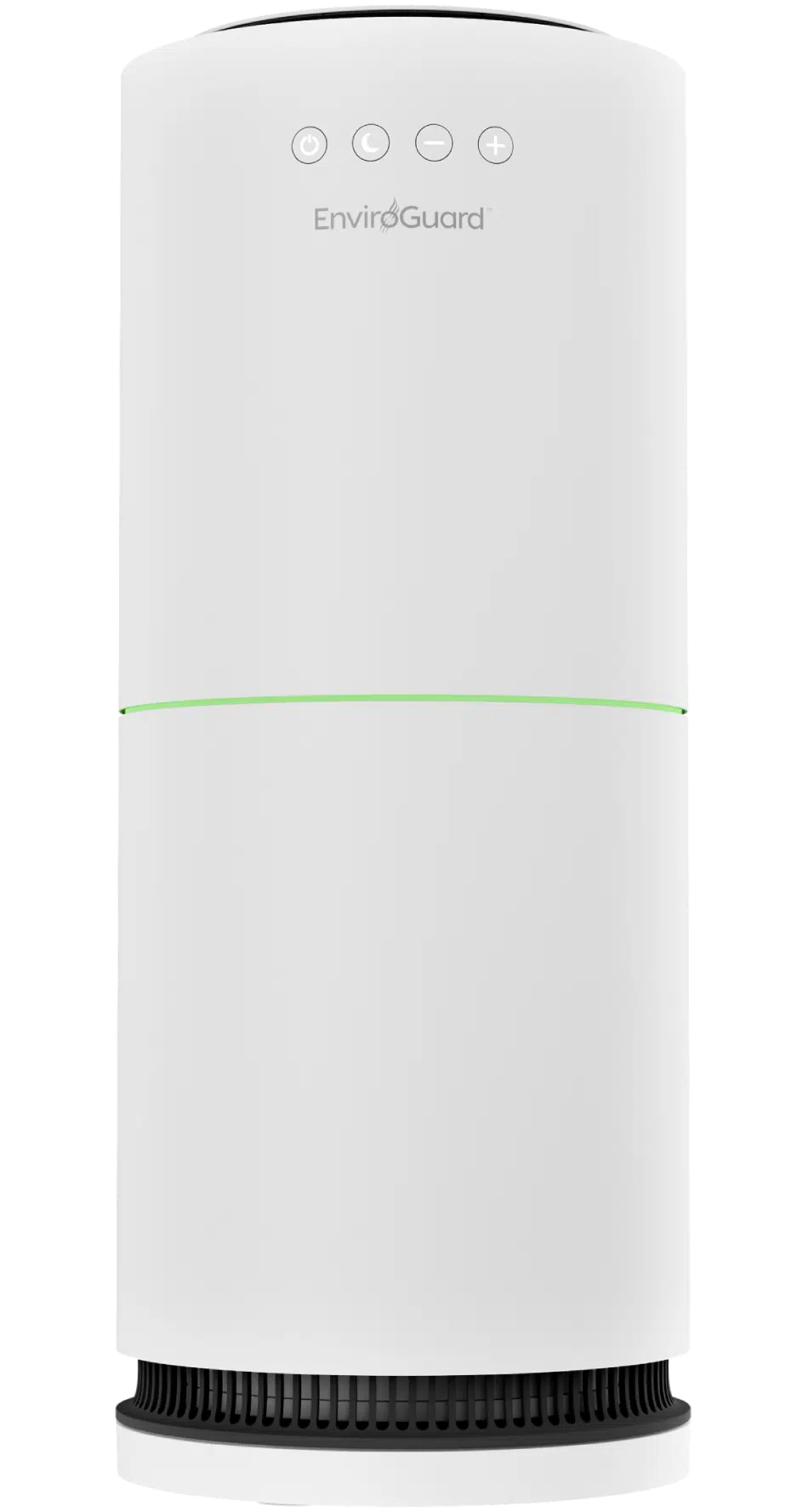
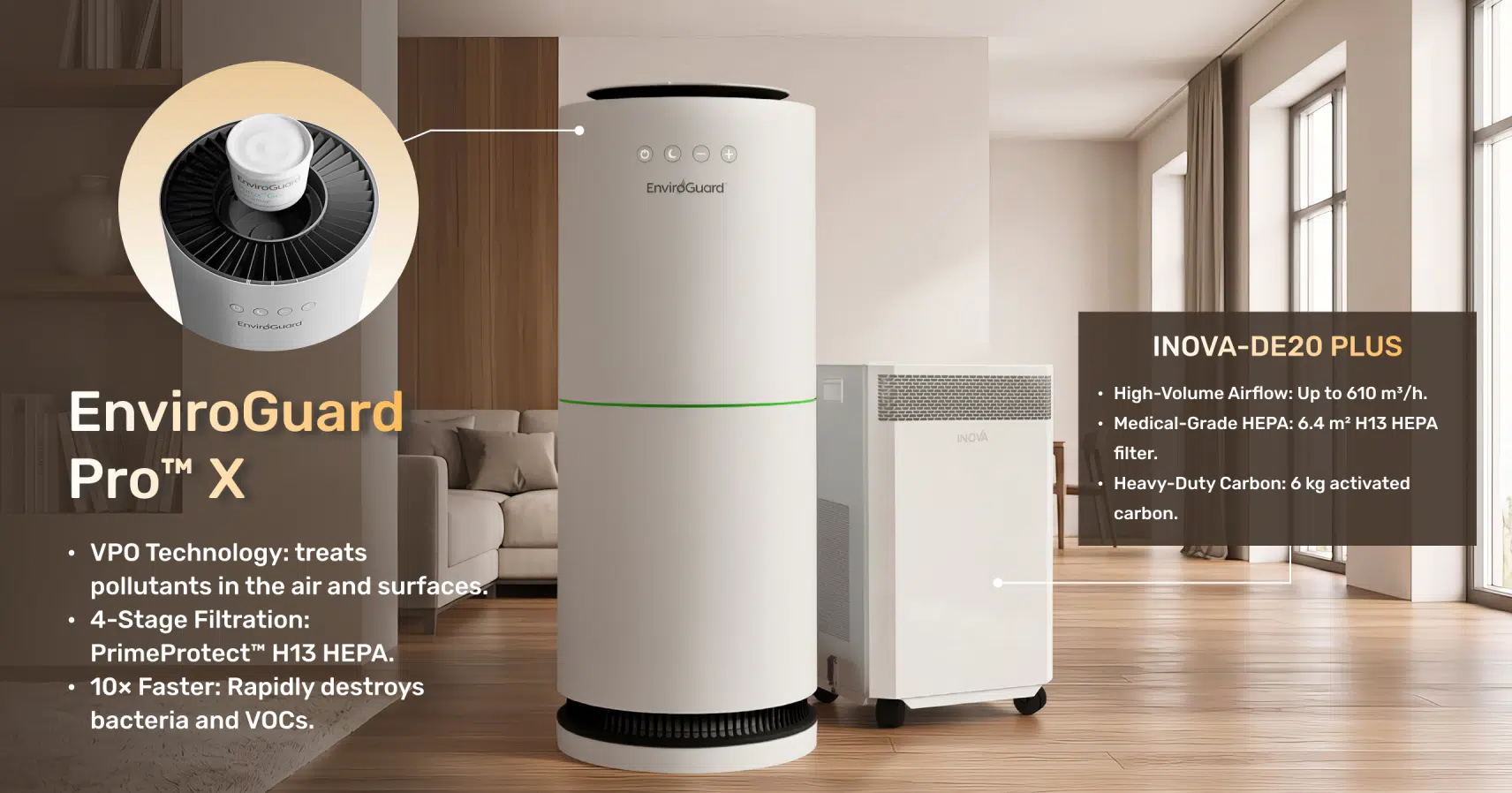
This is exactly the gap EnviroGuard Pro X is designed to fill. Rather than relying on plants or passive filters to slowly draw pollutants toward them, EnviroGuard Pro X uses Purox™ Gel to actively release a vapour throughout the entire room, breaking down VOCs, mould spores and pathogens at a molecular level — including in spots plants and filters simply can’t reach, like inside a wardrobe or deep in a couch. Alongside that, the PrimeProtect™ Filter handles the physical side of the equation, capturing the fine dust particles that no houseplant can meaningfully touch. Think of it as the mechanical, always-on backup to the greenery already doing its quiet work around your home.
Frequently Asked Questions
Snake Plant, Peace Lily, Boston Fern, Spider Plant and Bamboo Palm consistently rank among the top performers, based on lab testing for VOC removal. Availability is excellent across Australian nurseries and hardware chains, and most of these tolerate our varied indoor climates well.
Not quite. Plants can absorb small amounts of gaseous VOCs, but they're largely ineffective against fine particulate matter, and you'd need an unrealistic number of them to match what a HEPA-based air purifier for home use achieves in the same space.
None reliably neutralise strong odours. Ferns and palms can help marginally with light VOC background levels through natural transpiration, but for genuine odour and smoke control, mechanical or active air treatment is far more effective.
Yes — spider plants sold at Bunnings and most Australian nurseries are the same Chlorophytum comosum species tested in air-quality research. They're affordable, low-maintenance, and a solid entry point if you're just starting to build up your indoor plant collection.
Realistically, far more than is practical — estimates put it anywhere from 10 to 1,000 plants per square metre to match a standard mechanical air purifier, depending on the pollutant and plant species involved.
Conclusion
The science is genuinely on the side of houseplants — just not in the way most listicles suggest. Species like the Snake Plant, Peace Lily and Boston Fern really do process airborne VOCs, and picking the right ones for your light levels and pet situation is a smart, low-cost move for any home. But treating a few pot plants as a replacement for proper air filtration is where things fall apart: plants can’t touch fine particulate matter, and the plant density needed to rival a mechanical system just isn’t realistic indoors.
The smartest approach layers both — a handful of well-chosen, pet-safe plants for the biophilic benefits, paired with a proper air purifier for home use that handles what the greenery structurally can’t. Your lungs (and your living room) will thank you either way.
Limited-Time Offer
Transform Your Indoor Air Quality
Upgrade to the innovative EnviroGuard PRO™ X today for only $790 (Was $1,590). Claim your $800 saving now and breathe cleaner, healthier air tomorrow.
Many people experience no allergy issues with their first dog or cat. However, introducing a second or third pet into the home often triggers sudden sneezing, nasal congestion, red eyes, itchy skin, or morning chest tightness. This sudden reaction does not mean you have “developed a pet allergy out […]
Yes. You can develop or become aware of a pet allergy later in life, even if you have lived with cats or dogs for years without noticeable symptoms. This does not necessarily mean that your pet suddenly caused an allergy. Allergic disease involves a process called sensitisation, in which […]
Quick ways to get rid of cooking smells: Ventilate early: Turn on your rangehood 2-3 minutes before cooking and leave it running for 10-15 minutes after. Remove the source: Empty sink strainers, rinse away food residue, and flush drains with hot water promptly. Clean surfaces immediately: Wipe down greasy […]
When people compare premium Australian air purifiers, VBreathe EnviroGuard PRO™ X and InovaAir AirClean DE20 Plus are often placed side by side. On paper, both sit at the premium end of the market. Both are built for serious indoor air concerns. Both use high-quality filtration. But once you look […]
Whenever you step into a newly renovated home or bring brand-new furniture into a room, you often notice a distinct, unfamiliar scent—commonly referred to as that “new home” or “brand-new” smell. While many people consider this a normal part of buying new items, this odour can actually be a […]
¹ Tested in independent Australian laboratories under controlled conditions using airborne mould spores, bacteria and allergen particulates (0.3μm–10μm).
² Based on third-party testing results confirming 99.9% reduction in airborne mould spores and pet dander when using EnviroGuard Pro X with Purox™ Gel over 24 hours.
³ Independent testing by ICAS Testing Technology Service (Shanghai) Co., Ltd. demonstrated 99.99% reduction in airborne Staphylococcus Albus bacteria within 30 minutes in a 20m² test chamber, in accordance with Technical Standard for Disinfection GB 27948-2020.
⁴ Surface efficacy testing conducted by Eurofins BioPharma Product Testing — Sydney (Eurofins ams Laboratories Pty Ltd, TGA-licensed under MI-2021-LI-08995-1). Reductions over 8 hours: 99.99% Pseudomonas Aeruginosa, 99.9% Escherichia Coli, 90% Candida Albicans Yeast.
⁵ "10x faster than conventional filtration" comparison based on EnviroGuard Pro X achieving log 4 (99.99%) airborne bacterial reduction in 30 minutes, compared with log 1 (90%) pathogen reduction in 20 minutes reported for hospital HEPA systems operating at 12 air changes per hour (Fernstrom A, Goldblatt M. Aerobiology and its role in the transmission of infectious diseases. J Pathog. 2013;2013:493960).
⁶ Performance varies based on room size, airflow configuration, fan speed setting, environmental conditions and usage patterns.