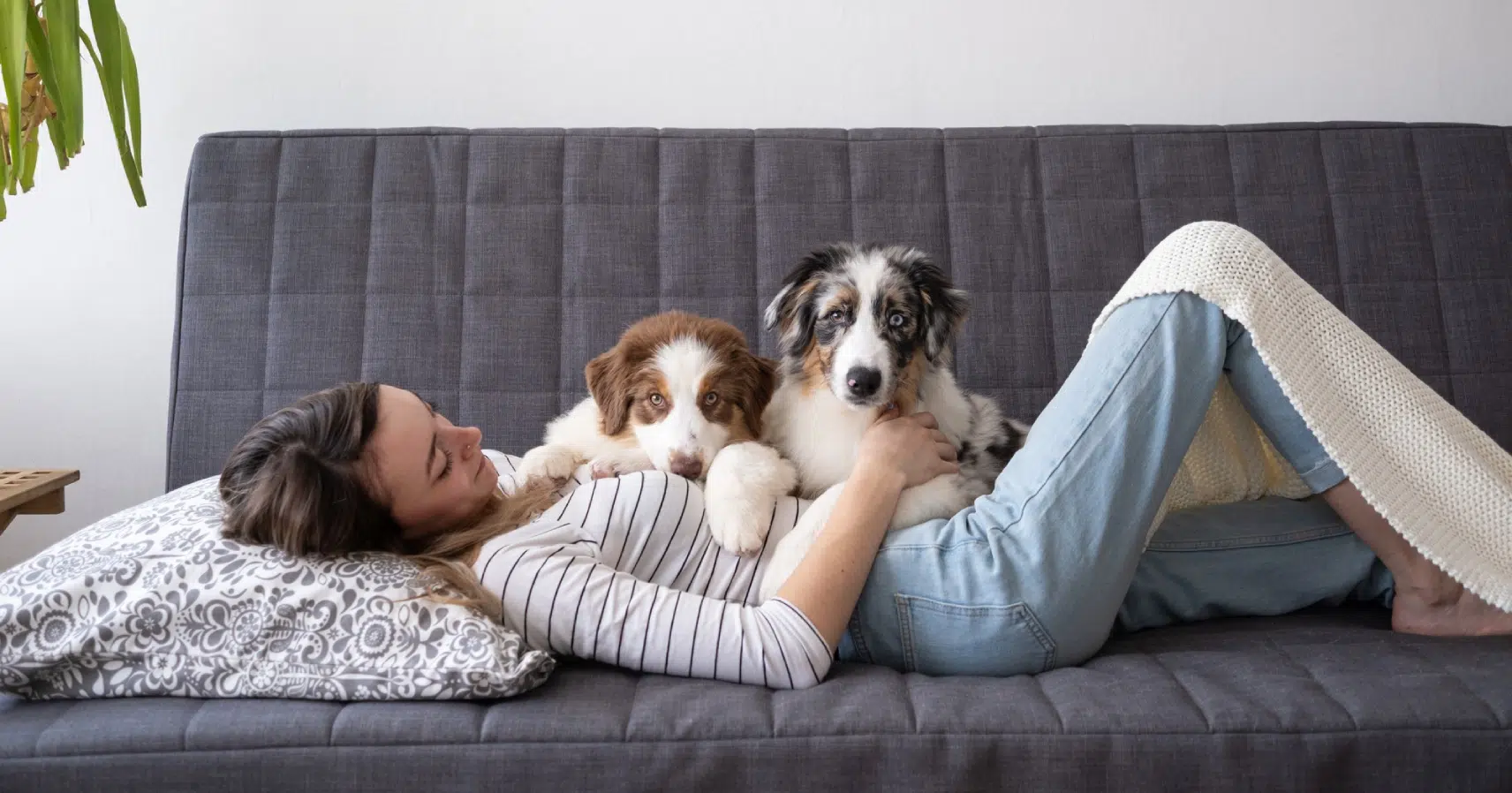
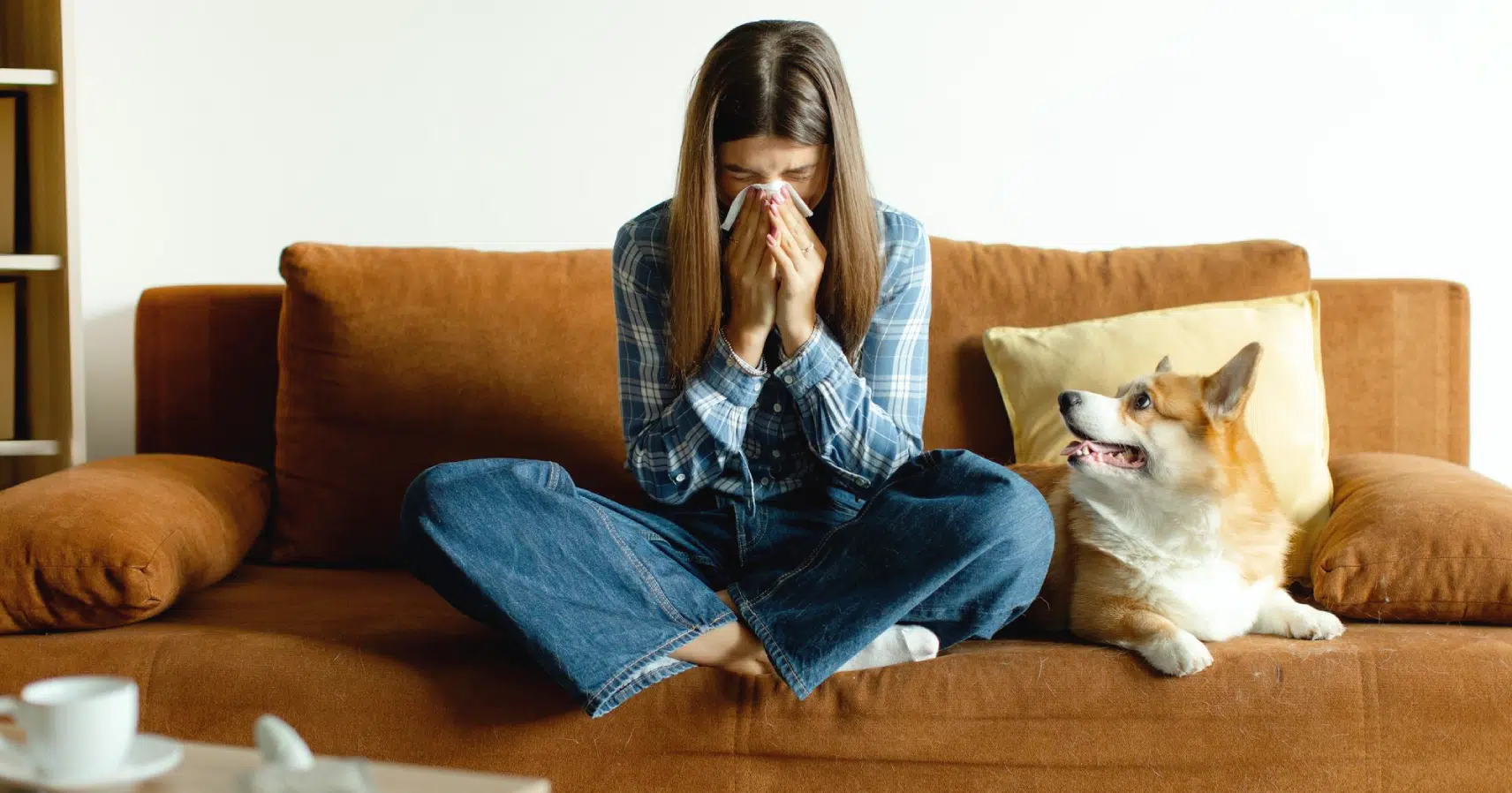
Many people experience no allergy issues with their first dog or cat. However, introducing a second or third pet into the home often triggers sudden sneezing, nasal congestion, red eyes, itchy skin, or morning chest tightness.
This sudden reaction does not mean you have “developed a pet allergy out of nowhere.” Instead, your home’s Cumulative Bio-Allergen Load has exceeded your body’s individual Allergic Threshold. When multiple pets live together, allergen levels do not rise in a simple linear pattern; they multiply and accumulate across indoor air, carpets, lounges, and bedding 24 hours a day. This guide explores the science behind multi-pet allergen dynamics and provides proven strategies to manage indoor air quality and pet dander effectively.
How Do Multiple Pets Impact Indoor Allergen Levels?
Having multiple pets causes a dramatic increase in indoor allergen levels because each animal continuously sheds dander, dried saliva, and sebaceous secretions into the living space.
1. Cumulative Bio-Allergen Load: Exponential Accumulation
Allergen concentrations in multi-pet households accumulate at levels dozens of times higher than in single-pet homes. Clinical research published in the Journal of Allergy and Clinical Immunology shows that allergen concentrations in multi-pet carpets can reach up to 237 µg/g —roughly 70 to 200 times higher than in homes without pets.
With more than one animal, natural processes such as skin shedding (dander), grooming, and body shaking occur simultaneously across multiple areas. These microscopic protein particles are too light to settle quickly; they remain suspended in indoor air and accumulate faster than standard home ventilation can disperse them.
2. The “Allergic Threshold” Phenomenon: Why One Pet Was Fine, but Two Trigger Symptoms
Many pet owners worry about developing pet allergies later in life, but the human immune system functions much like a glass filled with water: as long as the water stays below the rim, no symptoms appear.
When living with just one dog or cat, the inhaled allergen level may fill that glass to 60–70% capacity. Because this remains below your physiological tipping point (the sub-clinical level), you feel completely symptom-free. When you bring a second pet home, the additional allergen output causes the glass to overflow immediately (the allergic threshold is breached).
Your immune system responds by releasing histamines, resulting in sudden eye irritation, sneezing, postnasal drip, and respiratory discomfort, alongside skin reactions such as allergic dermatitis, hives, and eczema. While over-the-counter antihistamines and corticosteroid nasal sprays offer temporary relief, long-term management requires consulting a board-certified allergist for targeted options like immunotherapy (allergy shots), alongside a veterinarian to address dander production at the source.
3. The Immune Paradox: Does Growing Up with Multiple Pets Prevent Allergies in Children?
Growing up with two or more dogs or cats during the first year of life can significantly lower a child’s long-term risk of developing asthma and allergic sensitisation by nearly 50%, according to findings from the Detroit Birth Cohort Study published in JAMA.
This protective mechanism is explained by the Hygiene Hypothesis. Multiple pets introduce a richer diversity of environmental microbes and endotoxins into the home. During early infancy, this microbial exposure actively trains the developing immune system to build immune tolerance, preventing hyper-reactive responses to harmless environmental proteins later in life.
Why Do Dander and Pet Allergens Linger Indoors for Months?
A common misconception among pet owners is that pet hair causes allergic reactions. In medical reality, the primary triggers are microscopic proteins concentrated in pet dander, saliva, urine, and feces. Dried saliva on fur breaks into airborne dust during grooming, while microscopic urine and feces residues accumulate around litter boxes and cages. Additionally, outdoor pets act as biological carriers, bringing environmental allergens like tree pollen inside on their coats.
1. The Real Culprit: Proteins Smaller than 2.5 Microns
The primary allergen in cats is the Fel d 1 protein, while dogs produce the Can f 1 through Can f 6 protein group. The feline Fel d 1 protein is exceptionally light and measures under 2.5 microns in diameter—small enough to stay airborne for hours or days on subtle indoor air currents without settling.
Because these proteins possess sticky molecular properties, they adhere firmly to clothing, walls, curtains, and upholstered furniture. Once dried saliva flakes off an animal’s coat, it shatters into microscopic airborne dust, easily penetrating deep into human airways upon inhalation.
2. The Resuspension Phenomenon: Why Traditional Sweeping Worsens Allergies
Allergen particles that settle onto floorboards, rugs, and lounges do not break down on their own; instead, they undergo constant resuspension during daily household activities.
Every time family members walk through a room, pets jump onto furniture, or someone sweeps with a standard broom, air turbulence lifts settled dander back into the air. These particles hover directly within the Breathing Zone (1 to 1.5 metres above the floor), right at nose and mouth level. Traditional dry dusting or vacuuming with unsealed machines agitates these particles, often triggering worse allergic flare-ups than leaving the room undisturbed.
3. Allergen Persistence in Fabrics, Bedding, and Washing Machines
Pet allergens can remain embedded in fabrics, bedding, carpets, and washing machine drums for months or even years unless properly remediated.
Fel d 1 and Can f 1 proteins easily survive regular cold-water washing. Following strict washing pet bedding and laundry protocols is essential, as running contaminated items through a standard cold wash cycle fails to denature these proteins; instead, it redistributes them across other garments in the drum (cross-contamination) while leaving sticky residues along the machine’s internal walls and rubber seals.
Beyond hot-water laundering, encasing mattresses and bedding in allergen-impermeable covers and switching to hypoallergenic pillows creates a physical barrier that prevents pet dander and dried saliva from penetrating deep into fabric fibers.
To denature and remove more than 90% of pet allergen proteins from textiles, laundry must be washed in hot water at temperatures of ≥ 60 °C combined with quality detergent, permanently breaking the molecular bonds of the allergen.
Multi-Pet Air Filtration Strategy: Passive HEPA vs. Active VPO Environmental Systems
For homes with multiple cats or dogs, relying solely on conventional air purifiers is rarely enough, as pets shed allergens faster than air can be drawn through a filter.
1. The Limitation of Traditional Passive Filtration
Whether utilizing standalone room air purifiers or integrated whole-house air purifiers, standard passive systems rely entirely on air being drawn into the unit. In multi-pet homes, passive devices struggle to clear localized allergen reservoirs before they settle onto furniture or walls.
In a multi-pet home, microscopic Fel d 1 and Can f 1 particles are emitted continuously across multiple rooms. These lightweight particles linger in the Breathing Zone and stick to surfaces well before a passive purifier can circulate and draw that air inside. Solving air quality in multi-pet environments requires a system capable of neutralising allergens proactively in mid-air before they settle.
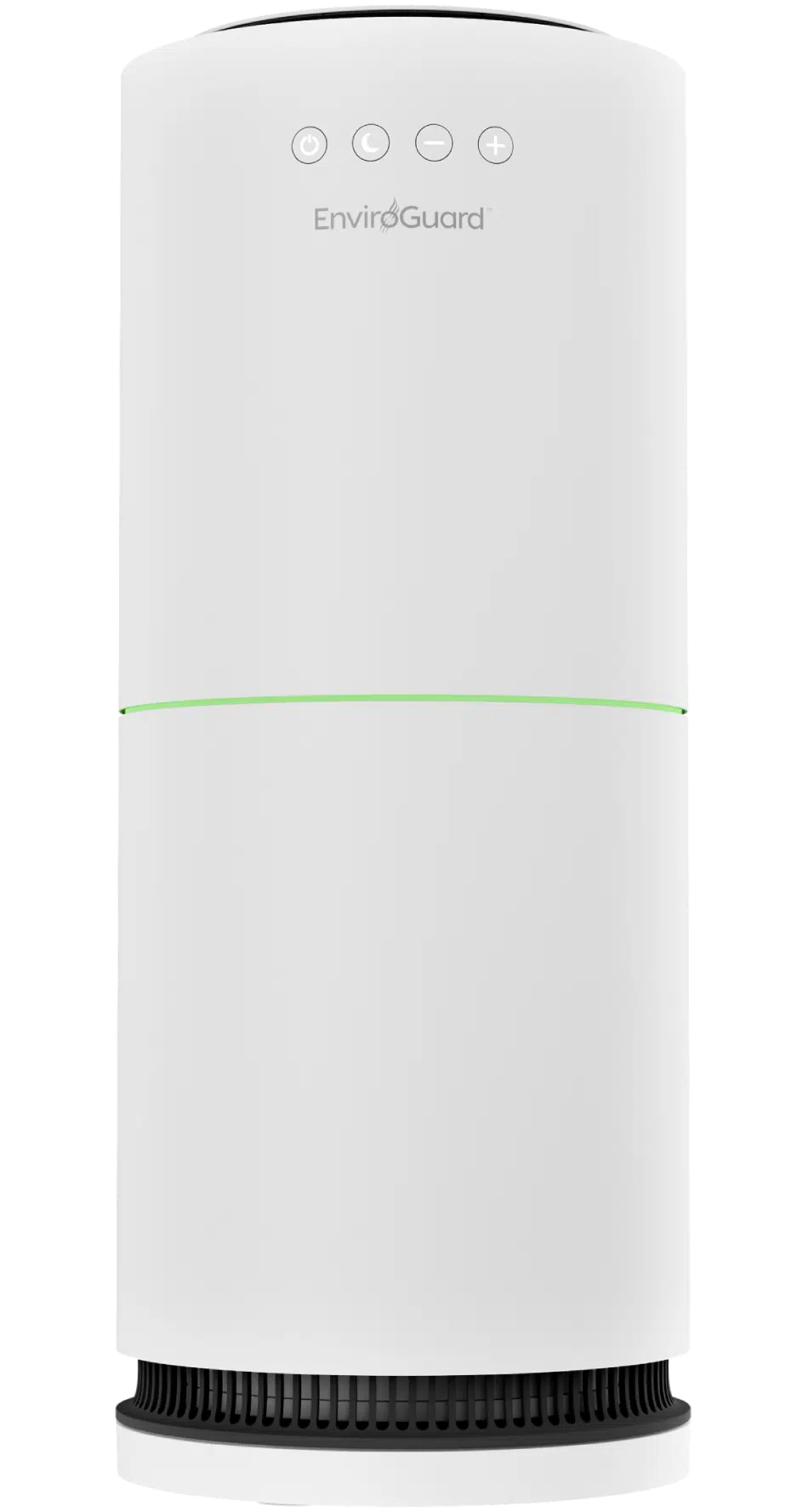
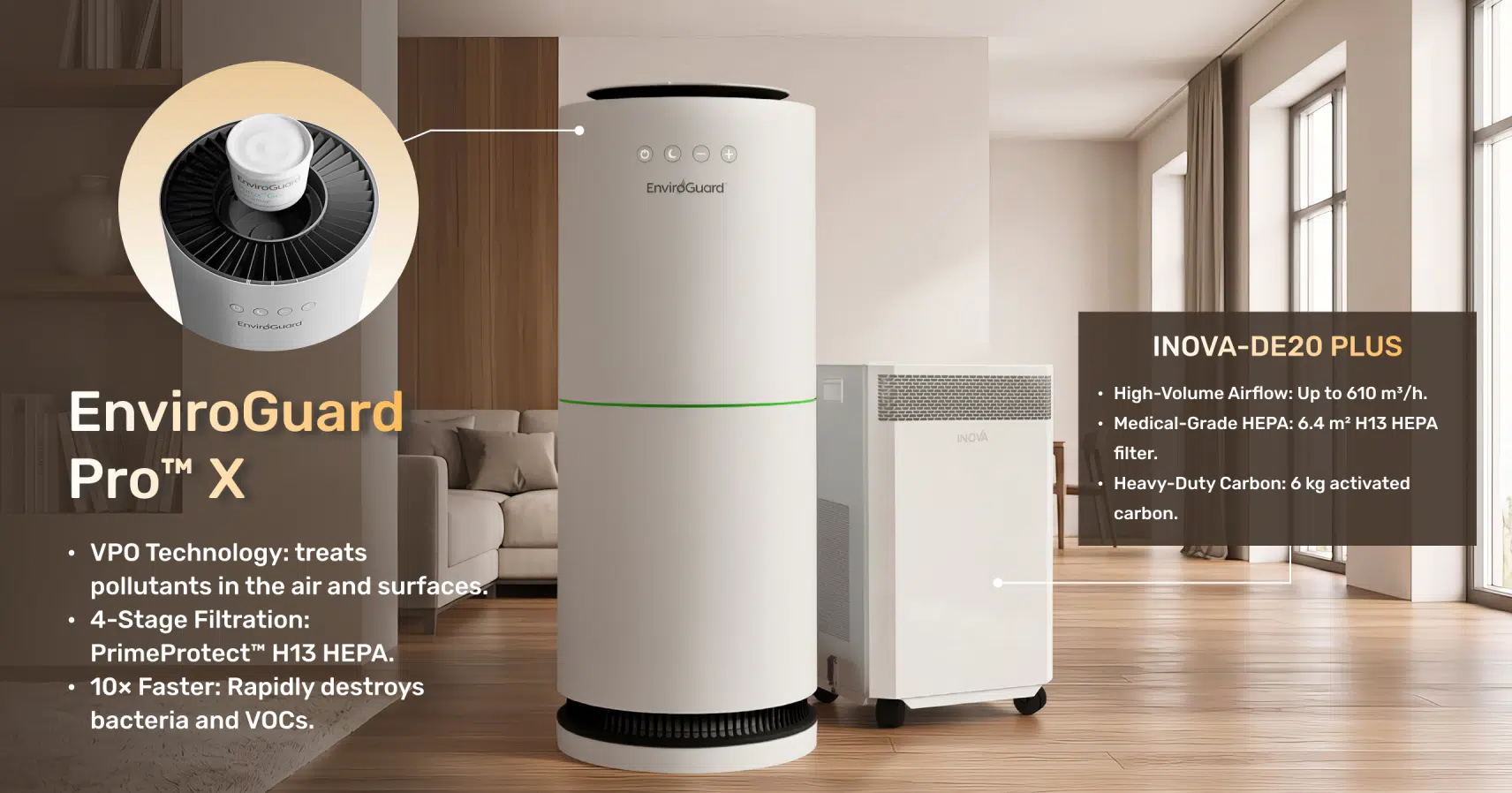
2. Active Environmental Innovation: VBreathe EnviroGuard PRO™ X
The VBreathe EnviroGuard PRO™ X active environmental system addresses the shortcomings of passive filtration by combining two complementary mechanisms:
- Active Vapour Phase Oxidation (VPO): The unit disperses an all-natural vapour derived from Purox™ Gel across ambient air currents. This botanical vapour actively binds to and dismantles the molecular structure of airborne Fel d 1, Can f 1, mould spores, and bacteria directly in mid-air (mid-air neutralisation), breaking them down into harmless water and oxygen.
- Medical-Grade Secondary Defence (PrimeProtect™ Filter): The device incorporates a Medical-grade HEPA-13 filter treated with an AerisGuard™ antimicrobial coating and a high-grade Activated Carbon layer. This dual setup captures large pet hairs and fine micro-dust while absorbing stubborn pet odours.
3. Performance Comparison: Multi-Pet Allergen Remediation Methods
4. Pet Respiratory Safety: Why Purifiers Must Be 100% Ozone-Free
Pet respiratory tracts—particularly those of cats, brachycephalic (flat-faced) dog breeds, and birds—are far more sensitive to airborne oxidants and chemicals than human lungs. Many generic ionic air purifiers emit dangerous levels of ozone, which acts as a severe lung irritant for pets and humans alike. Always verify that air purifiers are certified 100% Ozone-Free when searching for the safest air purifiers for pets.
VBreathe EnviroGuard PRO™ X is specifically engineered for pet safety, backed by certified 100% Ozone-Free testing from independent world-leading facilities, including Eurofins and the University of New South Wales (UNSW Sydney). This confirms zero emission of ozone, harmful ions, or toxic by-products.
5. Sizing and Placement Guidelines for Multi-Pet Homes
To maximise allergen reduction across shared living areas, consider two primary operational factors:
Air Changes per Hour (ACH)
Homes with two or more pets require an air cleaning capacity of at least 4.8 to 5 ACH (meaning the entire volume of air in the room is treated and refreshed 4.8 to 5 times every hour) to match continuous dander generation.
Active Vapour Dispersion in Hard-to-Reach Spaces
The core advantage of an active VPO system is that Purox™ Gel vapour travels with natural airflow.It reaches under beds, into upholstery seams, and behind curtains—areas where passive purifiers cannot draw sufficient airflow.
Recommended Placement Points
- Source Proximity: Position the unit 1.5 to 3 metres (5 to 10 feet) from litter trays or dog resting areas to capture odours and break down allergens at the source.
- Clean Air Bedroom Sanctuary: Place a unit in your bedroom to keep your sleeping space allergen-free, operating on quiet Night Mode for undisturbed rest.
Multi-Pet Deep Cleaning Protocol: Eliminating Allergens at the Source
Long-term allergen control in multi-pet homes requires combining direct pet care (source control) with sealed-system surface cleaning to break the dander accumulation cycle.
1. Source Control on Pets: Brushing, Bathing, and Neutralising Solutions
Reducing allergens at the source keeps loose dander from becoming airborne throughout your home:
- Groom Pets Outdoors: Brush dogs and cats 2 to 3 times weekly outdoors or in well-ventilated spaces (such as a balcony or verandah) to prevent dander from settling inside.
- Use Anti-Dander Shampoos: Washing dogs weekly with an anti-dander shampoo, or using allergen-reducing wipes on cats, removes up to 80% of surface-accumulated Fel d 1 and Can f 1 proteins from their coats.
- Apply Protein-Neutralising Foams: Using plant-derived enzyme grooming foams helps neutralise coat proteins before they dry and disperse into household dust.
2. Choosing a Sealed HEPA Vacuum Cleaner
Standard vacuums often aggravate allergies because exhaust air leaks around internal seals, blowing fine dander straight back into the room. Multi-pet homes should always use a fully sealed system with HEPA filtration, ensuring 99.97% of particles down to 0.3 microns stay trapped inside without leaking through the body seals.
3. Washing Protocols and Washing Machine Decontamination
Washing pet bedding, pillowcases, and linen in standard cold water leaves allergens active and spreads them across other garments.
- Hot-Water Washing at ≥ 60 °C (140 °F): Temperatures of 60 °C and above denature Fel d 1 and Can f 1 protein structures, while eliminating dust mites and fungal spores embedded in fabrics.
- Monthly Tub-Clean Routine: Pet dander and sebaceous oils accumulate in the crevices and rubber door gaskets of washing machines. Run an empty hot-water Tub Clean cycle (≥ 60 °C) monthly with a washing machine cleaner to prevent cross-contaminating everyday clothing.
4. Multi-Pet Household Cleaning Checklist
Conclusion: Living Comfortably and Allergy-Free in a Multi-Pet Home
Sharing your home with multiple pets should not mean living with chronic allergy symptoms or making the heartbreaking decision to rehome a companion. Achieving long-term indoor balance requires a three-pillar management approach:
- Source Control: Regular outdoor brushing, routine bathing, and using coat-neutralising grooming products.
- Sealed-System Cleaning: Using fully sealed HEPA vacuums and washing linens in hot water at ≥ 60 °C to denature sticky Fel d 1 and Can f 1 proteins.
- Active Air Management: Bridging the gap of passive filtration by using proactive environmental systems like the VBreathe EnviroGuard PRO™ X for pet allergies, which neutralises allergens and odours directly in mid-air while ensuring certified 100% Ozone-Free respiratory safety for your pets.
By keeping your home’s cumulative allergen load well below your personal allergic threshold, you can enjoy a fresh, clean home where both you and your pets breathe easily every day.