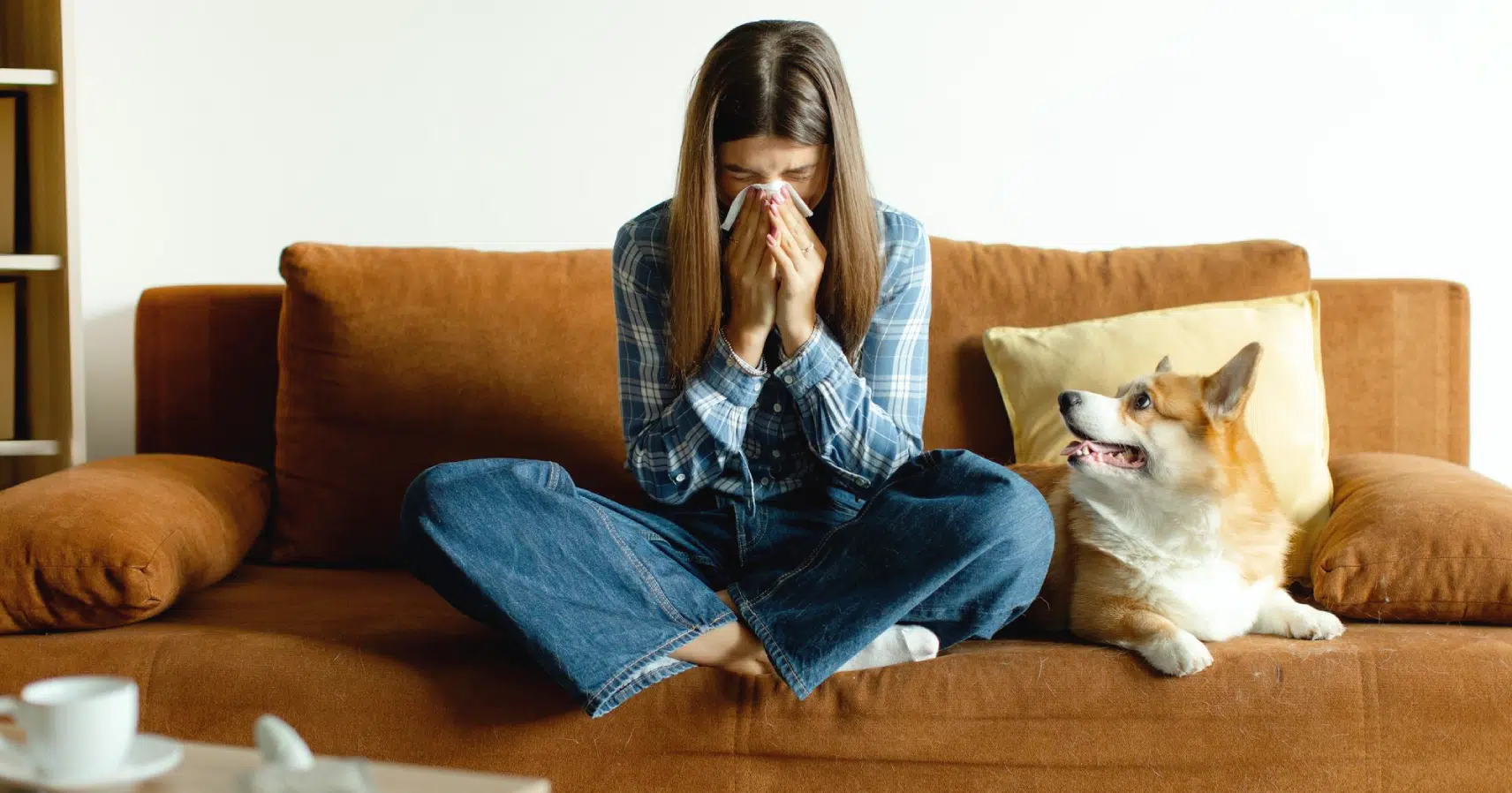
In recent years, global awareness regarding PM2.5 dust has surged, followed by an increase in the severity of respiratory illnesses caused by both particulate matter and pathogens. Consequently, many believe that having an air purifier with a high-quality filter is sufficient. However, did you know that inside a seemingly clean
The air quality is generally acceptable for most people. However, sensitive groups may experience minor to moderate symptoms from long-term exposure.
PM₂.₅
16.57
PM₁₀
21.76
SO₂
23.63
NO₂
33.63
O₃
52.69
CO
196.49
In recent years, global awareness regarding PM2.5 dust has surged, followed by an increase in the severity of respiratory illnesses caused by both particulate matter and pathogens. Consequently, many believe that having an air purifier with a high-quality filter is sufficient. However, did you know that inside a seemingly clean home or office, a silent threat far more concerning than dust might be lurking? This threat is VOCs—volatile organic chemicals that float in the air at all times, invisible to the naked eye, and which standard air purifiers often fail to eliminate.
This article explores the dangers of VOCs and their long-term health impacts. We will also introduce the VBreathe EnviroGuard PRO™ X, an innovation that redefines air purification through a Dual Active system. By utilising Purox™ Gel, it releases a natural vapour that neutralises toxins and pathogens at their source—both in the air and on surfaces—offering professional-grade hygiene standards that are safe for your entire family and pets.
What are VOCs?
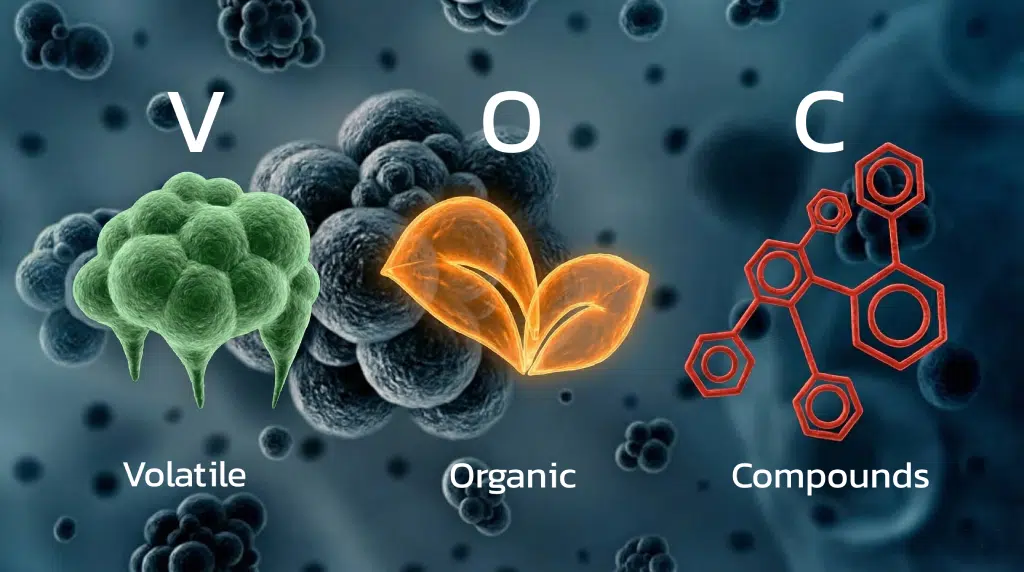
VOCs meaning (Volatile Organic Compounds) are a group of organic chemicals that can evaporate into a gas at normal room temperature. Put simply, they are toxic gases emitted from everyday items surrounding us.
The danger of VOCs lies not just in their odour, but in the fact that we unknowingly breathe these chemicals into our bodies, where they accumulate over time. Many people experience unexplained headaches, eye irritation, or fatigue after spending long periods in air-conditioned rooms. these symptoms are often referred to as Sick Building Syndrome, primarily caused by high concentrations of VOCs in enclosed spaces.
Sources of VOCs in Your Home (Where do they come from?)
We often assume indoor air is safer than outdoor air, but in reality, VOCs are released from items we use daily, such as:
New Items: The smell of “new furniture,” fresh paint, new carpets, or wallpaper comes from a process called off-gassing. During this process, materials release chemicals such as formaldehyde into the air.
Cleaning Products and Fragrances: Floor cleaners, air fresheners, scented candles, and even the perfumes we wear contain volatile compounds that rapidly increase indoor VOC levels.
Modern Hobbies and Tech: For those using 3D Printers (both filament-based like PLA/ABS or Resin), research indicates that the printing process releases significant amounts of harmful gases and ultrafine particles.
Kitchen Activities: Cooking with gas stoves or frying food creates volatile vapours that linger in the air if ventilation is inadequate.
VOCs appear more often than many people realize. Even more concerning, these chemicals often reach peak levels at night when people seal doors and windows to run air conditioning—forcing our lungs to inhale these toxins throughout sleep.
The Dangers of VOCs
Many people feel a sense of satisfaction from the “new home” or “new furniture” smell, associating it with cleanliness. However, scientifically, these scents are warning signs of toxic gas emission (off-gassing). This accumulation of concentrated VOCs can lead to severe health consequences if inhaled over the long term.
Global authorities have confirmed that VOC risks are far more than just minor irritations:
United States Data: The U.S. Environmental Protection Agency (EPA) states that indoor levels of volatile organic compounds are typically 2 to 5 times higher than outdoor levels. During activities like painting or paint stripping, indoor levels can soar to 1,000 times higher than outdoors. Long-term accumulation is directly linked to damage to the liver, kidneys, and central nervous system, and many are classified as carcinogenic (cancer-causing) to humans.
Australia Data: The Department of Climate Change, Energy, the Environment and Water (DCCEEW) has issued warnings regarding indoor air quality, noting that VOCs are a primary trigger for asthma and severe respiratory irritation. Furthermore, research from CSIRO indicates that VOC accumulation in buildings can negatively impact cognitive performance and sleep quality.
Health Impacts and Common Symptoms
When you inhale VOCs, your body sends various warning signals, which can be categorised by severity:
Acute Symptoms: Ranging from headaches, dizziness, and nausea to irritation of the eyes, nose, and throat. These typically occur immediately in rooms with high vapour concentrations.
Impact on Vulnerable Groups:
Pregnant Women: Evidence suggests that high exposure to VOCs can affect foetal development and increase the risk of complications during pregnancy.
Young Children: Children breathe faster than adults, and their organs are still developing. As a result, toxins enter their bodies more easily and can affect long-term lung growth and immune system development.
Pet Safety: Pets spend most of their time on or near the floor, where certain VOCs—which are heavier than air—tend to settle. This puts pets at a higher risk of toxin exposure through both inhalation and skin contact compared to humans.
Basic Prevention and Elimination of VOCs
Reducing VOC concentrations at home is possible through understanding and lifestyle adjustments to prevent these gases from reaching dangerous levels. If your room feels stuffy or you detect faint chemical odours, here are the essential steps you can take immediately:
Effective ways to reduce indoor VOCs:
Increase Ventilation: The golden rule is airflow. Open windows and doors to allow fresh outdoor air to displace accumulated gases, especially after bringing in new furniture or using heavy cleaning chemicals.
Choose Low-VOC or Zero-VOC Products: Many manufacturers now use “Low-VOC” labels on paints, adhesives, and building materials. Choosing these from the start is the best long-term strategy.
Control Temperature and Humidity: Research shows that VOCs off-gas more rapidly in hot and humid conditions. Keeping rooms cool and maintaining optimal humidity can slow down chemical emissions.
Store Chemicals Outside Living Areas: Substances like thinners, spray paints, or pesticides should be kept in outdoor sheds or ventilated cabinets away from the main living and sleeping areas.
Unwrap New Furniture and Dry-Cleaned Clothes: Dry-cleaned garments often contain residual chemicals like Perchloroethylene; they should be aired out in a well-ventilated space before being brought into the bedroom. Similarly, unwrap new furniture to allow gases to escape fully.
However, while these methods help, it is often impractical to keep windows open at all times, especially in cities plagued by PM2.5, traffic pollution, or extreme heat. Many turn to air purifiers as a solution—but can standard purifiers truly handle complex, microscopic gases like VOCs? This is particularly important when choosing an air purifier to remove formaldehyde, one of the most common indoor VOCs. We explore this in the next section.
Why Traditional HEPA Purifiers Might Not Be Enough for VOCs
When people think of air purifiers, they immediately think of HEPA (High-Efficiency Particulate Air) filters. While this is the “Gold Standard” for capturing microscopic dust, the biggest misconception is that HEPA can handle all types of pollution. In reality, VOCs are the Achilles’ heel of traditional filtration.
Here is why standard HEPA systems often fail to eliminate VOCs:
Particles vs. Gases HEPA filters are designed to trap particles with physical mass, such as PM2.5, pollen, or pet dander. However, VOCs are gases. Their molecular size is significantly smaller than the gaps in a HEPA filter’s fibres. To put it simply, using a HEPA filter to catch VOCs is like trying to use a fishing net to catch smoke. These chemical molecules simply drift through the filter.
Carbon Filter Saturation Many purifiers add an Activated Carbon layer to absorb gases. While you can explore more about how activated carbon filters remove odours and VOCs to understand their basic chemistry, it is important to recognise that these systems still face critical limitations:
Saturation: Carbon works by “storing” chemicals in its pores. Once these pores are full (often without the user knowing), the device stops removing toxic gases.
Desorption: If the room temperature rises or humidity shifts, the chemicals trapped in the carbon can be desorbed and released back into the room, turning the purifier into a source of pollution.
A “Passive” Approach Traditional purifiers are Passive, meaning they only clean air that happens to pass through the machine. In reality:
Toxic air often remains stagnant in corners, under beds, or behind cupboards where the purifier’s suction cannot reach.
Many VOCs are heavy and settle onto surfaces like furniture, carpets, or curtains. A passive system has no way to eliminate toxins embedded on these surfaces.
If your home has a constant source of VOCs, relying on a passive system is merely treating the symptom, not the cause. This is why technology must evolve from trapping to neutralising in mid-air.
When searching for the best air purifier for VOCs in Australia, understanding why traditional HEPA systems fall short against gaseous pollutants is essential.
VBreathe EnviroGuard PRO™ X: The Dual Active Innovation for VOCs
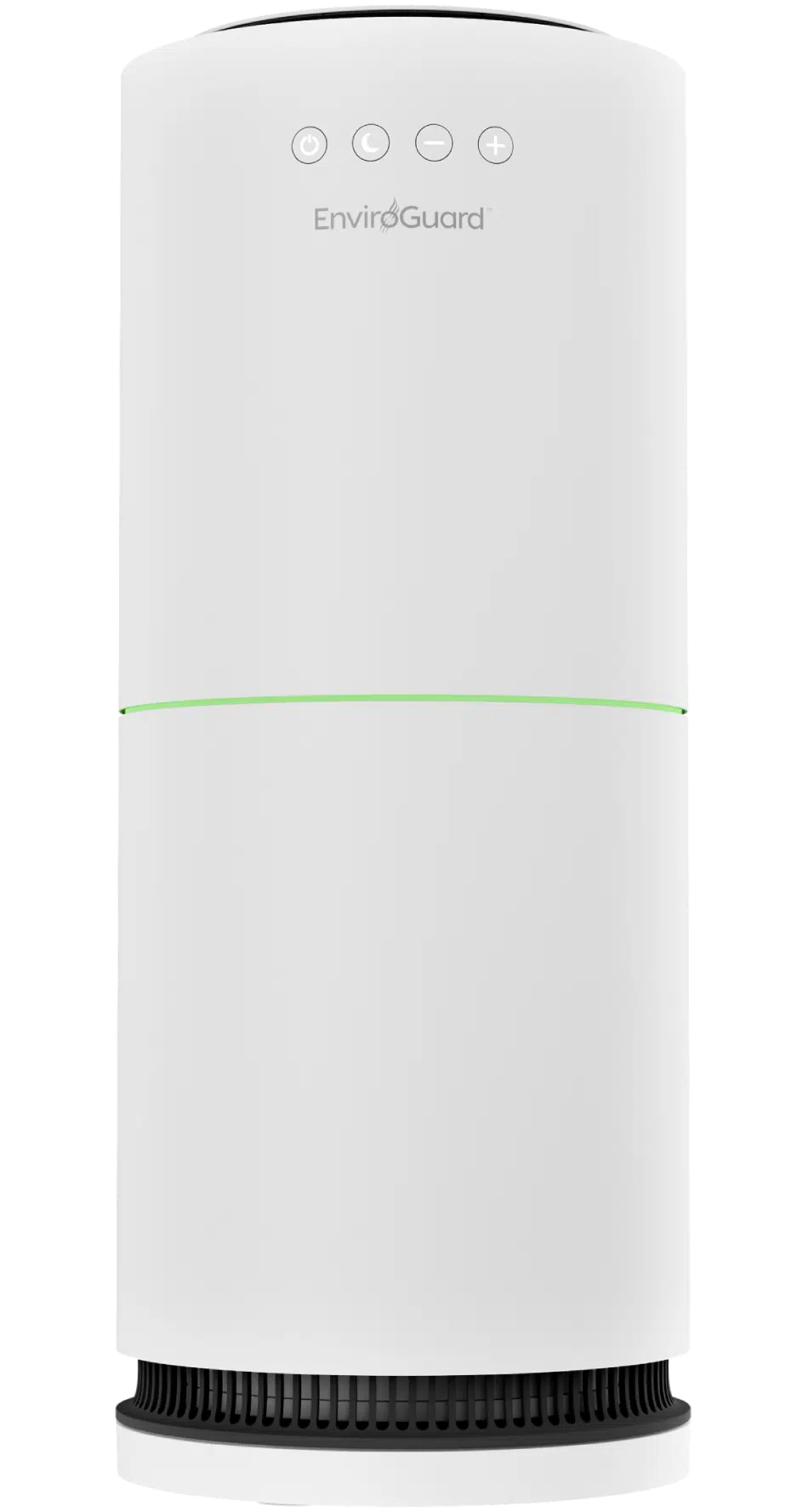
When traditional filtration reaches its limit, a more advanced solution is required. The VBreathe EnviroGuard PRO™ X is not just an air purifier; it is a professional-grade disinfection and purification system that cleans both the air and surfaces simultaneously.
The brilliance of VBreathe lies in its Dual Action approach, closing the gaps left by traditional purifiers:
Passive Protection (4-Stage HEPA Filtration): A high-standard 4-stage HEPA system captures 99.97% of fine particles, dust, and pollen flowing through the device.
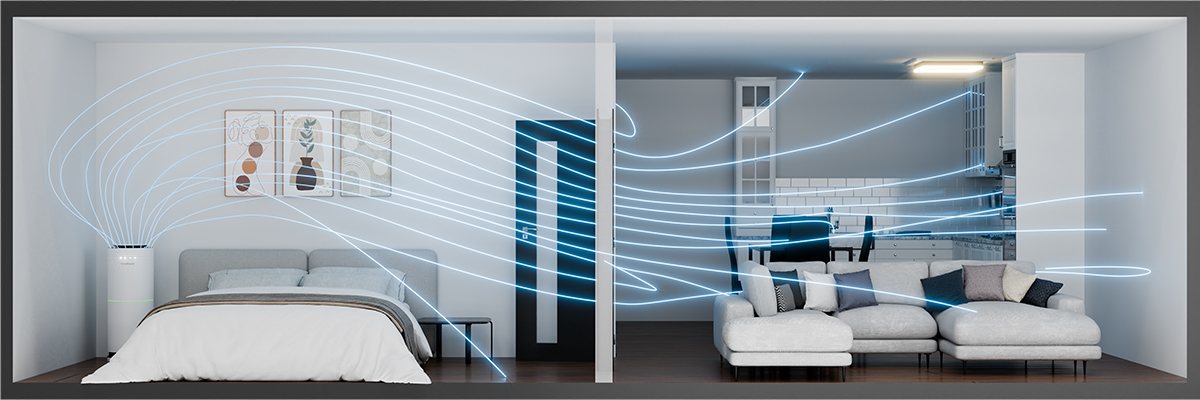
Active Protection (Purox™ Gel Technology): This is the heart of VBreathe. The device releases a vapour from Purox™ Gel—a concentrated natural extract—which disperses throughout the entire room. This vapour actively interacts with VOCs and pathogens mid-air and on surfaces, mimicking how natural sunlight sanitises the atmosphere. For readers who want to understand how this compares with traditional filtration systems, see the Air Purifier for VOCs buyer guide.
Comparison Table: Traditional Purifiers (Passive) vs. VBreathe (Active)
Technology Comparison
Feature
Standard HEPA Purifier
VBreathe EnviroGuard PRO™ X (Active Gel Technology)
Operation Mode
Passive
Air must pass through the filter.
Dual Active
Filters air + releases vapour to sanitise.
VOC Management
Limited(relies on carbon, which saturates).
Neutralises VOC molecules mid-air.
Surface Disinfection
None:
Only manages what floats into the machine.
Effective:
Vapour covers surfaces, desks, and furniture.
Coverage
Only where air circulates to the machine.
Comprehensive:
Reaches stagnant corners and dead zones.
Safety
Generally safe.
Highest:
Uses Food-grade, Non-toxic Purox™ Gel.
Purox™ Gel: Nature’s Power Mimicking Sunlight
The breakthrough of Purox™ Gel is a process called Vapor Oxidation. It replicates the way sunlight cleans the Earth by releasing low-concentration but powerful vapours that break down the chemical bonds of VOCs and destroy the cell walls of viruses. This effectively alleviates asthma and allergy triggers.
Most importantly, this technology is tested to be food-grade, non-toxic, and 100% ozone-free, leaving no harmful residues or respiratory irritants. This makes it exceptionally safe for homes with infants, the elderly, or pets, who are often far more sensitive to chemicals and air pollutants than the average adult.
FAQs About VOCs
How Long Do VOCs Stay in Indoor Air After New Furniture or Renovation?
VOC levels may drop over time as chemicals evaporate, but the key concern is how long this process takes. Many furniture items, paints, adhesives, and building materials continue releasing VOCs for months or even years after installation. During this off-gassing period, these chemicals remain in indoor air, so occupants may still experience ongoing exposure.
Relying only on time for VOCs to disappear naturally can extend that exposure. Improving ventilation and using air purification strategies helps reduce indoor VOC concentrations more effectively.
Can Houseplants Really Remove VOCs From Indoor Air?
Houseplants such as Snake Plants or Peace Lilies are often linked to air purification, and they can absorb small amounts of VOCs under controlled conditions. However, in real homes, their impact remains limited. Studies show that you would need an impractically large number of plants—potentially dozens per square metre—to match the performance of a typical air purifier. Plants still add aesthetic value, comfort, and slight humidity balance, but they work best as a supportive element rather than the primary way to remove chemical pollutants from indoor air.
Can VOCs Cause Headaches or Symptoms of Sick Building Syndrome?
Yes, exposure to elevated VOC levels indoors can contribute to symptoms commonly linked with Sick Building Syndrome. People may experience dull headaches, eye irritation, fatigue, or a general feeling of discomfort when staying in poorly ventilated rooms for long periods. A common indicator is when these symptoms improve after leaving the building or going outdoors. This pattern often suggests that indoor air quality—including VOC buildup—may be a contributing factor.
Are VOCs Dangerous or Linked to Cancer Risks?
Some VOCs are considered potentially harmful to human health, particularly with prolonged or repeated exposure. Certain compounds, including benzene and formaldehyde, have been classified by major health and environmental agencies as known human carcinogens. Not all VOCs carry the same level of risk, but reducing long-term exposure is widely recommended. Preventive measures—such as controlling sources, improving ventilation, and using appropriate air treatment solutions—can help lower indoor chemical exposure.
What Type of Air Purifier Works Best for Removing VOCs?
The most effective air purifiers for VOC control are not defined solely by fine dust filtration. Instead, they combine particle filtration with systems designed to address gaseous pollutants. Devices that integrate standard filters (to capture dust and allergens) with active chemical neutralisation technologies—such as vapor oxidation—are designed to break down gas molecules into less harmful substances. This combined approach can help manage both particulate pollution and chemical contaminants in indoor environments.
Final Thoughts: Protect Your Health by Reducing VOC Exposure
We spend over 90% of our day indoors. Therefore, “air quality” is not a luxury—it is the foundation of long-term health. Understanding the dangers of invisible VOCs and choosing the right technology, such as the VBreathe EnviroGuard PRO™ X, will transform your living space into a genuine safe haven.
Do not let “new smells” or “seemingly clean air” deceive you. Protect yourself, your loved ones, and your pets with an innovation that does more than just filter dust—it provides air that is pure and safe at its very source.
Many people experience no allergy issues with their first dog or cat. However, introducing a second or third pet into the home often triggers sudden sneezing, nasal congestion, red eyes, itchy skin, or morning chest tightness. This sudden reaction does not mean you have “developed a pet allergy out […]
Yes. You can develop or become aware of a pet allergy later in life, even if you have lived with cats or dogs for years without noticeable symptoms. This does not necessarily mean that your pet suddenly caused an allergy. Allergic disease involves a process called sensitisation, in which […]
Quick ways to get rid of cooking smells: Ventilate early: Turn on your rangehood 2-3 minutes before cooking and leave it running for 10-15 minutes after. Remove the source: Empty sink strainers, rinse away food residue, and flush drains with hot water promptly. Clean surfaces immediately: Wipe down greasy […]
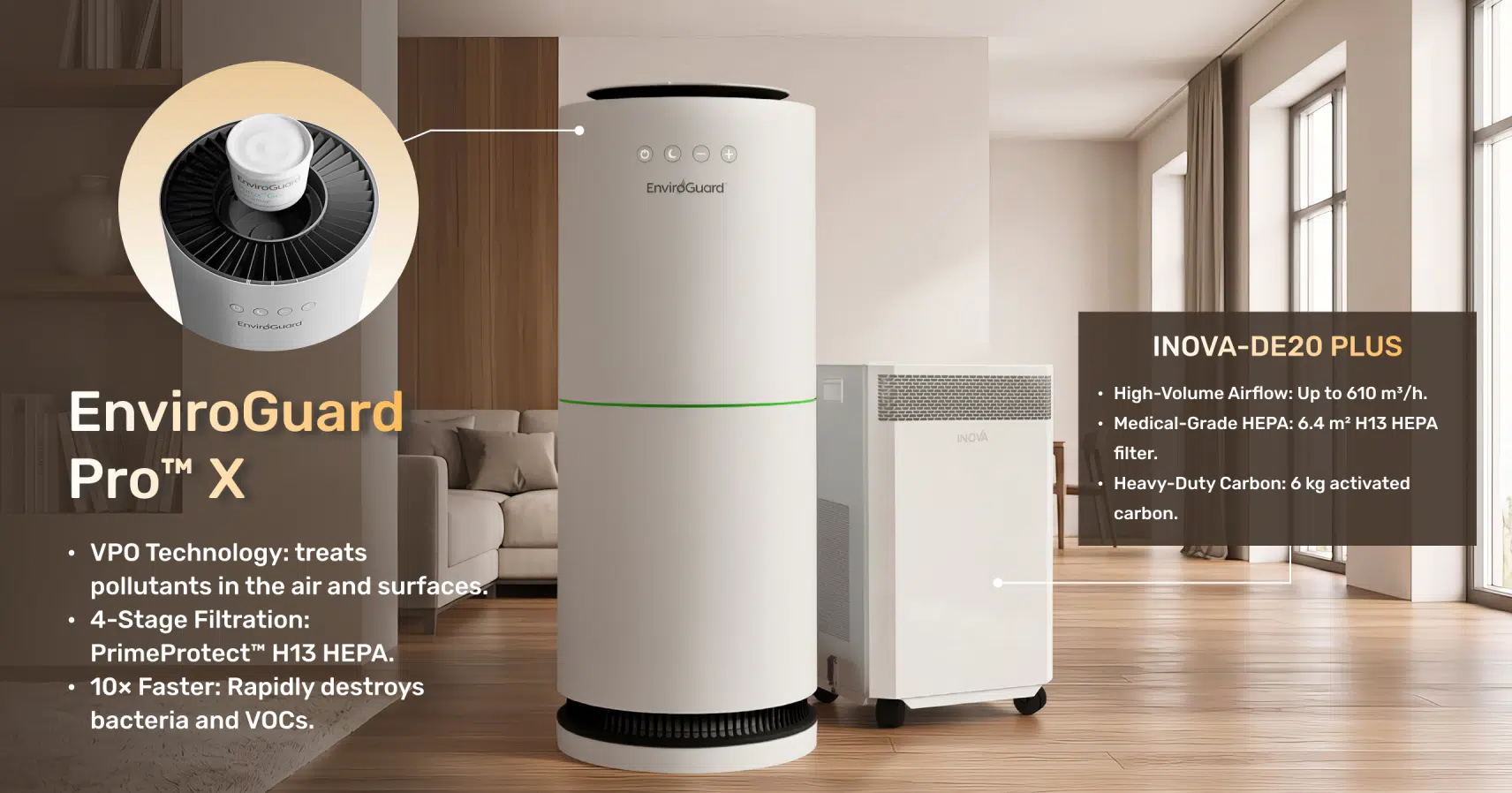
When people compare premium Australian air purifiers, VBreathe EnviroGuard PRO™ X and InovaAir AirClean DE20 Plus are often placed side by side. On paper, both sit at the premium end of the market. Both are built for serious indoor air concerns. Both use high-quality filtration. But once you look […]
Whenever you step into a newly renovated home or bring brand-new furniture into a room, you often notice a distinct, unfamiliar scent—commonly referred to as that “new home” or “brand-new” smell. While many people consider this a normal part of buying new items, this odour can actually be a […]
¹ Tested in independent Australian laboratories under controlled conditions using airborne mould spores, bacteria and allergen particulates (0.3μm–10μm).
² Based on third-party testing results confirming 99.9% reduction in airborne mould spores and pet dander when using EnviroGuard Pro X with Purox™ Gel over 24 hours.
³ Independent testing by ICAS Testing Technology Service (Shanghai) Co., Ltd. demonstrated 99.99% reduction in airborne Staphylococcus Albus bacteria within 30 minutes in a 20m² test chamber, in accordance with Technical Standard for Disinfection GB 27948-2020.
⁴ Surface efficacy testing conducted by Eurofins BioPharma Product Testing — Sydney (Eurofins ams Laboratories Pty Ltd, TGA-licensed under MI-2021-LI-08995-1). Reductions over 8 hours: 99.99% Pseudomonas Aeruginosa, 99.9% Escherichia Coli, 90% Candida Albicans Yeast.
⁵ "10x faster than conventional filtration" comparison based on EnviroGuard Pro X achieving log 4 (99.99%) airborne bacterial reduction in 30 minutes, compared with log 1 (90%) pathogen reduction in 20 minutes reported for hospital HEPA systems operating at 12 air changes per hour (Fernstrom A, Goldblatt M. Aerobiology and its role in the transmission of infectious diseases. J Pathog. 2013;2013:493960).
⁶ Performance varies based on room size, airflow configuration, fan speed setting, environmental conditions and usage patterns.