Itchy eyes, a runny nose, or a persistent sneezing fit may seem like minor nuisances to some, but for those living with Allergies, these are significant hurdles that diminish the quality of life every single day.
No matter how much we prioritise our health or clean our homes, the sobering reality is that most “allergens” are invisible foes. They do not merely float in the air; they lurk on the surfaces we touch, turning what should be our “safe haven” into a breeding ground for triggers without us even realising it.
This article has been compiled as a comprehensive guide for those wishing to reclaim their respiratory health. We will delve deep into the origins of the most common allergens based on international medical standards, clarify unusual symptoms you might not know are allergy-related, and introduce an innovative way to manage your indoor environment.
“This is not merely a standard air purifier with passive filtration; it is an active air purification system designed to create a clean, pure, and safe indoor environment for you and your family.”
What are the Most Common Allergies? Understanding the 14 Major Allergens
When people think of allergies, they often only imagine sneezing when encountering dust. In reality, “Allergens” are far more diverse and complex. According to medical data from organisations such as Allergy & Anaphylaxis Australia (A&AA), an allergy is a condition where the immune system overreacts to a foreign substance that is typically harmless. These substances can enter the body through inhalation, contact, or ingestion.
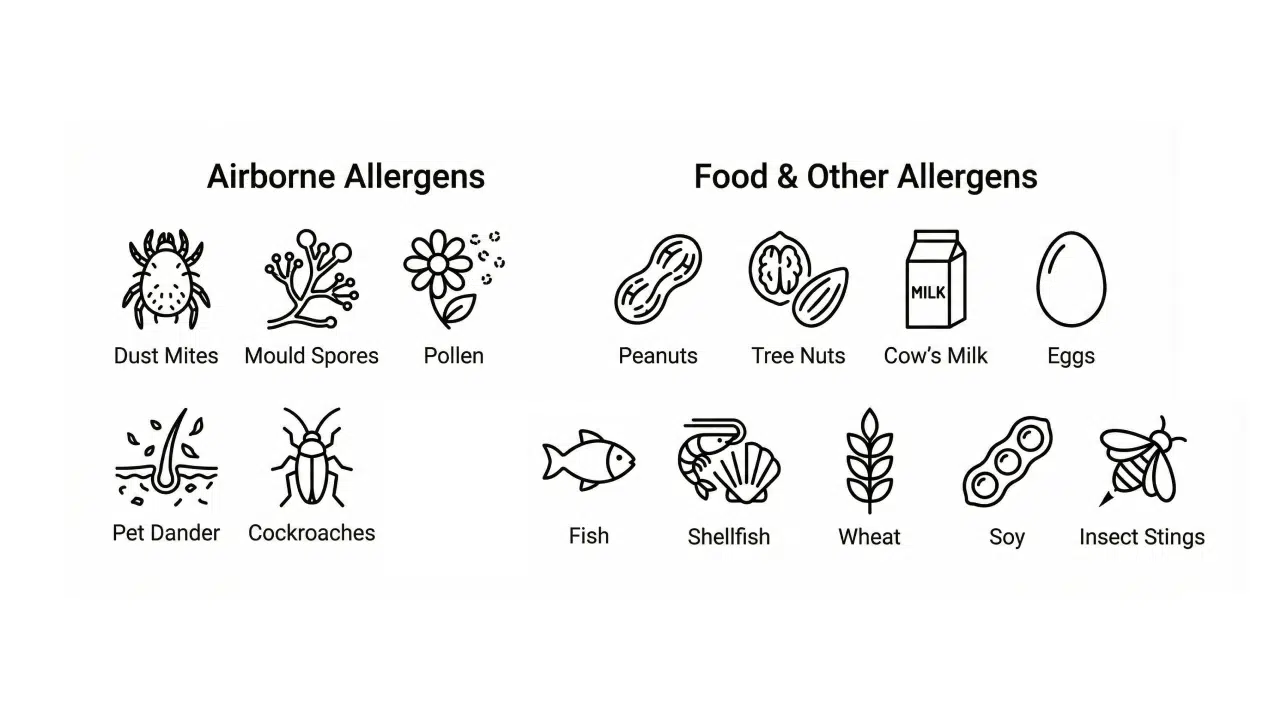
To help you monitor and manage your environment effectively, here are the 14 major allergens and primary allergy groups (14 main allergies) that most commonly affect people worldwide:
Airborne Allergens:
1. Dust Mites: Microscopic organisms living in mattresses, sofas, and carpets; they are the leading cause of chronic indoor allergies.
2. Mould Spores: Thriving in damp areas, these can easily become airborne and cause significant respiratory issues.
3. Pollen: From grasses, weeds, or trees; the primary trigger for seasonal Hay Fever (Allergic Rhinitis).
4. Pet Dander: Proteins found in the skin flakes, saliva, or urine of pets such as dogs and cats.
5. Cockroaches: Substances from the bodies and waste of cockroaches are potent indoor asthma triggers and can worsen allergy symptoms.
Food & Other Allergens:
6. Peanuts: One of the most severe allergens known.
7. Tree Nuts: Such as almonds, walnuts, and cashews.
8. Cow’s Milk: Frequently found in infants and young children.
9. Eggs: Particularly the proteins found in egg whites.
10. Fish: Finfish species.
11. Shellfish: Including prawns, crabs, and lobsters.
12. Wheat: Including the gluten protein group.
13. Soy: Commonly found in processed foods.
14. Insect Stings: Such as bees, wasps, or hornets, which can cause acute, severe reactions.
The key to managing these Common Allergens, especially airborne ones like dust mites and mould spores, is understanding that they do not just exist where we can see them. They embed themselves throughout the indoor environment. Identifying your specific triggers is the vital first step toward effective treatment and prevention.
Warning Signs and Related Allergy Symptoms
When the body encounters an allergen, the immune system responds by releasing a chemical called “Histamine” to fight off what it perceives as a threat. This process causes inflammation in various parts of the body.
These warning signs act as a defence mechanism, alerting us that something in our environment or something we have ingested is out of balance. Symptoms can range from mild irritation to severe disruption of daily life.
Generally, Common Allergy Symptoms are categorised by the body system they affect:
- Respiratory System: Frequent sneezing, nasal congestion, runny nose (clear discharge), itchy nose, or a persistent Allergic Cough.
- Skin: Itchy rashes, hives (urticaria), red inflamed skin, or swelling of the face and lips.
- Eyes: Itchy eyes, redness, watering, or swollen eyelids.
- Digestive System: Abdominal pain, nausea, vomiting, or diarrhoea (typically found in food allergies).
Are These Unusual Symptoms Actually Allergies?
Many people are confused by unfamiliar symptoms. We have gathered answers to some of the most frequently asked questions to help you identify your condition more clearly:
- Can allergies cause tingling?
Allergies do not typically cause tingling directly. However, a severe allergic reaction (Anaphylaxis) can affect systemic functions, leading to a tingling sensation. Generally, tingling is more often associated with peripheral neuropathy, nerve compression, or Vitamin B deficiency. - How do allergies cause ear pain?
Allergy-related ear pain or a feeling of “fullness” is caused by inflammation in the nasal passages spreading to the Eustachian Tube, which connects the nose to the middle ear. When this tube becomes swollen or blocked, it causes pressure and fluid buildup, resulting in pain or muffled hearing. - Are dark circles under the eyes related to allergies (Allergic Shiners)?
While allergies don’t cause traditional bruising, chronic sufferers often experience “Allergic Shiners.” This happens when histamine causes the small veins under the eyes to dilate and pool with blood, resulting in a dark blue, purple, or brown shadow often mistaken for a bruise. - Is nausea a real allergy symptom?
Yes. Beyond food allergies, airborne allergy sufferers with significant “Post-nasal drip” may find that the excess mucus irritates the stomach lining, leading to feelings of nausea or queasiness.
These symptoms are early signals from your body. Because reactions can be complex, knowing when to stop self-monitoring and consult a professional—and knowing how to correctly adjust your environment—is crucial for reclaiming your quality of life.
When to Consult a Doctor and Improving Your Indoor Environment
Managing allergies is about more than just taking antihistamines when symptoms appear. If you find that allergies are disrupting your sleep, affecting your work, or if your usual medication is no longer effective, it is time to consult an allergist (Specialist). They can perform diagnostic tests, such as a Skin Prick Test or Blood Test, to identify your exact triggers and create a more effective treatment plan.
Danger Signs of a Severe Allergy
Certain allergic reactions can escalate into a life-threatening condition called Anaphylaxis. Seek immediate medical attention if you or someone nearby experiences:
- Difficulty breathing or audible wheezing.
- A rapid, weak pulse or a sudden drop in blood pressure.
- Swelling of the throat, tongue, or lips that makes swallowing difficult.
- Dizziness, lightheadedness, or loss of consciousness.
- Rapidly spreading hives accompanied by nausea or vomiting.
Improving Your Indoor Environment
Beyond medical treatment, managing triggers within the home is vital. According to standard health guidelines, you can start with these steps:
- Reduce Humidity:
Keep indoor relative humidity between 30–50% to inhibit the growth of mould and dust mites. - Manage Bedding:
Clean bed linens and pillowcases thoroughly. Air out bedding in sunlight or wash in hot water (60°C or higher) every 1–2 weeks to eliminate dust mites. - Ventilation:
Open windows to allow fresh air circulation during periods when outdoor smoke and pollen counts are low, or use an effective filtered ventilation system. - Avoid Heavy Rugs and Curtains:
Where possible, opt for wood or vinyl flooring and easy-to-clean blinds to reduce the accumulation of pet dander and dust.
While these practices help to an extent, for those highly sensitive to triggers, a “Passive” defence is often insufficient. Microscopic allergens hide in places traditional cleaning cannot reach. This is why modern air management systems must evolve.
Why Traditional HEPA Filters Might Not Be Enough for Chronic Allergy Sufferers
When managing indoor pollutants, many look for air purifiers with a HEPA (High-Efficiency Particulate Air) filter. While HEPA is the gold standard for trapping small particles, for Chronic Allergy Sufferers, relying solely on traditional filters can leave significant gaps.
The limitations of passive air purifiers typically include:
- Waiting for the air to come to the machine:
Passive filters only work if the air physically passes through the filter. If allergens are settled in a corner, on curtains, or inside a sofa, the purifier cannot manage those airborne pollutants until they randomly float into the device. - No management of surface allergens:
This is the greatest weakness (HEPA Filtration Limitations). Over 80% of allergens are not always airborne; they settle on surfaces like beds, pillows, carpets, or desks. Traditional purifiers simply cannot reach these areas. - Risk of accumulation on the filter:
When a purifier traps mould or bacteria, if it lacks a secondary neutralising system, these pathogens can survive and grow on the filter itself.
The difference between random air cleaning (Passive) and proactive allergen elimination (Active) is what determines if your home is truly clean or just “feels” clean.
VBreathe Solution: A Dual Active Approach to Neutralize Allergens Mid-Air
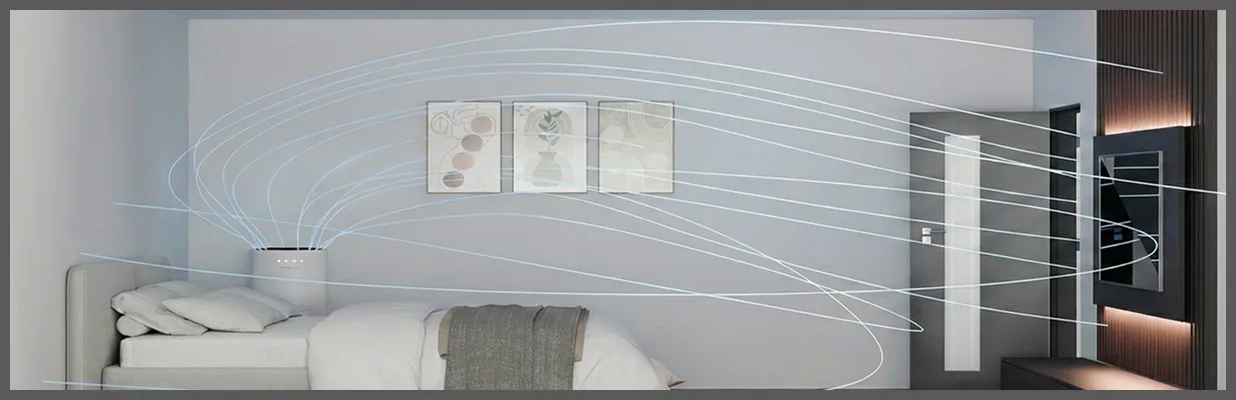
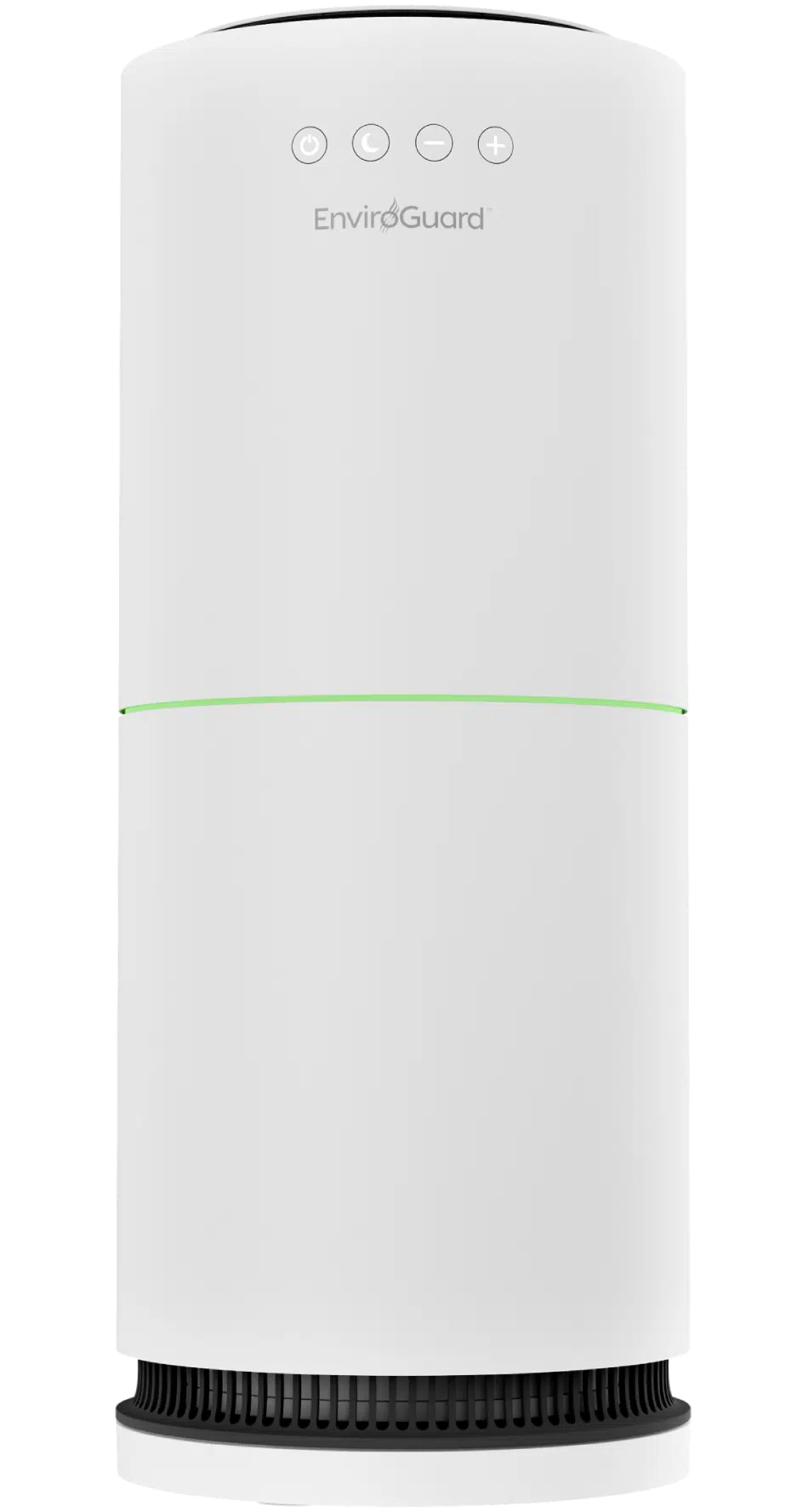
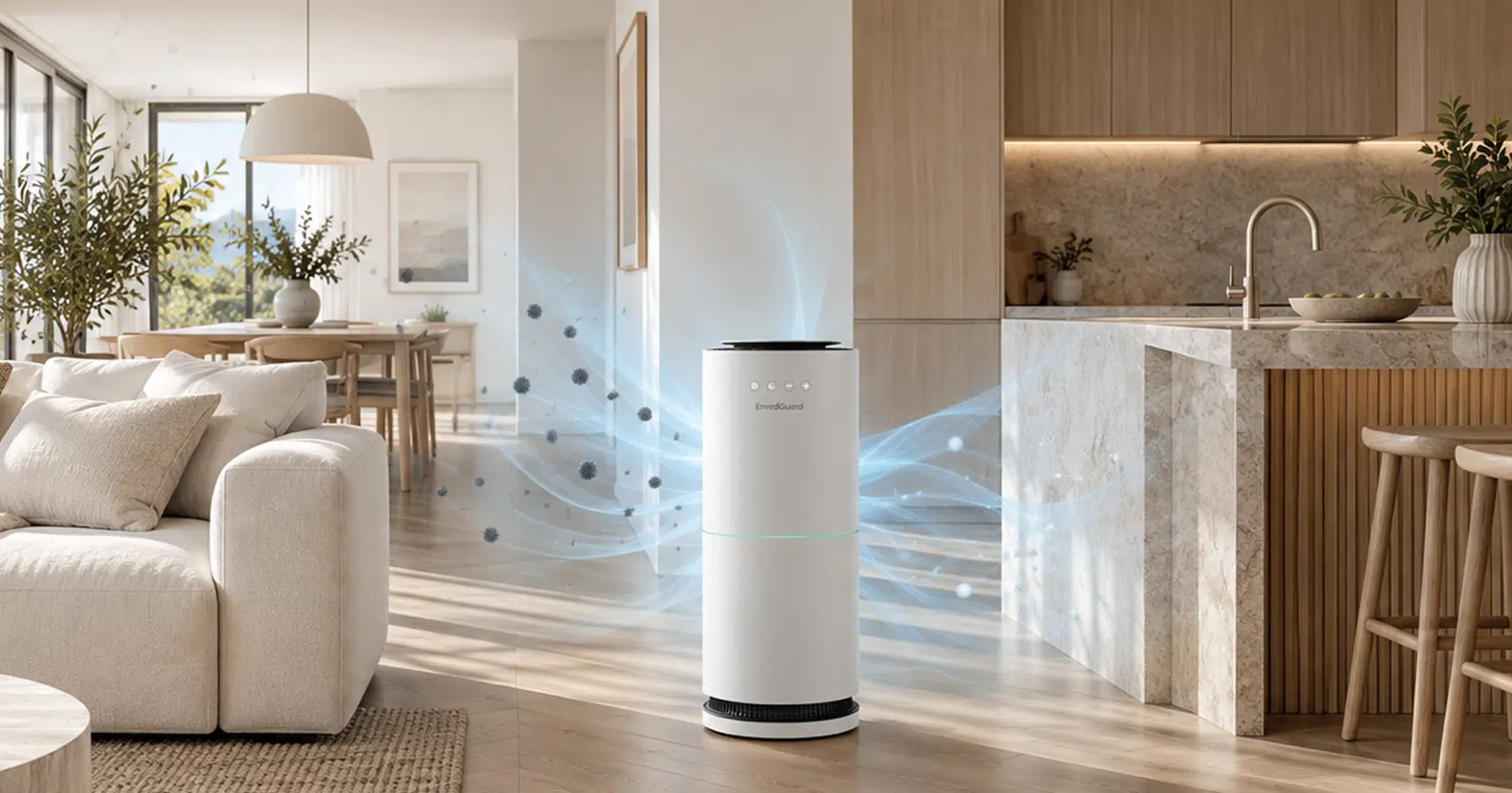
To overcome the limits of traditional purifiers, the VBreathe EnviroGuard PRO™ X was designed with a different philosophy: the Dual Active Approach. This combines passive filtration with active, proactive sanitisation. It doesn’t just wait for polluted air; it sends out “agents” to clean the entire room.
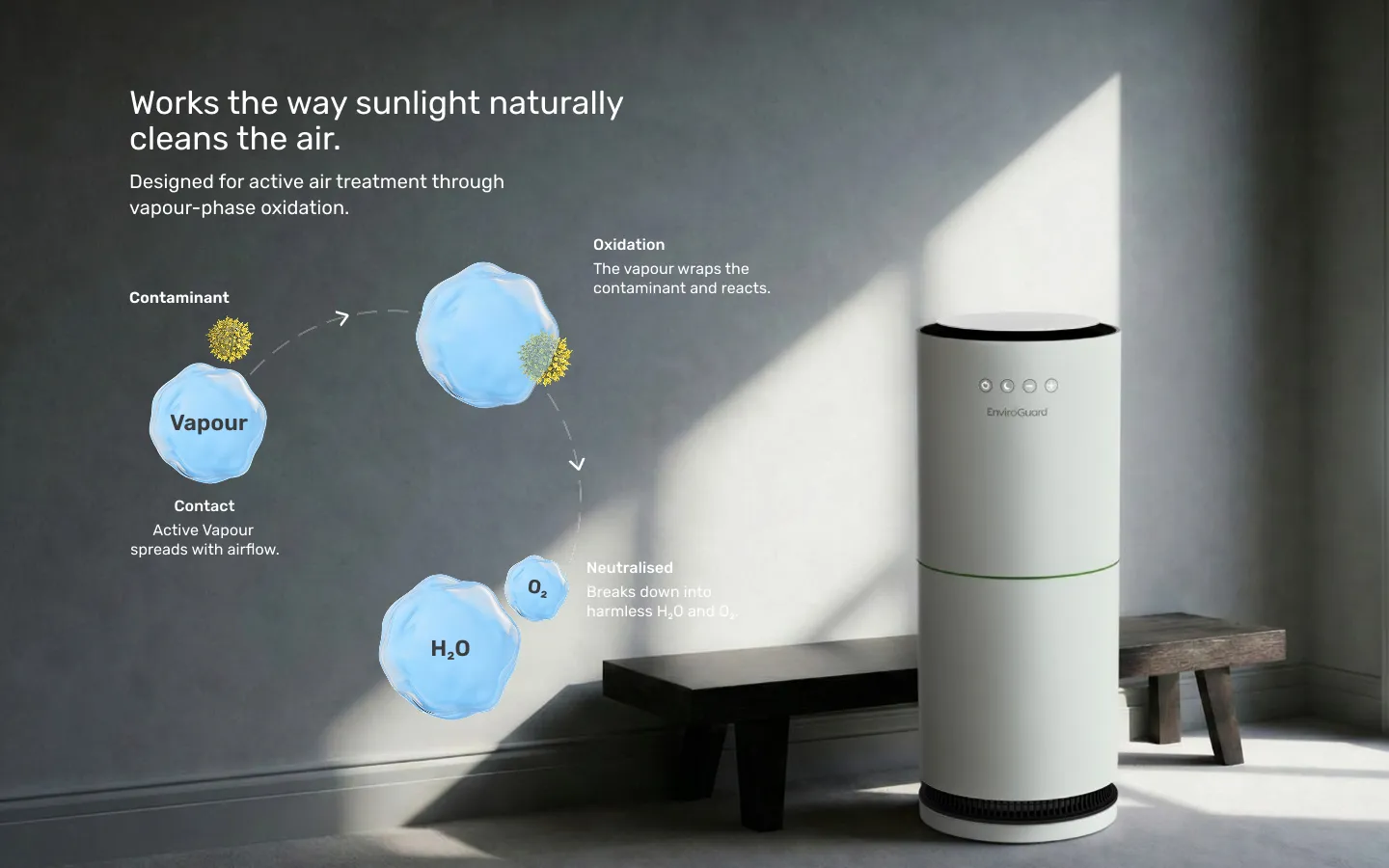
The heart of this innovation is Purox™ Gel, a proprietary, eco-friendly formula. As the device operates, it releases a low-level safe vapour that mirrors the natural oxidation process of sunlight. This vapour actively breaks down the protein structures of allergens, viruses, and bacteria, neutralising them mid-air and on surfaces throughout the home.
Comparison Table: Traditional Purifiers vs. VBreathe Technology
4-Stage Filtration Meets Active Vapour Technology
The intelligence of the EnviroGuard PRO™ X lies in the systematic synergy of two advanced technologies, creating a two-layer health shield:
Stage 1: High-Efficiency Filtration (4-Stage Filtration System)
The device contains a 4-layer system, including a hospital-grade HEPA filter capable of trapping particles as small as 0.3 microns with a 99.97% removal rate. Whether it is PM2.5, pollen, or pet dander, it is securely trapped inside the machine.
Stage 2: Proactive Sanitisation (Active Vapour Technology)
As air is filtered, the Purox™ Gel vapour is released to clean the air outside the device. This mid-air neutralisation process instantly deactivates allergens and Volatile Organic Compounds (VOCs). Crucially, this gel is Non-toxic and Food-grade, ensuring that the purity you achieve is safe for the respiratory systems of everyone in the family.
This revised section incorporates the specific safety points, the ozone-free status, and the medical disclaimer while maintaining a professional and reassuring tone.
Creating a Safe Haven: Protection for Pet Owners, Children, and Allergic Individuals
A home should be where you feel most at ease. For families with members requiring extra care—such as infants with developing immune systems or those with severe allergies—worrying about chemical residues from harsh disinfectants or the safety of air treatments is a major concern. The VBreathe EnviroGuard PRO™ X – air purifier for allergies was developed under the principle that safety must go hand-in-hand with efficiency.
Is it safe for kids and pets?
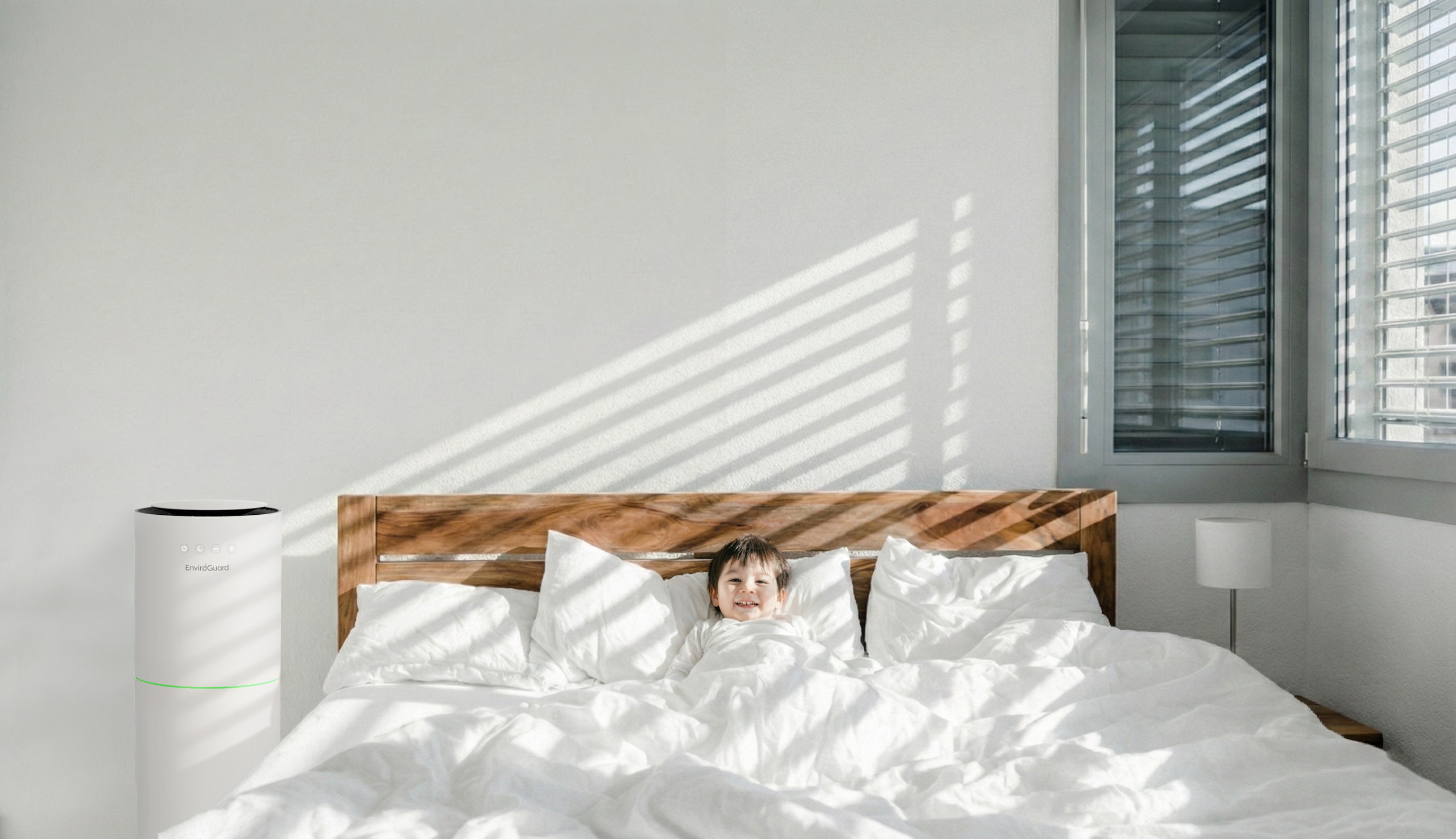
Yes. The VBreathe system is specifically designed for safe, continuous indoor use around families and pets. Unlike many traditional air purifiers or ionisers that can produce harmful by-products, the active vapour process used by VBreathe is ozone-free.
The Purox™ Gel utilised in the device is crafted from food-grade, non-toxic ingredients. This ensures that as the vapour moves through your home to neutralise allergens, it remains gentle on the respiratory systems of your most vulnerable family members, including toddlers who spend time playing on the floor and pets who are sensitive to airborne chemicals.
Proactive Protection You Can Trust
The intelligence of the system allows it to maintain a stable, clean environment without the need for harsh intervention. Whether it is removing microscopic pet dander or preventing the spread of mould spores, the process remains natural and safe.
Approved for your peace of mind:
- ✔ Safe for families: Non-toxic and gentle for all ages.
- ✔ Safe for pets: Designed with animal health in mind.
- ✔ Designed for continuous indoor use: Provides 24/7 protection without worry.
- ✔ Ozone-free vapour process: No harmful by-products released into your home.
For Allergic Individuals
“For sensitive individuals, even the smallest particles can trigger asthma or rashes. VBreathe’s Dual Active system creates a ‘Stable Environment’ by continuously reducing pathogens and allergens by 99.99% (based on testing by Aeris Environmental Ltd.) for 24 hours a day. This reduces the load on your immune system, turning your bedroom or living room into a true ‘Safe zone’ for recovery.”
Note: While the VBreathe EnviroGuard PRO™ X provides professional-grade air and surface purification to significantly reduce triggers, it is not a medical device.
Conclusion
Managing allergies is not a temporary battle; it is about building a foundation for health through the environment where you spend most of your time. Switching from a passive air purifier to a proactive system like the VBreathe EnviroGuard PRO™ X is an investment in professional-grade healthcare.
By merging 4-stage HEPA filtration with the neutralising power of Purox™ Gel, you aren’t just buying a machine; you are installing an intelligent defence system for long-term allergy management.
FAQs: Advanced Air Purification & Allergy Management