


How Do You Destruct VOCs? Most standard air purifiers fail to eliminate Volatile Organic Compounds (VOCs) because they rely on passive filtration (like HEPA), which only captures solid particles, or thin activated carbon filters that quickly saturate and risk releasing trapped toxic gases back into your room. For definitive […]
How Do You Destruct VOCs?
Most standard air purifiers fail to eliminate Volatile Organic Compounds (VOCs) because they rely on passive filtration (like HEPA), which only captures solid particles, or thin activated carbon filters that quickly saturate and risk releasing trapped toxic gases back into your room.
For definitive chemical and VOC elimination, modern indoor air science points to Vapour Phase Oxidation technology that releases safe, natural vapour to break down chemical bonds at the molecular level throughout the air and on contact surfaces.
Bring home a brand-new sofa, or finish painting your child’s bedroom, and you will immediately notice that distinct, unmistakable “new” smell drifting through your home. While often culturally associated with freshness, that odour is actually a warning sign of Volatile Organic Compounds (VOCs)—invisible, airborne chemicals silently off-gassing from adhesives, paints, and synthetic fabrics into the air you breathe.
According to the Environmental Protection Agency (EPA), indoor air can be 2 to 5 times more polluted than outdoor air. For Australians, who spend up to 90% of their lives indoors, this is not merely a cosmetic inconvenience; it poses a direct health risk—particularly for those living with asthma, severe allergies, or chronic respiratory conditions.
Faced with this problem, the natural instinct is to walk into a local store and purchase a standard air purifier. But here lies the modern air-quality paradox: most retail air purifiers are fundamentally not engineered to deal with VOCs. They rely on passive filter technology that has barely changed since World War II (the 1940s), which simply waits for air to pass through a physical barrier. While HEPA filters are highly efficient at capturing airborne dust and dander, gaseous VOC molecules are far smaller than the filter’s physical pores. As a result, toxic gases slip straight through, leaving your family exposed.
As we navigate, the standard for indoor air purification has shifted from merely “trapping” particles to “actively destroying” gaseous pollutants. This evidence-backed guide serves as your definitive manual to securing clean air. We bypass the marketing jargon to explore:

Many people have heard the term “VOCs” in passing, but from a scientific standpoint, Volatile Organic Compounds refer to a broad group of carbon-based gases that evaporate easily at normal room temperature. What makes VOCs uniquely challenging is their chemical volatility: these substances transition from a solid or liquid state directly into a gas without requiring high temperatures.
Because they are invisible and often float undetected, they are measured in parts per billion (ppb) or milligrams per cubic metre (mg/m³). The moment you use a floor cleaner, open a tin of paint, or sit on a newly manufactured sofa, these chemicals quietly volatilise, permeating the indoor air that you and your family breathe continuously.
While general articles often refer to “VOCs” as a single entity, the indoor environment actually hosts hundreds of distinct chemical compounds, each carrying its own chemical composition, source, and toxicological profile. Understanding these specific species is critical to safeguarding your health:

To help you identify where these hazards reside, the table below maps out the most common domestic sources, the specific chemicals they emit, and their documented health implications:
| Indoor Source | Commonly Found Chemicals | Potential Health Effects |
|---|---|---|
|
|
Formaldehyde Benzene | Respiratory tract irritation, acute asthma attacks, and long-term carcinogenic risk. |
|
|
Toluene Xylene PGEs | Dizziness, persistent headaches, nausea, and acute neurological/central nervous system effects. |
|
|
Chlorine Ammonia PGEs | Severe eye and nasal passage irritation, chronic dry cough, and skin inflammation/eczema. |
|
|
Acetone Limonene | Allergy and asthma aggravation, and respiratory irritation in fragrance-sensitive individuals. |
|
|
Styrene Various VOCs | Fatigue, mental fog, and recurrent headaches (commonly referred to as Office Syndrome). |
When you inhale these compounds, they act as powerful irritants across your respiratory and vascular systems. The clinical symptoms are generally categorised into two stages:
Because of these risks, choosing a system capable of managing gaseous chemical structures is not merely about home comfort—it is a critical, long-term investment in your family’s respiratory health.
When shopping for an air purifier in Australia, you will almost certainly encounter a metric called Clean Air Delivery Rate (CADR). Developed in the early 1980s by the Association of Home Appliance Manufacturers (AHAM), CADR is a voluntary certification programme designed to help consumers compare portable room air purifiers.
To determine a unit’s CADR, the air purifier is placed in a sealed test chamber measuring roughly 1,008 cubic feet (about 28.5 cubic metres) for just 20 minutes. Specialized instruments measure how quickly the machine clears three specific airborne pollutants: tobacco smoke, dust, and pollen. The faster the fan moves air through the physical filter, the higher the CADR number.
While this sounds like a logical way to measure performance, the test has a fundamental flaw: it was never designed to measure how well a machine removes chemical gases or VOCs.
The table below details the specific contaminants tested under the CADR standard and highlights the glaring gap when it comes to molecular gases:
| Contaminant Category | Tested Particle Size Range | Standard CADR Rating Scale | What It Actually Measures |
|---|---|---|---|
|
|
0.09 to 1.0 microns | 10 to 450 | Fine physical particulates (like combustion soot) |
|
|
0.5 to 3.0 microns | 10 to 400 | Medium physical particulates |
|
|
5.0 to 11.0 microns | 25 to 450 | Coarse physical allergens |
|
|
< 0.001 microns (Molecular) | Not Tested (N/A) | Completely ignored by the CADR standard |
If you are choosing an air purifier specifically to protect your family from paint fumes, formaldehyde, or new furniture off-gassing, relying on CADR numbers can lead to a highly disappointing purchase. Industry experts point to four critical reasons why CADR is an inadequate metric for chemical safety:
The CADR test only measures physical, floating solid particles that are captured by a physical barrier. However, chemical gases and Volatile Organic Compounds exist at a molecular level—frequently smaller than 0.001 microns. Because these molecules are thousands of times smaller than HEPA filter pores, they slip through standard particle filters effortlessly. A machine can have a perfect, maximum CADR rating of 450 for dust and smoke, yet remain completely incapable of capturing a single molecule of toxic formaldehyde.
To achieve those highly-marketed, high CADR numbers, manufacturers must run their machines at absolute maximum fan speeds during the short 20-minute test. In a real home, however, users rarely run their purifiers on high because the fan noise is too disruptive.
More importantly, high fan speed is the enemy of gas filtration. For passive chemical filters (like activated carbon) to work, gas molecules need sufficient dwell time—the duration that the polluted air remains in physical contact with the filtering media—to allow the chemicals to attach to the surface. Moving the air too quickly through the filter prevents this chemical bonding from occurring, rendering the filter highly ineffective.
While CADR measures smoke down to 0.09 microns, it fails to evaluate a purifier’s efficiency at capturing ultra-fine particles smaller than this range. This is a significant health concern because these ultra-fine particles are the most dangerous to human physiology; when inhaled, they bypass the lungs’ natural defenses and enter the bloodstream directly.
A CADR rating is a snapshot of a brand-new, pristine filter straight out of the box. It does not account for how the machine performs over weeks or months of continuous use. This is particularly dangerous for passive carbon filters. Once the microscopic pores of a carbon sheet become saturated with household chemicals, the filter stops capturing gases. Worse, when room temperatures shift, a saturated filter is highly prone to off-gassing—dumping all the previously trapped toxic chemicals back into your living spaces in one concentrated wave.
Ultimately, CADR is a useful metric if your only concern is vacuuming up pet dander, dust, and pollen. But when your goal is protecting your home from invisible chemical hazards and persistent VOC off-gassing, you must look beyond this 1980s standard and focus on technologies engineered for molecular destruction.

When evaluating how to clear your home of toxic gases, it is essential to understand that not all air treatment systems operate on the same scientific principles. To make an informed, health-focused investment, we must look past marketing terms and dissect the exact chemical and physical mechanisms of the three primary technologies available.
Activated carbon is the classic, passive method used in standard consumer air purifiers to handle household odours and chemical gases. This technology operates on a purely physical principle, requiring a motorized fan to pull indoor air through a physical carbon barrier and hoping that chemical molecules drift directly into the unit’s intake.
Real-World Outcome: Passive adsorption is a temporary storage system rather than a destruction method. Once the microscopic carbon pores are saturated, the filter can no longer trap gases and risks off-gassing—dumping months of concentrated toxic chemicals back into your room if temperature or humidity shifts. Genuinely effective passive units require bulky, loud machines packed with 5 to 10 kilograms of carbon, resulting in high filter replacement costs and disruptive fan noise in your home.
This method uses solid-state chemical catalysts to permanently transform and eliminate targeted organic gases. It represents an upgrade over traditional carbon storage by facilitating a continuous chemical reaction that breaks down toxic structures directly inside the machine.
Real-World Outcome: While catalytic filters permanently destroy formaldehyde and never wear out, they still operate on a passive basis. The machine cannot seek out pollutants; it must wait for chemicals to float through the room and enter the intake before any breakdown can occur. Additionally, this technology is highly selective—it is engineered to target formaldehyde and is less effective against broader household VOCs (such as benzene, toluene, or PGEs), which still require a secondary carbon filter to manage.
Vapour Phase Oxidation represents a paradigm shift from passive, machine-bound air filtration to active, room-wide air treatment. This proactive technology mimics nature’s outdoor self-cleaning process, where natural oxygen compounds break down toxic gases mid-air before they can ever accumulate in your breathing zone.
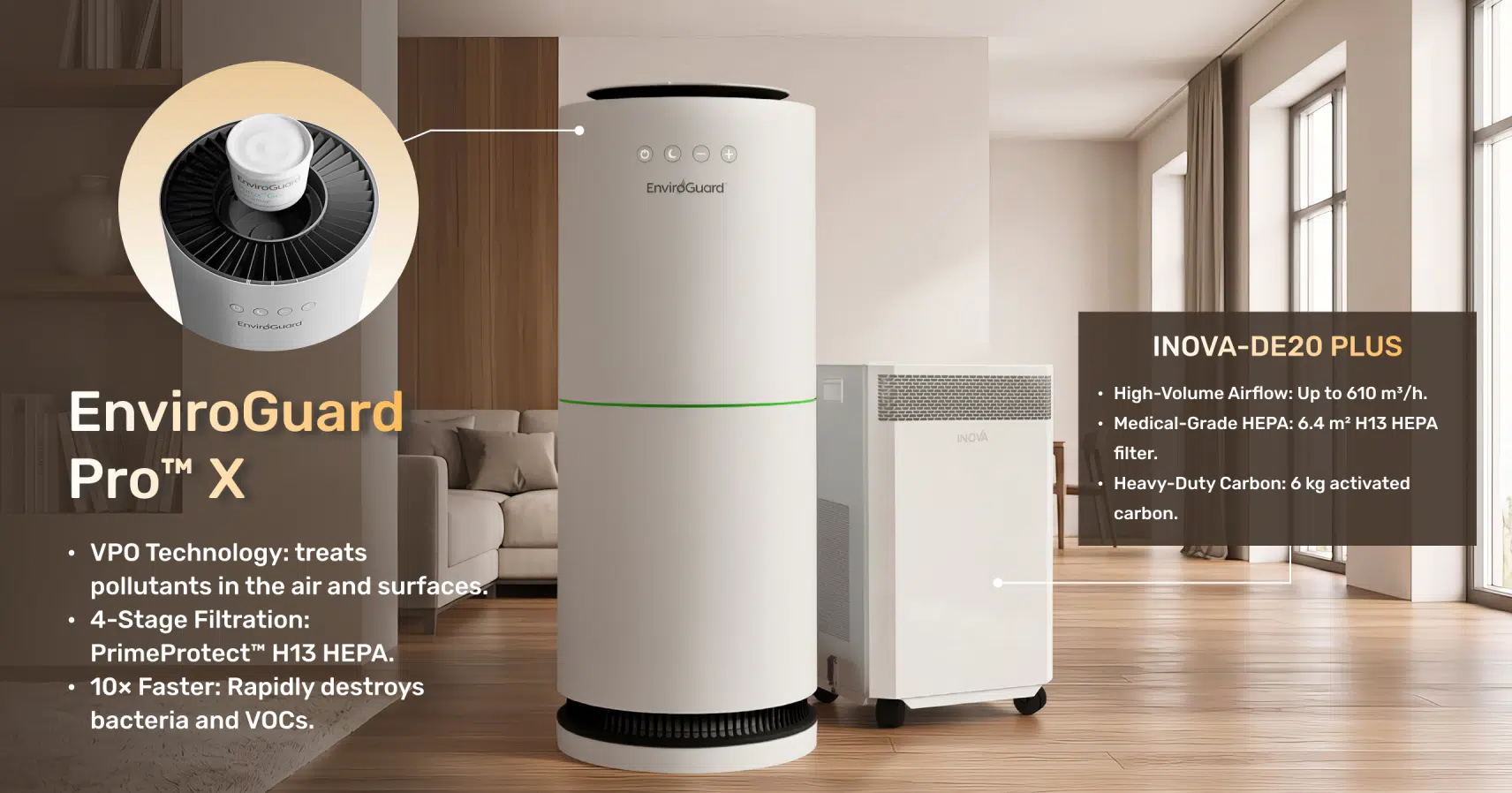
Real-World Outcome: Vapour Phase Oxidation provides proactive, whole-room sanitisation of both air and surfaces up to 10 times faster than conventional filtration. Because chemicals are permanently destroyed rather than stored, there is zero risk of secondary off-gassing, allowing the unit to run quietly and compactly with highly cost-effective gel refills instead of massive, expensive replacement filters.
For Australian families managing respiratory conditions like asthma or COPD, independent clinical evidence is far more valuable than paper specifications. Rigorous testing by leading independent Australian institutions, including the University of New South Wales (UNSW) and Eurofins Sydney, has validated this active vapour technology:
When choosing an air purifier for vocs from the hundreds of options on the market, here is a 3-point checklist to guide your decision, whether you are a first-time buyer or someone with specific requirements.
To effectively eliminate heavy concentrations of VOCs and formaldehyde from a newly constructed or recently renovated Australian home, a systematic, multi-phase protocol is required. While selecting the correct air treatment technology is vital, a scientifically robust solution must integrate three foundational principles:
Moving into a new build or starting a renovation? Ensure toxic chemical odours do not compromise your family’s respiratory health. Explore our evidence-based, chronological manual: The 72-Hour New-Home Protocol: How to Safely Eliminate Formaldehyde & Chemical Odours from New Furniture to neutralise invisible hazards and secure clean air from Day 1.
As we navigate, the standard for indoor air safety has moved beyond passive, machine-bound barriers. Depending on outdated activated carbon filtration traps you in a cycle of high-maintenance costs, requiring bulky replacements that inevitably saturate and risk off-gassing toxic chemicals back into your living environment.
Securing an EnviroGuard PRO X Environmental System with Vapour Phase Oxidation technology provides a more advanced approach to protecting your home from formaldehyde, VOCs and other indoor pollutants. More than an air purifier, EnviroGuard PRO X actively treats both the air and room environment, delivering quiet, continuous protection designed for long-term indoor air quality.
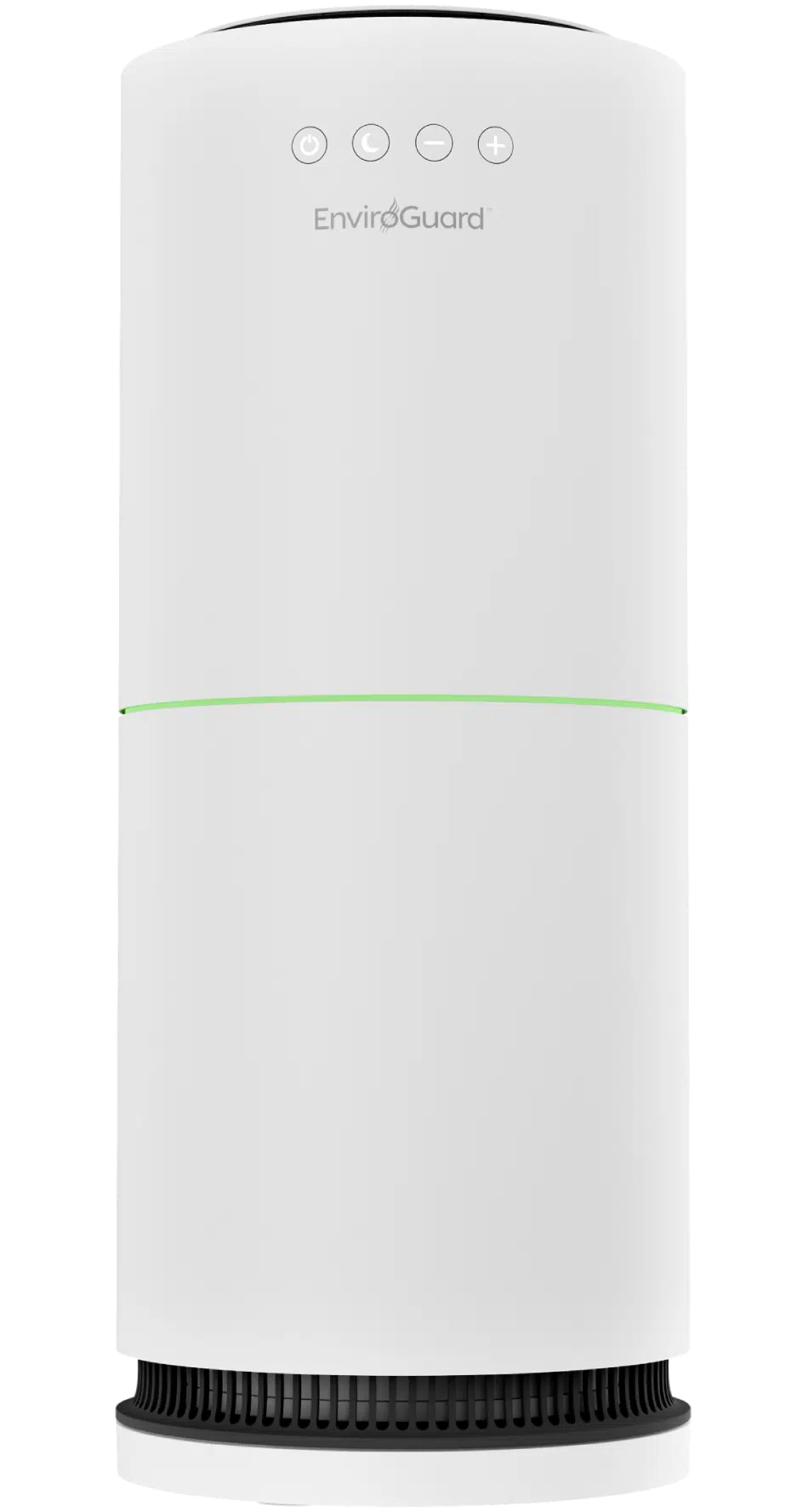
Upgrade to the innovative EnviroGuard PRO™ X today for only $790 (Was $1,590). Claim your $800 saving now and breathe cleaner, healthier air tomorrow.


¹ Tested in independent Australian laboratories under controlled conditions using airborne mould spores, bacteria and allergen particulates (0.3μm–10μm).
² Based on third-party testing results confirming 99.9% reduction in airborne mould spores and pet dander when using EnviroGuard Pro X with Purox™ Gel over 24 hours.
³ Independent testing by ICAS Testing Technology Service (Shanghai) Co., Ltd. demonstrated 99.99% reduction in airborne Staphylococcus Albus bacteria within 30 minutes in a 20m² test chamber, in accordance with Technical Standard for Disinfection GB 27948-2020.
⁴ Surface efficacy testing conducted by Eurofins BioPharma Product Testing — Sydney (Eurofins ams Laboratories Pty Ltd, TGA-licensed under MI-2021-LI-08995-1). Reductions over 8 hours: 99.99% Pseudomonas Aeruginosa, 99.9% Escherichia Coli, 90% Candida Albicans Yeast.
⁵ "10x faster than conventional filtration" comparison based on EnviroGuard Pro X achieving log 4 (99.99%) airborne bacterial reduction in 30 minutes, compared with log 1 (90%) pathogen reduction in 20 minutes reported for hospital HEPA systems operating at 12 air changes per hour (Fernstrom A, Goldblatt M. Aerobiology and its role in the transmission of infectious diseases. J Pathog. 2013;2013:493960).
⁶ Performance varies based on room size, airflow configuration, fan speed setting, environmental conditions and usage patterns.
Remove
Total Amount
Become part of our community and enjoy exclusive offers and benefits available only to our members.
Adding {{itemName}} to cart
Added {{itemName}} to cart