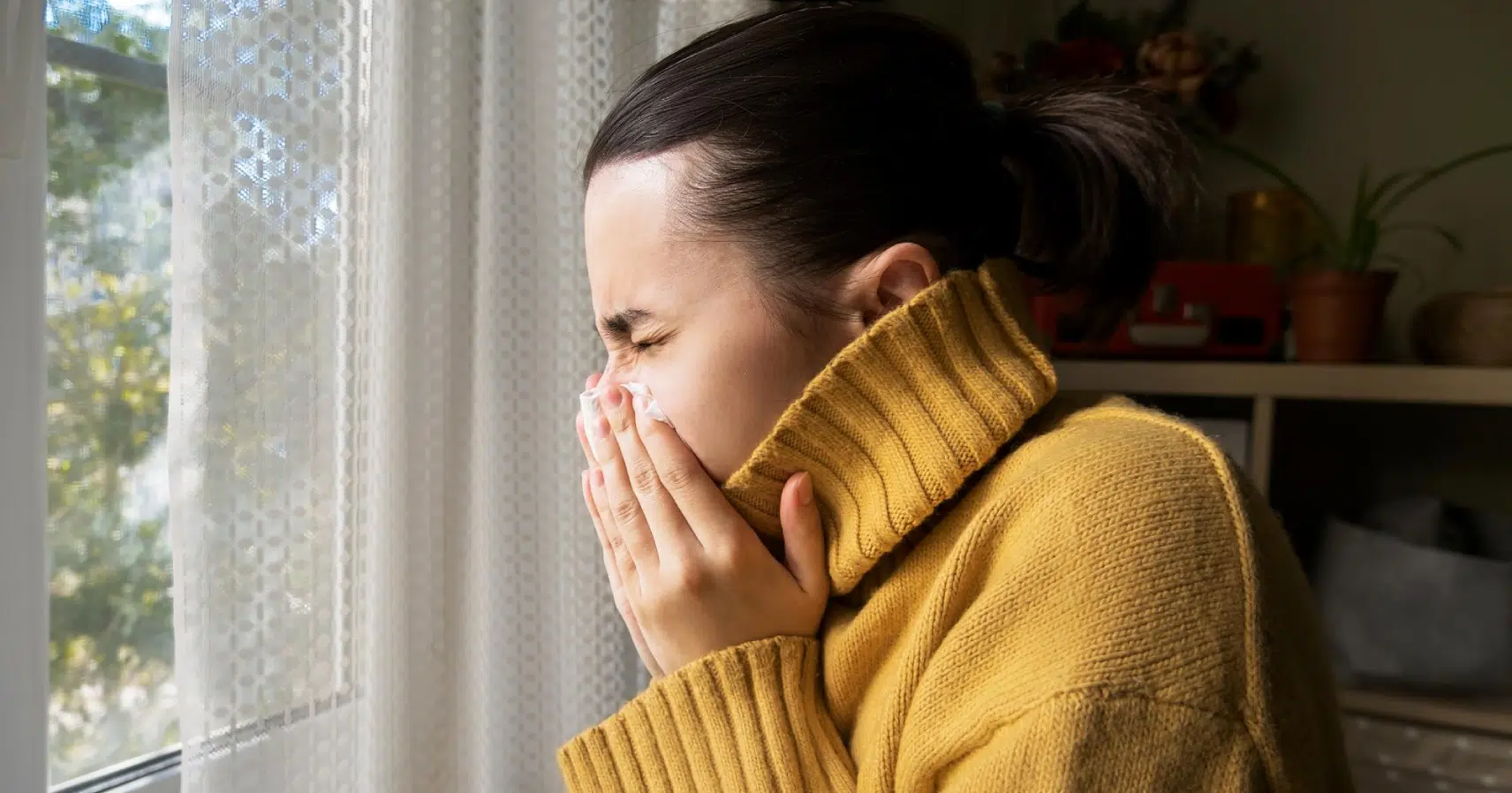

If you wake up most mornings with a stuffy nose, itchy eyes, or that familiar scratchy throat — and you share your home with a cat or dog — there’s a good chance your bedroom is working against you. Not because of anything dramatic, but because of something you can’t see, can’t smell, and probably haven’t thought much about until now.
Pet allergens are sneaky. They’re microscopic, they travel on air currents, and they quietly settle into your mattress, pillows, and curtains long before symptoms appear. The frustrating part is that most people spend weeks trying antihistamines or nasal sprays without ever addressing the real source of the problem — which is often right where they sleep. Understanding how allergens behave in your bedroom changes everything, because it turns a vague, overwhelming problem into something concrete and manageable.
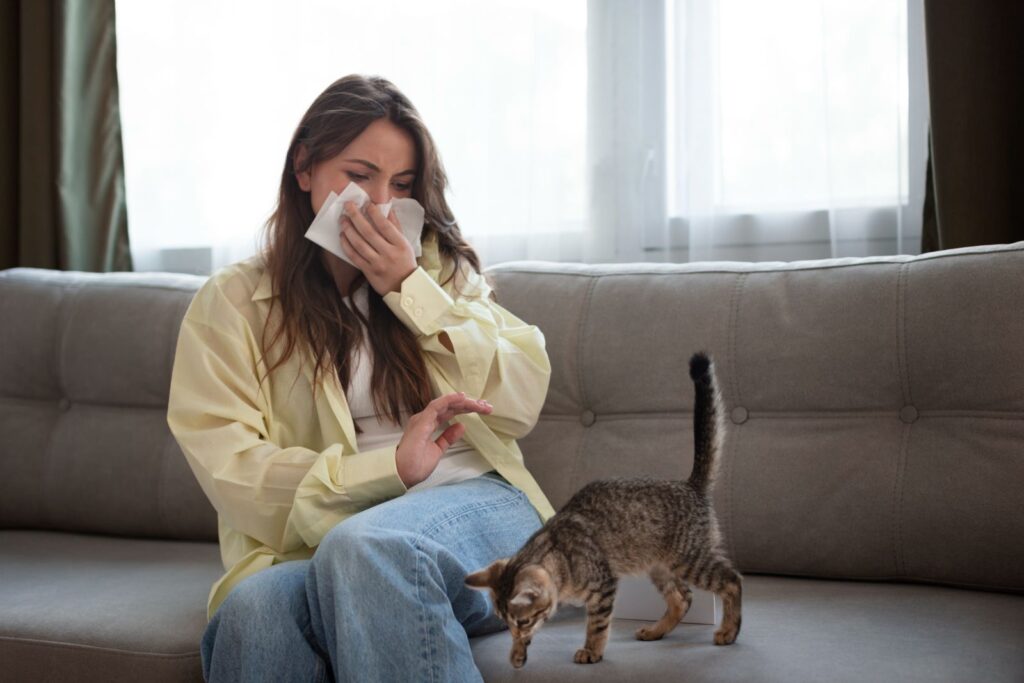
Most people assume pet hair is the main culprit. It’s not. The real troublemakers are proteins found in your pet’s skin cells (dander), saliva, and urine. When your cat grooms herself or your dog scratches, these proteins get released into the air and onto nearby surfaces. The particles are incredibly light — some are smaller than a micron — which means they stay airborne far longer than ordinary dust and travel from room to room without any help.
The two most well-studied are Fel d 1 (from cats) and Can f 1 (from dogs). Both are unusually resilient. Fel d 1 in particular clings to walls, furniture, and clothing, and has been detected in homes for up to six months after a cat has been removed entirely. This is why people sometimes still experience symptoms even after their pet has been kept out of a room for weeks — the allergen was already there, embedded in surfaces, waiting to be disturbed.
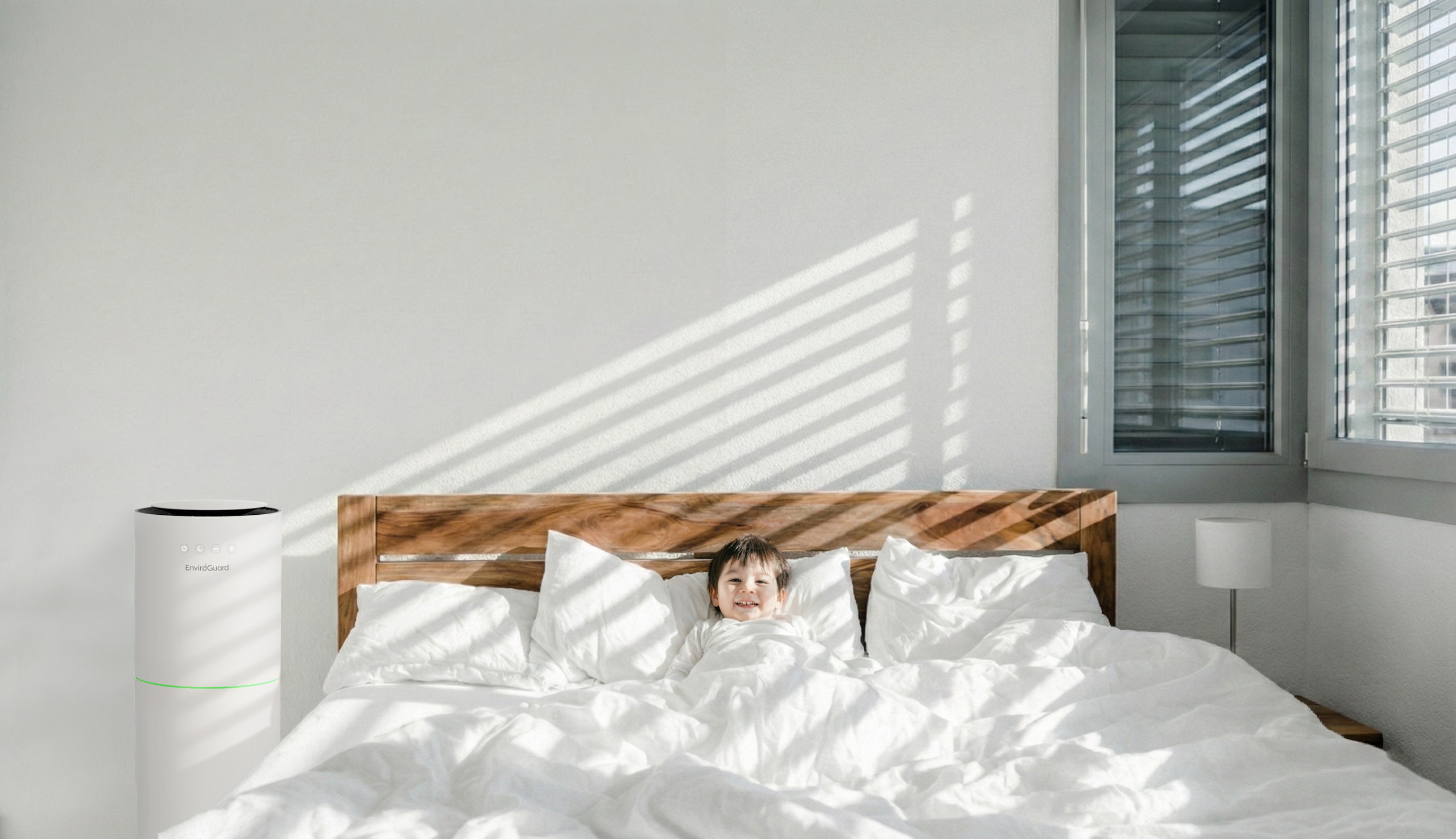
You spend roughly a third of your life in your bedroom — and most of that time, your immune system is receiving a sustained, low-level dose of whatever’s in the air around you. Unlike the living room, where you move around and open windows, the bedroom is often sealed overnight and rarely aired out properly.
Bedrooms also tend to trap allergens for a few structural reasons:
For people with asthma or allergic rhinitis, this nightly exposure can be enough to keep symptoms from ever fully settling down, no matter what you take during the day.
That’s the difficult truth — and also the starting point for fixing it.
Most people think of allergies as a spring or summer problem — pollen season, open windows, that kind of thing. But for pet allergy sufferers, winter is often the worst time of year, and the bedroom is where that plays out most clearly.
In colder months, windows stay shut, ventilation drops, and pets spend significantly more time indoors — shedding, grooming, and settling into exactly the soft furnishings you sleep surrounded by. Without fresh air cycling through, allergen concentrations in the bedroom can build steadily over weeks without any obvious trigger.
Summer brings its own challenges. Higher humidity accelerates dust mite populations, which often compound pet allergen symptoms. Open windows help dilute indoor allergens, but in urban areas they can introduce outdoor pollutants that irritate already-sensitised airways.
None of what follows requires a complete lifestyle overhaul. But each change reduces your nightly allergen load, and done together, the effect compounds meaningfully over time.
This is the single most effective intervention, and also the hardest one emotionally. If you’ve been sharing a bedroom with your cat for years, or if your dog has always slept at the foot of the bed, the idea of closing that door can feel like a small betrayal. That’s a real feeling, and it’s worth acknowledging.
But the bedroom is where sustained exposure does the most damage. Even if your pet only visits during the day, the allergens they leave behind accumulate in your bedding overnight. If you can commit to keeping the bedroom a pet-free zone — especially during sleep hours — most people notice a meaningful difference within a few weeks.
If that’s not something you’re willing to do yet, start smaller: keep pets off the bed itself, and wash bedding more frequently than you currently do.
This is one of the easiest changes to make—and one of the most impactful. Regular washing removes both settled dander and dust mites, which often co-exist in bedding and compound allergic symptoms. For a deeper breakdown of fabric care strategies, see our Laundry Tips for Pet Owners with Allergies. Cold or warm water washes don’t do the job—the temperature is what matters. Aim for 60°C minimum, and use a hot dryer cycle where possible. If your bedding is delicate, check the care label, but don’t let that become a reason to wash less often.
Mattress protectors, pillow encasements, and duvet covers designed to block allergens create a physical barrier between you and what’s already settled deep into the fabric. They’re not glamorous, but they’re one of the most cost-effective tools available — particularly for mattresses, which are almost impossible to wash properly and accumulate years of settled particles.
Standard vacuums can actually make allergen levels worse by blowing fine particles back into the air while you clean. Use a vacuum with move slowly across surfaces, and avoid aggressive back-and-forth motions that disturb settled particles. Don’t forget upholstered furniture, bed frames, skirting boards, and under the bed — these are often overlooked and act as quiet reservoirs.
Pay particular attention to carpets and rugs in the bedroom. These are among the largest allergen reservoirs in any room, trapping dander deep in the pile where surface cleaning barely reaches. If symptoms are severe and you’re considering a longer-term change, replacing bedroom carpet with hard flooring makes a measurable difference.
For hard surfaces, skip the dry duster entirely. A damp cloth captures particles rather than displacing them into the air.
This one often gets overlooked: clothing carries allergens between rooms. If you’ve been sitting on the sofa with your cat or dog, your clothes have picked up dander, and you’re carrying it directly into your bedroom. Changing into fresh clothes before sleep — or at minimum keeping a dedicated set of “bedroom clothes” — reduces how much allergen gets transferred to your bedding each night.
Dust mites thrive in humid conditions and struggle to survive below 50% relative humidity — at that level, they can’t absorb enough moisture from the air to reproduce effectively. Keeping indoor humidity between 40–50% discourages mite populations and also reduces the airborne persistence of other allergen particles. A basic hygrometer — available for a few pounds online — lets you monitor this accurately rather than guessing. If your bedroom consistently runs above 55%, a small dehumidifier can make a real difference.
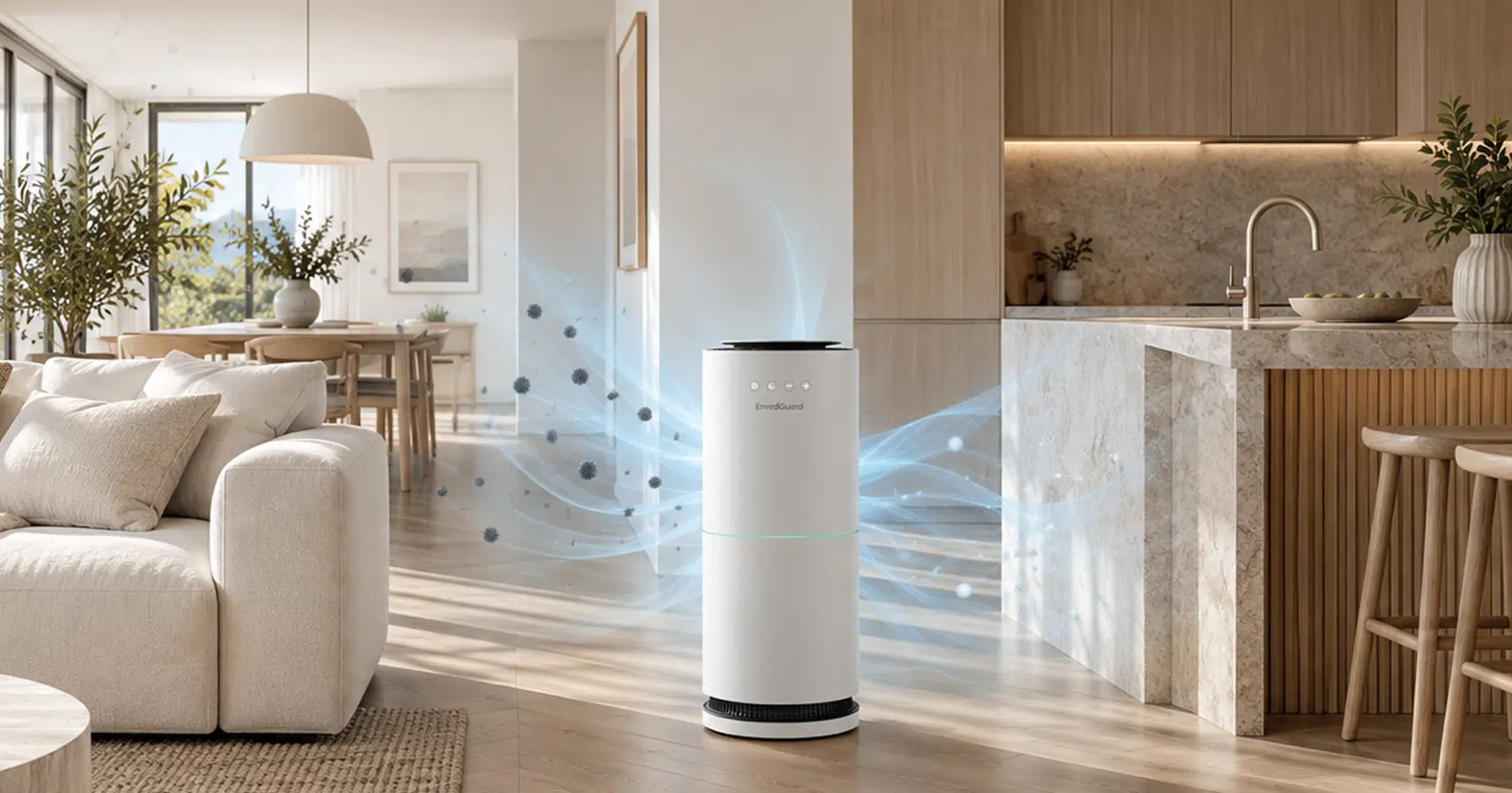
The steps above address allergens you can see, reach, and physically remove. But there’s a category of exposure that’s harder to tackle with cleaning alone — airborne particles that have already dispersed through the room, and allergen proteins that have settled on surfaces you can’t easily wash, like walls, curtains, and hard furniture. This is where VPO technology enters the picture.
The oxidative process is particularly effective against:
The result is a continuous reduction in both airborne and surface allergen loads, operating in the background without requiring any action from the occupant.
Not necessarily. Many people with pet allergies manage their symptoms effectively through a combination of environmental controls, medication, and in some cases immunotherapy. The goal of this guide is to reduce your exposure enough that your body isn’t in a constant state of reaction.
Yes — sometimes for months. Fel d 1 in particular is remarkably sticky and resistant to degradation. Washing all soft furnishings, thoroughly vacuuming, and replacing pillow covers after restricting pet access will help clear residual levels faster. Don’t expect immediate relief just from closing the door.
It does, temporarily. Regular bathing reduces the allergen load on your pet’s coat and skin, which means less is shed into your home. For most dogs, bathing once every one to two weeks is a reasonable starting point — though this varies significantly by breed and skin condition.
Not necessarily. A mid-range air purifier for pet — typically in the £80–£150 range for a bedroom-sized unit — will outperform an expensive model with a lower-grade filter. Focus on filter certification over brand or price. Replace filters according to the manufacturer’s schedule, as a saturated filter provides little benefit. If you want to compare different types of units specifically configured for sleeping spaces, take a look at our best bedroom air purifier guide.
This is a common situation. The most practical approach is to prioritise the bedroom of the person with allergies as a strict pet-free zone, while being more flexible in shared spaces. Using a dedicated air purifier in that bedroom, washing that person’s bedding more frequently, and asking other household members to change clothes before entering that room all help reduce cross-contamination significantly.

Managing pet allergens in the bedroom isn’t about choosing between your health and your relationship with your pet. It’s about being intentional — creating one room in your home where your body genuinely recovers overnight, rather than spending eight hours reacting to what’s in the air around you.
The steps in this guide don’t all need to happen at once. Start with the two or three that feel most doable — washing bedding more often, getting allergen-proof covers, or committing to keeping pets out during sleep — and build from there. Each change lowers your total allergen load, and lower load means fewer symptoms, better sleep, and over time, less reliance on medication just to get through the morning.
For those seeking higher performance, products that combine HEPA-13 level air purification with active vapour technology offer significantly improved effectiveness compared to conventional filtration alone. VBreathe EnviroGuard PRO™ X uses Vapour Phase Oxidation (VPO) technology, continuously releasing vapour alongside certified air purification. It is safe, ozone-free, and independently validated to ANSI IICRC S520 standards.
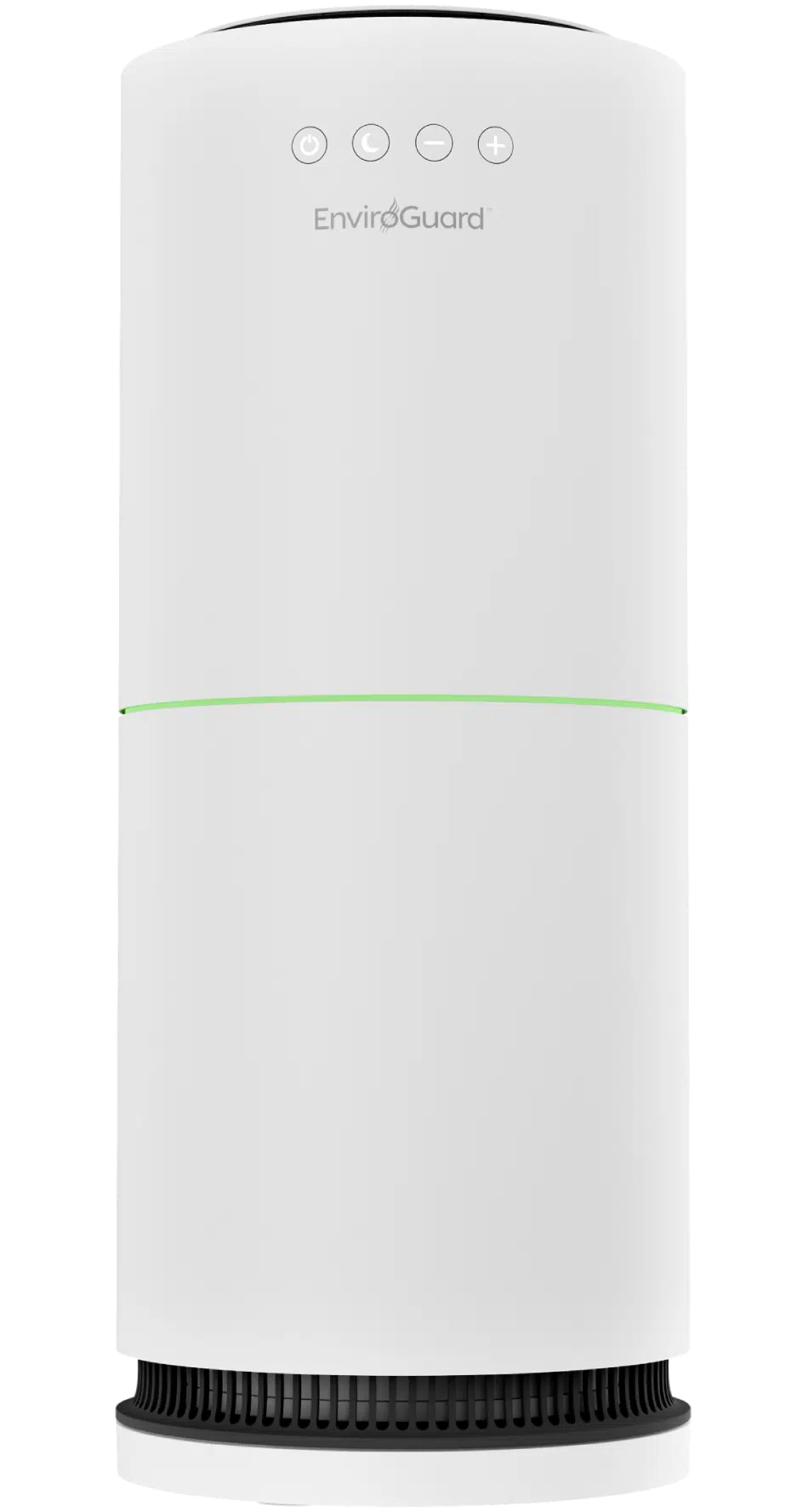
Upgrade to the innovative EnviroGuard PRO™ X today for only $790 (Was $1,590). Claim your $800 saving now and breathe cleaner, healthier air tomorrow.