In short, while the noticeable odor from new paint and adhesives typically dissipates within a few weeks, this does not mean the VOCs have cleared; these harmful compounds often persist long after the smell has faded., but VOCs (Volatile Organic Compounds) from a renovation don’t actually leave when the smell does. Pressed timber furniture and cabinetry can keep releasing formaldehyde for months — sometimes years — long after the “new house smell” has vanished.
That is the part nobody tells you when you move back into a freshly renovated home. The smell fading feels like a green light. It isn’t one. It’s just your nose adapting.
Here is what is actually happening in your indoor air, how long VOCs stick around by material, and what genuinely helps clear the air versus what is just clever marketing.
Do VOCs Eventually Go Away? Here’s the Real Timeline
Yes — but “eventually” means something completely different for every material in your reno, and it is rarely as fast as the odor disappearing. Understanding this timeline is crucial for ensuring you are not exposed to hidden, lingering chemical residues.
VOC release follows a curve, not a switch. It is heaviest in the first few days, drops off sharply over the following weeks, and then trails into a long, low-level tail that can run for months. The smell usually disappears somewhere in the middle of that curve — well before the tail actually finishes.
Safe Move-in Timeline
- General Adults: Wait 2 to 4 weeks post-renovation before moving in full-time, ensuring paints have fully cured and primary adhesives have off-gassed.
- Vulnerable Groups (Infants, Pregnant Women, Elderly, Asthma/COPD Patients): Wait at least 4 to 8 weeks. Sensitive respiratory systems react at much lower chemical concentrations.
That last row is the one most articles gloss over. Pressed timber is bonded with urea-formaldehyde resin, and lab research — including work out of Lawrence Berkeley National Laboratory — has tracked formaldehyde release from engineered wood continuing for two years or more, even as the rate steadily declines.
Heat, Humidity, and Modern Build Quality: Why VOCs Spike
Two identical renovations can off-gas at completely different speeds depending on climate and home design. This variability underscores why a one-size-fits-all approach to ventilation is rarely sufficient for effective chemical management.
- Temperature & Humidity Effects: VOCs are chemical solvents with low boiling points. As indoor temperatures rise (for instance, during an Australian summer) or relative humidity spikes, the kinetic energy of the molecules increases, forcing chemicals out of paints and adhesives at a significantly faster rate.
- Modern Airtight Construction: Modern, energy-efficient homes are built far tighter than older housing stock. Great for the power bill — but it means less natural air exchange, so anything off-gassing inside has fewer ways to escape. A newer, well-sealed home can hold onto VOCs much longer than a draughty older house.
According to US EPA indoor air research, indoor VOC levels routinely run two to five times higher than outdoor levels — and right after painting or installing cabinetry, that gap spikes far higher.
How to Measure VOC Levels Yourself (DIY Air Testing)
If the smell isn’t a reliable metric, how do you know when your air is actually safe?
- Digital Air Quality Monitors: Consumer-grade air monitors equipped with TVOC (Total VOC) and Formaldehyde (HCHO) sensors give real-time feedback. While consumer sensors can drift, they are excellent for spotting spikes when you close windows or introduce new furniture.
- Lab-Grade Test Kits: For exact numbers, home sampling kits allow you to collect air over 24 to 48 hours in a sealed badge or tube and send it to an accredited laboratory. This provides precise, compound-by-compound analysis.
- Target Safety Benchmarks: The World Health Organization (WHO) indoor air quality guideline sets the target for formaldehyde below 0.1 mg/m³ (~0.08 ppm). For overall TVOCs, keeping levels below 0.5 mg/m³ is the general standard for avoiding mild eye or throat irritation.
Does Your Body Get Rid of VOCs? (Do They Build Up Inside You?)
This is the question people lie awake worrying about, so let’s be direct: no, VOCs don’t accumulate in your body the way some persistent heavy metals do.
Your body processes and clears most VOCs — including formaldehyde — through normal metabolic pathways, mainly via the liver and through breathing them out, usually within hours to a couple of days after exposure stops. Your body actually produces a small amount of formaldehyde on its own as part of everyday metabolism, and it has enzymes specifically built to break it down.
The catch is the phrase “after exposure stops”. If your air is emitting VOCs at low levels every single day, you are not clearing a one-off dose — you are getting re-dosed before the last lot has fully left your system. That is an air problem, not a body problem.
Note: You do not need a “VOC detox,” a supplement, or a juice cleanse. There is no credible evidence any of these speed up how your liver processes VOCs. The only thing that reduces your exposure is reducing what is in the air you breathe.
Short-Term Symptoms vs. Long-Term Risk
- Sick Building Syndrome: Short-term VOC exposure is well documented to cause headaches, dizziness, eye and throat irritation, and fatigue.
- Cancer Risk Nuance: Formaldehyde is classified by the International Agency for Research on Cancer (IARC) as a Group 1 carcinogen. However, that classification is based on sustained, high-level occupational exposure (e.g., industrial factory workers over decades). Epidemiological research hasn’t shown an increased cancer risk at the low, average exposure levels measured in standard indoor residential settings.
(This is general information, not medical advice. If you are experiencing ongoing symptoms, consult your GP.)
Choosing Low-Emission Materials Before You Renovate
Stopping VOCs at the source is infinitely easier than managing them after installation.
- Engineered Timber Ratings: In Australia, engineered wood products are rated under AS/NZS 1859. Specify E0 or Super E0 rated particleboard and MDF for all cabinetry and flat-pack furniture to ensure minimal formaldehyde content.
- Paint Selection: Choose paints explicitly labelled as Low-VOC (< 50 g/L) or Zero-VOC (< 5 g/L) for interior walls and trim.
- Third-Party Certifications: Look for products certified by GREENGUARD or GREENGUARD Gold. GREENGUARD Gold certification sets strict emission limits to ensure products are safe for use in sensitive environments like nurseries, schools, and healthcare facilities.
- Solid Timber and Natural Fibers: Opt for solid wood flooring, bamboo, or cork rather than synthetic laminates. For carpets, choose natural materials like wool or jute with natural rubber backings, which often contain fewer chemical binders than synthetic carpet tiles.
- Avoid “Hidden” Adhesives: Ask your contractors about the glues they use for flooring underlay and cabinetry installation; specify low-VOC or solvent-free adhesives whenever possible.
How to Get Rid of VOCs After a Renovation (Action Plan)
If your renovation is already finished, here is how to clear the air in order of effectiveness:
1. The “Bake-Out” Method (Forcing Rapid Off-Gassing)
Before moving furniture in or sleeping in the home, use heat to force chemical release:
- Heat the Space: Close all windows and interior doors. Turn on heaters or set ducted air conditioning to 30°C–35°C for 24 to 48 hours. This triggers rapid off-gassing from adhesives, carpets, and cabinetry.
- Purge the Air: Open all doors and exterior windows wide. Place high-powered fans in windows pointing outwards to flush all trapped gaseous pollutants out of the house.
- Repeat: Perform this cycle 2 to 3 times prior to your target move-in date.
2. Active Cross-Ventilation
Airing out a room isn’t just cracking a single window. You need cross-ventilation — air moving in through one side of the house and forced out the other.
The real-world limit in Australia: You cannot always leave windows open around the clock during bushfire smoke season, high pollen days, or 40-degree summer scorchers pushing the aircon on.
3. Active Air Treatment (Beyond Passive Filters)
Standard HEPA filters trap physical particles, not gases. While activated carbon can be an effective tool for adsorbing gases, it requires substantial filter capacity to be truly effective. Furthermore, because these filters have a finite saturation point, they can become a source of secondary pollution—re-releasing trapped VOCs back into the air if the filter media is not replaced promptly once it reaches capacity.
During the months a home continues to off-gas, technologies that actively break VOC molecules down at a molecular level throughout the ambient air offer a continuous layer of protection where ventilation alone falls short.
Debunking Common VOC Myths
Myth 1: Baking Soda & Vinegar Neutralise VOCs.
Reality: Baking soda and vinegar can absorb or mask surface odors temporarily, but neither has the chemical ability to break down airborne formaldehyde or benzene gas. You are covering up the smell, not solving the toxicity.
Myth 2: Houseplants Will Purify Renovated Indoor Air.
Reality: The famous 1989 NASA study showing plants filtering VOCs was conducted in tiny, sealed laboratory chambers. In a real-world living room, natural air exchange outpaces plant absorption by a massive margin. You would need a dense jungle of roughly 10 to 100 plants per square metre to match the off-gassing rate of fresh cabinet adhesives.
A Complete Strategy for Clean Post-Reno Air
Clearing VOCs effectively relies on a four-part strategy: Source Control (specifying E0 and GREENGUARD Gold materials), Accelerated Off-Gassing (the Bake-Out method), Cross-Ventilation, and Active Air Treatment.
While ventilation and time do much of the heavy lifting, an air system that actively neutralises gases in the space bridges the gap during the months cabinetry and paint continue to off-gas.
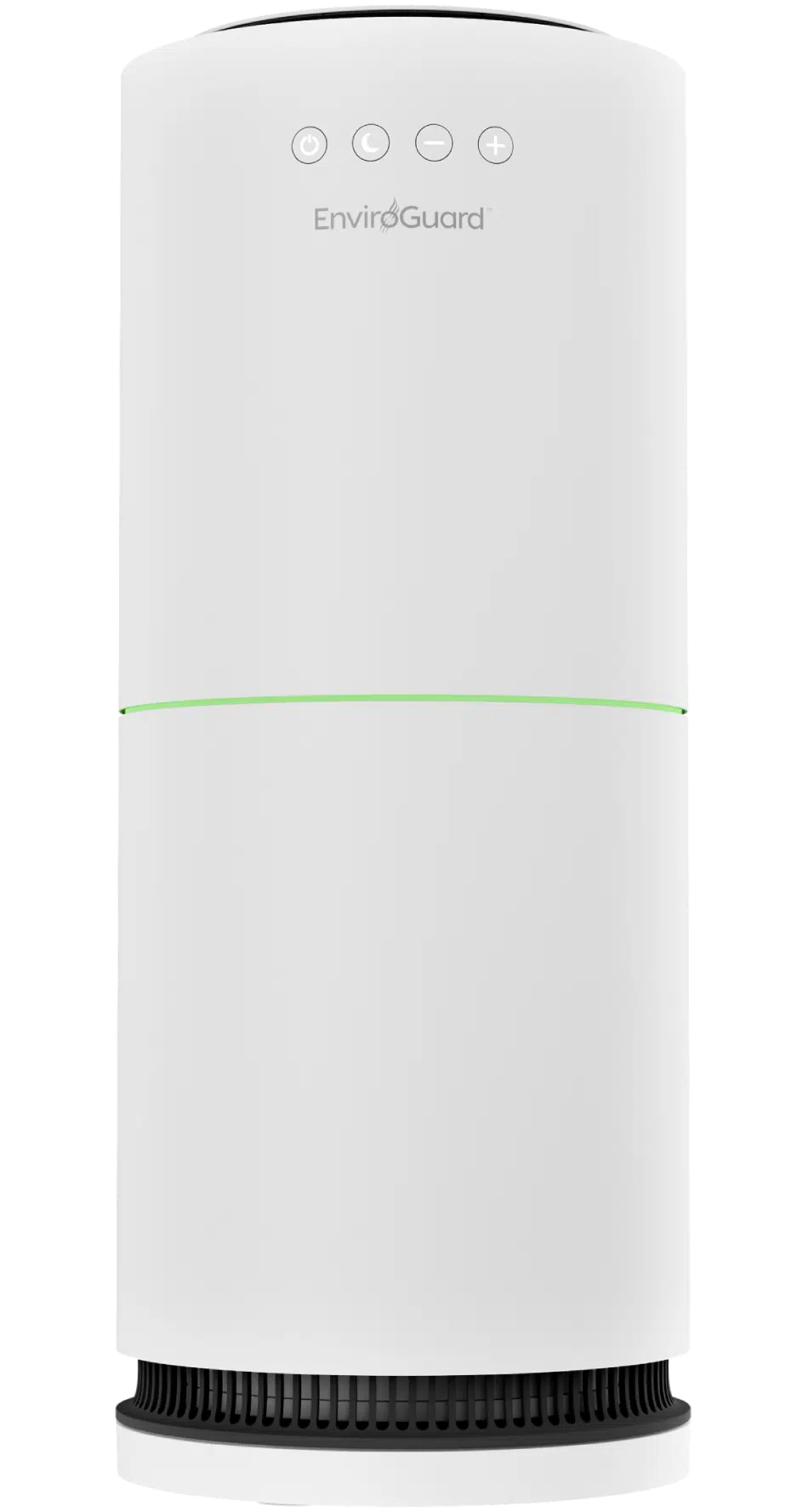
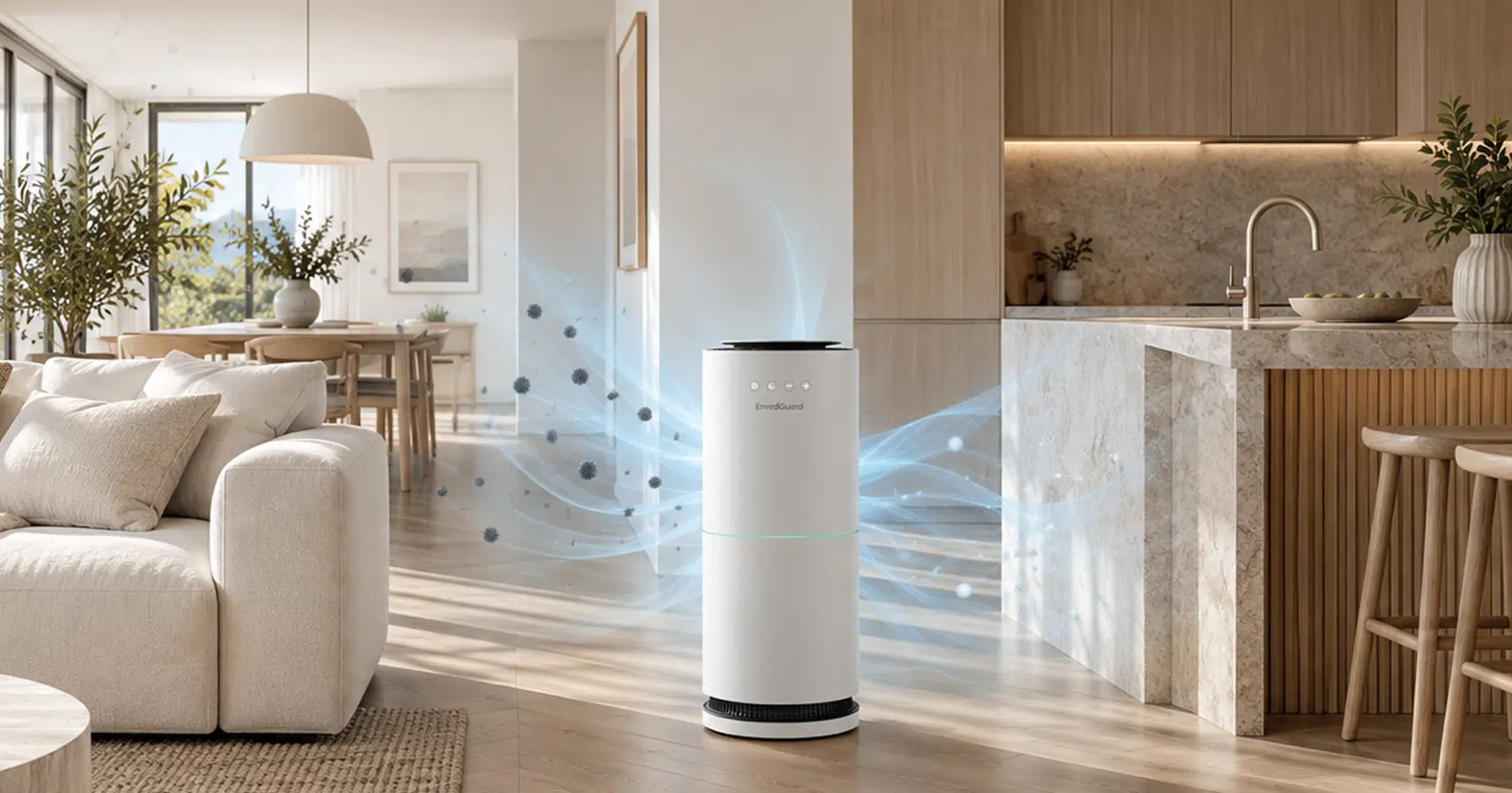
That is the principle behind the EnviroGuard Pro X system and Purox™ Gel. Rather than passively waiting for air to drift into a filter, it releases an active vapour that seeks out and breaks VOCs down into water and oxygen at a molecular level. In a documented commercial remediation project in Cairns, the underlying Vapour Phase Oxidation technology successfully reduced airborne fungal and gaseous contaminants from 795 CFU/m³ down to just 4 CFU/m³ — proving its real-world capability outside a laboratory.