Air Purifier Makes Room Smell Weird | Why It Happens and How to Fix It
Have you ever turned on your air purifier and noticed that your room suddenly smells strange? You might notice a plastic-like smell, a musty odour, a dusty scent or an unusual chemical smell. An air purifier can help improve indoor air quality, but the smell coming from a room […]
Air is clean and safe. No health risks expected. Everyone can enjoy outdoor activities without concern.
PM₂.₅
2.34
PM₁₀
3.55
SO₂
1.2
NO₂
2.85
O₃
75.14
CO
114.42
Table of Contents
Share
Today’s Air Quality
London, GB
9:11 AM
Air QualityGood
Air is clean and safe. No health risks expected. Everyone can enjoy outdoor activities without concern.
PM₂.₅
2.34
PM₁₀
3.55
SO₂
1.2
NO₂
2.85
O₃
75.14
CO
114.42
Have you ever turned on your air purifier and noticed that your room suddenly smells strange? You might notice a plastic-like smell, a musty odour, a dusty scent or an unusual chemical smell.
An air purifier can help improve indoor air quality, but the smell coming from a room depends on several factors, including the condition of the filters, moisture levels, the materials inside the unit and the sources of odours in your home.
The good news is that identifying the source is often the first step towards fixing the problem. This guide explains why an air purifier may make a room smell weird, how to remove unpleasant odours, what to look for in replacement filters and how different air treatment technologies can support better indoor air quality.
Quick Answer
An air purifier may produce or circulate unusual smells because of new materials, saturated activated carbon filters, accumulated dust, moisture, or odours already present in the room.
Start by checking whether the filters are installed correctly, whether they need replacing and whether the smell comes from the unit itself or the surrounding environment. Clean the parts specified in the manufacturer’s instructions and remove the original source of the odour.
If you notice a burning smell, smoke or a strong electrical odour, switch off the unit and stop using it until it has been checked. If the smell causes irritation, move away from the affected area and improve ventilation where safe to do so.
Quick Odour Diagnosis: What Does the Smell Mean?
This table provides initial guidance, though smell alone cannot confirm specific chemicals or mould.
Odour Troubleshooting Guide
What you notice
Possible cause
What to check
Solution
Recommended action
Plastic or “new appliance” smell
New plastics, adhesives, or packaging
If the unit is new and packaging is fully removed
Follow initial setup instructions and ventilate. Contact the manufacturer if the odour persists, is strong, or causes irritation.
Musty, damp, or earthy smell
Moisture, damp filters, mould, or damp fabrics
Filter condition, leaks, condensation, and soft furnishings
Address moisture sources directly. Clean or replace components per instructions rather than relying solely on the purifier.
Dusty or stale smell
Dust build-up, overdue maintenance, or disturbed dust
Pre-filters, unit surfaces, carpets, and bedding
Wipe surfaces with a damp cloth, vacuum regularly, and maintain the unit per manual guidelines.
Cooking, smoke, or burnt-food smell
Cooking emissions, smoke, or surface residue
Kitchen extraction, surfaces, and soft furnishings
Clean residues and use rangehoods or ventilation when outdoor air quality permits.
Pet, litter, or urine smell
Organic residues, litter trays, or trapped odours in fabrics
Pet bedding, litter areas, carpets, and upholstery
Clean affected areas directly. Carbon filters can help adsorb remaining gases.
Sharp or chemical smell
VOCs, cleaning chemicals, or new materials
Recent painting, cleaning products, or solvent use
Reduce chemical use and ventilate safely.
Burning or electrical smell
Overheating or electrical fault
Do not inspect while running
Switch off and unplug immediately. Arrange an inspection without restarting. Contact emergency services if smoke or fire is present.
The most reliable approach is to identify and remove the source first, then use ventilation and an appropriate air treatment system as supporting measures. The US Environmental Protection Agency (EPA) likewise recommends source control and ventilation as primary steps, with air cleaning used as a supplement.
1. Why Does My Air Purifier Make the Room Smell Weird?
Different smells can point to different causes. Understanding the type of odour can help you decide what to check first.
1.1 A New Air Purifier Has a Plastic or Chemical Smell
New air purifiers may release noticeable odours from plastic components, adhesives, packaging or other manufacturing materials. These smells are often most noticeable during the first few uses.
The best approach is to check the setup before assuming the unit has a fault.
What to do:
Remove all packaging from the unit and filters.
Check that each filter is installed in the correct direction.
Follow the manufacturer’s instructions for first-time use.
Ventilate the room when practical.
Contact the manufacturer if the smell remains strong, becomes worse or causes irritation.
A persistent or irritating smell deserves attention, especially if it is noticeably different from the usual odour of a new appliance.
1.2 The Activated Carbon Filter Is Saturated
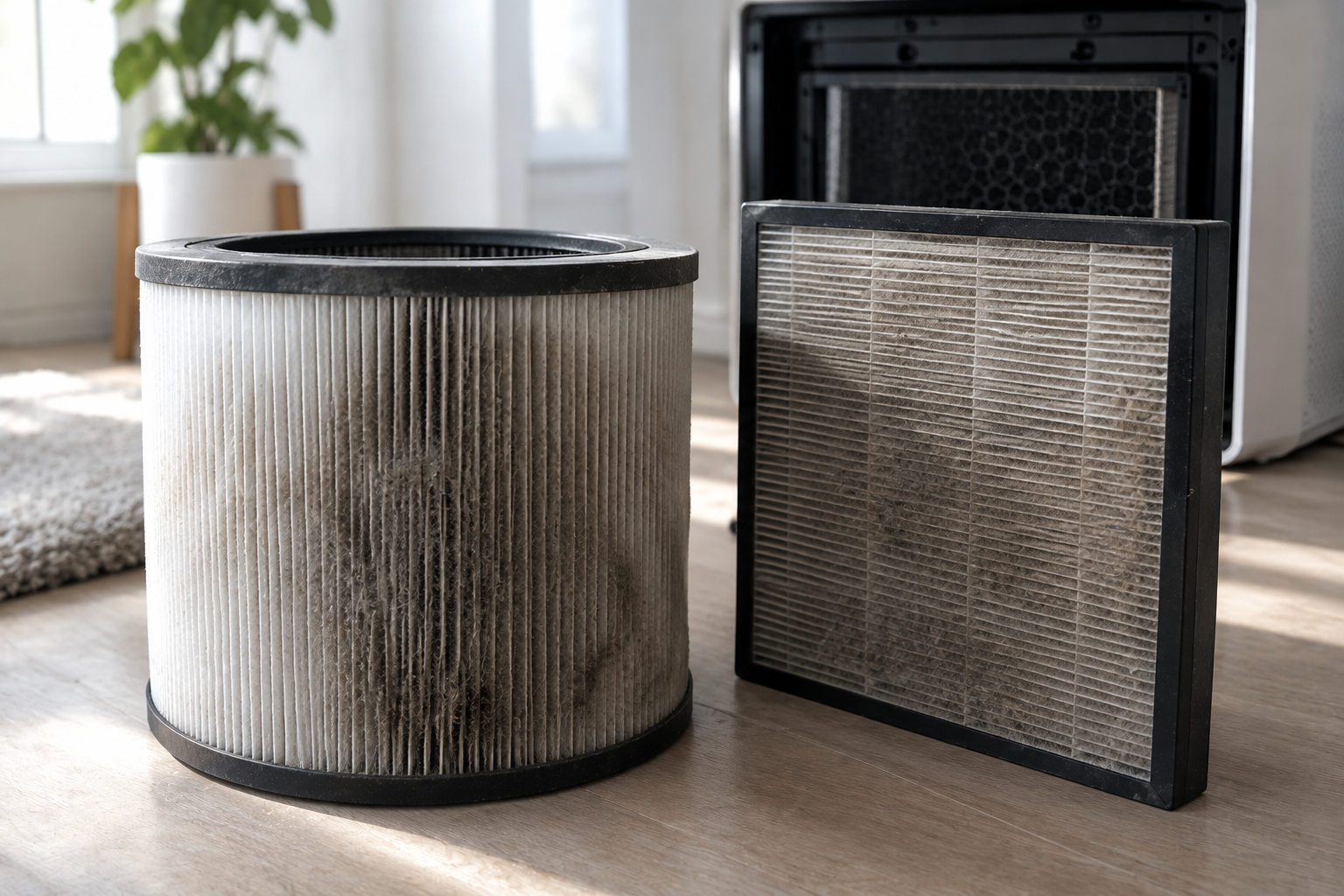
Activated carbon filters are designed to adsorb certain gases and odour-causing compounds. Over time, the available adsorption capacity can decrease as the carbon accumulates contaminants.
This can become noticeable in homes with frequent cooking, smoke, pet odours or other sources of indoor pollution.
A saturated carbon filter may become less effective at controlling smells, allowing more odour to remain in the room.
What to do:
Check the filter’s age and replacement schedule.
Replace the carbon filter when required.
Reduce the source of the smell wherever possible.
Avoid relying on a particle filter alone when the main problem is a gaseous pollutant or odour.
A musty smell can indicate moisture, accumulated dirt or a possible mould problem. The source may be inside the unit, around the filter or elsewhere in the room.
Humidity can also affect carpets, curtains, bedding and other materials that hold moisture and odours.
What to do:
Switch off the air purifier before inspecting it.
Check the filter for moisture, unusual discolouration or visible contamination.
Clean only the components that the manufacturer identifies as washable.
Replace a damp or contaminated filter if the manufacturer’s guidance recommends replacement.
Find and address the source of moisture in the room.
Avoid washing HEPA or activated carbon filters unless the manufacturer specifically states that they are washable. Moisture can damage some filter materials and affect their performance.
If the room itself smells musty, inspect areas around windows, bathrooms, wardrobes and other places where moisture may accumulate. Treating the source is essential for lasting odour control.
1.4 The Air Purifier Smells Dusty
A dusty smell may come from accumulated particles on accessible components, an overdue filter replacement or dust already present in the room.
Dust can collect on furniture, bedding, carpets and curtains before becoming airborne again through everyday activities.
What to do:
Clean accessible surfaces with a damp microfibre cloth.
Vacuum carpets and upholstery regularly.
Wash bedding according to the care label.
Check the air purifier’s pre-filter and clean it as directed.
Replace filters when they reach the recommended service interval.
Regular cleaning helps reduce the amount of dust that enters the air and reaches the filtration system.
1.5 The Room Smells Like Cooking, Smoke or Pets
Sometimes the air purifier is circulating air that already contains unpleasant odours rather than creating a new smell.
Cooking releases odour-causing compounds into the air. Pet bedding, litter trays, urine accidents and other organic residues can also contribute to persistent indoor smells. These compounds may remain in fabrics and on surfaces after the original activity has finished.
What to do:
Remove food waste and clean cooking surfaces.
Use kitchen extraction or suitable ventilation when cooking.
Wash pet bedding and clean litter trays regularly.
Remove urine or other organic residues using an appropriate cleaning method.
Use an air purifier with filtration suited to the pollutants you want to manage.
1.6 The Air Purifier Smells Burnt or Like Hot Electrical Components
A burning smell is different from the mild odour sometimes noticed when using a new appliance. It may indicate an electrical fault, an overheated component or another mechanical problem.
What to do:
Switch off the unit immediately.
Unplug it if you can do so safely.
Do not turn it back on to test whether the smell has disappeared.
Contact the manufacturer or a qualified technician for an inspection.
If there is smoke or a fire, move away from the affected area and contact emergency services.
2. How to Stop an Air Purifier from Causing a Weird Smell
Use this step-by-step process to identify the source and choose the right solution.
Step 1: Identify When the Smell Appears
Notice whether the smell is present before the air purifier starts, appears only while it is running or becomes stronger after several hours.
This simple observation can help distinguish an odour already present in the room from one associated with the appliance.
Step 2: Inspect the Filters
Check that the filters are correctly installed and that all packaging has been removed. Look for visible dust, moisture, damage or signs that the filter has reached the end of its service life.
Follow the manufacturer’s instructions when cleaning or replacing each filter type.
Step 3: Clean the Unit Correctly
Turn off the air purifier before cleaning. Wipe accessible surfaces and clean the pre-filter only as directed by the manufacturer.
Do not spray cleaning products directly into the appliance or use liquids on electrical components. Strongly scented cleaning products can also introduce additional odours into the room.
Step 4: Find the Original Source of the Odour
Check the room for rubbish, food residue, damp fabrics, pet accidents, smoke and other possible sources.
If the source remains in the environment, the smell may return even after the filter has been replaced.
Step 5: Check Room Ventilation and Humidity
Ventilation can help remove indoor pollutants when outdoor air quality is suitable. The EPA recommends source control and ventilation as important ways to reduce indoor pollution, with filtration as a complementary measure. Managing moisture is equally important in rooms that develop musty smells.
For cooking odours, use suitable kitchen extraction. For persistent damp smells, investigate leaks, condensation and other sources of moisture.
Step 6: Choose a Filtration or Air Treatment System That Matches the Problem
Different technologies address different types of indoor pollutants. Understanding their roles makes it easier to select a suitable system and maintain it properly.
3. What Chemicals in Air Purifiers Can Cause Unusual Smells?
The phrase “chemical smell” describes an odour, not a specific chemical. Several sources may be responsible, and smell alone cannot reliably identify the substance.
Potential sources include:
New materials: Plastics, adhesives and other components may produce noticeable odours when an appliance is first used.
Indoor volatile organic compounds (VOCs): Paints, solvents, cleaning products, furnishings and other household materials can release VOCs into indoor air.
Odour compounds: Cooking, smoke, pets and waste can release gases and volatile compounds that contribute to unpleasant smells.
Ozone: Certain air-cleaning devices can generate ozone, which can irritate the lungs. Ozone-generating devices should not be used in occupied spaces as a general air-cleaning solution.
If a strong chemical smell appears suddenly, ventilate the area when safe and investigate the source. Persistent symptoms such as coughing, breathing difficulty or eye irritation warrant leaving the affected area and seeking appropriate medical advice.
4. HEPA vs Activated Carbon vs VPO: What's the Difference?
Choosing an air treatment system starts with understanding what you want to manage. Particles, gases and odours behave differently in indoor air, so each technology has a different role.
HEPA Filtration: Capturing Airborne Particles
HEPA filtration is designed to capture airborne particles, including many types of dust and allergens. Its main function is particle removal rather than direct gas or odour adsorption.
For homes where dust, pollen and other airborne particles are a priority, HEPA filtration can be an important part of an indoor air quality strategy.
Activated Carbon: Adsorbing Certain Gases and Odours
Activated carbon has a porous structure that can adsorb certain gases and odour-causing compounds. Its performance depends on factors such as carbon quantity, material properties, airflow, pollutant concentration and contact time. The EPA notes that gas-phase filters need an appropriate adsorbent, such as activated carbon, and that effectiveness varies with the design and amount of material used.
Carbon filters have a finite capacity. Their effectiveness can decrease as adsorption sites become occupied, which is why correct maintenance and timely replacement matter.
Vapour Phase Oxidation (VPO): An Active Air Treatment Approach
Vapour Phase Oxidation (VPO) uses oxidation chemistry in the vapour phase as part of an air treatment approach. Unlike a conventional particle filter, it is based on a different mechanism for addressing selected airborne contaminants.
The performance of an oxidation-based system depends on its specific technology, operating conditions and the target substances. Product-specific test data and safety information are important when evaluating its intended applications.
These approaches have different functions. HEPA filtration focuses on particles, activated carbon adsorbs certain gases and odours, and VPO applies an active treatment process. A system that combines complementary technologies may support a broader indoor air quality strategy when designed and used appropriately.
5. How VBreathe Uses VPO Technology for Indoor Air Management
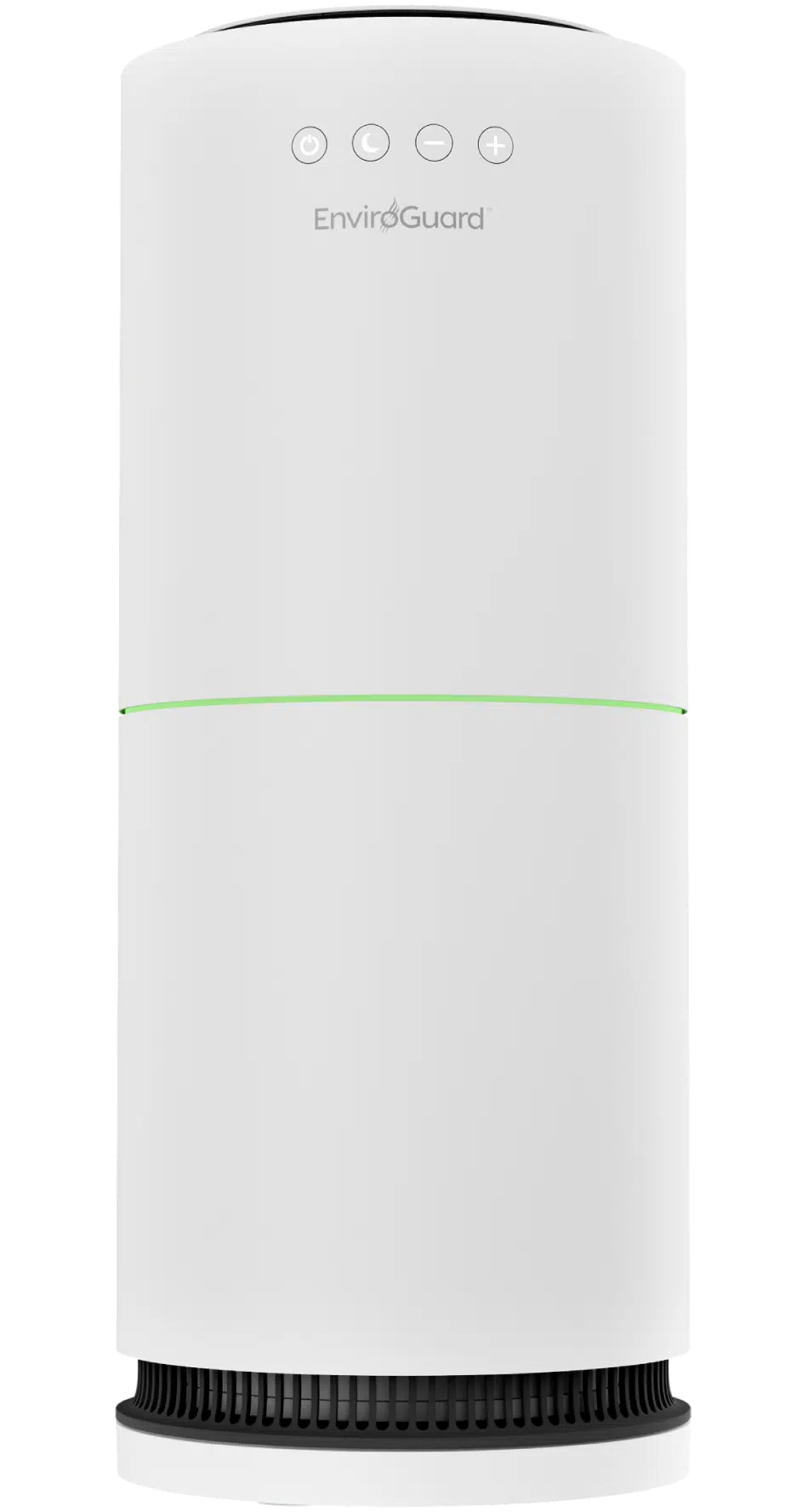
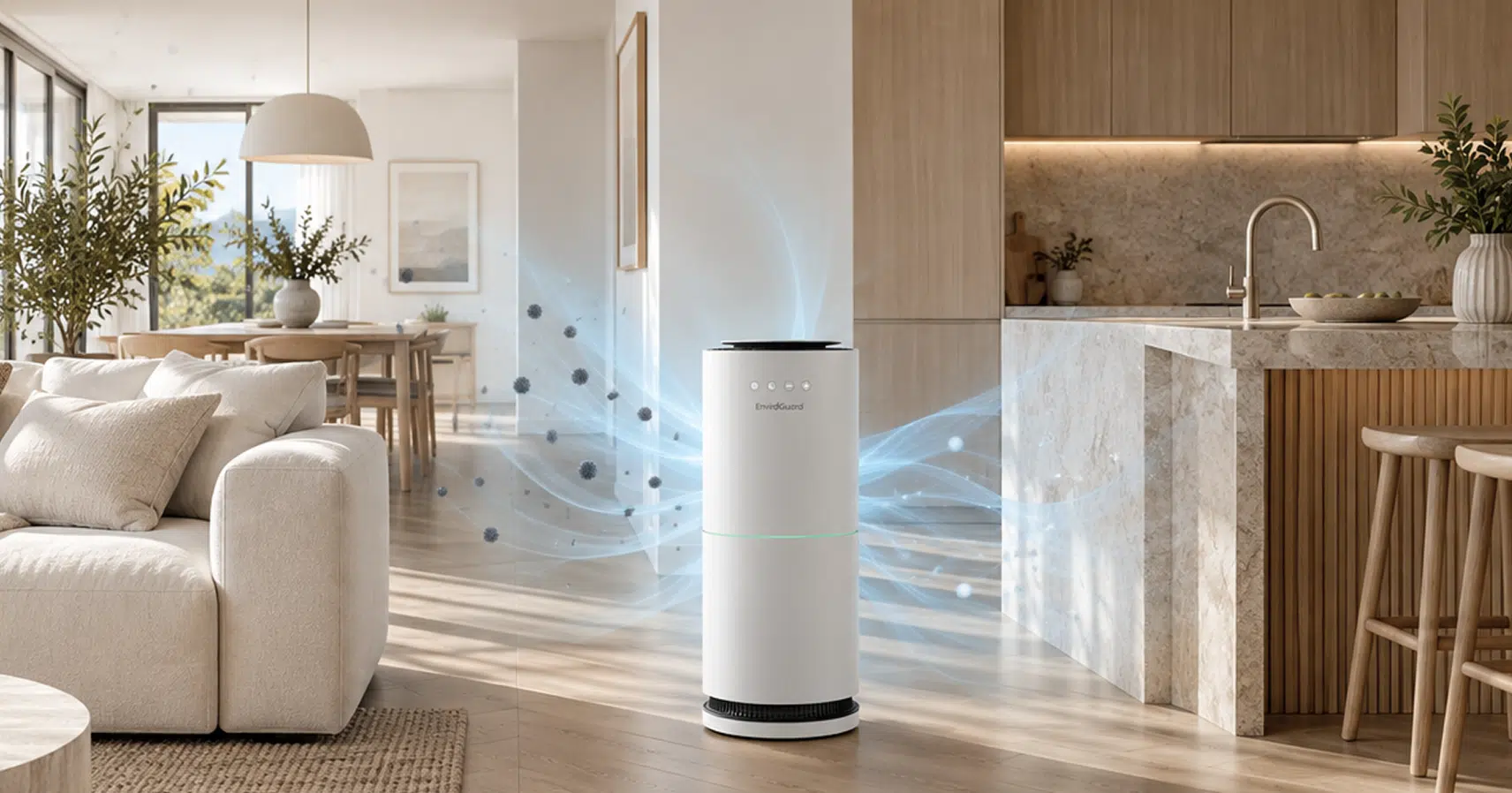
For people looking beyond particle filtration alone, VBreathe combines active vapour treatment with particle filtration in the EnviroGuard PRO X Environmental System.
The system combines Active Vapour Technology using Purox™ Gel with HEPA-13 filtration. These components have different roles: HEPA filtration captures airborne particles, while the vapour-based process uses an oxidation mechanism to address selected contaminants under defined operating conditions. This does not mean that every odour or gas will be removed; performance depends on the target substance, room conditions and system use.
Reported Testing
VBreathe provides laboratory test data for Purox™ Gel and EnviroGuard PRO X. These findings reflect specific lab simulations, not human clinical trials:
Airborne microbial reduction (ICAS, Shanghai): Reduced airborne Staphylococcus albus by 99.99% in 30 minutes in a test chamber. This specific result does not apply to all pollutants or real-world spaces.
Surface testing (Eurofins, Sydney): Achieved surface reductions of 99.99% for Pseudomonas aeruginosa, 99.9% for E. coli, and 90% for Candida albicans. These findings do not guarantee complete surface disinfection in homes.
Hydrogen peroxide monitoring (Eurofins): Over 24 hours, levels remained below the instrument’s 0.1 ppm detection limit at set distances, though this does not cover all exposure scenarios.
Safety assessment: Lab evaluations support intended product use. Review the original report and operating manual for specific testing parameters and limitations.
What does this mean for a room that smells strange?
VPO is an active air treatment approach, not a substitute for diagnosing the cause of a smell. A saturated carbon filter may still need replacement; damp materials and mould require moisture control; cooking and pet odours need source cleaning; and a burning or electrical smell requires the appliance to be switched off and inspected.
For persistent odours, use a layered approach: remove the source, improve suitable ventilation, maintain filters correctly and select air treatment based on the pollutant you want to manage. When comparing systems, check the tested pollutant, test method, exposure conditions, room size and maintenance requirements rather than relying on one headline performance figure.
6. How to Choose an Air Purifier with Low Odour Emissions
If you are buying a new air purifier or replacing an older model, look at more than its advertised filtration efficiency.
Check the Filter Design
Choose a system that matches your main concern. HEPA filtration is intended for particles, while activated carbon can help adsorb certain gases and odours.
Review Maintenance Requirements
Check how often filters need to be replaced, how much replacement filters cost and which parts can be cleaned. Easy maintenance makes it simpler to keep the system in good working condition.
Look for Relevant Test Results
Look for test results that identify the tested pollutant, method, operating conditions and measured outcome. Evidence for particle removal, for example, does not automatically establish performance against every type of odour or gas.
Understand the Technology Used
Check the manufacturer’s information about the cleaning mechanism, emissions, operating instructions and safety requirements. If a system uses an active treatment process, review the information for that specific technology and model.
Match the System to the Room
Consider room size, airflow, placement and the type of pollution you want to manage. A system that is appropriate for one room or application may not be the best fit for another.
7. Best Ways to Prevent Unpleasant Smells from Returning
Long-term odour control works best when the source, room conditions and air treatment system are managed together.
Keep filters in good condition: Follow the recommended cleaning and replacement schedule.
Control moisture: Fix leaks, reduce condensation and dry damp materials promptly.
Clean odour-holding surfaces: Wash bedding, pet fabrics and other materials that can retain smells.
Improve source ventilation: Use kitchen extraction when cooking and ventilate when outdoor air quality is suitable.
Remove odours at the source: Clean food residue, rubbish and pet accidents rather than relying only on air treatment.
Use the right technology: Match filtration or air treatment to the pollutants you want to address.
Investigate persistent smells: A recurring musty, chemical or burnt smell deserves a closer inspection.
Conclusion: Find the Source, Then Choose the Right Air Treatment
When an air purifier makes a room smell weird, the most useful first step is to identify where the smell comes from. A new appliance, a saturated carbon filter, moisture, accumulated dust and indoor odour sources each call for a different response.
Inspect the unit, maintain the filters correctly, improve ventilation where appropriate and remove the source of the smell. For burning or electrical odours, stop using the appliance and arrange a safety inspection.
For longer-term indoor air management, technologies such as HEPA filtration, activated carbon and Vapour Phase Oxidation serve different purposes. Understanding how they work helps you choose a system that fits your home and your air quality goals.
VBreathe’s EnviroGuard PRO X combines Active Vapour Technology with HEPA-13 filtration as an approach to active air treatment and particle filtration. Learn more about the VBreathe EnviroGuard PRO X Environmental System.
References and Further Reading
US Environmental Protection Agency (EPA), Guide to Air Cleaners in the Home — source control, ventilation, particle filtration and gas-phase filtration.
US Environmental Protection Agency (EPA), Volatile Organic Compounds’ Impact on Indoor Air Quality — common VOC sources and ways to reduce exposure.
US Environmental Protection Agency (EPA), Ozone Generators That Are Sold as Air Cleaners — ozone-related health concerns and limitations as an air-cleaning method.
VBreathe, Purox™ Gel — manufacturer information about the active vapour technology.
VBreathe, Evidence-Based Efficacy of EnviroGuard PRO X (PDF) — manufacturer-published product testing information.
Frequently Asked Questions
1. Why does my air purifier make the room smell strange?
Common causes include odours from new materials, saturated carbon filters, dust, moisture and smells already present in the room. Inspect the unit and filters, then identify and remove the original source.
2. How can I remove a weird smell from a new air purifier?
Remove all packaging, check the filter installation and follow the manufacturer's first-use instructions. Ventilate the room when practical. If the smell remains strong or causes irritation, stop using the unit and contact the manufacturer.
3. What should I do if my air purifier smells musty?
Check for moisture, dust and contamination around the filters and accessible components. Clean or replace parts according to the manufacturer's instructions, and investigate any damp areas in the room.
4. Does an activated carbon filter remove bad smells?
Activated carbon can adsorb certain gases and odour-causing compounds. Its performance depends on the carbon design, amount, pollutant type and operating conditions. Replace the filter according to the manufacturer's guidance.
5. Can a HEPA filter remove chemical smells?
HEPA filters are designed primarily to capture particles. They are not designed to adsorb gases directly. Activated carbon or another suitable treatment technology may be needed for specific gaseous pollutants.
6. Which air purifier technology helps manage odours?
Activated carbon can help adsorb certain odours and gases. Other active air treatment technologies, including VPO-based systems, use different mechanisms. The right choice depends on the pollutant, the system design and relevant performance and safety data.
7. Is a burning smell from an air purifier dangerous?
A burning or hot-electrical smell may indicate a fault. Switch off the unit, unplug it if safe and stop using it until it has been inspected. Do not restart it just to test whether the smell has gone away.
8. What is the difference between VPO and conventional air filtration?
Conventional HEPA filtration captures airborne particles, while activated carbon adsorbs certain gases and odours. Vapour Phase Oxidation uses an oxidation process in the vapour phase. Each has a different mechanism, so compare the specific system's intended applications, test results and safety information before choosing.
Limited-Time Offer
Transform Your Indoor Air Quality
Upgrade to the innovative EnviroGuard PRO™ X today for only $790 (Was $1,590). Claim your $800 saving now and breathe cleaner, healthier air tomorrow.
Have you ever turned on your air purifier and noticed that your room suddenly smells strange? You might notice a plastic-like smell, a musty odour, a dusty scent or an unusual chemical smell. An air purifier can help improve indoor air quality, but the smell coming from a room […]
Indoor air quality can be affected by more than visible dust. Bushfire smoke, pollen, pet allergens, cooking odours, mould spores and emissions from household products can all contribute to the air inside an Australian home. Choosing an air purifier is not simply about finding the highest HEPA rating or […]
How to Get Rid of Dust in Your Bedroom Quick answer: To reduce dust in your bedroom, deal with two things at the same time: dust that settles on surfaces and fine particles that remain in the air. Wipe furniture with a slightly damp microfibre cloth, wash your bedding […]
Air purifiers genuinely help alleviate airborne allergies and Hay Fever by reducing the concentration of allergens in the air, such as pollen, dust mites, and pet dander. They achieve this by capturing over 99.97% of particles as small as 0.3 microns through a True HEPA filter. However, modern Environmental […]
How does an air purifier work? An air purifier draws contaminated indoor air into the unit, where filters or treatment technologies capture, remove or break down pollutants such as PM2.5, pet dander, pollen, mould spores and odours. The treated air is then released back into the room, creating a […]
¹ Tested in independent Australian laboratories under controlled conditions using airborne mould spores, bacteria and allergen particulates (0.3μm–10μm).
² Based on third-party testing results confirming 99.9% reduction in airborne mould spores and pet dander when using EnviroGuard Pro X with Purox™ Gel over 24 hours.
³ Independent testing by ICAS Testing Technology Service (Shanghai) Co., Ltd. demonstrated 99.99% reduction in airborne Staphylococcus Albus bacteria within 30 minutes in a 20m² test chamber, in accordance with Technical Standard for Disinfection GB 27948-2020.
⁴ Surface efficacy testing conducted by Eurofins BioPharma Product Testing — Sydney (Eurofins ams Laboratories Pty Ltd, TGA-licensed under MI-2021-LI-08995-1). Reductions over 8 hours: 99.99% Pseudomonas Aeruginosa, 99.9% Escherichia Coli, 90% Candida Albicans Yeast.
⁵ "10x faster than conventional filtration" comparison based on EnviroGuard Pro X achieving log 4 (99.99%) airborne bacterial reduction in 30 minutes, compared with log 1 (90%) pathogen reduction in 20 minutes reported for hospital HEPA systems operating at 12 air changes per hour (Fernstrom A, Goldblatt M. Aerobiology and its role in the transmission of infectious diseases. J Pathog. 2013;2013:493960).
⁶ Performance varies based on room size, airflow configuration, fan speed setting, environmental conditions and usage patterns.