Most households change their air purifier filter far too late — and never realise it. Here is the definitive breakdown of replacement schedules, the variables that genuinely matter, and what happens to your air quality when you ask filtration alone to do a job it cannot perform.
Search for air purifier filter replacement and the same answer appears everywhere: “replace your HEPA filter every 6–12 months.” It is not wrong, exactly — but it is so broad as to be nearly useless.
A household in inner Sydney with two dogs, frequent cooking, and the windows closed for air conditioning runs through a standard HEPA filter far faster than a quiet apartment in regional Queensland occupied by one non-smoking adult. Treating these situations identically is the equivalent of telling both drivers their car needs an oil change at the same interval regardless of how far they have driven or what roads they have been on.
What actually determines how fast your filter degrades has little to do with the calendar. Four elements dictate your filter’s true lifespan: the air you breathe, the hours the unit runs, the grade of the filter, and—most importantly—what it was built to trap.
This guide covers all of it.
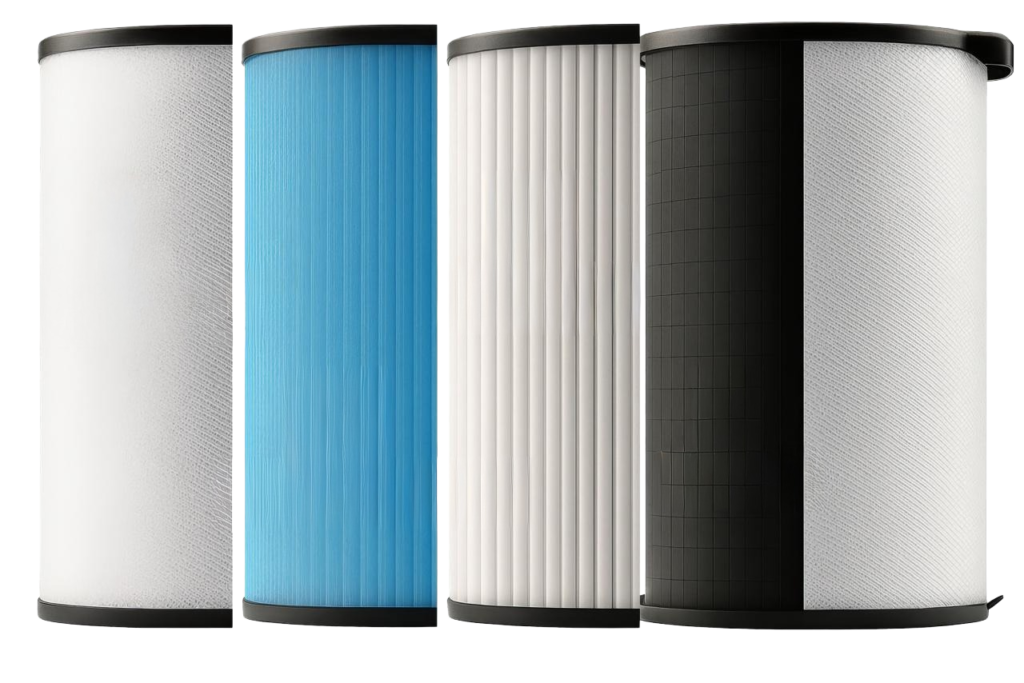
Air purifiers typically use three layers of filtration, each with a distinct lifespan and failure mode. Understanding each one is the starting point for any honest filter replacement conversation.
| Filter Type | Primary Function | Average Lifespan | High-Load Lifespan* |
|---|---|---|---|
| Pre-Filter | Captures visible dust, lint, and pet hair | 2–4 weeks | 1–2 weeks |
| Medical-Grade HEPA-13 | Removes 99.97% of fine particles (0.3 microns) | 6–12 months | 2–6 months |
| Activated Carbon | Adsorbs VOCs, gases, and odours | 3–6 months | 2–3 months |
Pre-filters are the first line of defence, designed to catch large particles — visible dust, pet hair, lint — before they reach the primary filtration stages. Because they absorb the heaviest load, they also degrade fastest.
Realistic lifespan: 2–4 weeks between cleaning; replacement when visibly damaged or no longer cleanable.
Most pre-filters are washable. Cleaning them every 2–4 weeks by gently rinsing with cool water and allowing them to dry completely is one of the highest-leverage maintenance habits an air purifier owner can develop. A clean pre-filter can meaningfully extend the life of every filter stage behind it.
One practical point almost no guide mentions: a pre-filter that is never cleaned does not simply stop working — it actively makes things worse. A clogged pre-filter forces the main motor to work harder to draw air through it, increasing energy consumption, reducing airflow, and compressing the useful life of the HEPA stage behind it.

HEPA-13 filters — the medical-grade standard, capturing 99.97% of particles at 0.3 microns — are the most discussed component of any air purifier. Their failure mode is instructive.
HEPA filters do not suddenly stop working. They degrade progressively as captured particles physically block the fibre matrix, restricting airflow. A study measuring air purifier performance over continuous use found that after approximately 1,500 hours of operation — roughly two months of 24/7 running — efficiency in removing pollutants from a room can fall by as much as 50%. The filter is still technically present and still technically capturing some particles; it is simply doing half the job you are paying it to do.
Realistic lifespan:
What no one tells you about HEPA filters: A saturated HEPA filter does not simply become ineffective. Under sustained motor pressure, some of the particles captured in the fibre matrix can begin to dislodge and re-enter the airstream. You are not breathing the air the purifier has processed — you are breathing what its degraded filter has released back into circulation.
The carbon filter is where most air purifier maintenance guidance becomes dangerously vague.
Activated carbon works through adsorption — VOC and odour molecules bind to the enormous internal surface area of treated carbon pores. It is highly effective when working. The problem is that its failure mode is invisible, undetectable without specialist equipment, and carries a consequence that very few air purifier owners understand.
When an activated carbon filter reaches saturation, it does not merely stop removing VOCs from the air. It begins releasing them back. As Molekule’s filtration research notes: a saturated carbon filter “will stop removing VOCs from the air and can even begin to release VOCs it has trapped back into the air.” Temperature changes and humidity fluctuations accelerate this reversal — water molecules can physically displace VOC molecules already held in the carbon matrix, effectively expelling them into your room.
This is not a fringe failure case. It is the standard behaviour of any carbon filter that has been left in service beyond its actual capacity.
Realistic lifespan:
The consequence of treating a carbon filter like a HEPA filter — changing it once annually — is that for potentially months of that year, your air purifier is actively contributing to the VOC problem it was installed to address.
The calendar is not your filter. These are the factors that genuinely govern how fast each filter stage loads.
Research from multiple HVAC and filtration sources consistently shows that pet-owning households need filter replacements 30–50% more frequently than pet-free homes. Pet dander — microscopic protein particles shed continuously by cats, dogs, and other household animals — is among the most challenging filtration loads for HEPA systems. It is fine enough to penetrate deep into the filter matrix and coarse enough to load it rapidly.
A study published in the International Journal of Environmental Research and Public Health recorded kitchen PM2.5 concentrations in homes with gas stoves averaging between 114 and 139 μg/m³ — well above the EPA’s recommended outdoor safe level of 9 μg/m³ (annual average). Every cooking session that deposits particles into your room is a session your filter is processing.
High-temperature frying and gas cooking produce the heaviest filter load. Carbon filters in cooking-heavy homes should be replaced at the lower end of their recommended interval — consistently, not occasionally.
A purifier running on Speed 1 for six hours a day processes a fraction of the air volume of one running at Speed 7 continuously. Filter life is fundamentally a product of air volume processed, not elapsed time. If your device has been running on Boost Mode through a wildfire smoke event or illness season, your effective filter age may be months ahead of what the calendar suggests.
Australia’s geography creates dramatically different baseline air quality conditions. Households near major urban roads, in areas subject to seasonal bushfire smoke, or in high-pollen coastal environments face significantly higher filter loading than those in clean, rural air. There is no universal replacement schedule that accounts for this variance.
This factor is rarely mentioned in consumer-facing guidance. High ambient humidity affects activated carbon performance directly, as water molecules compete with VOCs for adsorption sites within the carbon matrix. In humid climates or during summer months, carbon filters may need replacing closer to the lower end of their recommended range.
Regardless of schedule, these are the indicators that a filter has degraded to the point of replacement:
1. Reduced airflow from the outlet. Hold your hand near the air outlet. If the airflow feels noticeably weaker than when the unit was new, the filter matrix is clogged. The motor is drawing more energy to push air through an increasingly restricted medium.
2. Odours returning despite the purifier running. A carbon filter that has reached saturation or reversed is a reliable explanation. If you notice cooking smells, pet odours, or chemical smells persisting in a room with an active air purifier, the carbon stage is compromised.
3. Allergy or respiratory symptoms worsening. If allergy symptoms have increased in a home running an air purifier, one explanation is a HEPA filter past its effective service life. The unit is running — it is simply not removing enough particulate matter to make a meaningful difference to the pollutant concentration in the room.
4. Visible discolouration or structural damage. A filter that appears visibly grey or brown, or shows any structural deformation or tearing, is past replacement. Attempting to clean a true HEPA filter is counterproductive — washing the media damages the fibre structure and reduces its particle capture efficiency permanently.
5. Filter indicator alerts. Modern air purifiers with smart monitoring capability track actual runtime and, in some cases, real-time air quality to provide accurate replacement signals. These indicators are worth acting on promptly, not dismissing until convenient.
Here is the gap standard replacement guides fail to address, simply because they ignore the inherent limitations of the technology itself.
Every filter in every conventional air purifier operates on the same principle: air must travel through the filter for the filter to do anything. Filtration is, by design, a passive and reactive technology. Contaminants that do not pass through the filter — because they settled on a surface, because they are in a part of the room where airflow is minimal, or because they are moving too quickly through the airstream — evade capture entirely.
Conventional filter technology has not fundamentally changed since the 1940s. What has changed is the understanding of how pollutants behave in real rooms — and where passive filtration leaves gaps.
Consider: a person walks into a room and coughs. Droplets and particles disperse outward through the room. The fraction that travels through the air purifier’s intake and passes through the filter is captured. The remainder — particles that settled on the nearest surface, particles that dispersed to corners the airflow does not reach, particles that were in the air for seconds before settling — is not.
This is not an argument against filtration. A well-maintained HEPA filter is a meaningful contribution to indoor air quality. It is an argument for understanding what filtration alone was designed to do, and where supplementary approaches become relevant.
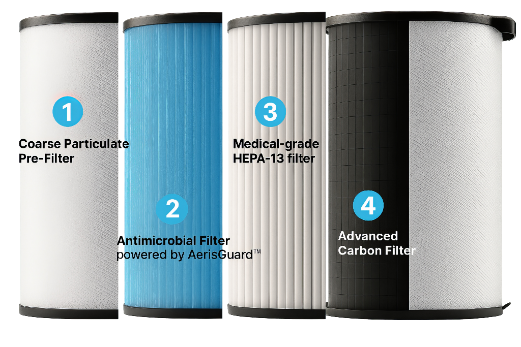
The PrimeProtect™ Filter inside EnviroGuard Pro X was designed with the failure modes of standard filtration specifically in mind.
Its four-stage architecture addresses each layer of contamination with purpose-built media:
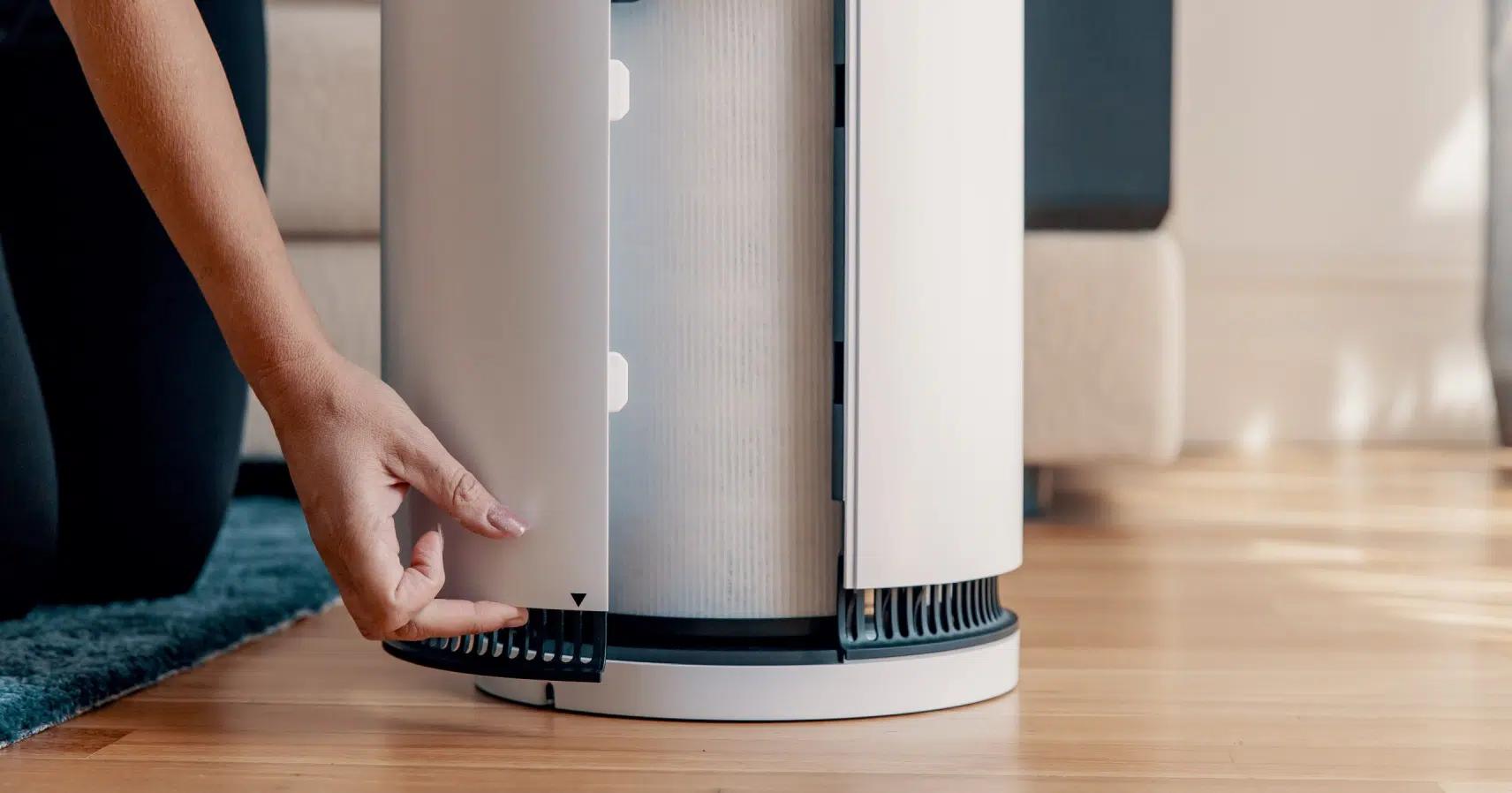
Stage 1 — Coarse Particulate Pre-Filter: Captures large particles and extends the operational life of all subsequent stages. The sensor integration in EnviroGuard Pro X actively monitors filter door position and filter condition, alerting when service is needed — rather than relying on owners to estimate elapsed time.
Stage 2 — Antimicrobial Filter Powered by AerisGuard™: AerisGuard is an Australian-developed bioactive filter treatment that inhibits bacterial and mould colonisation within the filter medium itself. An untreated filter accumulates trapped biological material that can proliferate over its operational life. The AerisGuard treatment provides residual antimicrobial protection against this colonisation, addressing one of the most commonly overlooked failure modes in standard filter maintenance. AerisGuard technology has been independently validated to kill 99.99% of bacteria and enveloped viruses, including SARS-CoV-2, on application.
Stage 3 — Medical Grade HEPA-13: 99.97% efficacy at 0.3 microns. Not “HEPA-type” — HEPA-13, the same classification used in clinical environments.
Stage 4 — Activated Carbon Filter: Addresses VOCs and odour molecules through adsorption.
Critically, the PrimeProtect™ Filter operates in parallel with Purox™ Gel — the active Vapour Phase Oxidation technology that releases hydrogen peroxide vapour throughout the entire room, seeking and oxidising contaminants before they reach the filter at all. The result is that the filter’s useful life is not consumed at the rate it would be if filtration were the only line of defence.
EnviroGuard Pro X’s recommended PrimeProtect™ Filter replacement interval is every six months — an interval underpinned by the device’s active monitoring sensors rather than a manufacturer-estimated calendar date.
Rather than offering a single timeline, here is a decision framework based on actual household conditions:
Putting off filter replacement is typically understood as a performance issue. The reality is more specific than that.
A saturated HEPA filter increases the motor load on the device, raising energy consumption and reducing the operational lifespan of the unit itself. A saturated carbon filter reverses function, potentially making the air in your home worse than if the purifier were not running. A bacteria-colonised untreated filter becomes a reservoir for the microorganisms it was installed to remove.
The operating cost of maintaining a filter on schedule — in the case of the PrimeProtect™ Filter, at a six-month replacement cycle — is modest relative to these outcomes. For EnviroGuard ProCare™ subscribers, PrimeProtect™ Filters and Purox™ Gel pods are delivered automatically every six months, removing the scheduling burden entirely.
PrimeProtect™ Filter replacement is recommended every six months with EnviroGuard Pro X, or as signalled by the device’s onboard filter monitoring sensors. EnviroGuard ProCare™ delivers replacement filters and Purox™ Gel pods automatically — so the schedule maintains itself.
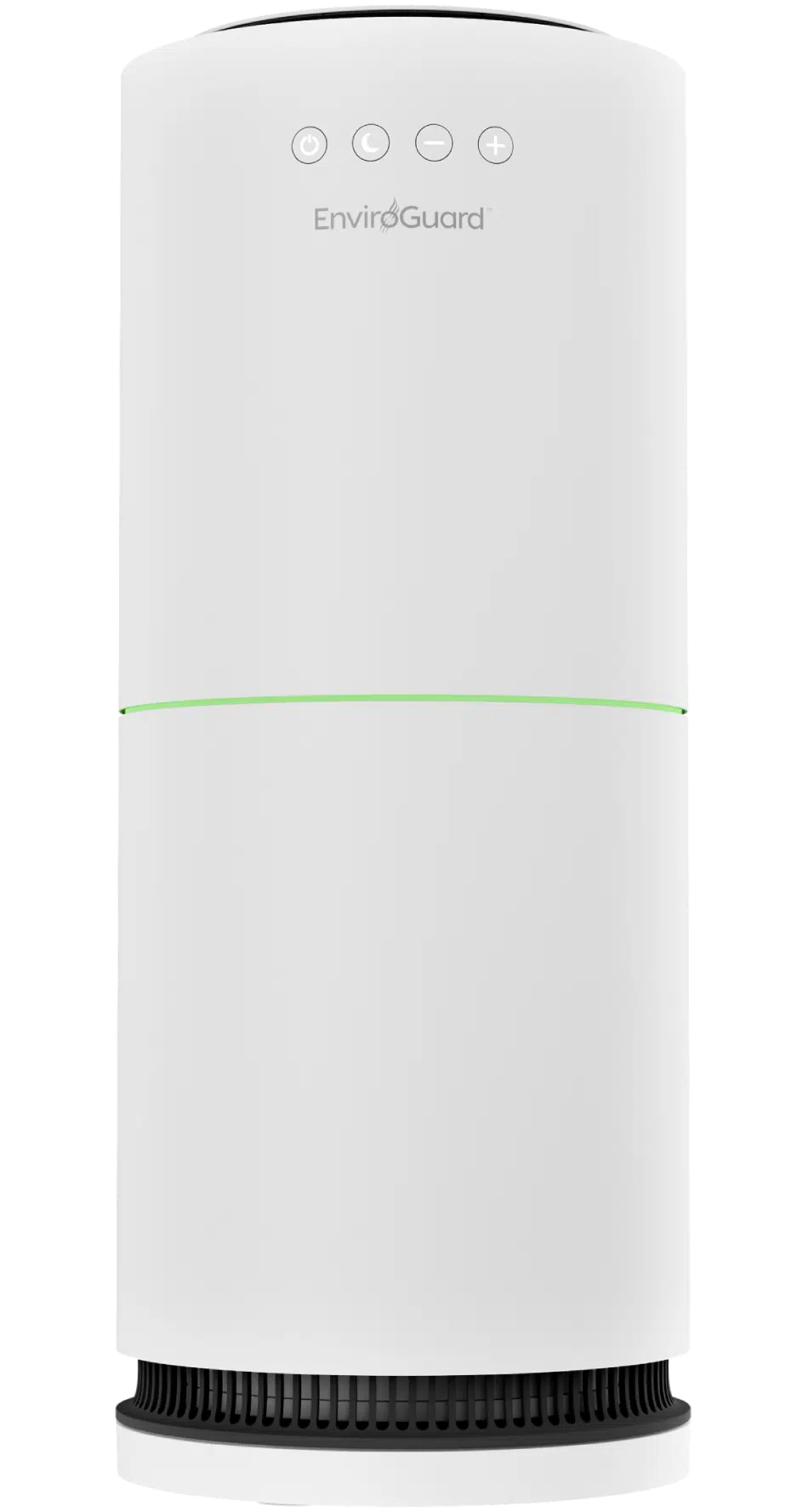
Upgrade to the innovative EnviroGuard PRO™ X today for only $790 (Was $1,590). Claim your $800 saving now and breathe cleaner, healthier air tomorrow.