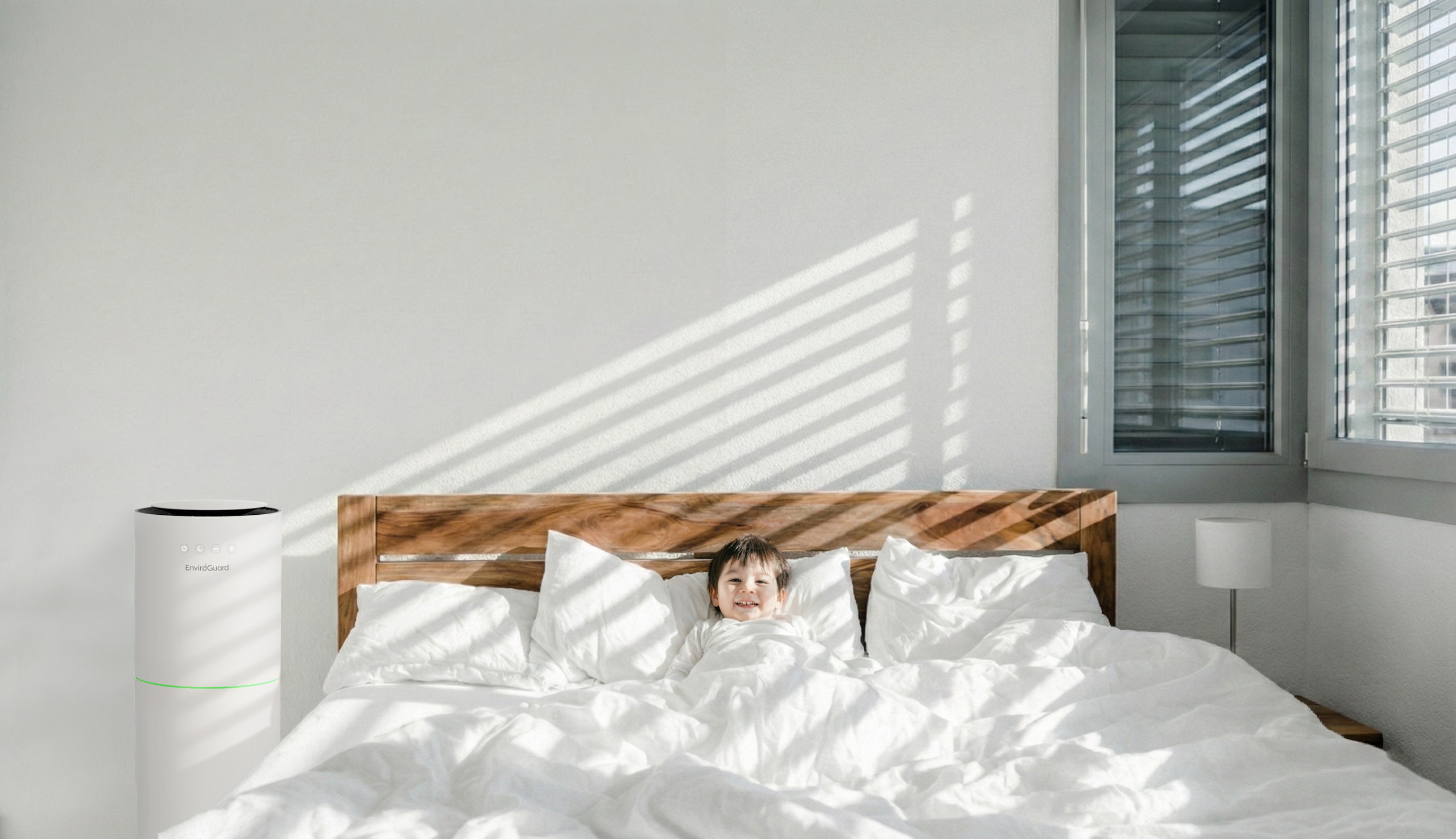
Best Air Purifier for Mould Australia: The New Standard
Do Air Purifiers Remove Mould Spores? Yes, but conventional passive air purifiers (such as standard HEPA filters) only trap airborne mould spores that happen to pass through the machine—they do not kill them, nor can they treat the 95% of mould spores that rapidly settle on surfaces, walls, and […]
Air is clean and safe. No health risks expected. Everyone can enjoy outdoor activities without concern.
PM₂.₅
2.8
PM₁₀
4.22
SO₂
2.53
NO₂
6.69
O₃
64.09
CO
113.95
Table of Contents
Share
Today’s Air Quality
London, GB
8:53 AM
Air QualityGood
Air is clean and safe. No health risks expected. Everyone can enjoy outdoor activities without concern.
PM₂.₅
2.8
PM₁₀
4.22
SO₂
2.53
NO₂
6.69
O₃
64.09
CO
113.95
Do Air Purifiers Remove Mould Spores?
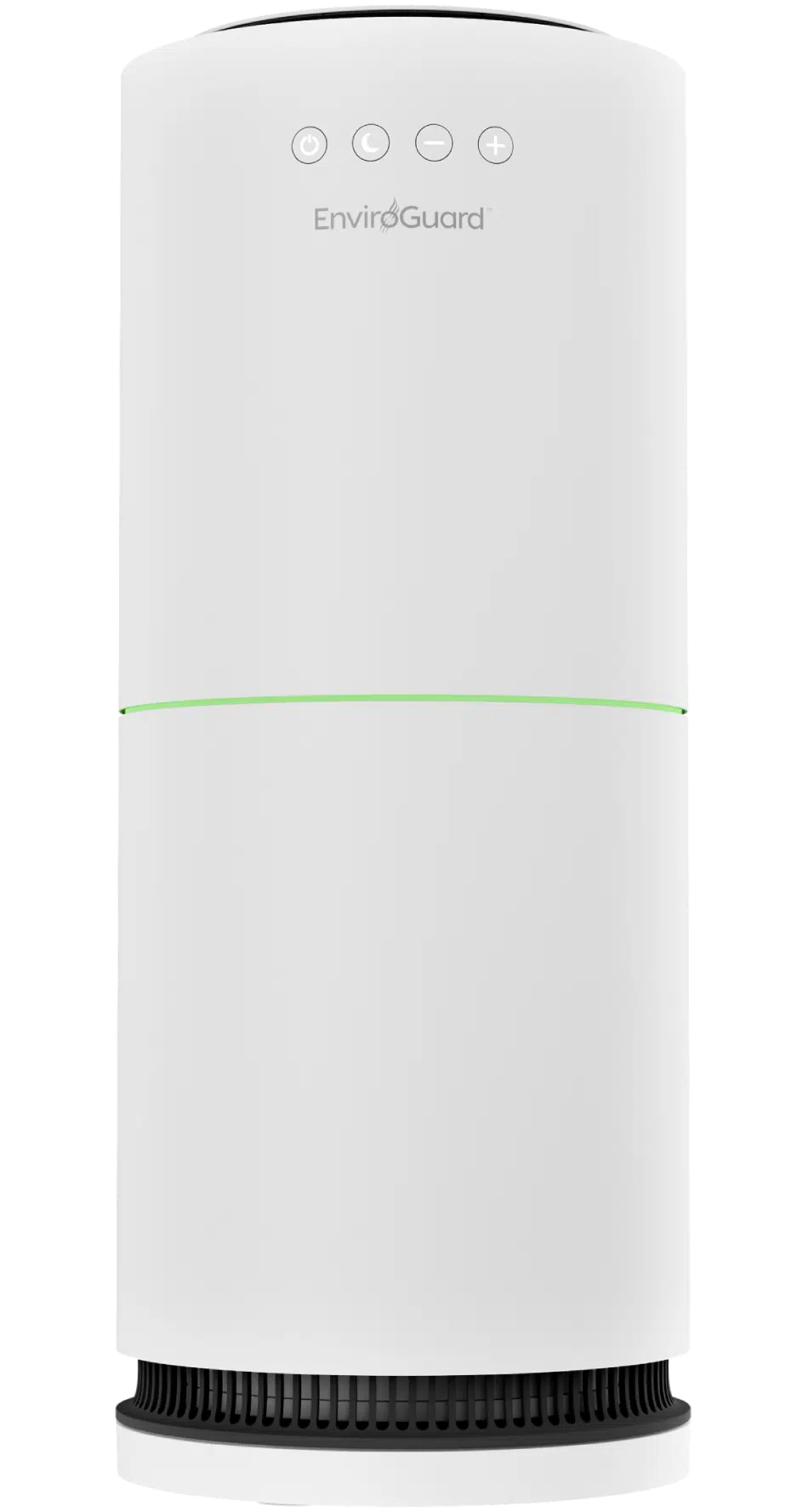
Yes, but conventional passive air purifiers (such as standard HEPA filters) only trap airborne mould spores that happen to pass through the machine—they do not kill them, nor can they treat the 95% of mould spores that rapidly settle on surfaces, walls, and furniture. To permanently eradicate indoor mould, you need an active environmental system like the VBreathe EnviroGuard PRO™ X. This Environmental system combines a medical-grade, biocide-treated mechanical filter with patented Vapour Phase Oxidation. It releases an invisible, non-toxic, food-grade dry vapour that diffuses throughout the entire room, destroying the molecular structure of mould spores both in the air and embedded on physical surfaces.
The Silent Crisis of Indoor Mould in Australian Homes
In Australia, indoor mould is far more than an aesthetic nuisance or a seasonal cleaning chore. It is a severe, structural, and biological hazard unfolding inside modern, energy-efficient homes. As we navigate the complex climatic realities of 2026—characterised by lingering high-humidity cycles in Brisbane, persistent coastal dampness in Sydney, and condensation-prone sub-floors in Melbourne—the search for the best air purifier for mould has reached an all-time high.
Chronic Health Risks and “Mould Sickness”
Active mould colonies continuously release microscopic reproductive spores, cellular fragments, and volatile chemical gases into the air column. When inhaled regularly, these particles bypass the body’s natural respiratory defenses. The World Health Organization (WHO) states clearly that occupants of damp or mould-prone buildings face a significantly increased risk of respiratory symptoms, clinical infections, and the severe exacerbation of asthma.
Prolonged exposure triggers a spectrum of systemic health issues collectively referred to as Mould Sickness:
The Hazard of Mycotoxins: Certain toxic mould species (such as Stachybotrys chartarum or black mould) secrete highly toxic chemical compounds known as mycotoxins. These toxins adhere to the outer shell of spores, penetrating deep into lung tissue and triggering severe immune-system reactions in sensitive individuals.
Structural Damage and Asset Destruction
Fungal organisms survive by secreting corrosive enzymes that digest organic matter. Left unchecked, mould actively feeds on the paper backing of plasterboard, rots structural timber frames, and destroys high-value personal assets—such as soft furnishings, carpets, and luxury leather goods stored in dark wardrobes.
The Building Physics of Mould: Why Traditional Methods Fail
To understand why conventional remedies and standard air purifiers fail, one must recognize that indoor mould propagation is not a housekeeping failure; it is a profound problem of building physics.
The Indoor Mould Triangle
High Humidity
Stagnant Air
Cold Surfaces
Dew Point
Rainy Season (28°C / 70% RH)Dew Point: 22.0°C
A/C Bedroom (25°C / 60% RH)Dew Point: 16.7°C
Closed Damp Room (24°C / 80% RH)Dew Point: 20.3°C
Rule of Thumb: Micro-condensation starts when surface temps drop within 3–4°C of the Dew Point. Keep humidity at 45–55% for safety.
The Dew Point Variable (Standard ASHRAE Standards)
The single most critical threshold in indoor mould prevention is the dew point—the temperature at which gaseous water vapour in the air condenses into liquid water on a solid surface. According to global building performance guidelines, including the ASHRAE standard, keeping indoor dew points at or below 15°C is highly recommended to suppress microbial germination.
When external temperatures drop, the structural walls of your home cool down rapidly. If indoor relative humidity is elevated due to routine activities like cooking or showering, hidden micro-climates—such as the cold drywall behind a built-in wardrobe, stagnant ceiling corners, or sub-flooring—instantly drop below the dew point. Moisture condenses silently, providing the exact biological trigger needed for fungal spores to germinate long before any visible staining appears on plasterboard.
The Particle Physics of the “3-Minute Settle Timeline”
Standard air purifiers are designed under the assumption that indoor air contaminants float indefinitely. However, biological particle physics contradicts this. Mould spores, heavy pollens, and dust mite fragments are high-mass, large particulates.
⏱️ The 3-Minute Settle Timeline: Once released into the air column, heavy biological contaminants typically settle out of the air and deposit onto physical surfaces within just 3 minutes.
Because these spores rapidly embed themselves into carpets, bedding, sofas, and curtains, they bypass the airflow zone of a passive air purifier sitting in the corner of the room. Every time you sit on a sofa, walk across a rug, or ruffle bedsheets, these settled spores are re-aerosolised back into your breathing zone. This creates an endless cycle of inhalation and exposure, completely untouched by traditional mechanical filtration.
Traditional Air Purifiers: Why Mechanical Filtration is Only Step One
While many high-end brands (like Dyson) claim their HEPA-equipped machines are the ultimate defense against mould, a closer inspection of their mechanical limits reveals a critical gap.
The Limitations of Passive Systems (The 5% vs. 95% Gap)
Conventional air purifiers are strictly passive systems. They rely on a motor to draw air into an intake grill, pass it through filter media, and push the clean air back out. This mechanism is entirely reactive—it can only clean the air that physically crosses its path.
Because indoor airflow is heavily restricted by furniture layout, thermal barriers, and architectural dead zones, passive fans fail to circulate air from the entire room. Environmental diagnostics indicate that standard passive air purifiers manage to treat only about 5% of indoor room contaminants. The remaining 95% of the biological and chemical load persists completely undisturbed, clinging to walls, settling onto floors, and breeding in stagnant corners.
The “Petri Dish” Risk: Trapping vs. Killing Mould
High-efficiency particulate air (HEPA) filters are excellent mechanical sieves. Their dense, microscopic fibreglass mesh traps spores with exceptional efficiency. However, trapping is not killing.
When living, viable mould spores are sucked into a standard HEPA filter, they are held in stasis. Over time, the filter accumulates organic debris, dust, skin flakes, and pet dander—supplying an abundant food source. If the room’s relative humidity rises or the machine is turned off, this dark, stagnant, and nutrient-rich filter media transforms into an ecological niche.
A peer-reviewed study published in an international scientific journal confirmed this biological risk, demonstrating that consumer HEPA filters frequently cultivate higher concentrations of viable bacteria and active fungi than the raw floor dust beneath the machine. Instead of purifying your home, a colonized filter can silently release allergenic fragments and toxic mycotoxins back into your living space.
The Active Approach Environmental System: Re-Engineering Indoor Safety
To achieve absolute protection against biological hazards, modern science demands a Balanced Approach. Mechanical filtration is indispensable for immediate, high-mass airborne particles. However, it must be re-engineered to prevent biological colonization and work in perfect harmony with an active, room-wide sterilising agent.
The VBreathe EnviroGuard PRO™ X resolves these vulnerabilities through its patented Active Approach.
PrimeProtect™ Medical-Grade Bio-Active Filtration
The PrimeProtect™ filter is a highly engineered, four-stage parallel mechanical barrier designed to systematically capture and destroy biological pathogens:
Layer 1: Coarse Particulate Pre-Filter: Captures large, high-mass contaminants (hair, pet dander, lint), protecting the delicate inner filtration layers and extending the system’s lifespan.
Layer 2: Antimicrobial Layer Powered by AerisGuard™: Resolves the “Petri dish” hazard. This layer is molecularly treated with a specialized biocide. The moment bacteria, mould spores, or fungal hyphae touch this surface, their cellular walls are disrupted, destroying them instantly and preventing any filter colonization.
Layer 3: Medical-Grade HEPA-13 Filter: Built to stringent clinical standards, achieving a 99.97% filtration efficiency at 0.3 micrometres—the most penetrating particle size. This layer locks down ultra-fine dust, combustion particulates, and viral droplets.
Layer 4: Advanced Activated Carbon Filter: Utilises highly porous activated carbon to adsorb molecular-level threats, capturing harmful VOCs off-gassing from furniture and chemically neutralizing musty damp odours (MVOCs).
Vapour-Phase Oxidation via Purox™ Gel
While Force 1 locks down the air column passing through the machine, Force 2 actively goes out to clean the rest of the room. Utilizing Purox™ Gel—a natural, non-toxic formulation with a controlled 5.8% w/w hydrogen peroxide matrix—the device gently evaporates the active agent using a precision radial fan.
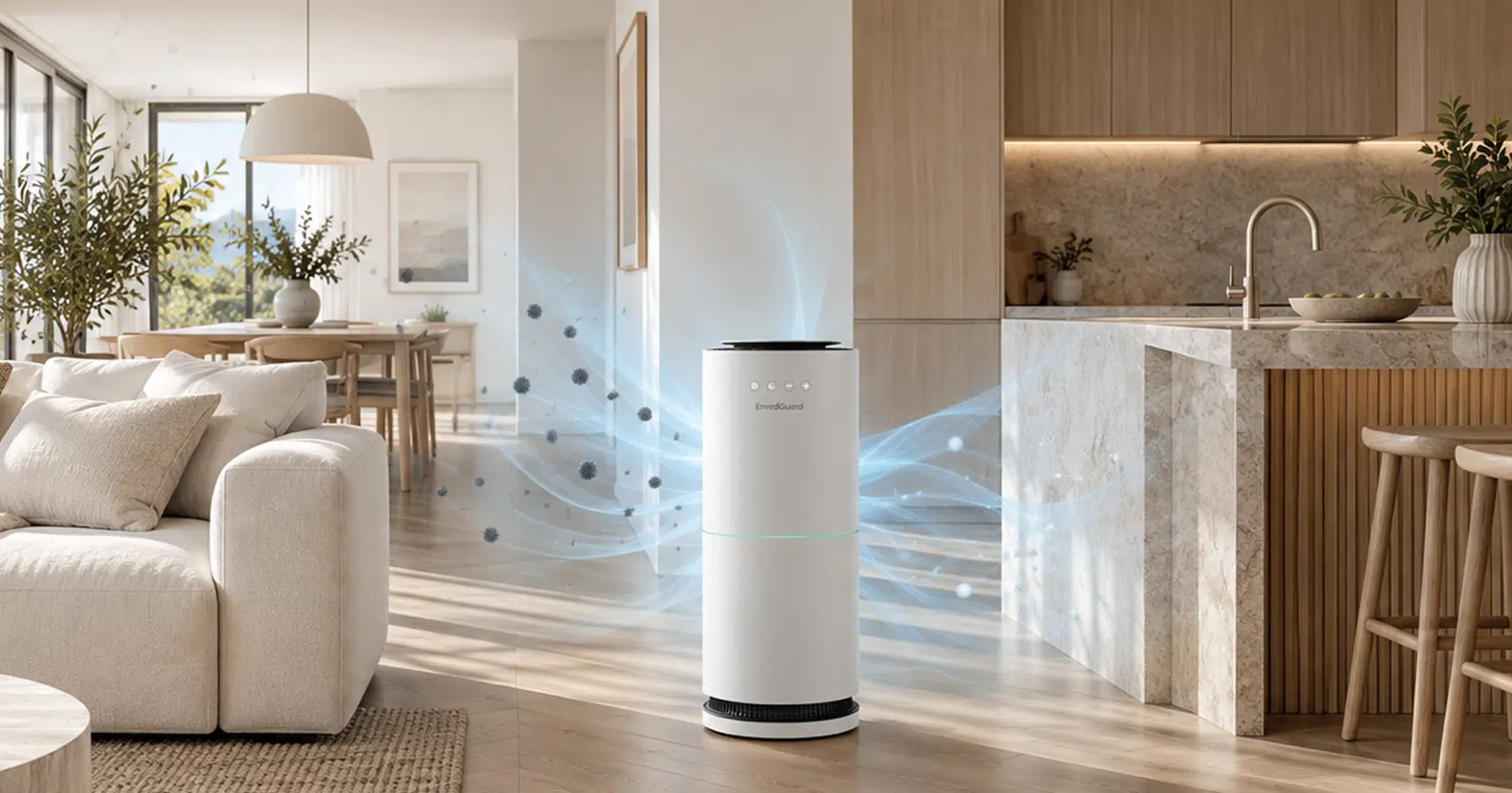
Active Vapour: The evaporated agent forms an invisible, weightless dry vapour. Unlike liquid sprays or humid mists, this dry vapour spreads via natural molecular diffusion, penetrating “dead zones”, deep carpet fibres, wardrobes, and walls far beyond the reach of standard fans.
Molecular Eradication via Redox Reactions: When the dry vapour contacts a mould spore or organic pathogen, it triggers an advanced oxidation-reduction (redox) reaction. It encapsulates the contaminant, breaking down cell membrane proteins and shattering carbon-hydrogen bonds.
Harmless Decomposing Byproducts: Once the pathogen’s structure is dismantled, it decomposes entirely into harmless water vapour (H2O) and pure oxygen (O2). No chemical residue or synthetic compounds are left behind, ensuring 100% safety for infants crawling on carpets or curious pets.
Permanent Odour Destruction: Unlike fragrance-heavy deodorisers that temporarily mask smells, Vapour-Phase Oxidation permanently breaks down gaseous musty odours (MVOCs) at the molecular level.
Conventional air purifiers are entirely reactive, measuring air quality only after contaminants drift past their primitive sensors. When managing biological hazards like mould, this delay allows spore germination to initiate before filtration occurs.
To eliminate this delay, the EnviroGuard PRO X uses predictive environmental intelligence. Its internal diagnostic array tracks four particulate sizes (PM1, PM2.5, PM4, PM10), temperature, and humidity, while simultaneously integrating localized macro-climatic, pollen, and postcode-specific outdoor humidity forecasts.
If shifts threaten to cross the indoor dew point threshold, the system automatically adjusts fan velocity and scales active dispersal of Purox™ Gel dry vapour. By proactively treating stagnant corners, window frames, and spaces behind heavy furniture, it arrests the mould lifecycle silently before moisture can accumulate.
The 2026 Evaluation Matrix: Mould Control Comparison
To make an informed decision when searching for the absolute best air purifier setup for mould containment in Australia, the underlying technology must be evaluated by how it addresses the physical reality of fungal biology. The matrix below bypasses surface-level marketing claims to focus strictly on real-world mechanics and surface mitigation capabilities:
System Capability Comparison
Feature / Dimension
Conventional Passive Air Purifier
EnviroGuard PRO™ X Environmental System
Primary Remediation Method
Passive Mechanical Capture: Relies entirely on drawing contaminated air through an internal filter.
Environmental System: Combines active vapour phase oxidation with a robust, medical-grade mechanical barrier.
Treatment Footprint
Restricted strictly to the physical airflow path directly entering the intake grill.
Extends uniformly across the entire three-dimensional room volume and all physical surfaces simultaneously.
Surface Spore and Mycotoxin Intervention
Completely Ineffective: Bypasses spores that settle onto carpets, bedding, and walls within 3 minutes.
Clinically Verified: Dry vapour actively penetrates porous fibers and structures to neutralize settled spores.
Mitigation Speed vs. Heavy Contaminants
Slow & Reactive: Heavy biological particulates frequently drop to surfaces before reaching the unit.
10x Faster: Active vapour eliminates airborne and surface hazards on contact, bypassing mechanical delays.
Internal Colonization ("Petri Dish") Risk
High Risk: Live spores accumulate on filter pleats and can breed if organic debris and humidity rise.
Zero Risk: Integrated AerisGuard™ biocide technology continuously eradicates biological targets on contact.
Chemical Gas and MVOC Neutralization
Minimal or temporary adsorption via standard, low-volume carbon media that saturates without warning.
Absolute Molecular Destruction: Vapour-phase oxidation permanently dismantles chemical bonds at a molecular level.
To establish true credibility within highly scrutinized health and environmental contexts, VBreathe’s active technology is backed by rigorous empirical data and certified third-party testing.
Laboratory Efficacy: Eurofins Sydney (TGA-Licensed)
The surface-level sanitising power of the Purox™ Gel formulation was independently evaluated by Eurofins Sydney (TGA-Licensed Laboratory). Testing measured the reduction of resilient microbial strains on contaminated contact surfaces over an 8-hour exposure window, confirming outstanding clinical efficacy:
Pseudomonas Aeruginosa: Achieved a profound Log 4 reduction (99.99% kill).
Escherichia coli (E. coli): Demonstrated a highly consistent Log 3 reduction (99.9% kill).
Candida Albicans (Fungal Yeast): Verified a Log 2 reduction (90% kill), proving that the active vapour aggressively targets and breaks down advanced fungal cell structures directly on physical surfaces.
Real-World Field Study: Catastrophic Tropical Mould in Cairns
To test the system’s performance under catastrophic, real-world building failures, a field evaluation was conducted inside a heavily compromised 600-square-metre office building in the Cairns CBD. Due to tropical humidity and HVAC system failures, the facility had sustained severe structural fungal contamination, classified as Grade 4 under AMG 2010 guidelines and Condition 3 under ANSI/IICRC S520 standards (the most severe level of active, deeply embedded structural mould growth).
A highly contaminated 84-square-metre meeting room was isolated. To scientifically isolate the capability of VBreathe’s active dry vapour, no traditional mechanical HEPA air scrubbers or chemical foggers were used.
The Post-Remediation Verification (PRV) results compiled after weeks of continuous deployment outperformed legacy mechanical equipment:
99.5% Airborne Contamination Eradication: Viable airborne fungi concentrations plummeted from an initial, hazardous load of 795 CFU/m³ down to just 4 CFU/m³—achieving a virtually sterile air column.
Absolute Surface Sterilisation: Independent surface sampling across more than 20 distinct surface matrices—including desk surfaces, cabinet interiors, back-of-door panels, and ceiling tiles—returned a raw count of 0 mould spores and 0 bacteria.
Hospital-Grade Cleanliness: ATP bioluminescence sampling across more than 40 touch surfaces yielded an average of just 8 Relative Light Units (RLU)—significantly cleaner than the stringent standard required in leading healthcare facilities (<15 RLU).
Long-Term Suppression (14 Weeks): Continuous monitoring over a 14-week period demonstrated that surface fungal counts remained at absolute zero. The persistent presence of the Purox™ Gel vapour arrested the biological lifecycle, preventing any new mould growth across the architectural footprint.
5 Steps to Effective Mould Remediation
To permanently eradicate mould and prevent spores from spreading to unaffected rooms, environmental health specialists recommend a systematic, professional-grade approach:
How to Remove Mould Safely
01
Contain the Area
02
Pre-Sanitise the Air (24-Hour Run)
03
Clean and Wipe Visible Growth
04
Decontaminate Hidden Reservoirs
05
Maintain a Healthier Indoor Environment
Contain the Area: Upon discovering mould, close all doors and windows in the affected room immediately to prevent spores from drifting into other rooms. Avoid wiping or scrubbing while the air is stagnant, as this instantly flings spores into the air.
Pre-Sanitise the Air: Run your VBreathe EnviroGuard PRO™ X continuously for 24 hours before you begin cleaning. This allows the Purox™ Gel dry vapour to build to optimal levels and neutralize airborne spores, making the environment exponentially safer for you to work in.
Wipe Away Visible Growth: Wearing an N95 mask and protective gloves, use a damp microfibre cloth (or a mild vinegar solution) to gently wipe away visible mould patches. As you work, the circulating Purox™ vapour continues to penetrate microscopic crevices, destroying embedded root structures.
Decontaminate Hidden Reservoirs: Keep the active air treatment running to allow the dry vapour to penetrate porous, high-risk materials like carpets, curtains, sofas, and the empty cavities behind heavy bedroom wardrobes.
Maintain a Healthier Indoor Environment: Once the space is clean, run your VBreathe EnviroGuard PRO™ X continuously. This maintains a constant protective level of vapour in the room, creating an inhospitable environment that prevents new spores from ever settling, germinating, or reproducing.
Environmental System Solutions and Practical Application
To achieve optimal biological containment, your indoor space must be treated as a holistic environmental system.
Air Purifiers vs. Dehumidifiers: Which One Do I Need?
Australian health professionals emphasize that air purifiers and dehumidifiers play entirely different yet complementary roles in environmental care:
Dehumidifiers: Control the physical building conditions by extracting airborne moisture, helping to keep indoor relative humidity within a healthy 30–50% range to prevent condensation. However, they cannot capture, kill, or remove existing airborne mould spores or allergens.
Active Air Purifiers: Target the biological hazard directly. They capture airborne spores, chemically break down mycotoxins, and actively sterilise settled pathogens on touch surfaces to protect your respiratory system.
For rooms with active condensation or severe moisture ingress, health experts strongly recommend running both devices in parallel to control the physical climate while actively destroying biological threats.
Strategic Positioning Guidelines
To maximize the molecular diffusion of Purox™ dry vapour and prevent dead zones, place your device in these critical areas:
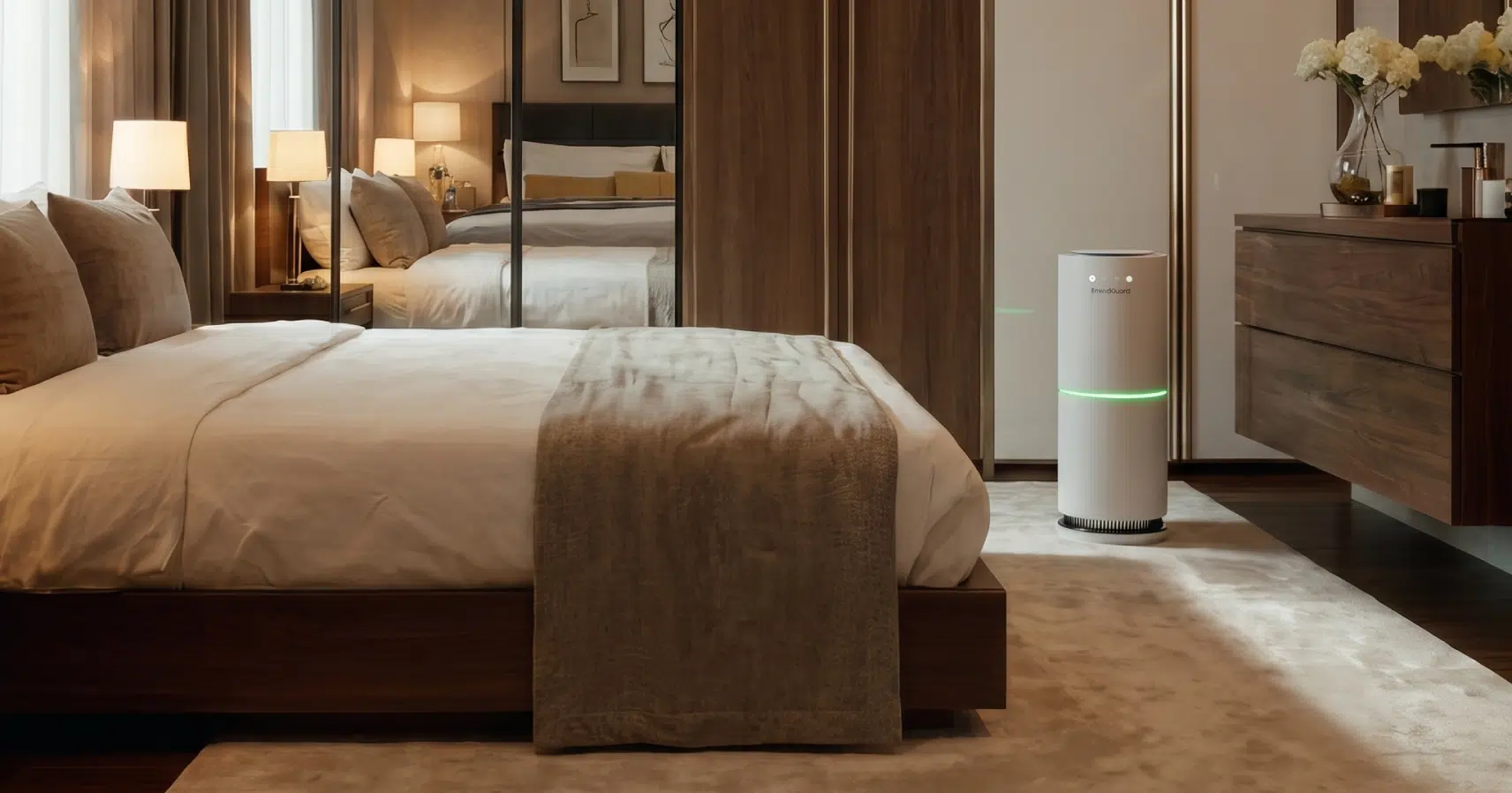
The Bedroom: Highly recommended to prevent overnight exposure, waking up with congestion, and chronic morning coughing. For detailed recommendations on selecting a unit for your sleep space, check out ourbest bedroom air purifier guide.
The Bathroom & Laundry: High-steam zones where persistent condensation easily triggers rapid fungal growth.
Basements & Sub-floors: Poorly ventilated, stagnant spaces prone to high humidity and dampness.
Operating Tip: Always place the unit on a flat surface, at least 30 cm away from walls, to ensure unhindered 360-degree intake and optimal vapour distribution.
Frequently Asked Questions (FAQs)
Does this device just inhibit mould growth, or does it actually kill the spores?
It completely kills and dismantles them. Vapour-Phase Oxidation breaks down the cellular walls and surface proteins of mould spores, converting them into harmless water vapour and oxygen instead of just trapping them.
Can I run the device in a wardrobe or luxury bag storage to prevent mould?
Excellent application. The active dry vapour penetrates deep into tight wardrobe spaces to neutralize hidden mould spores on fabrics and leather without causing any damage.
Will the Purox™ Gel cause dampness or wet furniture?
Absolutely not. The system releases a molecular-level "dry vapour" rather than a humid mist, leaving zero residue and adding no moisture to the room.
What is the difference between black mould and mildew, and can this system handle both?
The core difference is depth. Mildew is superficial, whereas black mould penetrates deeply into materials and releases hazardous mycotoxins. Our active dry vapour is engineered to break down the cellular structures of both types.
Do I need to close the windows when running this air purifier?
Yes, it is highly recommended. Closing the windows allows the active dry vapour to accumulate to the optimal concentration required to protect hidden corners and surfaces effectively.
Limited-Time Offer
Transform Your Indoor Air Quality
Upgrade to the innovative EnviroGuard PRO™ X today for only $790 (Was $1,590). Claim your $800 saving now and breathe cleaner, healthier air tomorrow.
Air purifiers genuinely help alleviate airborne allergies and Hay Fever by reducing the concentration of allergens in the air, such as pollen, dust mites, and pet dander. They achieve this by capturing over 99.97% of particles as small as 0.3 microns through a True HEPA filter. However, modern Environmental […]
How does an air purifier work? An air purifier draws contaminated indoor air into the unit, where filters or treatment technologies capture, remove or break down pollutants such as PM2.5, pet dander, pollen, mould spores and odours. The treated air is then released back into the room, creating a […]
How Do You Destruct VOCs? Most standard air purifiers fail to eliminate Volatile Organic Compounds (VOCs) because they rely on passive filtration (like HEPA), which only captures solid particles, or thin activated carbon filters that quickly saturate and risk releasing trapped toxic gases back into your room. For definitive […]
Many people experience no allergy issues with their first dog or cat. However, introducing a second or third pet into the home often triggers sudden sneezing, nasal congestion, red eyes, itchy skin, or morning chest tightness. This sudden reaction does not mean you have “developed a pet allergy out […]
Yes. You can develop or become aware of a pet allergy later in life, even if you have lived with cats or dogs for years without noticeable symptoms. This does not necessarily mean that your pet suddenly caused an allergy. Allergic disease involves a process called sensitisation, in which […]
¹ Tested in independent Australian laboratories under controlled conditions using airborne mould spores, bacteria and allergen particulates (0.3μm–10μm).
² Based on third-party testing results confirming 99.9% reduction in airborne mould spores and pet dander when using EnviroGuard Pro X with Purox™ Gel over 24 hours.
³ Independent testing by ICAS Testing Technology Service (Shanghai) Co., Ltd. demonstrated 99.99% reduction in airborne Staphylococcus Albus bacteria within 30 minutes in a 20m² test chamber, in accordance with Technical Standard for Disinfection GB 27948-2020.
⁴ Surface efficacy testing conducted by Eurofins BioPharma Product Testing — Sydney (Eurofins ams Laboratories Pty Ltd, TGA-licensed under MI-2021-LI-08995-1). Reductions over 8 hours: 99.99% Pseudomonas Aeruginosa, 99.9% Escherichia Coli, 90% Candida Albicans Yeast.
⁵ "10x faster than conventional filtration" comparison based on EnviroGuard Pro X achieving log 4 (99.99%) airborne bacterial reduction in 30 minutes, compared with log 1 (90%) pathogen reduction in 20 minutes reported for hospital HEPA systems operating at 12 air changes per hour (Fernstrom A, Goldblatt M. Aerobiology and its role in the transmission of infectious diseases. J Pathog. 2013;2013:493960).
⁶ Performance varies based on room size, airflow configuration, fan speed setting, environmental conditions and usage patterns.