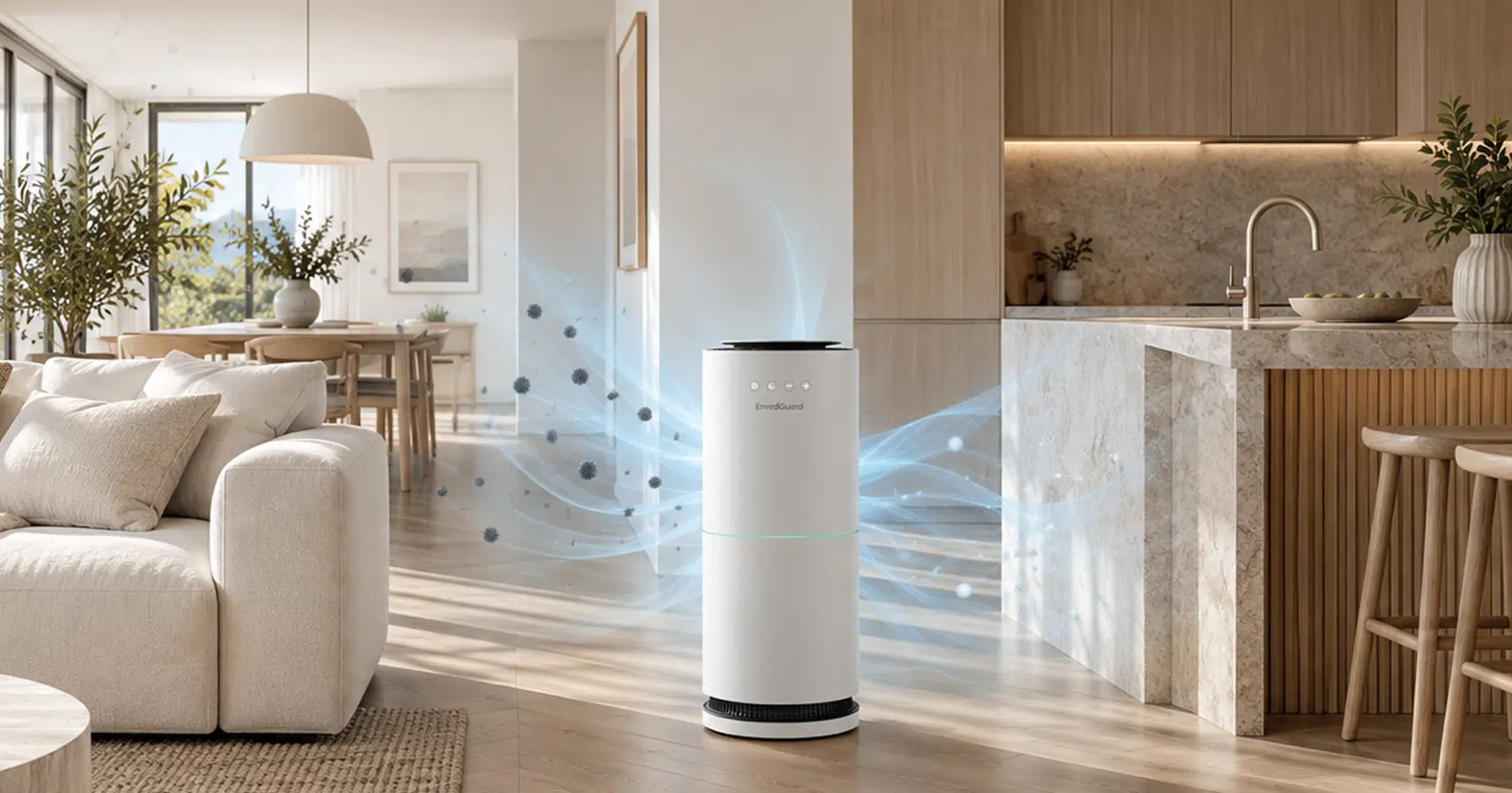

When comparing air purifiers, most buyers focus on filtration performance, smart features, and design. Brands like Dyson have set a high standard in these areas, particularly in consumer-friendly air purification. However, a growing category of air treatment technologies is expanding beyond traditional filtration—introducing approaches that aim to reduce not only airborne particles, but also environmental contamination more broadly.
This comparison looks at how conventional air purifiers differ from systems like the EnviroGuard PRO X™, particularly in how they manage allergens, microorganisms, and indoor air quality over time.
Most mainstream air purifiers rely on HEPA filtration, often combined with activated carbon filters.
Strengths:
Limitations:
This means that while airborne particle levels may decrease, sources of contamination can remain in the environment, particularly in fabrics, carpets, and hard-to-reach areas.
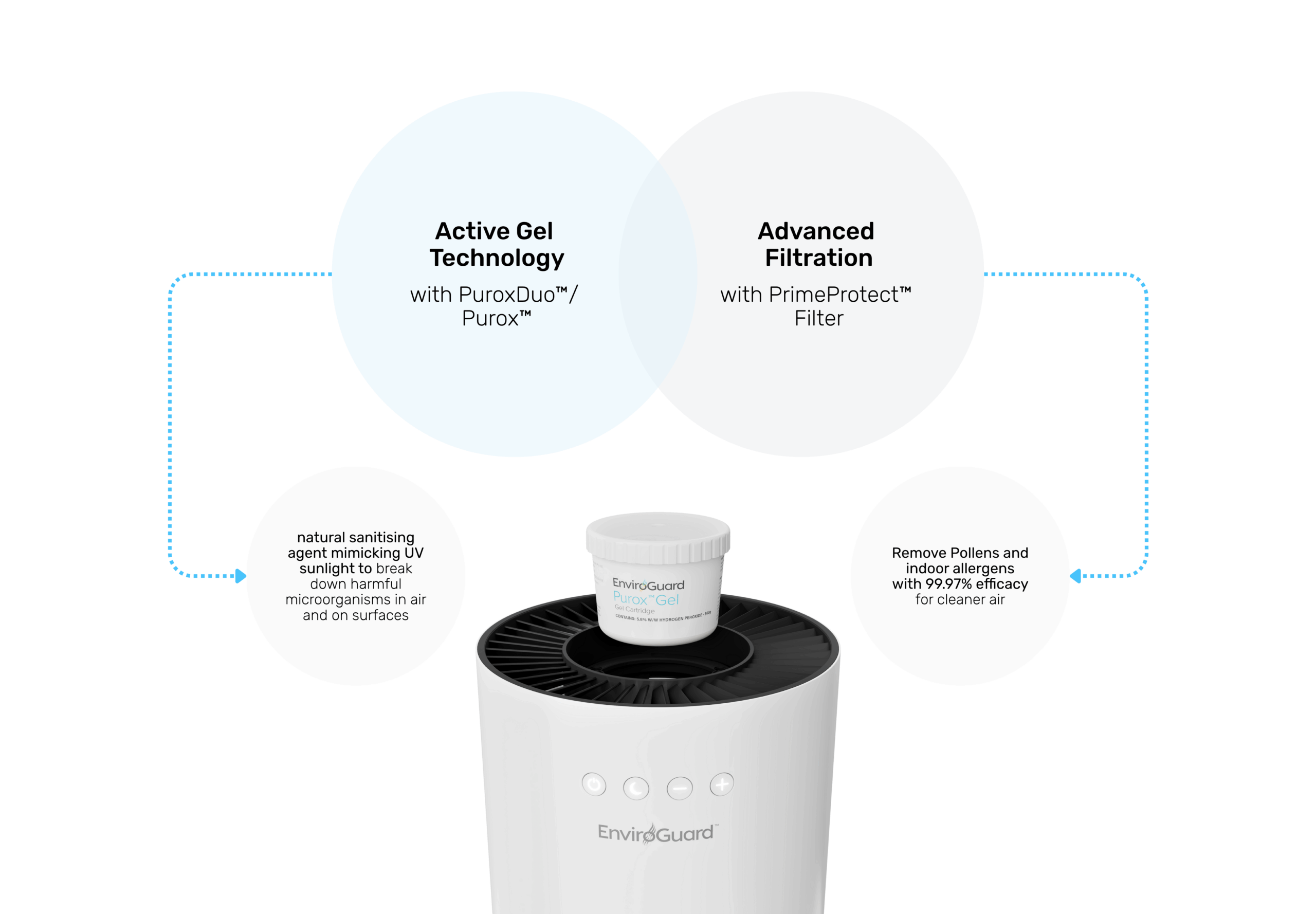
Through controlled evaporation, Purox™ Gel releases a low-level sanitising agent into the environment. This agent behaves similarly to compounds naturally generated by sunlight and interacts with contaminants through oxidation reactions .
What this adds:
Rather than relying solely on air circulation through a filter, this approach aims to reduce the overall environmental load of contaminants.
In a mould remediation project conducted under the ANSI IICRC S520 standard, a combination of EnviroGuard PRO X™ and vapour-phase sanitisation was used in a 600m² office environment
Observed results included:
In a test room scenario, these outcomes were achieved without traditional HEPA air scrubbers, suggesting that vapour-phase treatment contributed significantly to environmental control.
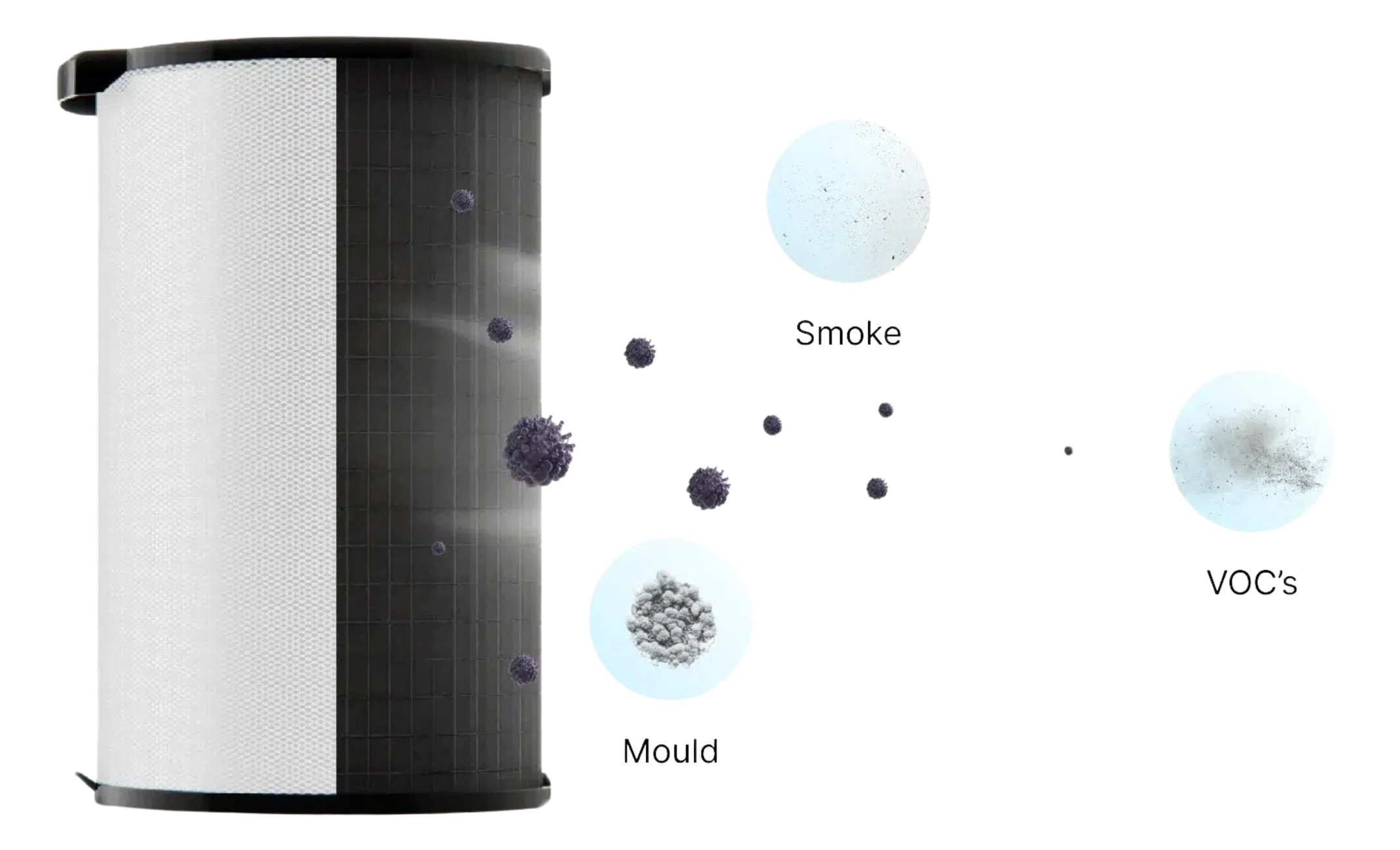
Both Dyson and EnviroGuard use high-quality filtration systems, but EnviroGuard’s 4-layer filtration takes it a notch higher. Combining a medical-grade HEPA-13 filter with antimicrobial and activated carbon filters, it effectively removes 99.97% of particles, including viruses, bacteria, VOCs, and allergens. Dyson purifiers, while excellent, don’t offer this level of pathogen-neutralising technology directly in their filters.
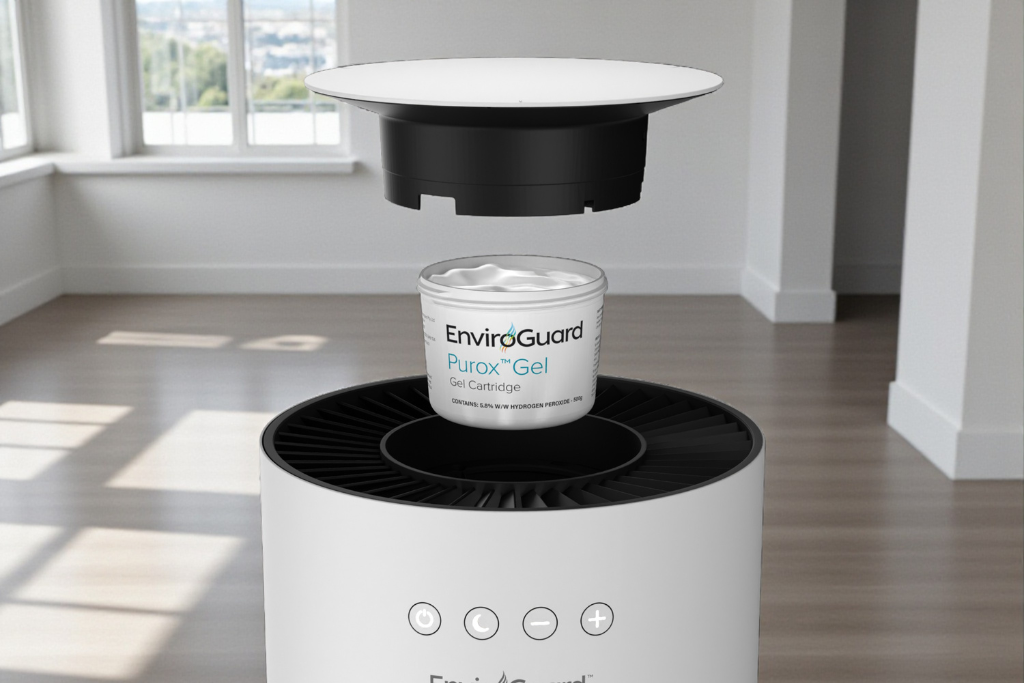
Where Dyson stops at air purification, EnviroGuard takes hygiene seriously by addressing surface contaminants. The Purox™ Gel ensures continuous sanitisation, making it ideal for environments like offices, medical facilities, and homes with young children. For those prioritising cleanliness, this added feature makes all the difference.
One of the main distinctions between filtration-based systems and combined systems like EnviroGuard PRO X™ lies in how they address contamination pathways:
| Approach | Airborne Particles | Surface Contamination | Continuous Treatment |
|---|---|---|---|
| HEPA Filtration | ✔ Captures | ✖ Not addressed | Limited to airflow |
| Vapour-Phase + Filtration | ✔ Reduces | ✔ Reduces | ✔ Continuous |
This difference becomes more relevant in environments where:
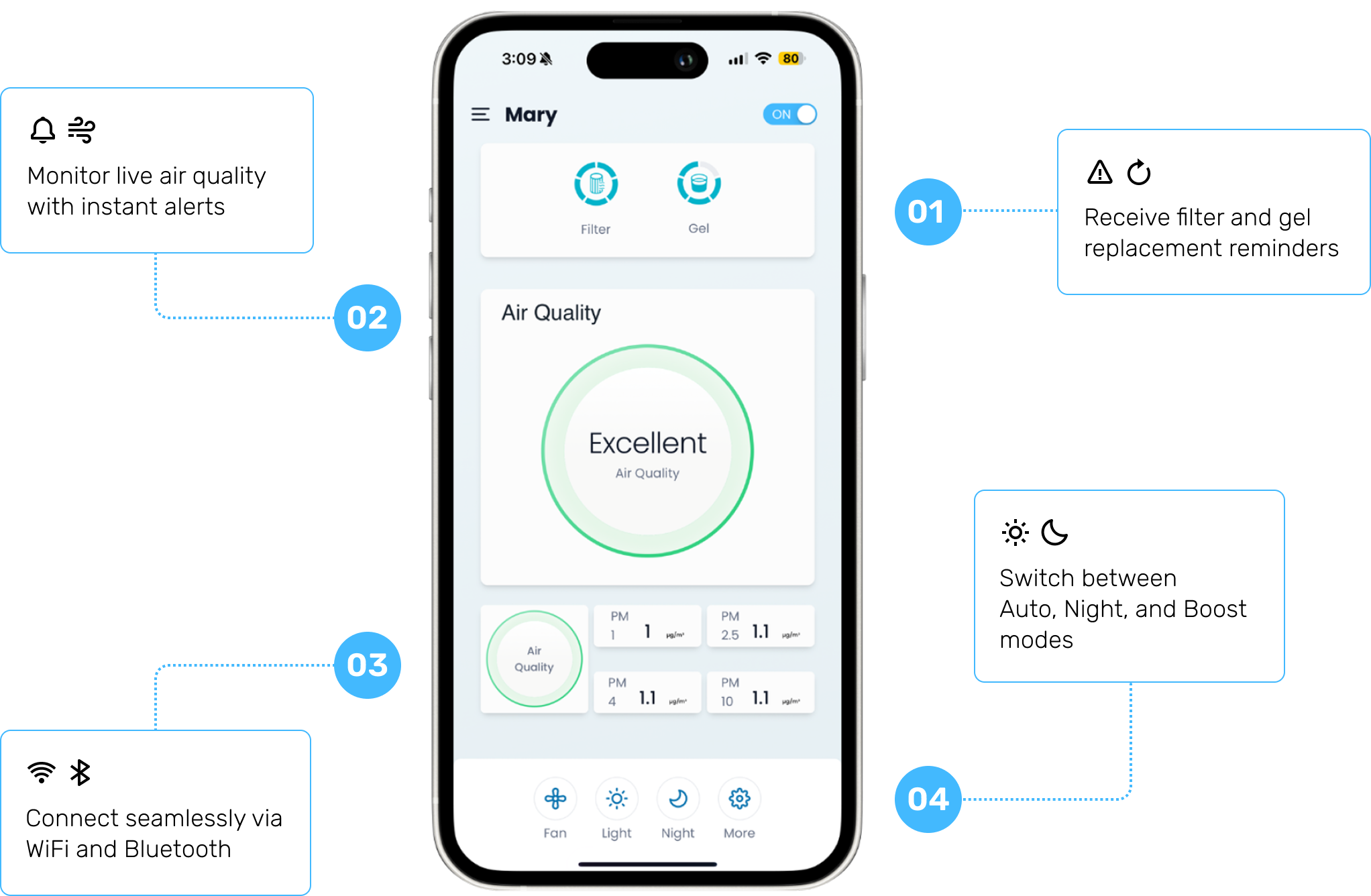
Both brands excel in smart features like app connectivity and real-time air quality monitoring. However, EnviroGuard’s ProQuiet technology ensures whisper-quiet operation (33 to <59 dBA), making it suitable for bedrooms and workspaces. Dyson’s Big+Quiet models are also noise-conscious but lack the additional sanitisation benefits.
The choice between traditional air purifiers and systems with active sanitisation depends on the environment and user needs.
Filtration-based purifiers may be sufficient for:
Combined systems (Filtration + vapour phase oxidation VPO) may be more relevant for:
While Dyson remains a solid choice for air purification, the EnviroGuard PRO X™ is perfect for those seeking more than just clean air. Its active surface sanitisation, multi-layer filtration, and intelligent design make it the ultimate solution for healthier living and working environments. If you’re serious about both air and surface hygiene, EnviroGuard could be the choice for you.
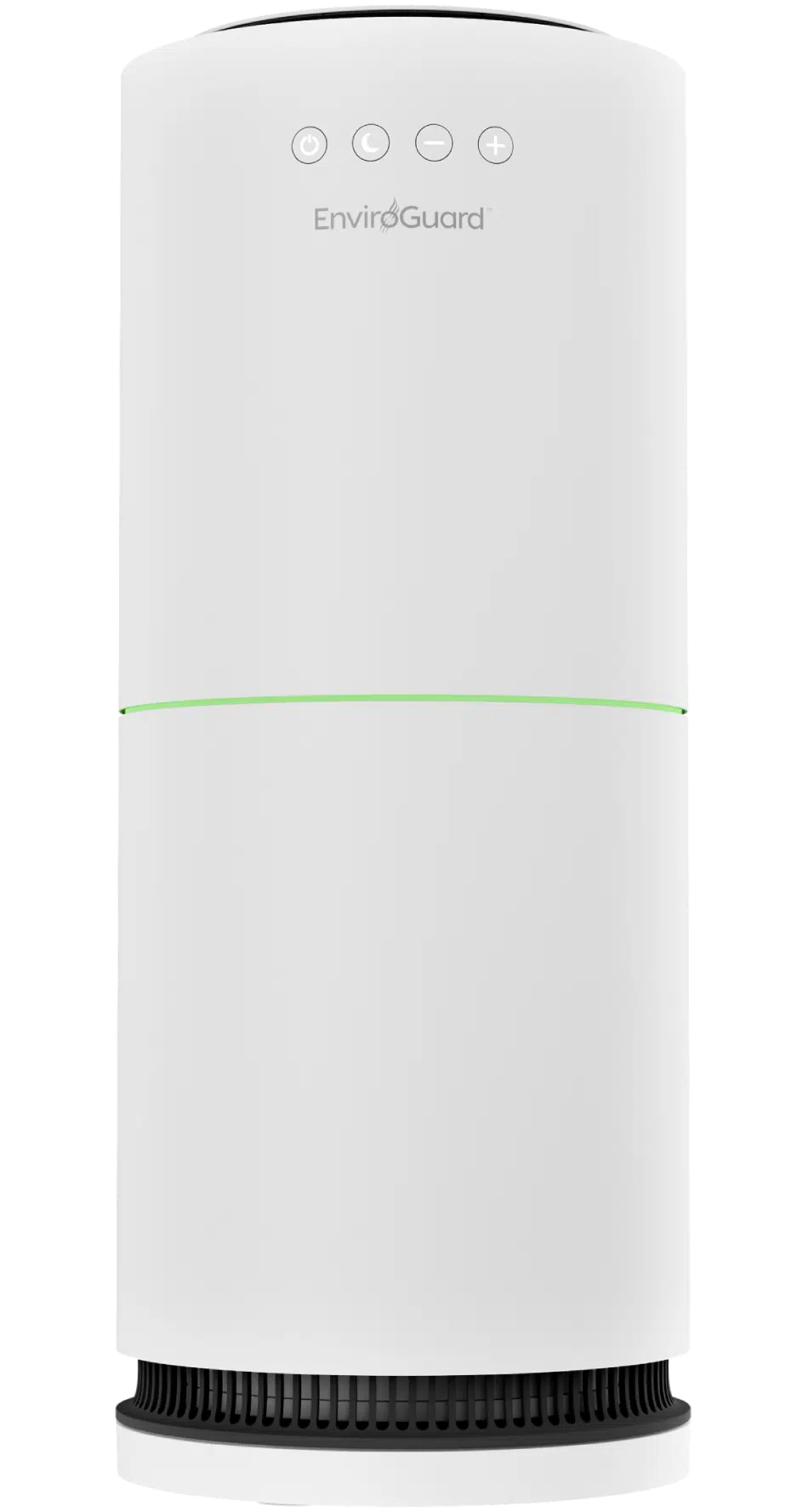
Upgrade to the innovative EnviroGuard PRO™ X today for only $790 (Was $1,590). Claim your $800 saving now and breathe cleaner, healthier air tomorrow.