Most people unbox an air purifier, plug it into the nearest free socket, and assume the job is done. Then a well-meaning friend says it has to go in the centre of the room, another insists it belongs by the window, and a third swears the only correct spot is right beside the bed. None of them can point to a source. That confusion is exactly why “where to place air purifier” is one of the most-searched questions in indoor air quality — and why most of the answers online are guesswork dressed up as expertise.
This guide strips that out. Below, you’ll find what independent testing actually shows about air purifier positioning, the one clearance measurement that genuinely changes performance, the sizing rule that matters more than position ever will, and room-by-room placement for bedrooms, living rooms, kitchens, nurseries and multi-storey homes. We’ve also covered something most placement guides ignore entirely: the difference between filtration-only purifiers and active vapour-phase systems, and why that distinction changes the placement rules altogether.
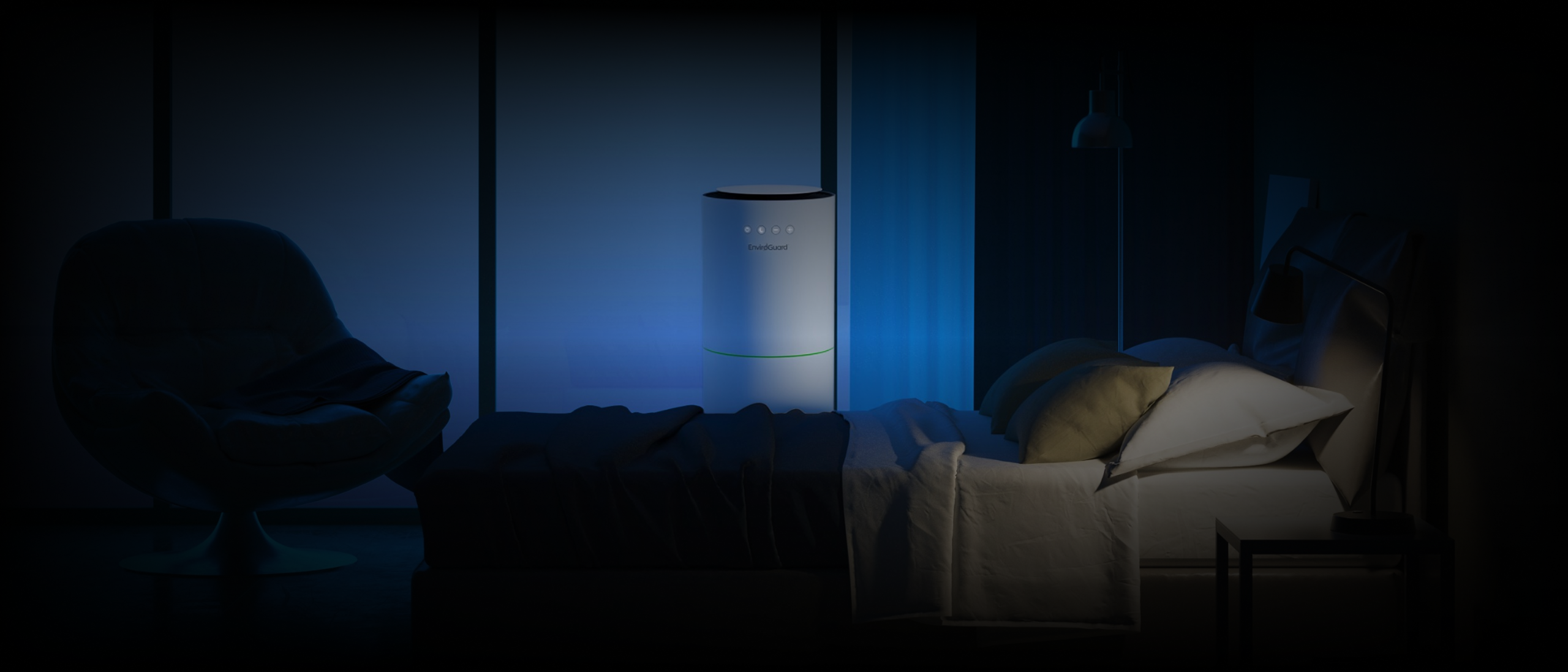
Here’s the uncomfortable truth for anyone who has spent twenty minutes deciding between “by the sofa” or “by the door”: for a correctly sized unit, the spot you choose within a room makes very little measurable difference.
Smart Air, an air quality social enterprise and certified B Corp, ran seven overnight tests in a 15 m² bedroom with the doors and windows closed. Three particle counters were rotated between the location nearest the purifier, a mid-distance spot, and the furthest corner of the room, tracking pollution levels through the night. The result: the difference in particle reduction between the closest and furthest spots came out at under 1%. The organisation published its raw data openly, and its conclusion was blunt — provided the purifier’s Clean Air Delivery Rate (CADR) suits the room, position barely moves the needle.
That single finding should reframe how you think about this whole topic. The question isn’t really “where is the magic spot in my room?” The real questions are: is the unit powerful enough for the space, and is it physically free to draw in and release air? Get those two things right, and the rest is largely cosmetic. Not sure what size purifier you need? Read our guide to choosing the right air purifier for large spaces.
While position within the room is mostly noise, distance from the wall is not. Smart Air also measured airflow at the unit’s intake while moving it progressively away from a wall. Flat against the wall, airflow dropped to roughly 5% of normal. At just 4 cm of clearance, it jumped to 94%. By 10 cm, it had recovered to a full 100%.
That’s a genuinely useful, specific number — and it’s the opposite of the vague “give it some space” advice most blogs repeat. As a working rule, keep the air intake at least 15 cm (roughly a hand’s width) from any wall or piece of furniture. That margin accounts for the fact that not every purifier’s intake sits in exactly the same place, so a slightly generous gap protects you from accidentally choking the airflow.
The same logic applies to corners and behind-furniture placement, both of which restrict airflow from more than one side simultaneously. If a corner is genuinely your only option, pull the unit forward by at least 30–45 cm so air can still reach the intake from multiple directions.
Sizing has a far bigger effect on air quality than placement, and it’s the step most buyers skip. The Association of Home Appliance Manufacturers (AHAM) — the body responsible for the CADR testing standard recognised by the US EPA and widely referenced by manufacturers internationally — recommends what’s known as the “two-thirds rule”: a purifier’s CADR (in cubic feet per minute) should be at least two-thirds of the room’s floor area in square feet.
Working example: a 12 ft × 20 ft room (240 sq ft, or roughly 22 m²) needs a unit with a smoke CADR of at least 160. The US EPA’s separate benchmark — at least 4.8 air changes per hour (ACH) for the room size stated — points to the same conclusion from a different angle: an undersized unit, however perfectly placed, will always be working against the room rather than with it.
If you’re shopping by spec sheet rather than CADR (common with combination filtration-and-treatment systems), check the manufacturer’s stated coverage area directly rather than estimating from airflow figures alone, since airflow (CFM/CMH) and certified CADR aren’t interchangeable measurements.
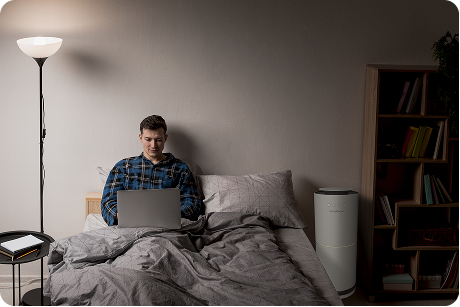
General principles are useful, but air purifier positioning changes depending on what each room is actually for. Here’s how to apply the rules above to the rooms that matter most.
This is the single most-asked version of the placement question, and for good reason — you spend roughly a third of your life in this room, breathing whatever is in it.
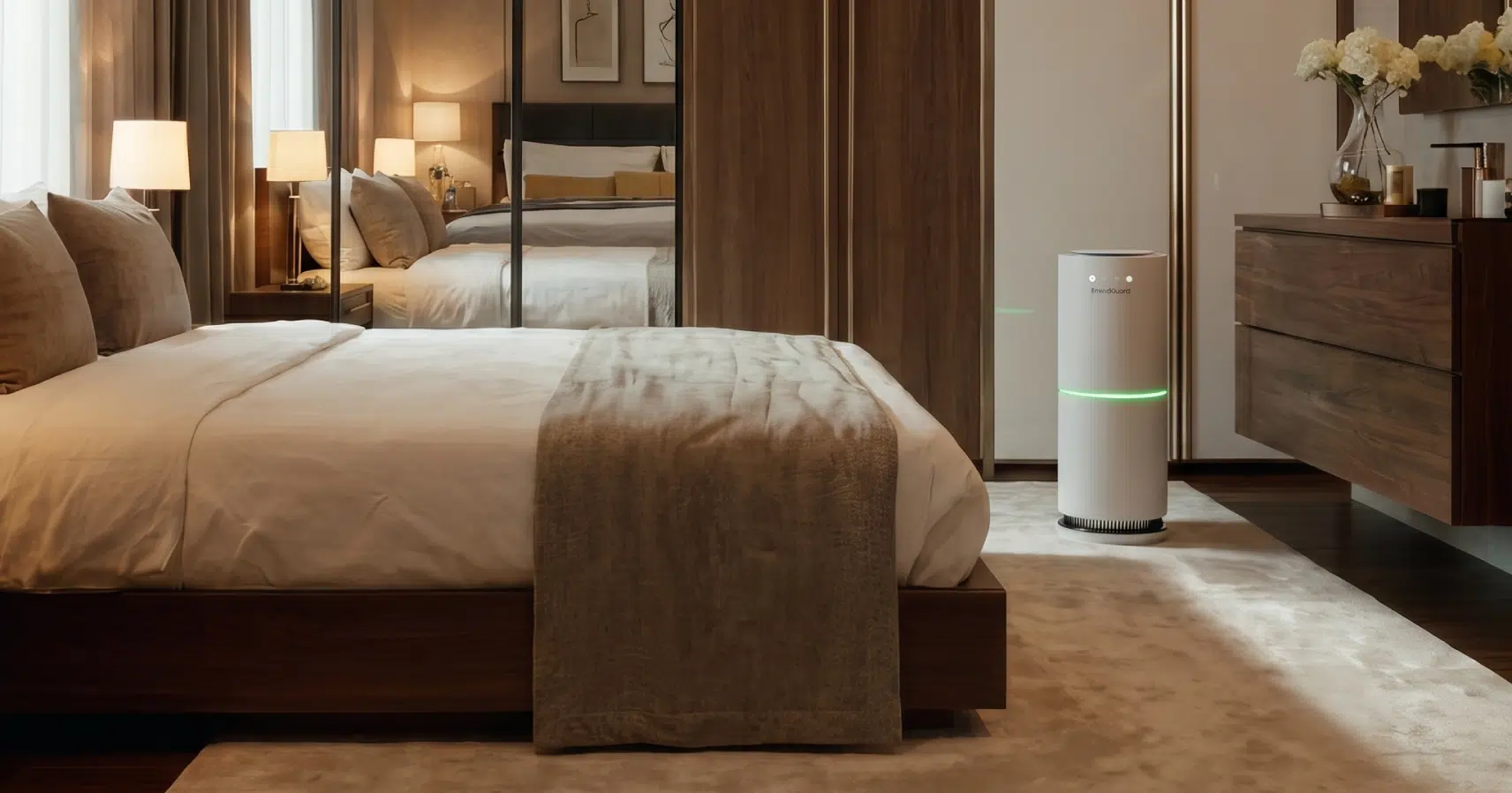
Place the unit 1.8–3 m (6–10 ft) from the head of the bed, ideally elevated on a low dresser or nightstand rather than directly on the floor. This keeps the airflow out of your direct breathing line (which can dry out your nose and throat overnight) while still keeping you well within the room’s treated air zone — remember, the Smart Air data shows distance within the room matters little once you’re not sitting directly on top of the intake.
Run the unit on its lowest or “night” setting if noise is a concern; a unit rated around 33 dBA on its quietest setting sits below the volume of a library, which is low enough to disappear into the background of a bedroom. Avoid tucking it behind curtains or a headboard — that reintroduces the wall-clearance problem covered above, and it also hides any light-ring air quality indicator the unit might have.
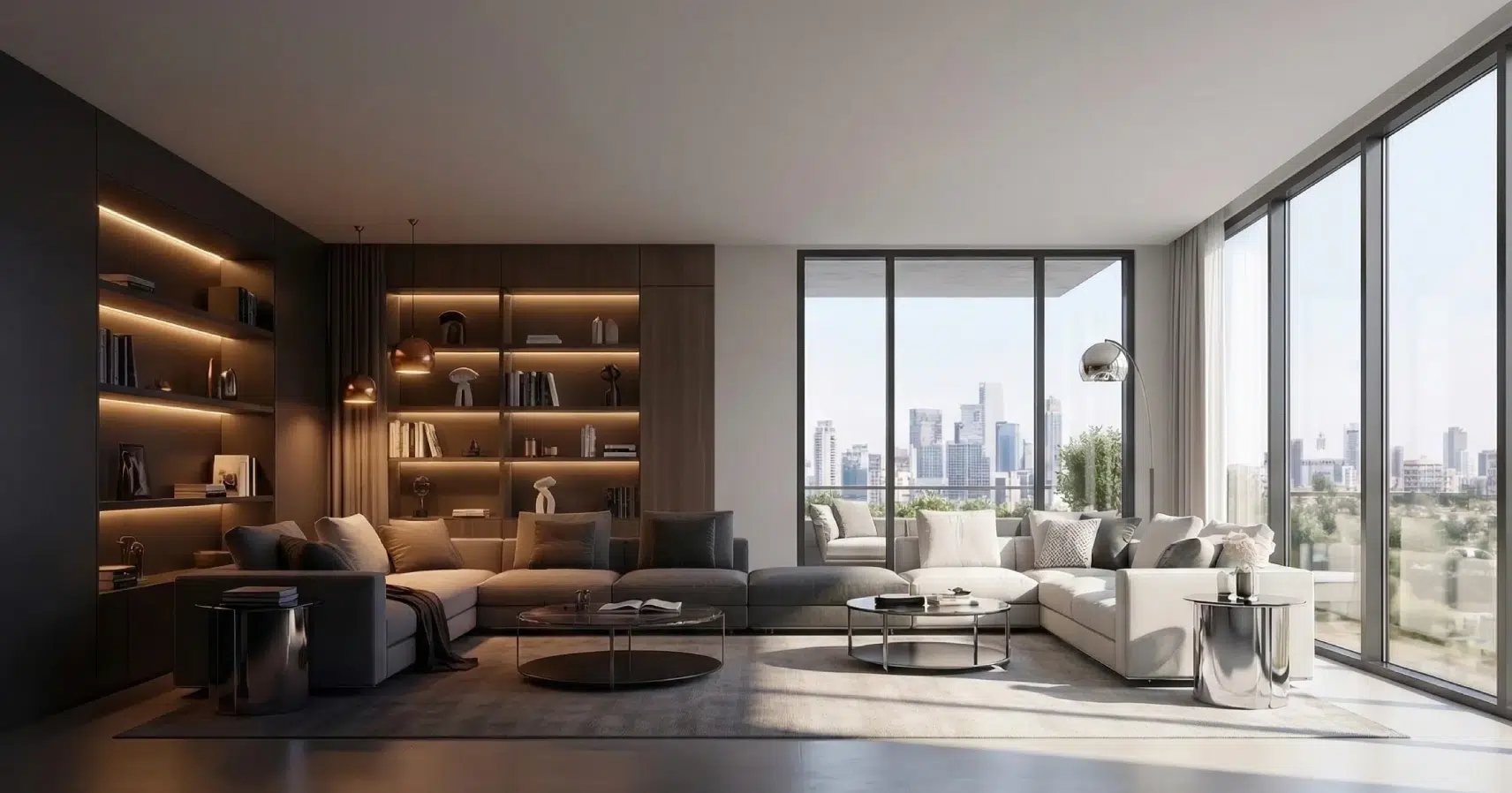
Living rooms collect pollutants from multiple sources at once — foot traffic, soft furnishings, open windows, the occasional candle. Central placement, away from sofas and bookcases, generally outperforms corner placement here simply because it gives the unit clear access to air from every direction. If a specific source dominates (a fireplace, a frequently used front door), positioning the unit nearer that source — but still respecting wall and furniture clearance — helps it intercept pollutants closer to where they enter the room.
Cooking generates fine particulates, grease aerosols and volatile organic compounds (VOCs) that linger well after the smell has cleared. Position the unit on a worktop or shelf opposite the hob, with clearance from heat and splashes, and switch to boost or maximum airflow during and immediately after cooking. Avoid placing any unit directly above a hob or within range of grease spatter, both for safety and to protect the intake from clogging prematurely. Learn more about what VOCs are and how they impact your health.
The same bedroom rules apply, with two additions. First, keep the unit and its cord well out of reach of a crib or cot — out of arm’s and mouth’s reach, not just “nearby.” Second, prioritise continuous overnight operation over occasional boosting; children breathe faster than adults relative to their body size, so a steady background reduction in allergens, dust mite debris and pet dander matters more here than a single powerful burst.
VOCs from desks, carpets, and electronics accumulate over a full working day in a way that’s easy to miss because there’s no obvious smell. Position the unit at roughly desk height, within a couple of metres of where you sit, so the treated air zone overlaps with your actual breathing zone rather than the far corner of the room.
Terraced houses, period conversions and open-plan flats rarely behave like the single sealed test room used in most manufacturer data. For open-plan kitchen-diners or knocked-through living areas, calculate the combined square footage as one room and size (or position) accordingly, ideally central to the longest sightline so air can circulate the full length of the space. For traditional homes with smaller, closed-off rooms, it’s generally more effective to run a correctly sized unit per room than one large unit for the whole floor with doors left open.
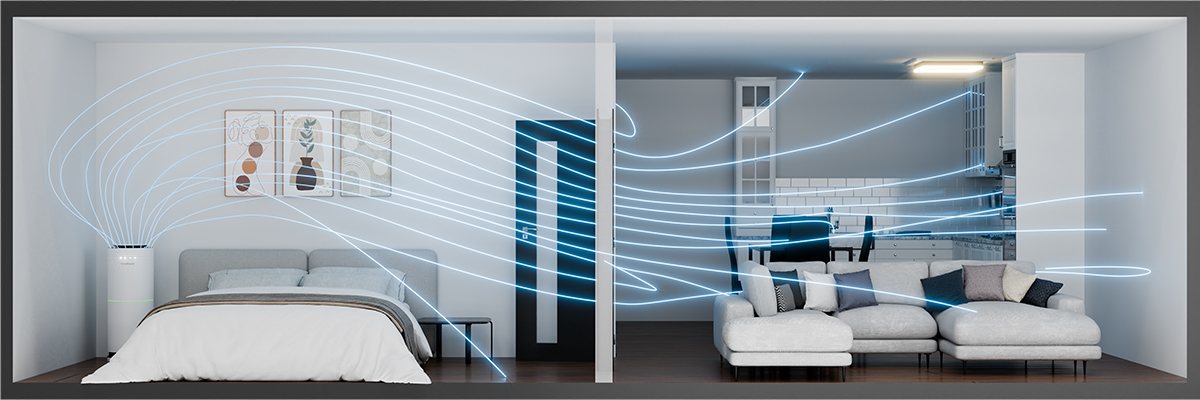
Almost every placement guide online assumes one specific kind of machine: a fan pulling air through a stack of physical filters. That assumption is the real “gap” in most existing advice, because it doesn’t hold for every air purification technology on the market.
A standard HEPA-only tower depends entirely on physically drawing room air through pleated filter media. Its effectiveness is tied directly to how much air it can pull in and push out, which is exactly why wall clearance and furniture obstruction matter so much for that category — block the airflow path, and you’ve blocked the entire mechanism.
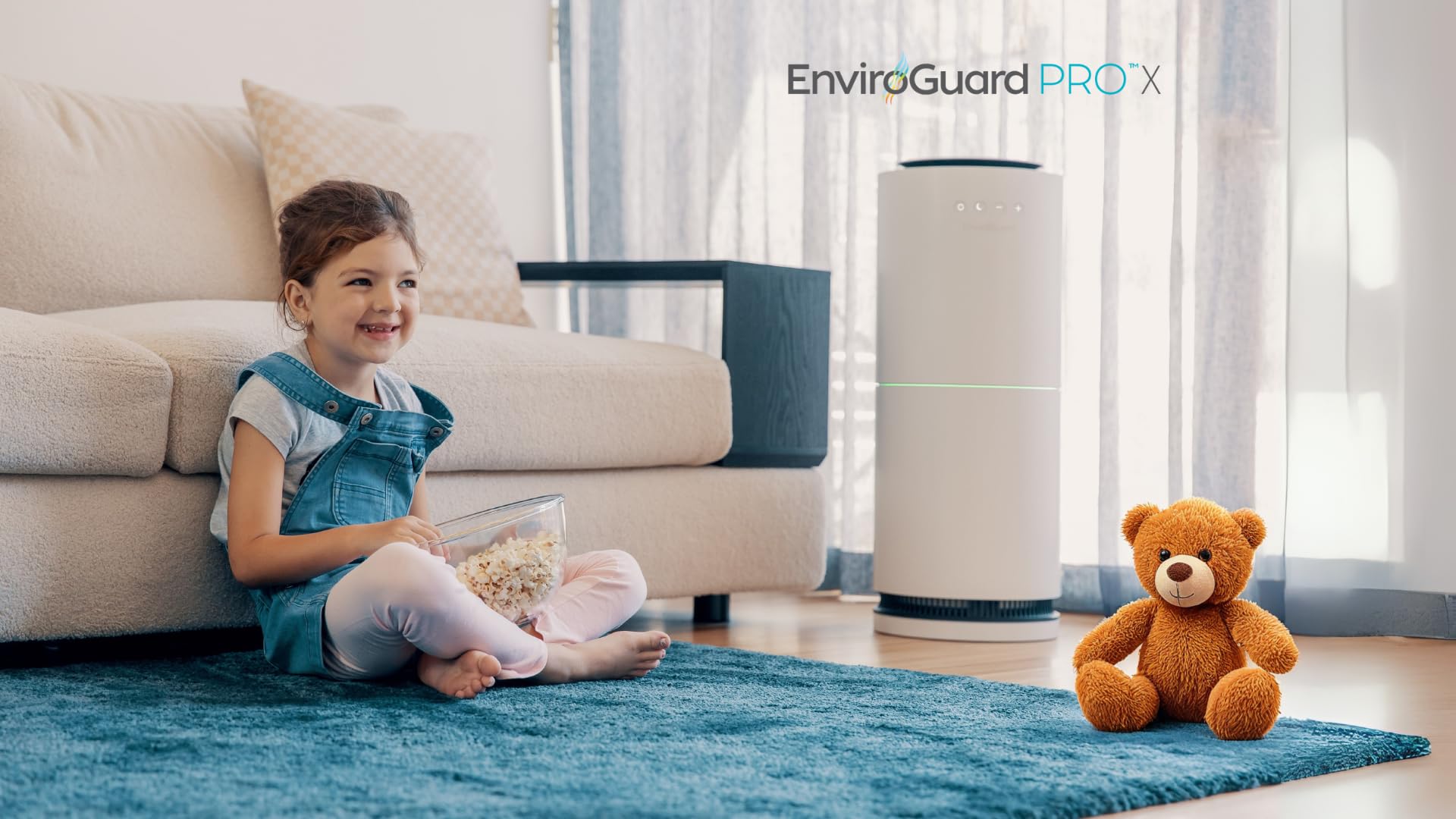
Active vapour-phase systems work differently. Purox™ Gel, the technology inside the VBreathe EnviroGuard Pro™X, releases a controlled hydrogen peroxide vapour that disperses outward through the room via radial airflow, oxidising airborne and surface-bound contaminants — including VOCs, mould spores and bacteria — wherever they happen to be, rather than waiting for air to be drawn back through a filter. The system pairs this with a separate four-stage PrimeProtect™ Filter (including medical-grade HEPA-13) running in parallel for particulate capture.
The practical takeaway: even with a vapour-phase system, placement isn’t irrelevant — it’s just doing a different job. The EnviroGuard Pro™X carries continuous particle sensing across four size classes (PM1, PM2.5, PM4 and PM10) alongside temperature, humidity, gel capacity, filter, filter-door and lid-position sensors. Wedge that kind of unit into a corner or behind a sofa, and you’re not just restricting vapour dispersal — you’re also feeding its sensors an unrepresentative slice of the room’s air, the same way a thermostat tucked behind a curtain will always report the wrong temperature.
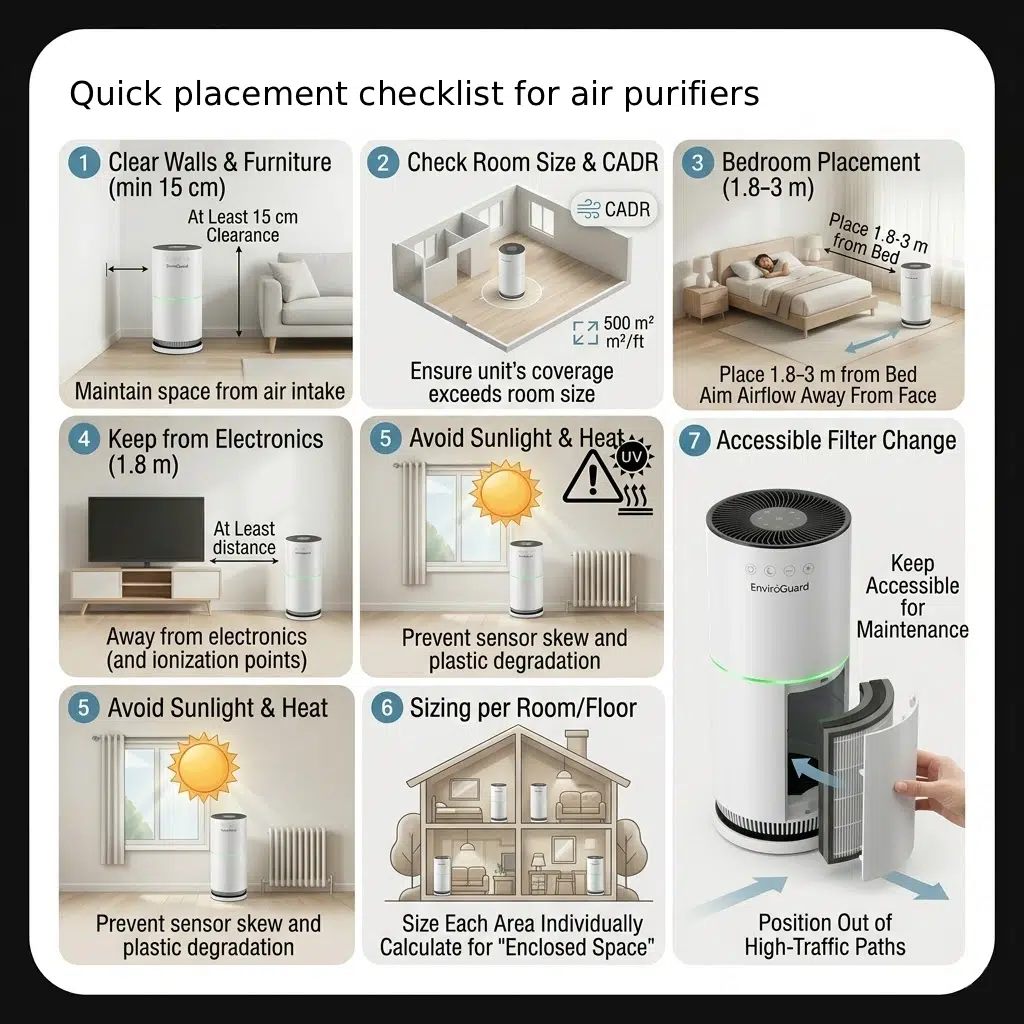
If you take one thing from this guide, make it this: stop agonising over the exact spot and start checking two things instead — whether the unit is sized for the room, and whether its intake has genuine clearance from the nearest wall or piece of furniture. Everything else, from corner versus centre to floor versus shelf, makes a far smaller difference than the marketing on most purifier boxes implies.
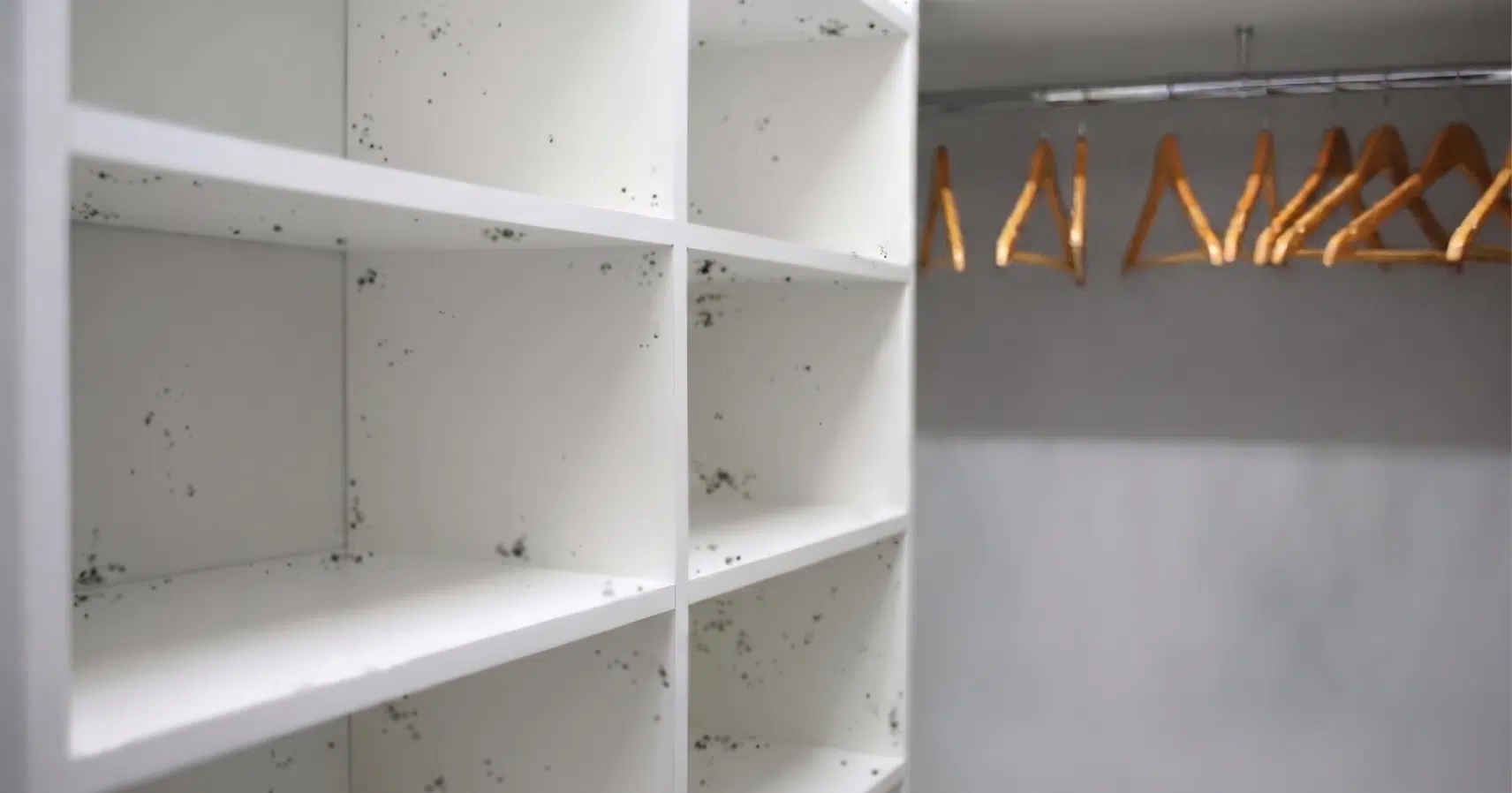
For homes where source-based pollutants — VOCs from new furniture, mould spores in a damp wardrobe, pet dander, cooking fumes — are the real concern rather than just airborne dust, an active system such as Purox™ Gel inside the EnviroGuard Pro™X is built to treat the whole room rather than wait for pollutants to drift past a filter, which gives you a wider margin for error if the “perfect” spot in your room simply doesn’t exist.
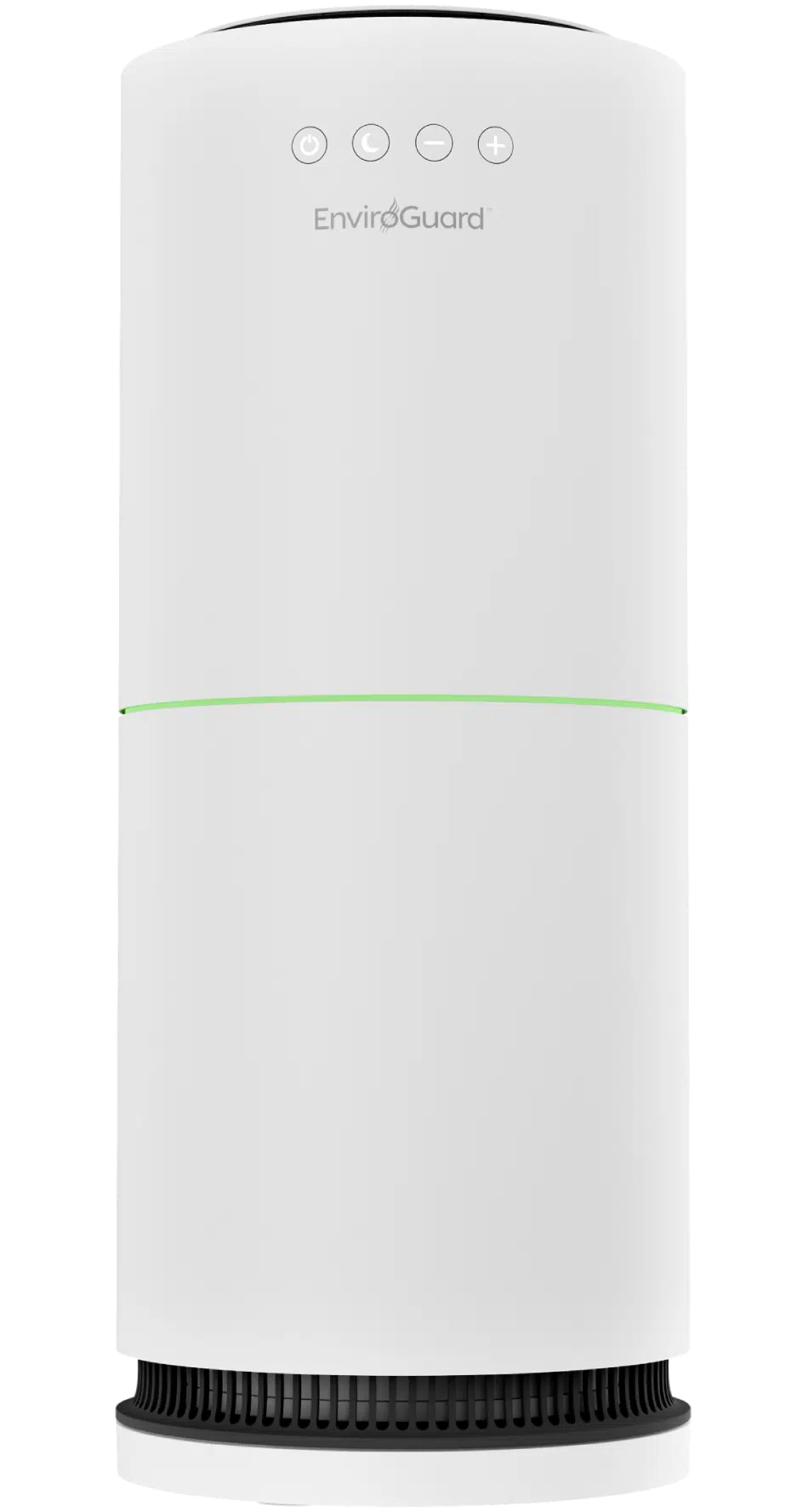
Upgrade to the innovative EnviroGuard PRO™ X today for only $790 (Was $1,590). Claim your $800 saving now and breathe cleaner, healthier air tomorrow.