


Air purifiers genuinely help alleviate airborne allergies and Hay Fever by reducing the concentration of allergens in the air, such as pollen, dust mites, and pet dander. They achieve this by capturing over 99.97% of particles as small as 0.3 microns through a True HEPA filter. However, modern Environmental […]
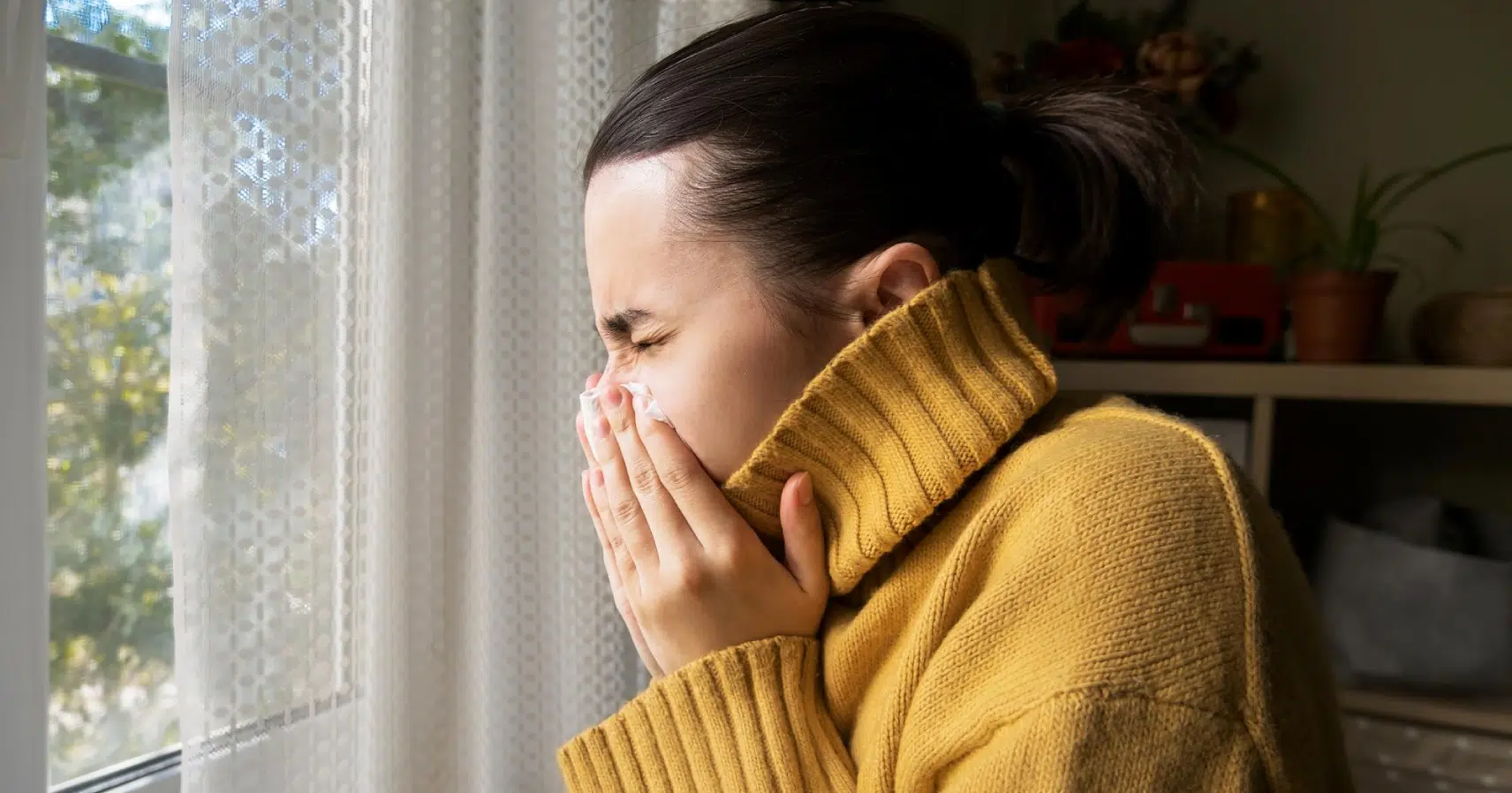
Air purifiers genuinely help alleviate airborne allergies and Hay Fever by reducing the concentration of allergens in the air, such as pollen, dust mites, and pet dander. They achieve this by capturing over 99.97% of particles as small as 0.3 microns through a True HEPA filter. However, modern Environmental System innovations have taken this a step further. By combining air filtration with Vapour Phase Oxidation technology, these systems proactively disperse a vapour to neutralise biological triggers throughout the entire room, reducing allergen inhalation much more thoroughly than traditional filtration.
For those suffering from allergic rhinitis, Hay Fever, or Eczema, persistent sneezing, itchy eyes, a blocked nose, or waking up feeling exhausted often stem from microscopic particles invisible to the naked eye. Whether it’s seasonal grass pollen, dust mite proteins, or pet dander lingering in a closed room, inhaling these foreign elements day and night triggers the body to release histamine, leading to chronic inflammation and exacerbating indoor air triggers and eczema flare-ups. Controlling indoor air quality to ensure it remains clean is the most crucial first line of defence in breaking the cycle of triggers, allowing your respiratory system to truly recover.
This article is designed to help allergy sufferers and their families understand the science and medical principles behind air purifiers. It explains the differences between traditional Mechanical Filtration and proactive Environmental Systems integrated with Vapour Phase Oxidation technology. We also provide an in-depth checklist for creating an allergy-proof bedroom, giving you the accurate information needed to choose the most effective and worthwhile device to protect your health.

Air purifiers genuinely help reduce the symptoms of airborne allergies and Hay Fever. Their primary function is to lower the concentration of airborne allergens to a level that no longer triggers the body to release Histamine—the chemical responsible for itching, sneezing, a runny nose, and congestion. Medical-grade filters, such as Medical Grade HEPA-13, can capture at least 99.97% of fine particles, covering pollen, mould spores, dust mites, and pet dander. When the volume of triggers entering the respiratory tract is reduced, the mucous membranes in the nasal passages and eyes have a chance to recover, leading to a noticeable reduction in allergy symptoms.
Conventional air purifiers rely on a Passive Filtration mechanism, which requires a fan to pull contaminated air through the filter. While the filter itself is highly effective at capturing particles, room airflow often has blind spots or stagnant areas where the circulation doesn’t reach. Lightweight allergens can remain suspended in areas where people sit or sleep. Relying solely on a traditional air purifier can take a long time to circulate the air in the entire room and may not promptly reach contaminants in every corner.
To overcome the limitations of passive filtration, the innovative Environmental System integrates advanced air filtration with Vapour Phase Oxidation technology. Rather than just waiting for air to be drawn into the unit, this system proactively releases a safe, precisely controlled vapour in a 360-degree Radial Airflow. This vapour directly interacts with allergens and biological contaminants suspended in the room, neutralising the structure of these triggers before they can be inhaled. When working in tandem with multi-stage filtration, the air treatment is far more comprehensive and faster than standard purifiers relying solely on passive filters.

The four primary airborne allergens responsible for nasal congestion, sneezing, and Eczema flare-ups include Pollen, Pet Dander, Dust Mites & Mould Spores, and Volatile Organic Compounds (VOCs). These particles not only inflame the nasal lining when inhaled but are also small enough to land on the skin, causing Skin Barrier Dysfunction and triggering red, itchy rashes.
Pollen is the leading cause of Seasonal Allergic Rhinitis (Hay Fever), particularly grass and weed pollen that becomes airborne and slips in through doors and windows. Although pollen particles are relatively large compared to other pollutants, they can rapidly trigger the immune system to release histamine, resulting in itchy eyes, an itchy palate, and bouts of sneezing. Using a Medical Grade HEPA-13 filter is absolutely essential here, as it decisively captures all pollen from the very first pass.
Pet allergens aren’t primarily caused by visible hair, but rather by proteins found in dry skin flakes (dander), saliva, and urine (such as the Fel d 1 protein in cats or Can f 1 in dogs). These proteins attach to microscopic, ultra-light dander particles, allowing them to remain airborne for hours, even after the pet has left the room. Sufferers dealing specifically with domestic pets should implement comprehensive strategies for reducing pet dander and Fel d 1 proteins alongside continuous whole-room air treatment.
Dust mites and mould are biological allergens that reside indoors year-round. The allergic trigger isn’t the live dust mite, but rather the enzymes in their faeces and decaying bodies that break down into fine dust. Similarly, mould spores thrive and become airborne in high-humidity rooms. Managing these biological agents requires more than just standard filtration. Integrating targeted protocols for airborne mould spore removal alongside an antimicrobial filtration layer (like AerisGuard™ technology) and Vapour Phase Oxidation ensures that fungal fragments are neutralised before they colonise indoor surfaces.
Volatile chemicals like Formaldehyde and vapours from paint, cleaning products, or new furniture are gas-phase contaminants that HEPA filters cannot capture. These gases act as irritants that directly damage skin proteins, weakening the skin barrier and making it easier for other allergens to penetrate. Eliminating VOCs requires an Activated Carbon layer to absorb the gases, combined with the oxidation process of an Environmental System to effectively break down chemical molecules in the air. Understanding how activated carbon adsorbs gaseous VOCs reveals why dual-stage filtration is essential for gas-phase protection.
Thunderstorm Asthma is a severe environmental phenomenon that is highly dangerous for Hay Fever sufferers. It occurs when large grass pollen grains (such as Ryegrass pollen during the Australian spring) are swept up into thunderstorm clouds. The high humidity causes the pollen grains to absorb water and burst into hundreds of microscopic protein particles, shrinking to less than 2.5 microns in size.
The danger of this rupture includes:
(Caution: During a thunderstorm warning with high pollen counts, immediately close windows and stay indoors. If you experience chest tightness or wheezing, follow your personal asthma action plan and use your reliever puffer immediately as advised by your doctor.) Read more: What is Thunderstorm Asthma? Symptoms, Causes, and Prevention
Allergists and respiratory health organisations (such as the National Asthma Council Australia via the Sensitive Choice program) recommend using air purifiers as an “Adjunct Environmental Control” alongside medical treatment. They play a vital role in breaking the cycle of indoor trigger exposure, which helps reduce the frequency of flare-ups and may lower the reliance on antihistamines or nasal sprays. However, they are not a replacement for prescribed medical treatments.
The body’s response to clean air occurs in three stages based on symptom severity:
Choosing an air management device for allergies and Hay Fever requires looking at its core mechanism. A Humidifier only adds moisture but cannot filter allergens. A Conventional HEPA Purifier captures dust particles well but operates passively. In contrast, an Environmental System integrates advanced 4-stage filtration (PrimeProtect™) with Vapour Phase Oxidation technology, delivering proactive vapour to treat the air throughout the entire room, offering comprehensive protection against pollen, mould spores, pet dander, and VOCs.
| Comparison Criteria | Humidifier | Conventional HEPA |
Ultimate Solution Environmental System (Active + Multi-Stage) |
|---|---|---|---|
| Core Mechanism |
Emits water vapour to increase relative humidity
|
Draws air through a mechanical filter (Passive Filtration)
|
Combines Active Vapour Phase Oxidation with 4-stage filtration
|
| Pollen and Dust Mite Management |
Cannot capture or reduce allergens
|
Captures effectively when particles pass through the filter
|
Captures with HEPA-13 while proactively neutralising airborne triggers
|
| Coverage Area |
Increases humidity only in the immediate vicinity
|
Dependent on the suction airflow (has blind spots)
|
Distributes treatment vapour 360 degrees across the room (Radial Airflow)
|
| VOCs and Odour Removal |
Cannot remove chemicals or odours
|
Limited removal based on the Activated Carbon layer
|
Combines Activated Carbon and oxidation to break down chemicals
|
| Air Quality Monitoring |
Measures humidity only, or no sensors
|
Measures general dust particles (usually just PM2.5)
|
Environmental Intelligence detects PM1, PM2.5, PM4, and PM10 particles
|
Allergy sufferers often mistakenly believe humidifiers reduce allergens. In reality, they only release water droplets to alleviate dry respiratory linings. These devices cannot remove pollen or dust mite proteins from the air. Furthermore, if used without regulation and relative humidity exceeds 50%, it creates an ideal breeding ground for dust mites and mould, which can severely worsen allergy and Eczema symptoms.
Standard air purifiers using HEPA filters are medically recognised baseline devices that effectively capture pollen and pet dander. However, their efficiency relies entirely on their ability to pull air into the unit. If the room is large, obstructed, or if allergens are suspended outside the suction airflow, those allergens can remain airborne and be inhaled before ever reaching the filter.
To provide complete health protection, the Environmental System is designed with a “Beyond Filtration” concept, driven by three core pillars:
Rather than relying on simple air filtration alone, an active setup like the EnviroGuard PRO X™ Environmental System continuously monitors ambient air quality with multi-sensor intelligence while simultaneously purifying the room using PrimeProtect™ four-stage filtration and active vapour dispersion.
Creating an allergy-proof bedroom requires combining continuous overnight air treatment with strict surface hygiene. Because the respiratory system and skin are highly vulnerable to indoor triggers during the 6–8 hours of sleep, following these 5 steps will help lower airborne particle density, prevent congestion, and ensure truly restful sleep.
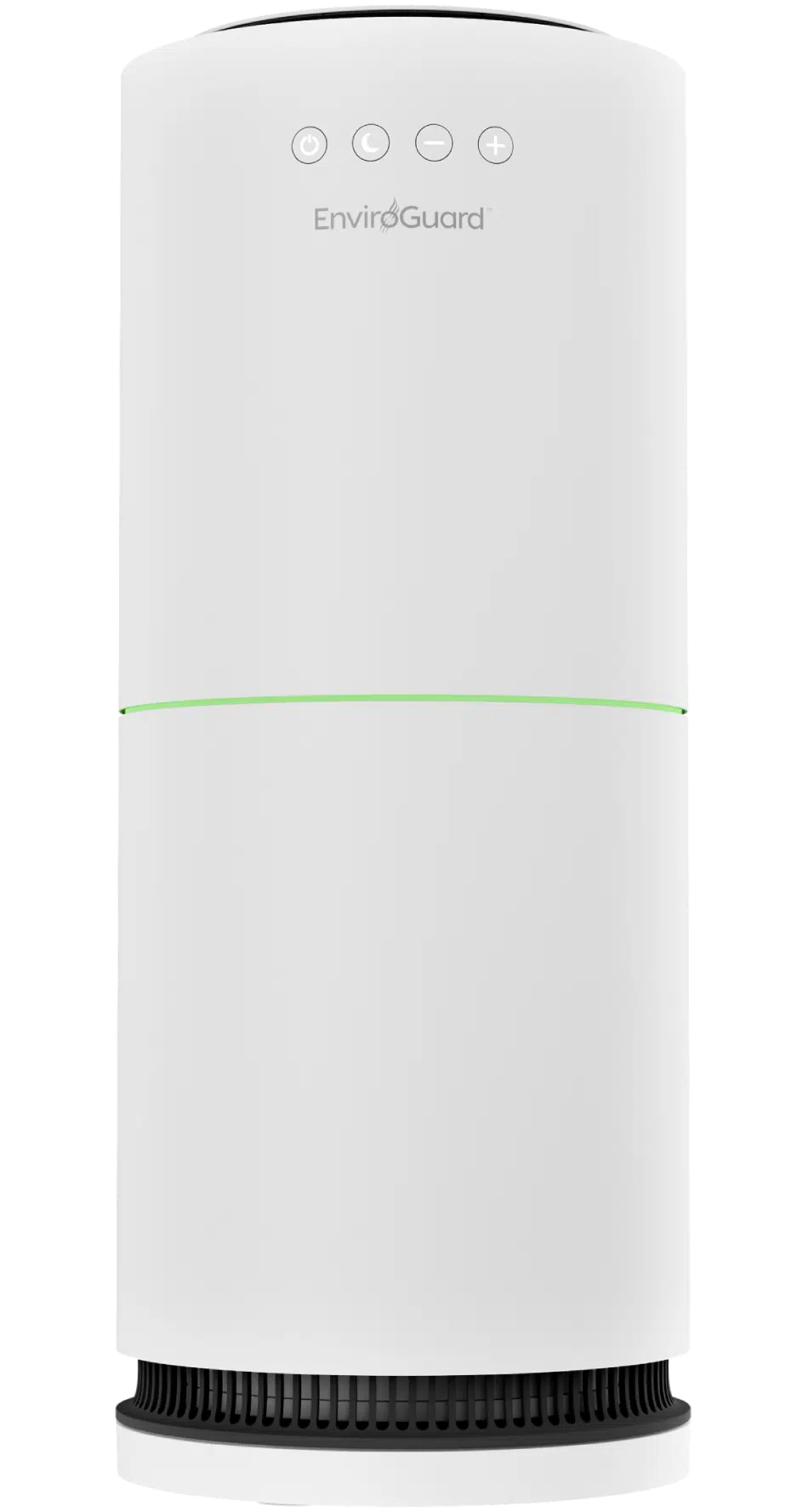
Upgrade to the innovative EnviroGuard PRO™ X today for only $790 (Was $1,590). Claim your $800 saving now and breathe cleaner, healthier air tomorrow.

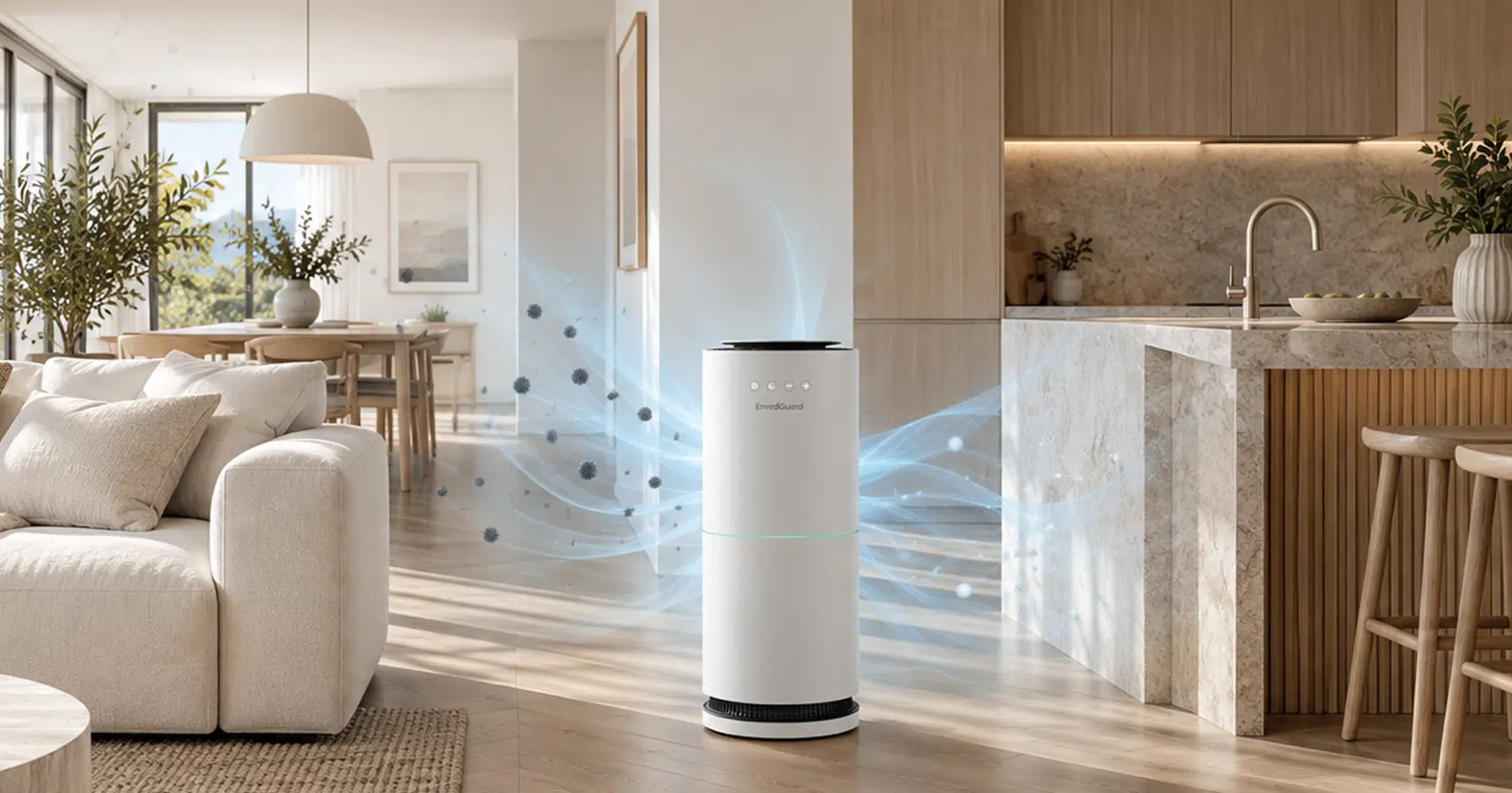
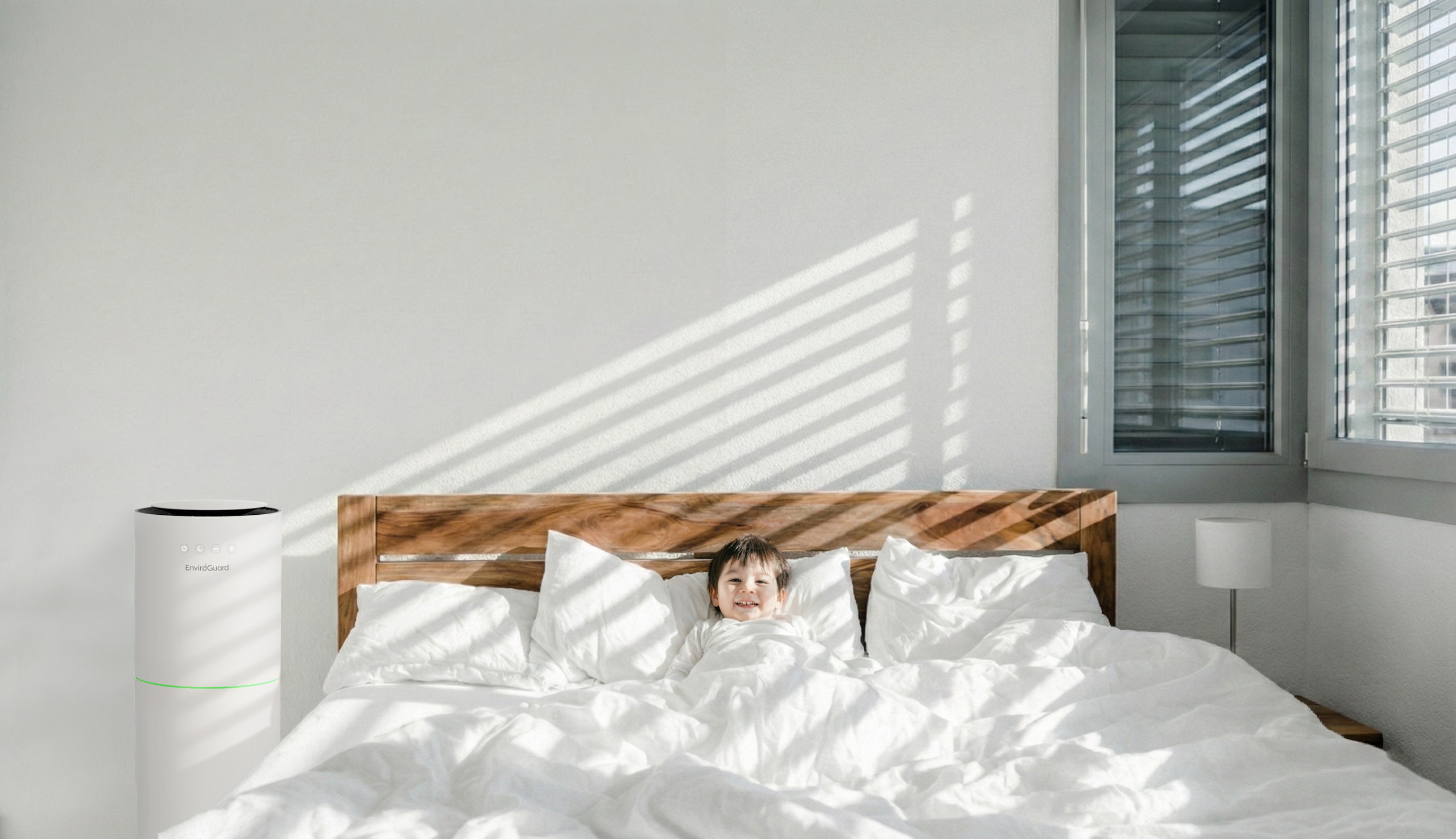

¹ Tested in independent Australian laboratories under controlled conditions using airborne mould spores, bacteria and allergen particulates (0.3μm–10μm).
² Based on third-party testing results confirming 99.9% reduction in airborne mould spores and pet dander when using EnviroGuard Pro X with Purox™ Gel over 24 hours.
³ Independent testing by ICAS Testing Technology Service (Shanghai) Co., Ltd. demonstrated 99.99% reduction in airborne Staphylococcus Albus bacteria within 30 minutes in a 20m² test chamber, in accordance with Technical Standard for Disinfection GB 27948-2020.
⁴ Surface efficacy testing conducted by Eurofins BioPharma Product Testing — Sydney (Eurofins ams Laboratories Pty Ltd, TGA-licensed under MI-2021-LI-08995-1). Reductions over 8 hours: 99.99% Pseudomonas Aeruginosa, 99.9% Escherichia Coli, 90% Candida Albicans Yeast.
⁵ "10x faster than conventional filtration" comparison based on EnviroGuard Pro X achieving log 4 (99.99%) airborne bacterial reduction in 30 minutes, compared with log 1 (90%) pathogen reduction in 20 minutes reported for hospital HEPA systems operating at 12 air changes per hour (Fernstrom A, Goldblatt M. Aerobiology and its role in the transmission of infectious diseases. J Pathog. 2013;2013:493960).
⁶ Performance varies based on room size, airflow configuration, fan speed setting, environmental conditions and usage patterns.
Remove
Total Amount
Become part of our community and enjoy exclusive offers and benefits available only to our members.
Adding {{itemName}} to cart
Added {{itemName}} to cart