You’ve just finished a six-hour ABS print. The layers are perfect. The object is exactly what you imagined. But the air in your room? It’s carrying something invisible — something your filament spool never warned you about.
This guide breaks down what 3D printing actually releases into your workspace, why a standard air purifier almost certainly won’t handle it, and what the current science says about protecting the air in a dedicated printing room.
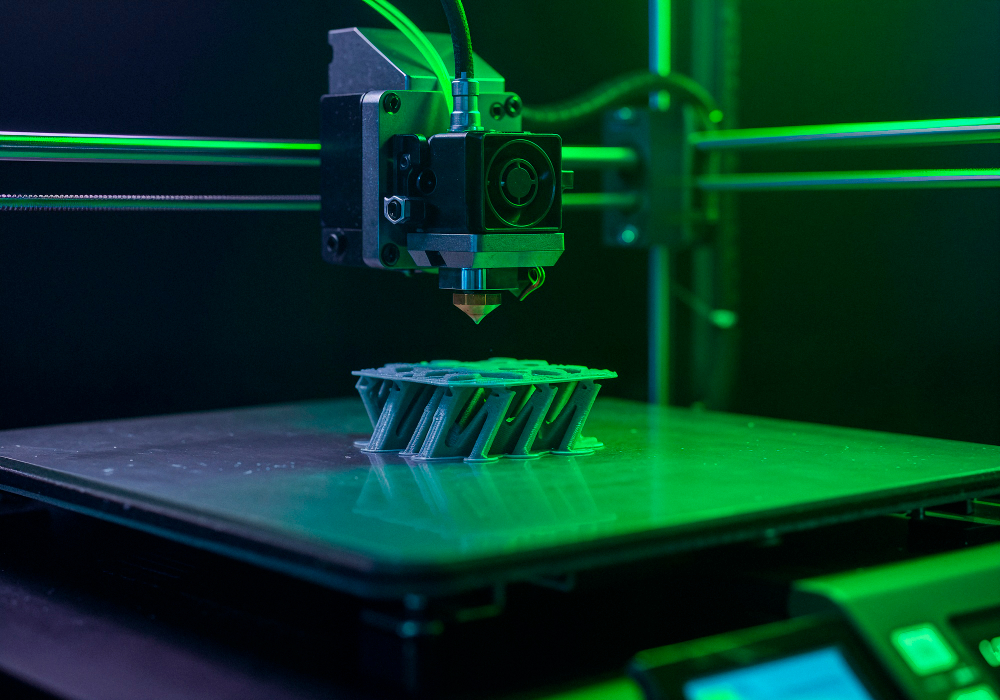
Before discussing purification, it’s worth being precise about the problem.
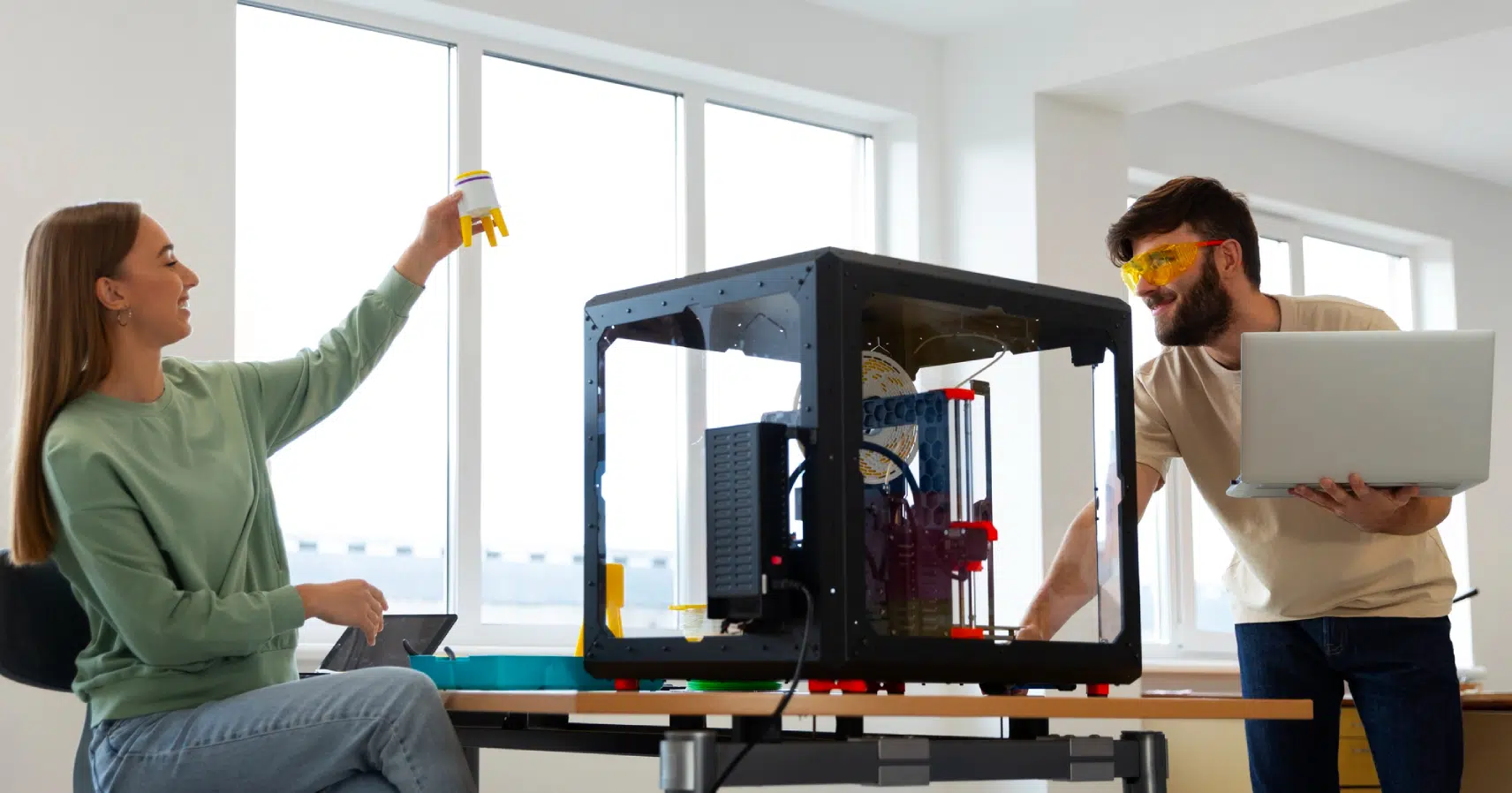
Desktop 3D printers — whether FDM (fused deposition modelling), SLA (stereolithography resin), or MSLA — release two distinct categories of pollutants: Ultrafine Particles (UFPs) and Volatile Organic Compounds (VOCs).¹ They require two fundamentally different solutions to address, and this is the point where most buyers make their first mistake.
The 3D printing process releases particles of ultrafine size (1–100 nm), and researchers have found that they are small enough to be deposited deeper into the respiratory system. These particles can be more difficult to clear from the body than larger solid particulates.
To put that scale in perspective, UFPs are approximately 300 times smaller than the width of a human hair. They don’t settle on surfaces — they remain suspended in the air you breathe throughout and after a print session.
Research has found that they are small enough to be deposited deeper into the respiratory system, specifically the lower respiratory tract.³, Particle mass concentrations (PM2.5) near an operating printer can exceed outdoor levels found near a busy highway.
The chemical picture is equally specific. When the hotend melts the plastic, it doesn’t just change its shape; it fundamentally alters its chemistry, off-gassing Volatile Organic Compounds (VOCs) into your room.² The filament or resin you’re running determines exactly which compounds enter the air around you.
Commonly emitted gases and vapours include carbonyls, formaldehyde, acetaldehyde, acetone, alcohols, styrene, toluene, pentane, 2-butanone, acrolein, and propylene glycol.
The source material matters enormously:
ABS and ASA filaments: Styrene is the main VOC emitted during ABS printing, classified by the International Agency for Research on Cancer (IARC) as “probably carcinogenic to humans” — Group 2A.
PLA filaments: Often described as “safe,” but during PLA printing, formaldehyde up to 191.5 µg/m³ has been detected. The UKHSA guideline for a 30-minute exposure is 100 µg/m³. One of the two PLA filaments tested in that peer-reviewed study exceeded UK health authority guidelines outright.
Nylon filaments: Most of the total VOC emission from nylon is caprolactam, which has an ocular and respiratory toxicity. Caprolactam has a low 8-hour chronic reference exposure level of 7 µg/m³.
Resin (SLA/MSLA) printers: SLA printing releases significantly more VOCs compared to FDM printing — VOC emissions from SLA printing can be 3 to 6 times higher. Critically, VOC off-gassing continues for extended periods after printing ends, with measurable emissions tracked over a period of 84 days after the print is completed.
The implication for anyone running a resin printer is significant: the room doesn’t stop being a source of exposure when you finish a print.

This is the most common and costly misconception in the 3D printing community.
HEPA filtration — including the Medical Grade HEPA-13 standard, which captures 99.97% of particles at 0.3 microns — is genuinely effective at intercepting UFPs. The particle problem is real, and a quality HEPA filter addresses it meaningfully.
Using a filter cover combined with an air purifier could eliminate between 74% and 93% of ultrafine particles (UFPs).
But VOCs are gases. They have molecules far smaller than the physical pores of any filter medium. They pass through HEPA filtration entirely — no matter how high the grade.
Activated carbon does adsorb VOCs — temporarily. The problem is saturation. Once the carbon reaches its capacity, it stops capturing, and as temperature changes, it begins releasing the compounds it previously stored back into the air. Activated carbon manages VOCs; it does not destroy them.
The fundamental gap in passive filtration is this: it waits. Contaminants must travel to the device, pass through the airflow path, and be intercepted at the filter face. In a room where styrene or formaldehyde is off-gassing from every printed surface, ceiling corner, and closed wardrobe — a filter in the corner of the room does not reach most of what it needs to address.
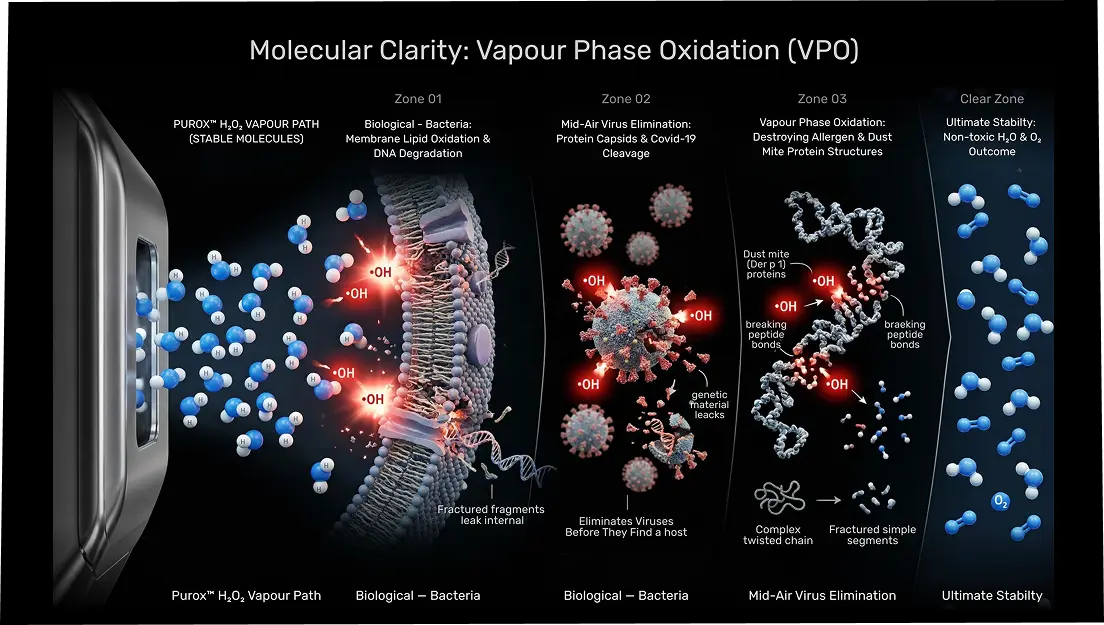
The most capable solution currently available for a 3D printing environment combines passive HEPA filtration with an active vapour-phase treatment. The two technologies address fundamentally different parts of the problem.
Passive filtration handles particles. A four-stage filtration system — coarse pre-filter, antimicrobial layer, Medical Grade HEPA-13, and activated carbon — captures UFPs, larger particulate debris, and provides a baseline layer of chemical adsorption.
Active vapour-phase treatment handles gases. This is where the science diverges sharply from conventional air purifier design.
the technology inside Purox™ Gel within the EnviroGuard Pro X — releases hydrogen peroxide (H₂O₂) as a controlled, invisible active vapour throughout the entire space. This is not ozone, not UV light, not ionisation. Technologies like Vapour Phase Oxidation work by releasing hydrogen peroxide vapour at safe, low levels to trigger an oxidation reaction at the molecular level. The result is that formaldehyde and VOCs are transformed into water (H₂O) and oxygen (O₂), which are naturally safe. This actually destroys the pollutants rather than just relocating them to a filter.
For a 3D printing room specifically, this matters for reasons that go beyond what most purifier guides discuss:
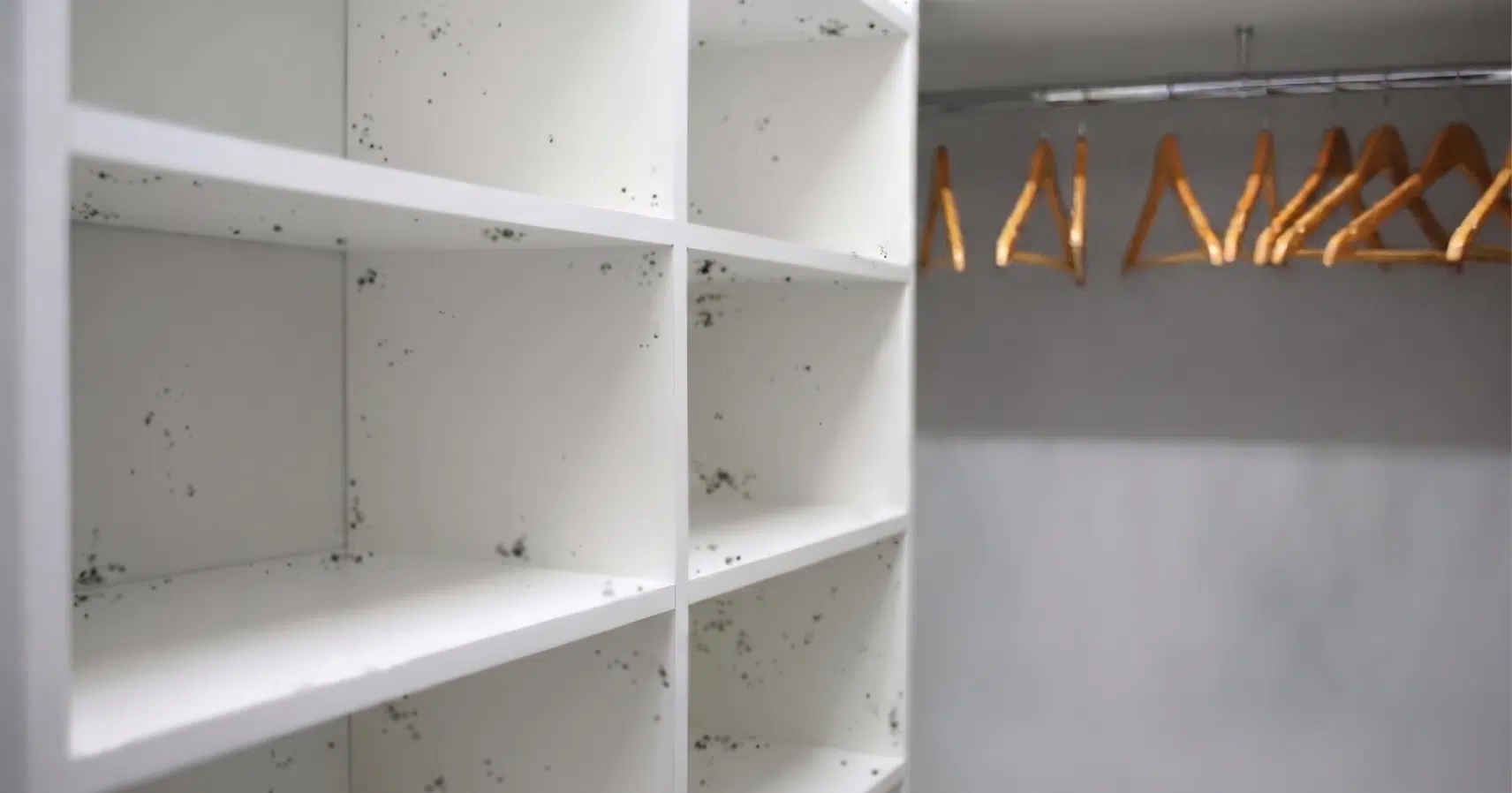
VOC off-gassing from printed objects doesn’t stop when the print ends. A resin print left on your workbench is still releasing compounds. The wardrobe where you store completed ABS parts is off-gassing. The shelves where your filament spools sit are contributing to background VOC levels. An active vapour reaches these surfaces. A filter in a corner cannot.
The H₂O₂ molecule is not new technology — it is nature’s own. Your immune system produces it continuously. The atmosphere above you contains it, formed by the reaction of sunlight with water vapour. The EnviroGuard Pro X’s Purox™ Gel operates at levels substantially below all international safe exposure limits, independently verified by Eurofins Sydney and assessed by the University of New South Wales, which concluded it is completely safe for continuous use in occupied spaces.
Understanding your specific exposure risk requires knowing what your printer is running.
| Filament / Process | Primary VOC Concern | UFP Output | Active Treatment Priority |
|---|---|---|---|
| PLA | Formaldehyde, methyl methacrylate | High particle count | High Formaldehyde can exceed UKHSA 30-min guidelines |
| ABS | Styrene (IARC Group 2A), ethylbenzene | High PM2.5 | Very High |
| ASA | Similar profile to ABS | High PM2.5 | Very High |
| PETG | Formaldehyde, toluene, acetone | Moderate | High |
| Nylon | Caprolactam (Low safe exposure threshold) |
Moderate | High |
| Resin (SLA) | 30–100+ individual VOCs; acrylates | Very Low | Critical Requires post-print treatment |
For resin users specifically: if your room has no active VOC treatment running, the printer is not your only exposure source. Every cured and uncured piece in the space is contributing to air chemistry, continuously.
Most air purifier guidance frames 3D printing exposure as a per-session problem. It isn’t.
Consider a home workshop or dedicated printing room where:
In this environment, the background VOC load is cumulative. Styrene from last month’s ABS print has been settling into the wall surfaces. Caprolactam from nylon jobs has been off-gassing from stored parts. Resin residue on trays and wash stations continues to release compounds at room temperature.
For high-temperature, high-emission materials like ABS, indoor printing requires a sealed printer enclosure and an active exhaust system or a HEPA/Carbon air purifier. But that prescription addresses active printing. It does not address the persistent chemical environment of a room used regularly for additive manufacturing.
The EnviroGuard Pro X’s Vapour Phase Oxidation technology is designed for continuous operation — not as a reactive response to a print in progress, but as the baseline condition of the room. The Purox™ Gel works at all times, including when no printing is happening, addressing the background off-gassing load that accumulates invisibly.
A frequently recommended shortcut in the 3D printing community is simply enclosing the printer with a basic filtration box. The data on this is worth understanding precisely.
Sealed enclosures with filtration achieve 80–90% VOC and UFP removal at the source; high-flow ventilation systems achieve 95–100% reduction.
An enclosure is a meaningful first-line control. But it addresses what leaves the printer, not what is already in the room. It does not address:
Room-level treatment — combining Medical Grade HEPA-13 filtration with active Vapour Phase Oxidation — closes the gap that printer enclosures leave open. Both approaches are complementary, not competing.
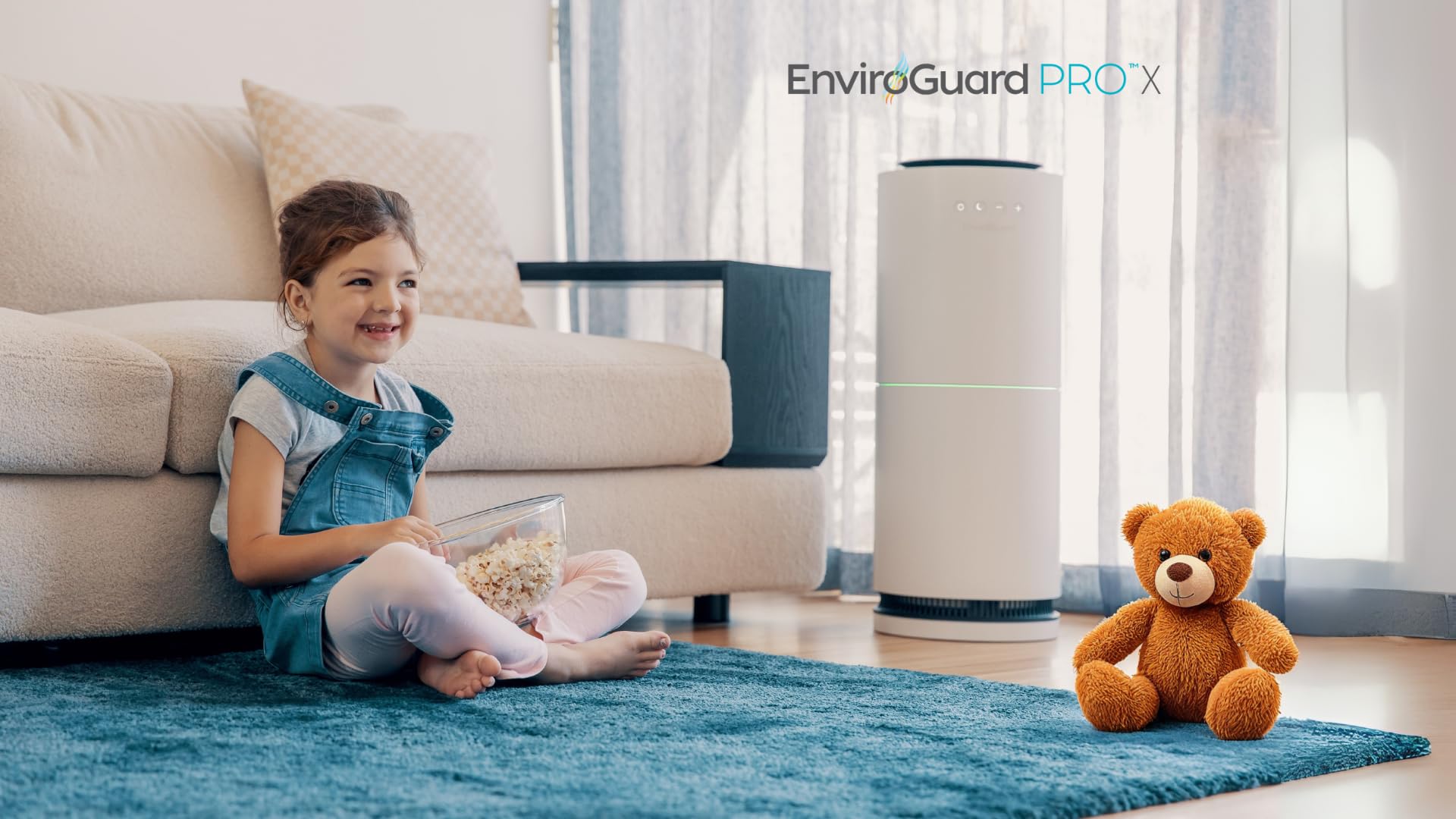
The EnviroGuard Pro X is rated for whole-room operation with airflow across ten fan speeds — from 44 CFM at its quietest to 295 CFM at Boost Mode. In a typical 3D printing room (4m × 4m × 2.7m ceiling, approximately 43 m³), the system delivers multiple complete air changes per hour even at mid-range fan settings.
For active print sessions — particularly with ABS, nylon, or resin — Boost Mode provides maximum active vapour dispersal and filtration throughput simultaneously. For background operation between prints, the system’s lowest settings (33 dBA, below library ambient noise) allow it to run continuously without disrupting focus or nearby work.
The PrimeProtect™ Filter’s four stages work in parallel with Purox™ Gel at all fan speeds. The gel does not require high airflow to disperse — it operates through passive evaporation enhanced by the system’s radial airflow design, reaching surfaces, stored parts, and corners that airflow alone cannot address.
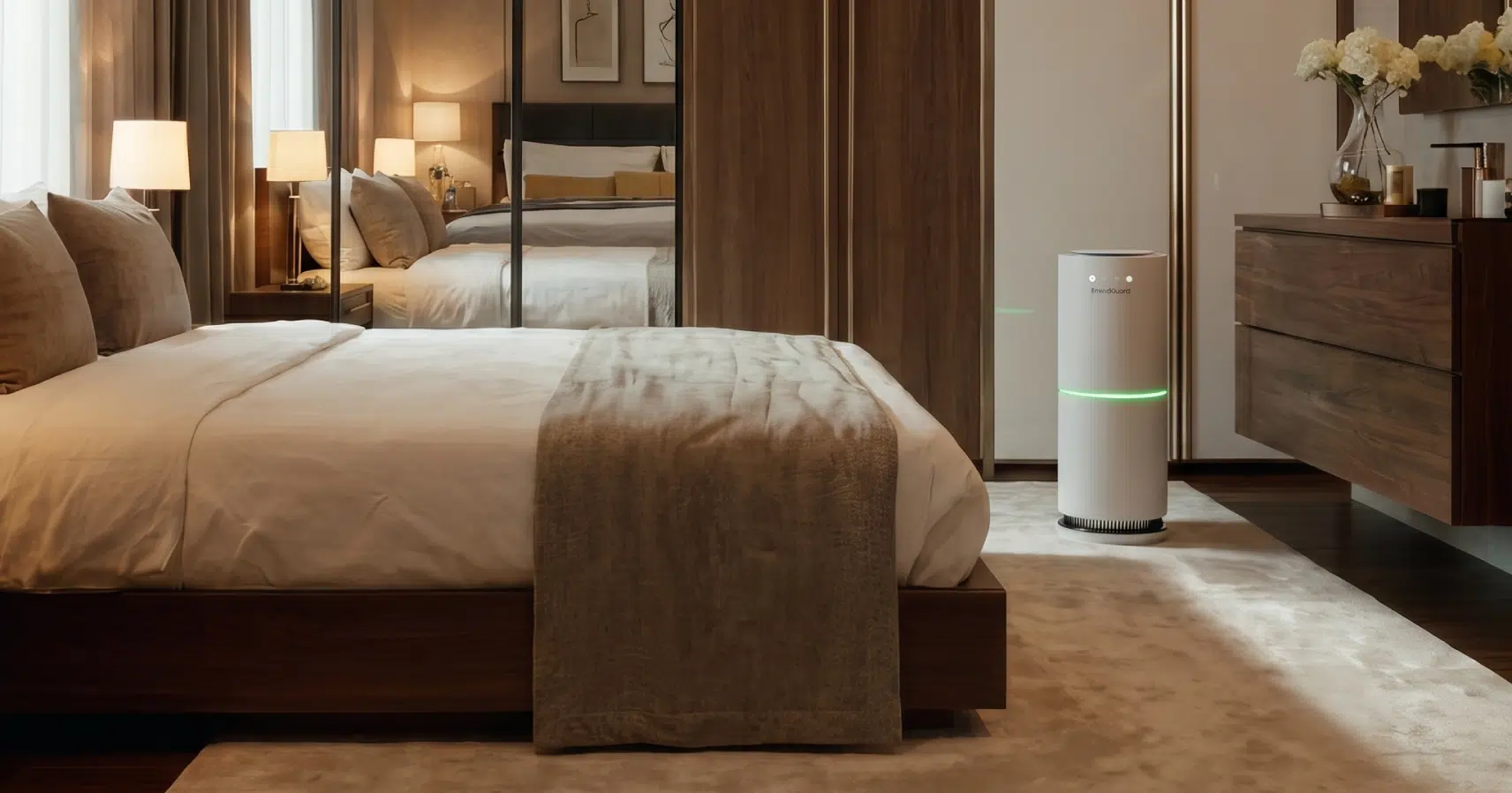
Placement. Position the EnviroGuard Pro X centrally in the room rather than directly beside the printer. The active vapour disperses radially outward and benefits from central placement. The filter intake handles particles coming from any direction.
Running schedule:
Gel consumption and rotation. Each Purox™ Gel pod operates for up to six weeks under normal conditions. In a high-use printing room, particularly with multiple printers running or heavy resin work, rotation at the lower end of that range is appropriate. The EnviroGuard ProCare™ subscription delivers gel and filters automatically on a six-month cycle, removing one variable from workshop management entirely.
Ventilation complement. Active vapour treatment and physical ventilation are not mutually exclusive. Opening a window when running particularly high-emission materials (ABS, ASA, nylon) adds a dilution effect on top of the treatment system. In Australian summer conditions where windows cannot remain open, the EnviroGuard Pro X’s continuous operation provides the full treatment without ventilation trade-offs.
If you are comparing air purifier options, the technical criteria for this specific application are:
VOC destruction, not storage. Ask whether the device destroys VOCs molecularly or adsorbs them into carbon. Carbon adsorption is temporary and reversible. Vapour Phase Oxidation is permanent — the compound ceases to exist as a VOC.
Medical Grade HEPA-13 or higher. The minimum for UFP capture in a 3D printing environment. Standard HEPA (H11/H12) leaves a meaningful gap at sub-100nm particle sizes.
100% ozone free. Ozone-generating devices — ionisers, some UV-C systems — create a secondary respiratory irritant in exchange for photochemical oxidation. In a workspace where you spend extended focused hours, ozone generation is an unacceptable trade-off. Purox™ Gel is independently confirmed 100% ozone free.
Coverage at operating airflow. Some purifiers are rated for larger rooms at maximum fan speed — a setting impractical for focused work due to noise. Check the CFM at the fan speeds you will actually use.
Continuous operation design. A 3D printing room needs continuous background treatment, not a reactive unit that runs only when a sensor detects elevated particle mass. UFPs and many VOCs do not register significantly on PM2.5 sensors.
The air quality challenge in a 3D printing room is not primarily a particle problem — conventional wisdom has reached that point adequately. The more significant and less addressed challenge is the ongoing chemical environment created by the combination of active printing, stored materials, cured prints, and the surfaces those compounds adsorb into over time.
A Medical Grade HEPA-13 filter handles UFPs with proven effectiveness. Activated carbon provides a temporary buffer against VOC accumulation. But the only technology that destroys VOCs at a molecular level — breaking styrene, formaldehyde, caprolactam, and acrylates into nothing but water and oxygen — is active vapour-phase oxidation using hydrogen peroxide at safe, low, continuously verified concentrations.
The EnviroGuard Pro X was not designed as a reaction to 3D printing. It was designed as a system for the rooms people actually live, work, and create in — where the sources of chemical emission don’t arrive and leave on a schedule, but accumulate silently in the materials, surfaces, and air of spaces we return to every day.
In a dedicated printing room, that is precisely the environment you are managing.
Purox™ Gel operates substantially below all international safe exposure limits. Safety verified by Eurofins Sydney and assessed by the University of New South Wales. 100% Ozone Free. Clinically tested. Designed and assembled in Australia.
For technical specifications on the EnviroGuard Pro X system or to explore the EnviroGuard ProCare™ subscription, visit vbreathe.com.
¹ Azimi, P., Zhao, D., Pouhzadi, Z., & Stephens, B. (2016). Emissions of Ultrafine Particles and Volatile Organic Compounds from Commercially Available Desktop Three-Dimensional Printers with Multiple Filaments. Environmental Science & Technology, 50(3), 1260-1268.
² Byrley, P., George, B. J., Boyes, W. K., & Rogers, K. (2020). Particle and volatile organic compound emissions from a 3D printer filament extruder. Science of The Total Environment, 736, 139605.
³ Byrley, P., Boyes, W. K., & Rogers, K. (2021). 3D printer particle emissions: Translation to internal dose in adults and children. Journal of Aerosol Science, 154, 105741.
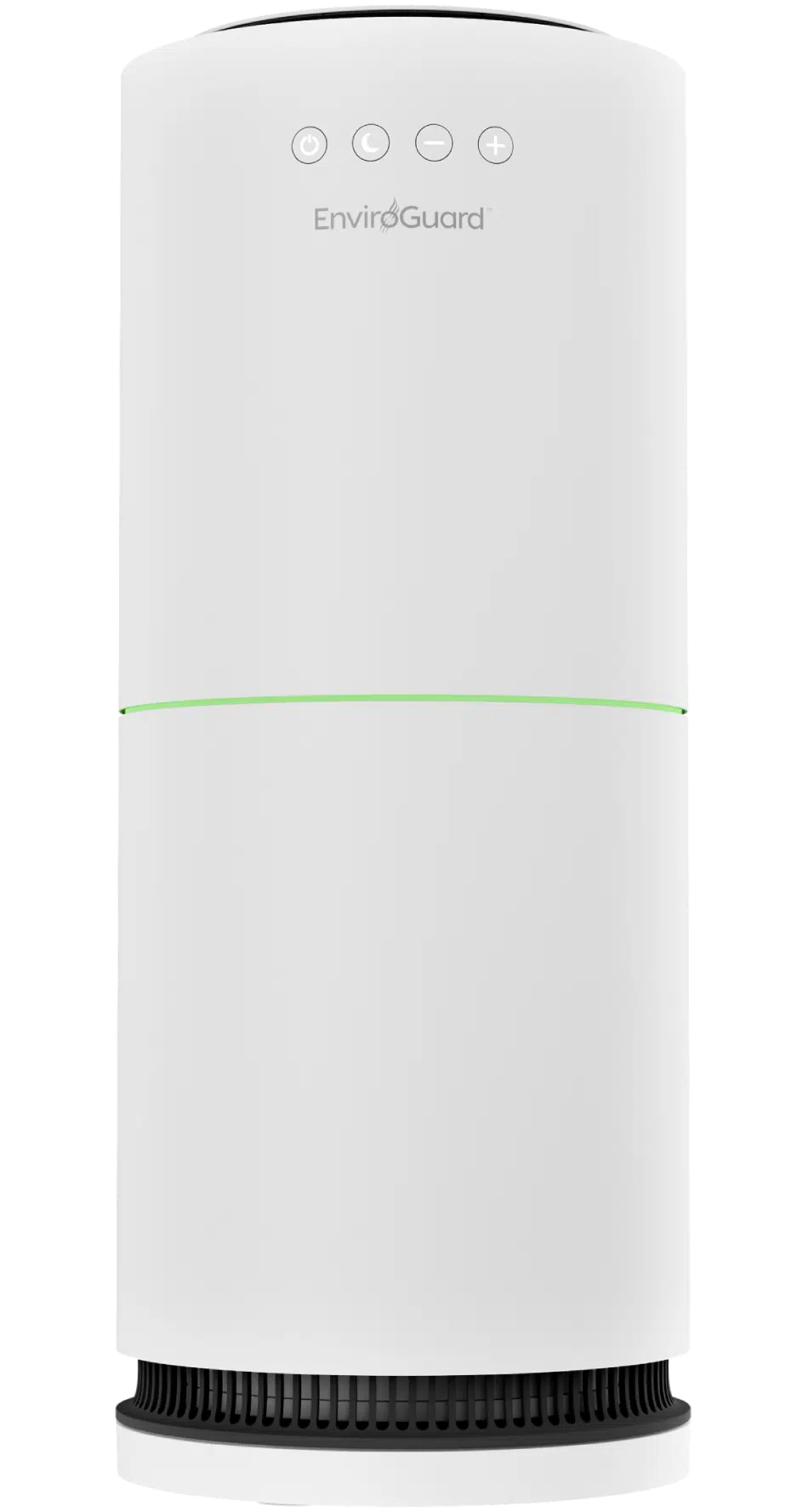
Upgrade to the innovative EnviroGuard PRO™ X today for only $790 (Was $1,590). Claim your $800 saving now and breathe cleaner, healthier air tomorrow.